
会计师事务所

Search documents
麦迪卫康委任容诚为新任核数师
Zhi Tong Cai Jing· 2025-11-28 11:13
Core Viewpoint - The company announced the resignation of its auditor, Deloitte Touche Tohmatsu, due to a failure to agree on the proposed audit fees for the fiscal year ending December 31, 2025 [1] Group 1 - The resignation of Deloitte Touche Tohmatsu will take effect from November 28, 2025 [1] - The audit committee has recommended the appointment of RSM Hong Kong as the new auditor to fill the vacancy left by Deloitte's resignation [1] - RSM Hong Kong's appointment will be effective from November 28, 2025, until the conclusion of the next annual general meeting of the company [1]
篡改格力地产审计底稿“应付”监管 致同会计所迎来年内第三罚
Zhong Guo Jing Ying Bao· 2025-11-28 08:59
11月26日,广东证监局公布对致同会计师事务所(以下简称"致同所")的行政处罚决定。 经查,致同所存在包括篡改格力地产2019至2021年三个房地产存货项目审计底稿等违法行为。广东证监 局决定对致同所及4名责任人共处罚款100万元。 接受采访的律师对《中国经营报》记者表示,篡改审计底稿应付监管的行为,并非普通的审计程序瑕 疵,而是触及资本市场"诚信根基"与"监管底线"的恶性违规。 受访人士同时认为,篡改审计底稿是"主观故意"的违法行为,其危害具有"全局性、深层次、长期性"特 征,这也是监管部门对致同所及签字会计师给予"警告+高额罚款"的处罚,并将此类行为作为"零容 忍"打击重点的根本原因。 本次处罚也是致同所今年年内第三次遭到行政处罚。今年9月,因在红相股份、新智认知年报审计中未 勤勉尽责,出具的审计报告存在虚假记载,致同所及相关责任人分别被厦门证监局、广东证监局罚没 1014.47万元、1620万元。 篡改审计底稿应付监管 广东证监局11月26日披露的《行政处罚决定书》显示,经查明,致同所在开展格力地产2019年至2021年 年度财务报表审计项目中,对于"上海保联""上海太联""重庆两江"三个房地产存货项目 ...

德勤:越来越多中国企业开始主动管理ESG
Zhong Guo Xin Wen Wang· 2025-11-25 17:47
中新社北京11月25日电 (记者王恩博)在ESG(环境、社会和公司治理)领域,中国企业正从"被动合规"走 向"主动布局"。德勤中国可持续发展与新兴技术鉴证业务主管合伙人胡建宇25日在北京举行的一场发布 会上表示,越来越多中国企业开始主动管理ESG,以应对"出海"过程中的挑战。 当天发布的《德勤中国2025财年社会影响力报告》显示,该财年,德勤跨越96个海外市场,助力2000多 家中资企业"出海"。 基于这些合作实践,胡建宇观察到,越来越多中国企业开始主动管理ESG,一方面响应国家"双碳"政策 和绿色转型号召,另一方面积极应对"出海"过程中的多方面挑战。他特别提到,许多企业已意识到,在 全球价值链中,上下游伙伴正以更严苛的标准审视其可持续发展表现。 胡建宇表示,这些政策不仅强调信息披露,更从合规角度出发,让企业科学准确地识别可持续发展过程 中的风险与机遇。(完) (文章来源:中国新闻网) 胡建宇强调,ESG已不再仅是企业合规的"底线要求",更成为决定企业长期可持续运营、资本市场高效 稳健运作乃至整个价值链健康发展的关键因素。 尽管ESG评价体系在中国起步相对较晚,但发展迅速。胡建宇认为,中国在可持续发展方面,无 ...
H股业务会计师事务所名单将增补两家
Zhong Guo Zheng Quan Bao· 2025-11-21 20:09
Core Points - The Ministry of Finance and the China Securities Regulatory Commission (CSRC) have issued a notice to supplement the list of accounting firms qualified to conduct audits for H-share companies, adding two new firms to the existing ten [1][2] - This initiative aims to enhance the quality of audits for H-share companies and support the development of the accounting profession in both mainland China and Hong Kong, aligning with national economic goals [1][2] Summary by Sections Background and Significance - The update of the H-share audit firm list is a response to the evolving accounting industry in mainland China and Hong Kong, with the original list established in December 2010 [1] - Two firms from the original list have been disqualified due to mergers or administrative penalties, necessitating the update [1] Requirements for Inclusion - New firms must meet specific criteria, including completion of securities service business registration, certain revenue thresholds, and a sufficient number of registered accountants [2] - Additional factors for consideration include the firm's internal management quality, technological capabilities, and relevant audit experience in Hong Kong [2] Management and Oversight - A dedicated committee will be established to oversee the inclusion process, ensuring transparency and fairness [3] - The Ministry of Finance and CSRC will implement a dynamic management system for the list, conducting annual evaluations to ensure compliance with the established criteria [5] Ongoing Monitoring - The firms will not have a "lifetime" qualification; continuous assessment will be conducted to maintain high standards [5] - Regular quality checks will be integrated into the oversight process, with a focus on H-share audit projects [5] - Enhanced collaboration with Hong Kong regulators will facilitate information sharing regarding audit practices [5]
财政部、证监会,共同发布!
Zheng Quan Shi Bao Wang· 2025-11-21 14:16
Core Viewpoint - The Ministry of Finance and the China Securities Regulatory Commission (CSRC) have announced the addition of two qualified accounting firms to the list of firms authorized to conduct audits for H-share companies, aiming to enhance cooperation between the accounting sectors of mainland China and Hong Kong, reduce listing costs for mainland enterprises, and promote connectivity between the two capital markets [1][6]. Group 1: Requirements for Inclusion - Accounting firms wishing to join the H-share audit list must meet several basic requirements, including completion of securities service business filing, specific revenue levels, and a sufficient number of registered accountants [2][3]. - The revenue and audit income will be based on the audited financial statements for the year 2024, and firms with overseas branches can consolidate their income from these branches [2][3]. Group 2: Evaluation Criteria - In addition to basic requirements, the Ministry of Finance and CSRC will prioritize firms with high levels of information technology in practice, strong risk management capabilities, and significant audit experience in Hong Kong [3][5]. - Firms must submit detailed partner/shareholder information and documentation regarding their Hong Kong branches as part of the application process [3][5]. Group 3: Management and Oversight - A dedicated committee will oversee the addition of firms to the H-share audit list, ensuring a transparent and fair process [4][5]. - The committee will consist of officials from the Ministry of Finance and CSRC, and will follow a structured process for reviewing applications, including public notice and on-site evaluations [4][5]. Group 4: Dynamic Management of the List - The inclusion on the list is not permanent; the Ministry of Finance and CSRC will conduct annual evaluations to ensure compliance with the requirements, and firms that no longer meet the criteria may be removed from the list [5][6]. - The auditing projects for H-share companies will be included in annual quality checks conducted by provincial finance departments [5][6]. Group 5: Historical Context and Significance - The mechanism for recommending accounting firms for H-share audits has been in place since December 2010, initially including 12 firms, which has effectively reduced costs for mainland companies seeking to list in Hong Kong [6][7]. - The update to the list is significant due to changes in the status of some original firms, ensuring that the list reflects current capabilities and compliance [6][7].
深圳注协携15家会计师事务所亮相深圳金博会,看点来了
Nan Fang Du Shi Bao· 2025-11-21 13:06
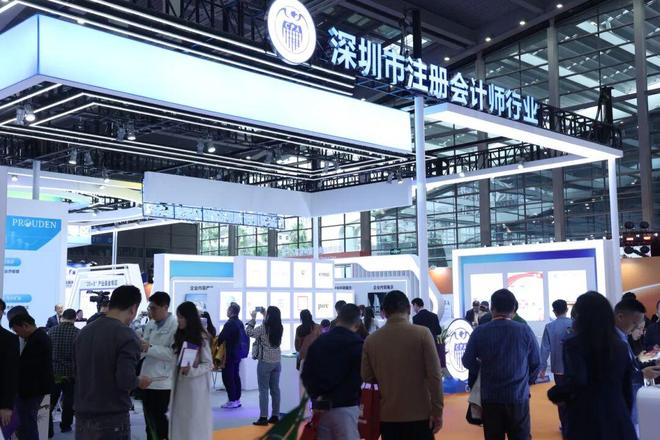
Core Insights - The 19th Shenzhen International Financial Expo, themed "New Heights of Industrial Finance, Empowering the Future with Science and Technology," has attracted 288 institutions from various countries and regions [1][3] - The Shenzhen Certified Public Accountants Association organized 15 renowned accounting firms to showcase their services in capital market support, ESG verification practices, and cross-border financial audit compliance [1][3] Group 1 - The expo features an innovative "1+3+N" model, hosting high-end forums such as the 2025 Shenzhen International Financial Conference and the Financial Technology Conference, along with nine themed exhibition areas [3] - The industry joint exhibition area led by the Shenzhen CPA Association focuses on "Professional Safeguarding Financial Innovation, Empowering Industrial Collaborative Development," showcasing the CPA industry's practical achievements in compliance, risk prevention, and digital transformation [3][6] - Participating accounting firms presented their full-chain service capabilities in specific fields, providing precise financial and tax consulting solutions to exhibitors and financial institutions [3][6] Group 2 - During the expo, accounting firms engaged in thematic speeches and specialized sharing sessions to deepen industry communication, discussing complex financial instrument valuation and the implementation of new standards [6] - The CPA industry aims to serve as a "professional guardian" of the financial system, facilitating efficient conversion of financial resources to the real economy [6][8] - The collaboration of the Shenzhen CPA Association and 15 accounting firms not only demonstrates the professional strength and collaborative advantages of the CPA industry but also injects professional momentum into the high-level circulation of "technology-industry-finance" [8]
香港会财局就审计缺失谴责尚誉会计师事务所及其两位董事 并罚款60万港元
智通财经网· 2025-11-20 12:14
Core Viewpoint - The Hong Kong Institute of Certified Public Accountants has imposed penalties on ShineWing Certified Public Accountants Limited and its two directors for multiple audit deficiencies related to the financial statements of a listed company, Chuangyi Group (Holdings) Limited, for the year ending March 31, 2017 [1] Group 1 - The audit deficiencies included a lack of due diligence in evaluating the work of valuation experts and a failure to apply professional skepticism to management's assumptions regarding the valuation of technical assets and goodwill impairment testing [1] - The total fines imposed amount to HKD 600,000, which includes HKD 300,000 for ShineWing, HKD 210,000 for director Chen Xinting, and HKD 90,000 for director Yan Xinghan [1]
连辞三家上市公司独董,“A股大所”负责人疑失联
Feng Huang Wang· 2025-11-20 08:20
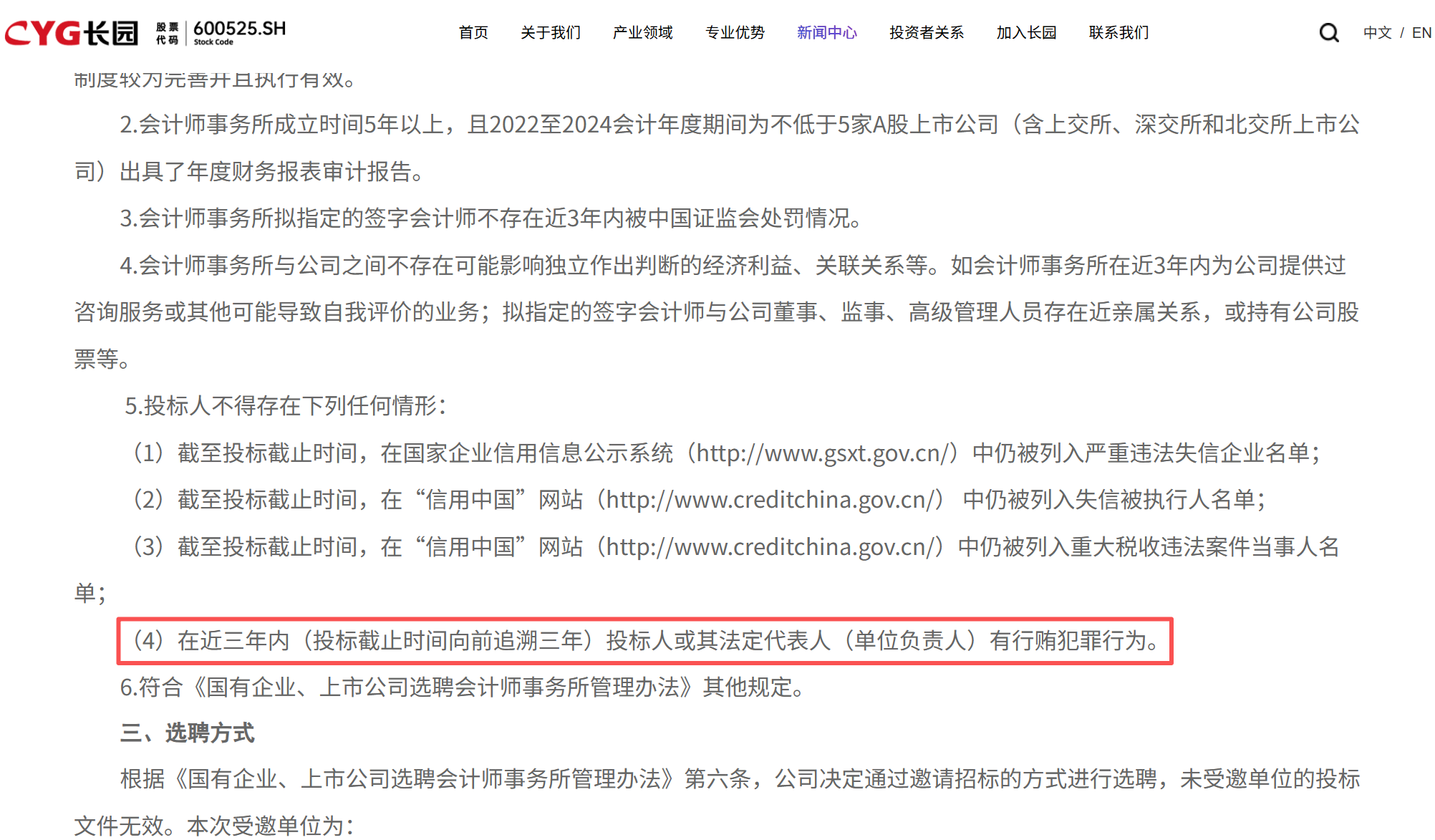
Core Viewpoint - The resignation of independent director Yang Xiong from three listed companies has raised concerns about his alleged disappearance, bringing attention to Beijing Dehao International, the accounting firm he leads [1][2][5]. Group 1: Resignation of Yang Xiong - Yang Xiong, aged 59, has over 30 years of experience in the accounting industry and has held key management positions in various firms before joining Beijing Dehao International [2][6]. - In a span of one week, Yang resigned from his roles as independent director in three companies, citing "personal reasons" [2][3]. - His absence from board meetings, particularly the lack of prior notice or delegation, is unprecedented and has led to speculation about his well-being [1][5]. Group 2: Impact on Beijing Dehao International - Beijing Dehao International is responsible for auditing over 120 companies for the 2024 fiscal year, ranking 13th among accounting firms in terms of the number of audits [1]. - The firm generated over 190 million yuan in revenue from annual reports and internal control audits for the same period [1]. - The ongoing situation surrounding Yang Xiong's status may affect the firm's reputation and operational stability [11]. Group 3: ST Changyuan's Decision - ST Changyuan, a company under risk warning, has decided to retain Beijing Dehao International as its auditor for the 2025 fiscal year despite internal opposition [1][7]. - The decision was made with a board vote of 9 in favor and 0 against, later corrected to 7 in favor and 2 against, indicating dissent regarding the choice of auditor [7][9]. - Concerns were raised about the quality of the audit due to the firm's previous regulatory issues, which could impact the company's financial reporting and internal control effectiveness [7][8].

河南省高级人民法院关于《河南省破产案件管理人名册》的公告
He Nan Ri Bao· 2025-11-19 23:19
Core Points - The Henan Provincial High People's Court has updated the bankruptcy administrator roster, allowing 869 institutions to participate in bankruptcy case management [1] - The new roster replaces the previous one published in 2022, and existing appointed administrators will continue their duties for cases designated before the new roster's announcement [1] Summary by Category Legal Framework - The update follows the "Enterprise Bankruptcy Law of the People's Republic of China" and relevant regulations from the Supreme People's Court [1] - The evaluation group for the roster was formed based on principles of openness, fairness, and justice [1] Roster Details - A total of 869 institutions have been included in the new bankruptcy administrator roster [1] - The roster is publicly available and allows institutions to participate in the selection of bankruptcy administrators [1] Institutional Breakdown - The roster includes various law firms and accounting firms categorized into different levels, with specific names listed for each category [2][3][4][5][6][7][8][9][10][11][12][13][14][15][16][17][18][19][20][21][22][23][24][25][26][27][28][29][30][31][32][33][34][35]
德勤料香港特区政府本财政年度录得盈余
Sou Hu Cai Jing· 2025-11-17 14:13
Core Insights - Deloitte forecasts that the Hong Kong Special Administrative Region government will record a surplus of approximately HKD 15.6 billion for the current fiscal year, with fiscal reserves expected to increase to HKD 669.9 billion by the end of March 2026 [1] - The actual deficit for the Hong Kong government from April to September 2025 is projected at HKD 103.2 billion, a significant reduction compared to the same period last year, primarily due to increased stock stamp duty revenue and bond issuance, alongside a faster economic growth driving up operational income and various tax revenues [1] - Deloitte anticipates that the Hong Kong government may achieve fiscal balance in the 2025/2026 fiscal year [1] Recommendations for Government Budget - Deloitte suggests three key expectations for the upcoming government budget, including the development of the Northern Metropolis as a new growth engine for Hong Kong [1] - Strengthening Hong Kong's capital markets is highlighted as a priority [1] - Maintaining Hong Kong's competitive advantage as a regional asset and wealth management center, such as providing up to 50% investment tax credits for companies investing in the Northern Metropolis, optimizing taxes to promote dual listings, and encouraging capital investments [1]