
Banking

Search documents
Home equity rates unchanged as the Fed holds pat on rates
Yahoo Finance· 2026-01-28 20:18
Core Insights - Home equity rates remain unchanged as the Federal Reserve keeps interest rates steady at its first meeting of 2026, with the average home equity line of credit (HELOC) at 7.44% and the five-year home equity loan at 7.92% [1] - The current HELOC average is the lowest in over three years, nearly three percentage points lower than two years ago, with expectations that it may drop below 7% for the first time since September 2022 [2] - Home equity rates are influenced by Federal Reserve policy and long-term inflation expectations, with forecasts indicating potential rate cuts later in 2026 [3] Home Equity Rates Overview - Current home equity rates are as follows: - HELOC: 7.44% (down from 7.63% four weeks ago and 8.26% a year ago) - 5-year home equity loan: 7.92% (down from 7.99% four weeks ago and 8.44% a year ago) - 10-year home equity loan: 8.09% (down from 8.17% four weeks ago and 8.57% a year ago) - 15-year home equity loan: 8.09% (down from 8.12% four weeks ago and 8.52% a year ago) [2] Factors Influencing Home Equity Rates - Home equity rates are primarily driven by Federal Reserve policy and inflation expectations, with the Fed's recent decision to maintain interest rates reflecting a cautious approach to monitoring inflation and the job market [3][4] - The job market is stabilizing, and inflation is moderating, leading to a balanced risk outlook for the Fed's future decisions [4] Comparison with Other Credit Types - Home equity rates are significantly lower than rates for unsecured credit types, such as: - Credit card: 19.61% - Personal loan: 12.26% [5] - Individual offers for HELOCs or home equity loans depend on factors like creditworthiness, financial status, and home value, with lenders typically capping total home loans at 80% to 85% of a home's worth [5]
Fed holds interest rates steady: What that means for mortgages, credit cards and loans
CNBC· 2026-01-28 19:03
Core Viewpoint - The Federal Reserve has decided to keep its benchmark interest rate unchanged amid various economic pressures, which continues to affect consumer borrowing costs and affordability in the housing market and other sectors [2][3]. Interest Rates and Borrowing Costs - The federal funds rate, set by the U.S. central bank, influences the rates at which banks lend to each other overnight, indirectly affecting consumer rates [3]. - Short-term borrowing costs, such as credit card rates, are closely tied to the prime rate, which is typically 3 percentage points above the federal funds rate [4]. Housing Market - The housing market is facing significant affordability issues due to high prices and elevated borrowing costs, with fixed mortgage rates not directly tracking the Fed's rate but following long-term Treasury rates [5]. - The average rate for a 30-year fixed-rate mortgage is currently 6.15%, down from over 7% a year ago, indicating a slight improvement in borrowing costs [7]. - The affordability crisis is expected to persist unless there are substantial changes in mortgage rates, incomes, or home prices, reinforcing barriers for first-time buyers [6]. Credit Cards - The average credit card interest rate in the U.S. has fallen to 23.79%, the lowest in almost three years, following three rate cuts by the Fed in the latter half of 2025 [8]. - Despite the decrease, the impact on consumers is described as "not earth-shattering" [9]. Auto Loans - Auto loan rates are fixed, but the increasing cost of vehicles has led to larger car payments, with the average amount financed for a new car reaching an all-time high [12]. - The Fed's decision to maintain steady rates is not expected to significantly impact consumer confidence in the auto market [13]. Savings Accounts - Online savings accounts are offering above-average returns, with yields correlated to changes in the federal funds rate, currently providing returns of 3% to 3.5% [14]. - However, the personal savings rate has fallen to 3.5%, the lowest since October 2022, as consumers struggle with the rising cost of living [14].

Northern Trust Universe Data: Global Markets Deliver Steady Fourth Quarter Gains to U.S. Institutional Investors
Businesswire· 2026-01-28 18:48
Core Insights - Global markets showed steady gains for institutional investors in Q4 2025, with a median return of 2.1% for the Northern Trust All Funds Over $100 Million plan universe, finishing the year up 13.1% [1] Performance Summary - The Northern Trust Universe tracks 365 large U.S. institutional investment plans with a combined asset value exceeding $1.4 trillion [1] - Performance varied by plan type: - Northern Trust Corporate (ERISA) universe: 1.3% median return for Q4 - Northern Trust Public Funds universe: 1.9% median return - Northern Trust Foundation and Endowment (F&E) universe: 2.5% median return [1] - U.S. equity markets performed well, with the Northern Trust US Equity program universe achieving a 2.4% median return for Q4 and 15% for the year [1] - The Northern Trust Non-US Equity program universe had a median return of 3.8% in Q4 [1] - Fixed income returns were modest, with the Northern Trust US Fixed Income program universe returning 1.1% in Q4 [1] Long-term Returns - ERISA plan median returns over one, three, and five years were 11.1%, 8.0%, and 2.3% respectively [1] - Public Funds universe median returns for the same periods were 13.1%, 10.7%, and 7.1% [1] - Foundations & Endowments universe median returns were 13.6%, 12.2%, and 8.1% over one, three, and five years respectively [1] Asset Allocation Insights - In the ERISA plan universe, the largest median allocation was U.S. fixed income at 49.7%, though this allocation has been declining [1] - Public Funds universe allocations: U.S. equity at 26.9% and U.S. fixed income at 23.6%, with private equity allocations rising to 14.6% [1] - Foundations & Endowments maintained a median private equity allocation of 22.0% [1]


Powell Pushes Back on DOJ Subpoenas, Cites Fed Independence
Yahoo Finance· 2026-01-28 18:45
Federal Reserve Chair Jerome Powell spoke out against recent subpoenas from the Department of Justice, calling them a political move that could threaten the Fed’s independence. Bitcoin barely reacted and stayed within its recent range, as most traders were already looking ahead to the next interest rate decision. The concern sits in the background of all markets. When politics starts to influence interest rates, the effects spread quickly to stocks, housing, and crypto. What Happened and Why Powell Push ...
UNH stock just did something to the Dow Jones you rarely see
Yahoo Finance· 2026-01-28 16:56
Core Insights - UnitedHealth Group's significant stock decline led to a 409-point drop in the Dow Jones Industrial Average, marking a 0.8% decrease [1] - The decline was primarily attributed to a proposal from the Trump administration to maintain flat Medicare rates for the upcoming year, which surprised the industry and investors [1] - UnitedHealth is projected to experience its first annual revenue decline in over 30 years by 2026, indicating ongoing struggles to regain investor confidence [2] Impact on the Dow Jones - UnitedHealth's stock price drop of 68.94 points, or 19.6%, had a substantial impact, translating to a 424.44-point decline in the Dow due to its price-weighted nature [3] - The remaining 29 stocks in the Dow collectively contributed only a minor increase of 15 points, with the top six gainers adding 168.8 points [3] - Other major stocks, including Apple, Nvidia, Amazon.com, and Chevron, collectively fell by 153.3 points, further illustrating the negative impact of UnitedHealth's decline [4] Market Outlook - There is a possibility of a slight rebound for UnitedHealth and Humana on January 28, with the Nasdaq-100 Index and S&P 500 expected to open slightly higher [5] - The financial news on January 28 is anticipated to be busy, including the Federal Reserve's interest rate decision and earnings reports from major companies like Microsoft, Meta, Tesla, and IBM [7]

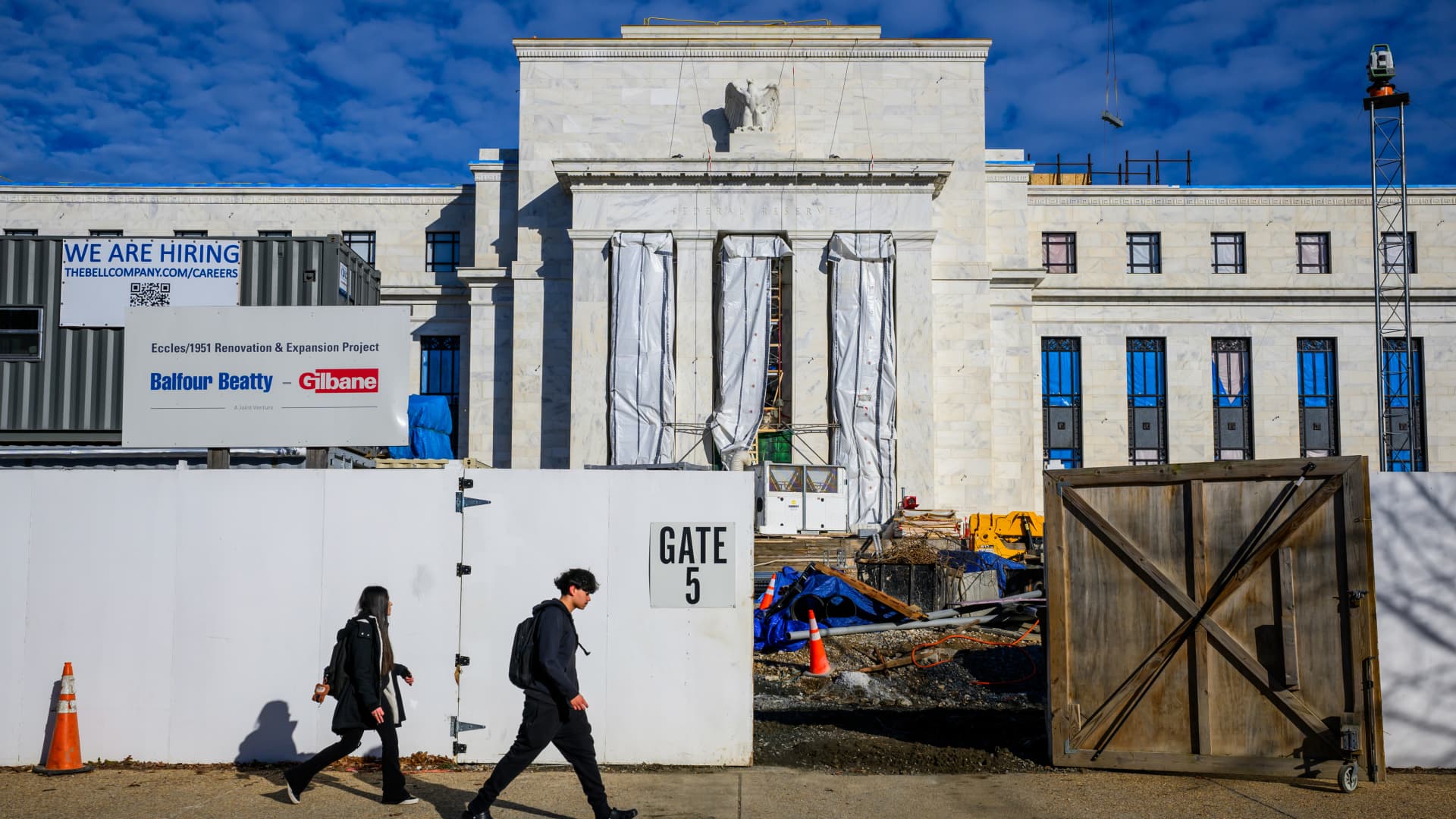
Federal Reserve holds rates steady
Yahoo Finance· 2026-01-28 15:58
Economic Overview - The U.S. economy expanded at a solid pace last year and is entering 2026 on a firm footing, according to Federal Reserve Chair Jerome Powell [2] - Job gains have remained low, but the unemployment rate shows signs of stabilization, while inflation remains somewhat elevated [2] - Consumer spending has been resilient, and business fixed investment continues to expand, although the housing sector remains weak [2] Federal Reserve Actions - The Federal Open Market Committee maintained the target range for the federal funds rate at 3.5% to 3.75% after multiple cuts last year [1] - The Fed's decision is expected to have a muted short-term impact on the multifamily market, which relies on financing priced off Treasury yields [3] Market Implications - Lower short-term borrowing costs are anticipated to improve debt service coverage and overall deal feasibility, particularly for transitional multifamily assets [4] - The long end of the yield curve remains a wildcard; rising longer-term rates could offset benefits from short-term compression, affecting permanent financing volatility [5] Economic Indicators - Mixed economic indicators present challenges; while GDP figures, retail sales, and equity markets suggest continued expansion, data on payroll employment, job openings, wage growth, and consumer confidence indicate rising pessimism among Americans [6]
Top Wall Street Firms Met With SEC Crypto Task Force to Discuss DeFi Concerns
Yahoo Finance· 2026-01-28 15:29
Core Viewpoint - The meeting between top Wall Street players and the SEC highlighted concerns regarding the regulator's approach to digital assets, particularly the potential economic impact of exemptive relief for tokenized securities and the treatment of decentralized finance (DeFi) projects [1][2]. Group 1: Meeting Outcomes - Representatives from JPMorgan, Citadel, and SIFMA discussed the SEC's plans to provide exemptions for tokenized securities, expressing worries that this could harm the broader U.S. economy [1][2]. - SIFMA emphasized that regulatory treatment should focus on economic characteristics rather than technology or labels, warning that broad exemptions could undermine investor protection and lead to market disruptions [3]. Group 2: Regulatory Context - SEC Chair Paul Atkins announced plans to issue significant innovation exemptions for the crypto sector, which would protect crypto companies from triggering securities law violations while experimenting with tokenized securities and DeFi [5]. - The SEC's push for legal assurances for the crypto industry coincides with stalled progress on a crypto market structure bill in Congress, which aims to establish federal protections for crypto [6]. Group 3: Industry Tensions - Tensions between DeFi advocates and SIFMA arose over language in the crypto market structure bill that would exempt certain decentralized financial services from legal oversight, although some progress was reported in negotiations [6]. - The conflict between Coinbase and the banking lobby over stablecoin rewards posed a significant threat to the bill's future [7].


Fed Chair Powell Has Done a Good Job, Rubenstein Says
Youtube· 2026-01-28 15:25
Core Insights - The speech by Commerce Secretary Howard Lutnick at the World Economic Forum was controversial, drawing significant attention from attendees [2][3] - The event marked a transition in leadership at the World Economic Forum, with Klaus Schwab no longer present, leading to a notable increase in CEO participation [4][5] - There is a growing concern among global CEOs regarding investing in the U.S. due to uncertainties about the dollar's value and government policies [8][10] Economic Outlook - The U.S. economy is perceived to be performing well, with good growth, controlled inflation, and tolerable unemployment levels [11] - The Federal Reserve, under Jay Powell's leadership, has not led to a recession despite interest rate fluctuations, which is seen as a positive outcome [12][13] - Business leaders generally support the federal government's current direction, noting a reduction in regulation and an easier decision-making process for mergers and acquisitions [18][19]

Fidelity to Enter Stablecoin Market With Ethereum-Based 'Digital Dollar'
Yahoo Finance· 2026-01-28 15:18
Core Viewpoint - Fidelity Investments is set to launch its own U.S. dollar-pegged stablecoin, the Fidelity Digital Dollar (FIDD), aimed at both retail and institutional investors, which will operate on the Ethereum blockchain [1][2]. Group 1: Company Developments - Fidelity Digital Assets, a subsidiary focused on crypto, will issue the new stablecoin, which will be fully backed by U.S. dollars and high-quality cash equivalents [1]. - Mike O'Reilly, president of Fidelity Digital Assets, emphasized the firm's unique position as a leading asset manager and digital assets pioneer to provide on-chain utility through the digital dollar [2]. Group 2: Market Context - The stablecoin market is highly competitive, with existing players like Circle's USDC and Tether's USDT dominating 82% of the total market capitalization [2]. - The stablecoin category saw significant growth, with its market capitalization increasing by 49% to $306 billion by the end of 2025, and currently reaching $311 billion [3]. Group 3: Industry Trends - Fidelity's initiative reflects a broader trend among traditional financial firms showing increased interest in stablecoins as blockchain-based settlement becomes more prevalent [4]. - Other financial institutions, such as JPMorgan, have also explored stablecoin offerings, indicating a growing acceptance of digital currencies in traditional finance [4].
BitMine’s Tom Lee Explains the Gold, Silver, and Bitcoin Cycle | US Crypto News
Yahoo Finance· 2026-01-28 14:27
Welcome to the US Crypto News Morning Briefing—your essential rundown of the most important developments in crypto for the day ahead. Grab a coffee and settle in — the markets are moving, and what’s hot today may signal what’s next. Precious metals are stealing headlines, stocks are holding steady, and Bitcoin…well, it might just be waiting in the wings. Crypto News of the Day: Tom Lee Explains Why Gold and Silver Are Dominating Investors’ Attention Investors are increasingly turning to precious metals ...