
进出口贸易

Search documents
前7月云浮对上合组织国家进出口比增23.3%
Sou Hu Cai Jing· 2025-09-02 05:13
Group 1 - The total import and export trade volume between Yunfu and SCO member countries reached 280 million RMB from January to July 2025, marking a 23.3% increase compared to the same period last year, with exports at 160 million RMB and imports at 120 million RMB [1][3] - Yunfu's New Sheng International Trade Co., Ltd. successfully imported a batch of stone materials from Pakistan, benefiting from customs facilitation measures such as "advance declaration" and "two-step declaration" [3] - Yunfu Customs is actively promoting trade facilitation policies and organizing activities to address the challenges faced by local enterprises in exporting kitchenware to SCO countries, resulting in an 18.2% increase in kitchenware exports to these countries, totaling 53 million RMB [3][4] Group 2 - Yunfu Customs aims to enhance the business environment at the port and improve cross-border trade facilitation, focusing on expanding economic cooperation with SCO countries into broader and deeper areas [4]

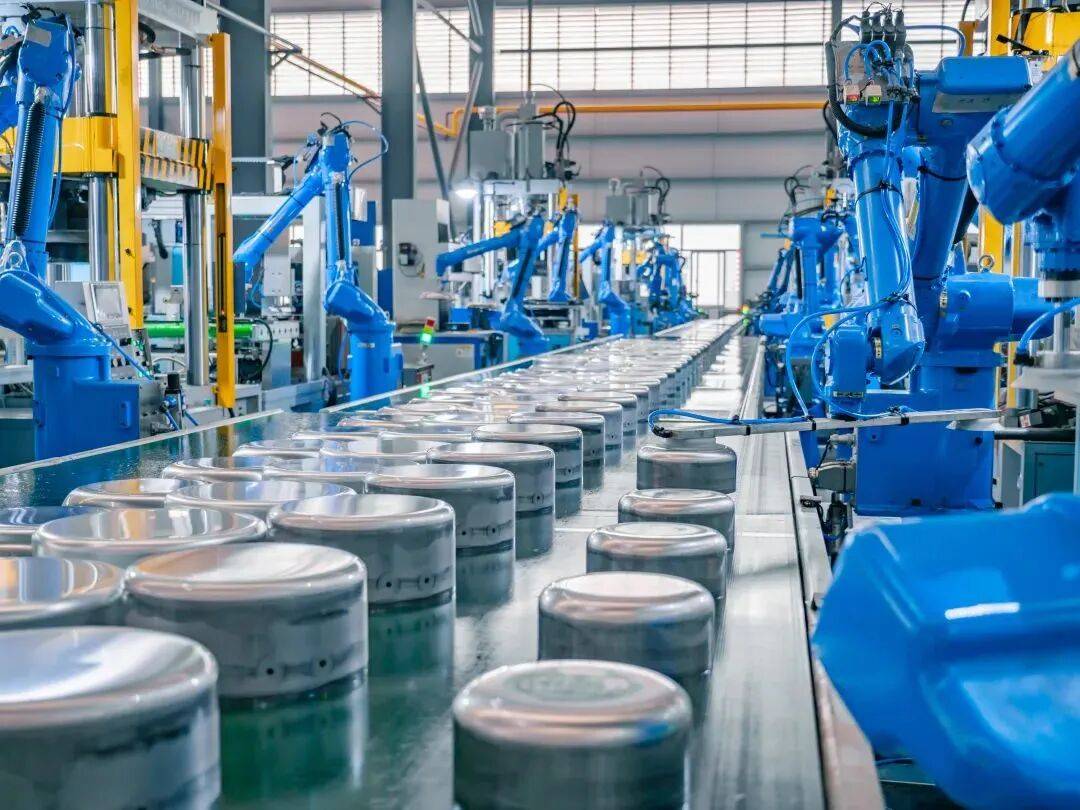
中方给了墨西哥一个忠告,被美国当枪使的后果,说得很清楚
Sou Hu Cai Jing· 2025-09-02 02:01
Group 1 - The Mexican government is preparing to increase tariffs on Chinese goods to "protect domestic enterprises," but the deeper reason is to "appease the United States" [1] - Since Trump's return to the White House, his administration has pressured Mexico to raise tariffs on Chinese goods, citing concerns that Chinese products could enter the U.S. market through Mexico [3] - Mexico's previous plans to establish a "North American fortress" aimed at strengthening trade among the U.S., Mexico, and Canada, effectively blocking Chinese goods [3] Group 2 - China's Ministry of Foreign Affairs firmly opposes Mexico's potential tariff increases on Chinese goods under U.S. pressure, emphasizing the importance of Mexico's independence as a sovereign nation [5] - The Chinese government warns that if Mexico chooses to align with the U.S. at the expense of Chinese interests, it may face retaliatory measures from China [5] - Mexico's economy heavily relies on trade with China, which is its second-largest trading partner, with a total trade volume of $109.426 billion last year [7] Group 3 - Increasing tariffs on Chinese goods may provide short-term political benefits for Mexico but could harm its own economy due to reliance on Chinese components and equipment [7] - Mexico's exports to China, including oil and electrical equipment, may not easily find alternative markets, risking significant economic losses [7] - The concept of "independence" is highlighted as both a warning and a potential path forward for Mexico, emphasizing the need for long-term strategic thinking [7]

美加税50%印度表态开拓新市场 沪金震荡上涨
Jin Tou Wang· 2025-09-01 03:06
Group 1 - Gold futures are currently trading around 795.68, with a reported price of 795.46 per gram, reflecting a 1.42% increase, and a high of 795.92 and a low of 785.70 [1] - The short-term outlook for gold futures appears bullish [1] Group 2 - Following the increase of tariffs on Indian goods to 50% by the US, India's Minister of Commerce and Industry, Piyush Goyal, stated that India will not "yield" but will focus on exploring new markets [3] - Goyal emphasized India's openness to signing free trade agreements while asserting that the government will introduce measures to support various industries and boost exports [3] - Goyal expressed confidence that India's export figures for this year will exceed those of 2024-2025 [3] Group 3 - Key resistance levels for gold futures are identified between 795 and 840 per gram, while important support levels are between 772 and 830 per gram [3]
海外政策|特朗普关税再遭裁定违法,后续走向如何?
Jin Shi Shu Ju· 2025-09-01 01:20
Core Viewpoint - The U.S. Court of Appeals ruled that Trump's tariffs imposed under the International Emergency Economic Powers Act (IEEPA) are illegal, but this does not mean an immediate suspension of the tariffs as Trump plans to appeal to the Supreme Court [1][3][4]. Summary by Sections Court Ruling and Implications - The U.S. Court of Appeals determined that Trump's use of IEEPA to impose tariffs exceeded the authority granted by the act, which does not explicitly allow for tariff imposition [3][7]. - The ruling was passed with a 7-4 majority, maintaining the validity of tariffs until October 14, 2025, allowing time for Trump's appeal to the Supreme Court [3][4]. Future Legal Proceedings - The Supreme Court is expected to review the case after its summer recess ends on September 29, with a potential decision on whether to extend the suspension of the ruling by October 14 [4][5]. - Historical precedents suggest that Supreme Court decisions can take several months, with the earliest possible ruling by the end of the year and the latest by summer 2026 [4][5]. Economic and Trade Impact - The ruling does not immediately disrupt import and export activities, as the tariffs will remain in effect during the appeal process [8]. - Despite the tariffs, strong demand from non-U.S. regions is expected to mitigate some of the downward pressure on exports from China [8][10]. Export Growth and Trade Diversification - In the first seven months of 2025, China's exports to ASEAN and Africa grew by 13.5% and 24.5%, respectively, indicating a shift towards trade diversification [10]. - The growth in high-tech and machinery exports also supports the overall export performance, with significant increases noted in new energy and advanced manufacturing sectors [10].

中金:关税成本到底由谁来承担?
中金点睛· 2025-08-31 23:39
Core Viewpoint - The article discusses the unexpected resilience of the US stock market and inflation despite concerns over tariffs and the Federal Reserve's interest rate decisions, suggesting that the market's fears may be misplaced [2][5]. Group 1: Tariff Impact on Inflation - The impact of tariffs on inflation has been underestimated due to a focus on the end effects rather than the transmission process, which allows for a gradual adjustment [3][9]. - The actual tariff rate is currently at 10.6%, significantly lower than the theoretical rate of 16-17%, indicating that the immediate impact on consumer prices has been limited [7][9]. - Tariff costs are primarily absorbed by exporters and importers, with consumers only bearing 8-10% of the costs, which further dilutes the immediate inflationary impact [16][18]. Group 2: Transmission Delays and Cost Sharing - The transmission of tariff costs to consumer prices is slow, with delays of 2-3 months due to logistics and customs processes [11][12]. - The share of taxable imports has increased, but the overall impact on inflation remains controlled due to trade agreements and exemptions [12][19]. - Inventory accumulation has provided a buffer against immediate price increases, allowing businesses to manage costs more effectively [12][19]. Group 3: Market Reactions and Future Outlook - The market's concerns about tariffs and inflation have created a divergence between expectations and reality, presenting potential investment opportunities [5][6]. - The Federal Reserve's interest rate decisions will be influenced by how much of the tariff burden is passed on to consumers, affecting corporate profit margins and inflation metrics [5][19]. - The article emphasizes the importance of understanding the distribution of tariff costs among exporters, importers, and consumers to gauge future market conditions [19][22].

中国—南非安全智能贸易试点航线开通
Zhong Guo Xin Wen Wang· 2025-08-31 14:28
Core Points - The "Anzhi Trade" pilot route between China and South Africa has officially opened, marking the first such route among BRICS countries [1] - The route utilizes an "information sharing and mutual recognition of regulation" model, allowing participating companies to expedite customs procedures in both countries [1] - The customs inspection process is streamlined, where if the exporting country's customs inspects the goods, the importing country's customs will generally not conduct a second inspection, significantly improving logistics efficiency and reducing costs for businesses [1] Trade Volume and Growth - Xiamen Port currently operates 24 BRICS routes, with a total import and export throughput of 248,200 TEUs from January to July this year, representing a year-on-year growth of 4.9% [1]
2025年1-7月广西壮族自治区贸易统计分析:广西壮族自治区进出口总额为4535.3亿元,同比增长13.5%
Chan Ye Xin Xi Wang· 2025-08-31 00:45
上市企业:中成股份(000151),远大控股(000626),厦门信达(000701),凯瑞德(002072),江 苏国泰(002091),怡亚通(002183),鹏都农牧(002505),五矿发展(600058),苏豪弘业 (600128),东方创业(600278),江苏舜天(600287),ST沪科(600608),苏美达(600710), 云维股份(600725),汇鸿集团(600981),中信金属(601061) 2019-2025年1-7月广西壮族自治区累计进出口统计图 数据来源:海关总署,智研咨询整理 知前沿,问智研。智研咨询是中国一流产业咨询机构,十数年持续深耕产业研究领域,提供深度产业研 究报告、商业计划书、可行性研究报告及定制服务等一站式产业咨询服务。专业的角度、品质化的服 务、敏锐的市场洞察力,专注于提供完善的产业解决方案,为您的投资决策赋能。 相关报告:智研咨询发布的《2025-2031年中国数字贸易行业竞争策略研究及未来前景展望报告》 2025年1-7月,广西壮族自治区进出口总额(海关口径)为4535.3亿元,比上年同期增长13.5%,其中出 口额为2716.89亿元,同比增长23.2 ...

2025年1-7月甘肃省贸易统计分析:甘肃省进出口总额为394.6亿元,同比增长24.4%
Chan Ye Xin Xi Wang· 2025-08-31 00:45
数据来源:海关总署,智研咨询整理 知前沿,问智研。智研咨询是中国一流产业咨询机构,十数年持续深耕产业研究领域,提供深度产业研 究报告、商业计划书、可行性研究报告及定制服务等一站式产业咨询服务。专业的角度、品质化的服 务、敏锐的市场洞察力,专注于提供完善的产业解决方案,为您的投资决策赋能。 2025年1-7月,甘肃省进出口总额(海关口径)为394.6亿元,比上年同期增长24.4%,其中出口额为 95.53亿元,同比增长33.2%,进口额为299.1亿元,同比增长21.9%,贸易逆差为203.57亿元。 2019-2025年1-7月甘肃省累计进出口统计图 上市企业:中成股份(000151),远大控股(000626),厦门信达(000701),凯瑞德(002072),江 苏国泰(002091),怡亚通(002183),鹏都农牧(002505),五矿发展(600058),苏豪弘业 (600128),东方创业(600278),江苏舜天(600287),ST沪科(600608),苏美达(600710), 云维股份(600725),汇鸿集团(600981),中信金属(601061) 相关报告:智研咨询发布的《2025-20 ...

2025年1-7月北京市贸易统计分析:北京市进出口总额为18207.7亿元,同比下滑13.4%
Chan Ye Xin Xi Wang· 2025-08-31 00:45
2019-2025年1-7月北京市累计进出口统计图 数据来源:海关总署,智研咨询整理 知前沿,问智研。智研咨询是中国一流产业咨询机构,十数年持续深耕产业研究领域,提供深度产业研 究报告、商业计划书、可行性研究报告及定制服务等一站式产业咨询服务。专业的角度、品质化的服 务、敏锐的市场洞察力,专注于提供完善的产业解决方案,为您的投资决策赋能。 上市企业:中成股份(000151),远大控股(000626),厦门信达(000701),凯瑞德(002072),江 苏国泰(002091),怡亚通(002183),鹏都农牧(002505),五矿发展(600058),苏豪弘业 (600128),东方创业(600278),江苏舜天(600287),ST沪科(600608),苏美达(600710), 云维股份(600725),汇鸿集团(600981),中信金属(601061) 相关报告:智研咨询发布的《2025-2031年中国数字贸易行业竞争策略研究及未来前景展望报告》 2025年1-7月,北京市进出口总额(海关口径)为18207.7亿元,比上年同期下滑13.4%,其中出口额为 3540.81亿元,同比增长1.8%,进口额为14 ...

2025年1-7月河北省贸易统计分析:河北省进出口总额为3467.7亿元,同比下滑3.8%
Chan Ye Xin Xi Wang· 2025-08-31 00:45
上市企业:中成股份(000151),远大控股(000626),厦门信达(000701),凯瑞德(002072),江 苏国泰(002091),怡亚通(002183),鹏都农牧(002505),五矿发展(600058),苏豪弘业 (600128),东方创业(600278),江苏舜天(600287),ST沪科(600608),苏美达(600710), 云维股份(600725),汇鸿集团(600981),中信金属(601061) 2019-2025年1-7月河北省累计进出口统计图 数据来源:海关总署,智研咨询整理 知前沿,问智研。智研咨询是中国一流产业咨询机构,十数年持续深耕产业研究领域,提供深度产业研 究报告、商业计划书、可行性研究报告及定制服务等一站式产业咨询服务。专业的角度、品质化的服 务、敏锐的市场洞察力,专注于提供完善的产业解决方案,为您的投资决策赋能。 相关报告:智研咨询发布的《2025-2031年中国数字贸易行业竞争策略研究及未来前景展望报告》 2025年1-7月,河北省进出口总额(海关口径)为3467.7亿元,比上年同期下滑3.8%,其中出口额为 2149.37亿元,同比下滑0.5%,进口额为1318 ...
