Autonomous Vehicles

Search documents
Uber & Partners Reveal Robotaxi Design at CES: Sign of More Upside?
ZACKS· 2026-01-07 17:00
Core Insights - The development of autonomous vehicles (AVs) is advancing, with Uber Technologies and partners Lucid Group and Nuro unveiling production-ready vehicles for their global robotaxi service at CES 2026 [1][11] - Autonomous on-road testing has begun, marking a significant milestone for the robotaxi program, with plans for a launch in the San Francisco Bay Area later this year [2][11] - Nuro is leading the testing phase, which is crucial for validating the safety and performance of the robotaxi program [3][4] Company Developments - Lucid Group signed a deal with Uber to supply 20,000 vehicles over six years, integrating Nuro's self-driving technology, as part of its strategy to diversify beyond consumer electric vehicles [5] - Uber is leveraging an asset-light strategy through partnerships to establish a foothold in the robotaxi market, avoiding high R&D costs associated with independent development [6] - Uber's extensive market share in ride-hailing provides a competitive edge, allowing for rapid scaling of autonomous services as technology matures [7] Industry Landscape - Alphabet's Waymo is a significant competitor in the autonomous vehicle space, already operating commercial services and achieving substantial ride volumes [8] - Autonomous vehicles are expected to enhance road safety by reducing human error, which is a major cause of traffic accidents [9] Financial Performance - Uber's shares have increased by 31.8% over the past year, compared to a 58.5% growth in the Zacks Internet-Services industry [12] - Uber's current valuation is at a 12-month forward price-to-sales ratio of 2.94X, indicating it is relatively inexpensive compared to its industry [14] - Earnings estimates for Uber have improved over the past 60 days, reflecting positive market sentiment [16]



Neolix Technologies Joins Autoware Foundation as Premium Member To Deliver Fully Commercialized Autonomous Driving Solutions to the Ecosystem
Prnewswire· 2026-01-07 09:00
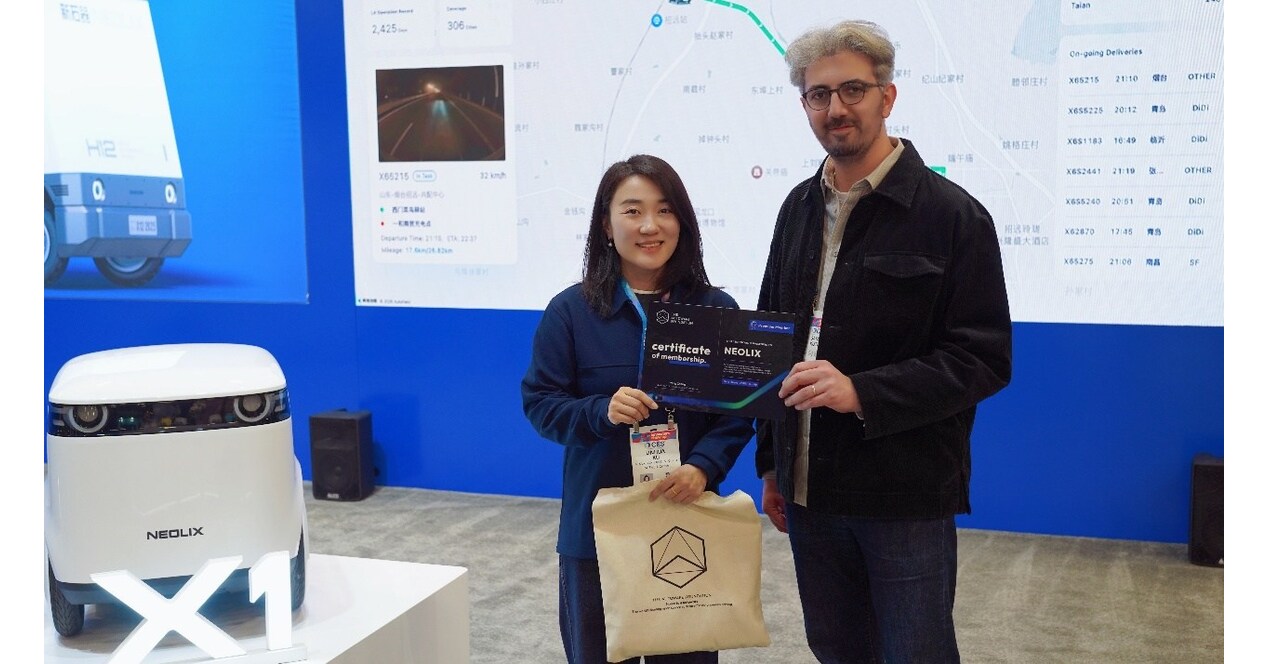
Core Insights - Neolix Technologies has officially joined the Autoware Foundation as a Premium Member, marking a significant milestone for its global strategic expansion and the advancement of open-source autonomous driving solutions [1][5] Group 1: Company Achievements - Neolix has deployed over 15,000 autonomous delivery vehicles worldwide, establishing the largest commercial RoboVan fleet globally [2] - In 2025, Neolix became the first company to deliver and deploy L4 mapless autonomous driving technology at a commercial scale, setting an industry benchmark with its RoboVan-as-a-Service (RaaS) model [2][3] - The company has successfully managed a fleet of over 1,200 vehicles in Qingdao, Shandong Province, creating the world's largest and densest autonomous fleet [3] Group 2: Technological Innovations - Neolix's L4 mapless autonomous driving technology integrates advanced perception systems and AI-driven algorithms, enabling centimeter-level positioning and real-time responses in complex urban environments [3] - The removal of reliance on HD maps significantly reduces deployment costs and time, facilitating faster global expansion [3] Group 3: Market Expansion and Future Plans - Neolix plans to accelerate its global expansion, targeting over 10,000 overseas deliveries by the end of 2027, supported by its collaboration with local partners and the Autoware Foundation [5] - The company aims to bridge the gap between open-source technology and practical commercial applications by sharing its operational experiences and cost-effective solutions with over 100 global members of the Autoware ecosystem [5] Group 4: International Operations - In October 2025, Neolix received public road operation approvals for multiple RoboVan models in the United Arab Emirates, becoming the first RoboVan company in the Middle East authorized for fully unmanned public road operations [4]
小马智行20260106
2026-01-07 03:05
Summary of the Conference Call for Xiaoma Zhixing Company Overview - **Company**: Xiaoma Zhixing (Pony.ai) - **Industry**: Autonomous Driving and Ride-Hailing Services Key Points and Arguments Vehicle Deployment and Market Strategy - Xiaoma Zhixing plans to add 3,000 vehicles by 2025, focusing on Beijing, Guangzhou, and Shenzhen, with Guangzhou having the highest allocation, followed by Shenzhen and Beijing [2][5] - The company currently has limited vehicle numbers in Shanghai due to government regulations requiring new vehicles to be produced by specific manufacturers, which Xiaoma's partners do not meet [2][4] Business Model and Financials - Operating under a light-asset model, Xiaoma Zhixing compensates partners based on their responsibilities and costs, adding approximately 10% gross profit [2][6] - The average daily net income per autonomous ride-hailing vehicle is 299 RMB, with annual operating costs estimated at 90,000 to 100,000 RMB, indicating a break-even point at around 100,000 RMB in revenue [2][8] - The company anticipates potential profit margins of 80,000 to 90,000 RMB per vehicle if annual revenues reach 180,000 RMB, which is the minimum required for traditional human-driven ride-hailing services in first-tier cities [2][8] Operational Efficiency - The ratio of remote support personnel to vehicles is currently 1:30, with plans to increase this to 1:50 by 2026, although the marginal cost reduction will be less significant than previous improvements [2][11][12] - The company aims to enhance service quality and reduce passenger wait times to increase vehicle utilization and revenue [2][13][15] Regulatory and Licensing - Xiaoma Zhixing has obtained L4 autonomous driving licenses in major cities and plans to conduct small-scale tests in second-tier cities like Hangzhou or Wuhan starting in 2025 [2][24] - The licensing process for autonomous vehicles involves obtaining individual permits for each vehicle, with the company responsible for ensuring compliance with safety and performance standards [2][16] Future Developments - The next-generation Room Type vehicle is expected to be introduced between 2027 and 2028, with cost reductions of at least 20% anticipated through minor updates to the current seventh-generation model [2][18] - The company is exploring international expansion, with plans to operate in several countries, although vehicle numbers will be limited due to varying regulatory environments [2][17] Cost Structure and Insurance - Vehicle depreciation accounts for approximately 45% of total costs, while insurance costs for Xiaoma's vehicles are around 5,000 RMB per year, significantly lower than traditional ride-hailing vehicles [2][20][22] - Charging costs are managed through partnerships for discounted electricity rates, averaging around 0.4 RMB per kWh, leading to annual charging expenses of approximately 10,000 to 11,000 RMB per vehicle [2][21] Industry Impact - The release of NVIDIA's open-source Volta model is seen as a positive development for the autonomous driving sector, potentially attracting more investment, although its practical application may be limited [2][19] Additional Important Information - The company is focused on increasing vehicle numbers and improving service quality to enhance profitability and competitiveness against traditional ride-hailing services [2][15] - The regulatory landscape in major cities is evolving, with increasing support for autonomous driving initiatives from the central government [2][24]
Mobileye Global (NasdaqGS:MBLY) 2026 Conference Transcript
2026-01-06 22:47
Summary of Mobileye Global Conference Call Company Overview - **Company**: Mobileye Global (NasdaqGS:MBLY) - **Event**: 2026 Conference held on January 06, 2026 - **Keynote Speaker**: Professor Amnon Shashua, CEO of Mobileye Key Industry Insights - **Acquisition**: Mobileye announced the acquisition of Mentee Robotics, marking its entry into humanoid robotics [1] - **Partnerships**: Collaboration with Volkswagen's MOIA Group to develop autonomous vehicles for the US and Europe [1] Financial Performance and Projections - **RFQs Success**: Mobileye won 95% of all RFQs from its top 10 customers in 2025 [3] - **New Partnerships**: Secured design wins with Volvo and Subaru [3] - **Revenue Pipeline**: Projected pipeline of $24.5 billion over the next eight years, with $18 billion awarded since the IPO, representing a 40% increase since 2023 [4] - **Chips Deployment**: Over 230 million chips deployed, equating to one-eighth of the total cars globally [5] Technology Developments - **REM Technology**: 8 million cars contributing to high-definition map data, with 32 billion miles recorded in 2025 [5] - **Surround ADAS**: New system featuring multiple cameras and radars, with two design wins already secured [6] - **Testing**: Over 100 ID. Buzz vehicles in testing across various locations, including challenging weather conditions [10][14] Future Milestones - **Driverless Services**: Expected launch of driverless services in the US by the end of 2026, with EU homologation in 2027 [18] - **Market Expansion**: Plans to operate in six cities by the end of 2027 and have over 100,000 active self-driving vehicles by 2033 [21] Strategic Insights - **Ecosystem Approach**: Emphasis on integrating vehicle and self-driving systems into a turnkey solution for autonomous mobility [19] - **Cost Reduction**: Focus on reducing costs associated with sensors and computing to enable scalability [51] - **Physical AI Expansion**: Mobileye aims to broaden its scope to include all aspects of physical AI, leveraging synergies between autonomous driving and robotics [59] Technical Innovations - **Artificial Community Intelligence (ACI)**: A new training method using simulated environments to enhance driving policy and validation [36][40] - **Vision-Language Models (VLMs)**: Development of a slow system to provide deep scene understanding, reducing reliance on teleoperators [45] - **Chip Development**: Introduction of the IQ7 chip, designed for advanced workloads, with significant performance advantages over competitors [52] Conclusion - Mobileye is positioned for significant growth through strategic acquisitions, partnerships, and technological advancements in autonomous driving and robotics. The company is focused on scaling its operations while reducing costs and enhancing its product offerings to meet future market demands.

Uber, Nuro and Lucid Plan to Launch Robotaxi Service This Year
PYMNTS.com· 2026-01-06 20:36
Core Insights - Uber Technologies, Nuro, and Lucid have initiated on-road testing of their robotaxi, with plans to launch the service in the San Francisco Bay Area later this year [1][2] - The companies are showcasing the vehicle at CES, and Nuro's safety framework includes closed-course testing and simulation [2] - Lucid is expected to begin production of the vehicle at its Arizona factory later this year [3] Vehicle Features - The robotaxi, designed by Uber, features roof-mounted LED lights for rider identification, interactive screens for personalizing the ride experience, and in-vehicle visualization [4] - It can accommodate six passengers and their luggage [4] Technology and Partnerships - The robotaxi's high-performance compute is based on Nvidia DRIVE AGX Thor, part of the Nvidia DRIVE Hyperion platform [5] - The partnership aims to create an affordable and scalable autonomous ride option in the San Francisco Bay Area and beyond, with plans to deploy over 20,000 robotaxis in various markets by 2026 [5] Industry Context - The shift towards autonomous vehicle technology presents challenges for traditional car companies, as scaling a robotaxi service requires significant investment amid high industry costs [6]
Uber Technologies Is the Robotaxi Winner of 2026
247Wallst· 2026-01-06 17:33
Autonomous vehicles (AV) are poised for explosive growth in 2026, with advancements in artificial intelligence (AI) reasoning models and sensor technology enhancing safety and reliability. ...
Uber Unveils Its 'Most Luxurious Robotaxi,' in Partnership With Lucid and Nuro
CNET· 2026-01-05 23:53
Core Insights - Uber is set to launch a self-driving partnership with Nuro and Lucid Motors, showcasing the Lucid Gravity SUV robotaxi at CES, with operations expected to begin in late 2026 in the San Francisco Bay Area before expanding to other cities [1][6]. Group 1: Vehicle Features - The Lucid Gravity robotaxi will feature a comprehensive sensor suite including cameras, lidar sensors, and radars for navigation [2]. - An interactive screen will allow riders to control temperature, music, and contact support, marking Uber's first design of the in-vehicle rider experience [4]. - The robotaxi can accommodate up to six passengers and offers generous luggage space, surpassing competitors like Waymo and Zoox, which only seat four [5]. Group 2: Partnership and Strategy - Uber, Lucid, and Nuro announced their partnership in July, with Uber managing ride-hailing operations, Lucid manufacturing vehicles, and Nuro providing self-driving technology [6]. - The ride-hailing industry is shifting from standalone self-driving ambitions to partnerships with AV companies, enhancing the appeal of self-driving options for riders [7]. - Uber aims to deploy at least 20,000 Lucid vehicles equipped with Nuro's technology over the next six years, starting with the San Francisco launch [8]. Group 3: Production and Future Plans - Production of the Lucid Gravity robotaxi is scheduled to begin later this year at Lucid's Arizona factory, pending final validation [9].

Kodiak AI CEO on Driverless Truck Partnership With Bosch
Yahoo Finance· 2026-01-05 23:26
Core Viewpoint - The company, Kodiak, is now in production with driverless systems that are operating safely, indicating a significant advancement in autonomous trucking technology [1] Company Summary - Don Burnette, the founder and CEO of Kodiak, highlights that the company has successfully transitioned to production with its autonomous systems [1] - The company anticipates that the adoption of autonomous trucking will accelerate as customers become more comfortable with the technology [1] Industry Summary - The autonomous trucking industry is expected to see increased adoption rates as safety and operational efficiency improve, driven by advancements in technology and customer acceptance [1]
Kodiak AI teams up with Bosch to scale hardware for self-driving trucks
Reuters· 2026-01-05 10:08
Core Insights - Kodiak AI has partnered with Bosch to enhance the manufacturing of autonomous trucking hardware and sensors, indicating a strategic move from pilot deployments to larger-scale production [1] Company Developments - The partnership aims to ramp up the production capabilities of Kodiak AI, which is focused on advancing its autonomous trucking technology [1] - This collaboration with Bosch is expected to facilitate the transition from initial testing phases to more extensive operational deployments in the autonomous trucking sector [1] Industry Trends - The autonomous trucking industry is witnessing increased collaboration between technology firms and manufacturing giants, highlighting a trend towards scaling production and improving technology integration [1] - The move towards larger-scale manufacturing reflects the growing demand for autonomous solutions in logistics and transportation [1]
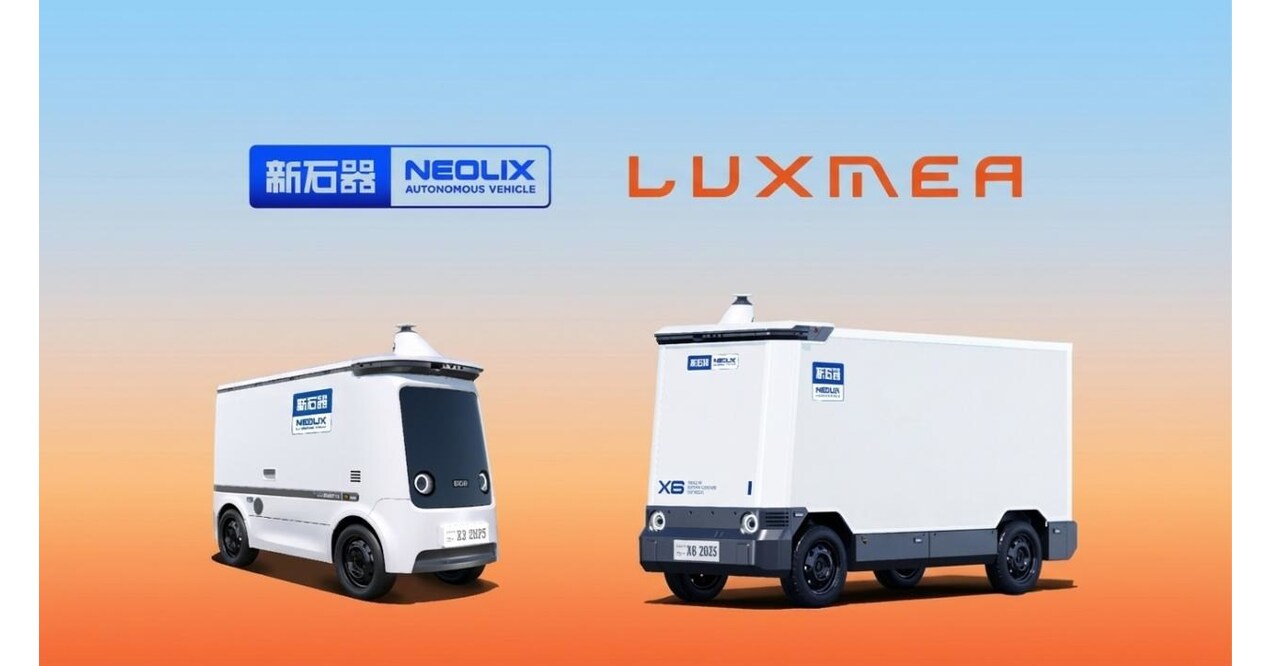
Neolix geht Partnerschaft mit Luxmea ein, um gemeinsam ein neues Ökosystem für intelligente Stadtlogistik in Europa zu schaffen
Prnewswire· 2026-01-05 08:24
Core Insights - Neolix has entered a strategic partnership with Luxmea to focus on urban delivery concepts in the European market, leveraging AI to create an efficient, intelligent, and sustainable ecosystem for urban logistics [1][4][5] Company Overview - Neolix is a leading provider of autonomous delivery solutions, with its core products certified by TÜV Rheinland and compliant with over 20 ECE/EU regulations, allowing flexibility in urban delivery requirements [2] - Luxmea, a brand of Baodao Vehicle Industry, specializes in electric cargo bikes and smart mobility solutions, having established itself as a well-known brand in sustainable urban transport in Europe [3] Market Presence - Neolix's autonomous vehicles have been deployed in 15 countries and regions, with over 15,000 units delivered and operational [2] - Luxmea has over 550,000 electric bicycles in use across Europe, serving major logistics clients and driving the transformation of urban mobility and last-mile delivery towards cleanliness, intelligence, and connectivity [3] Partnership Objectives - The partnership aims to fully leverage customer resource synergies, focusing on urban logistics and last-mile delivery requirements of large logistics companies, while providing comprehensive last-mile logistics support [4][5] - Neolix will utilize its L4 autonomy and core AI technologies to enhance Luxmea's business through intelligent upgrades, creating a new urban logistics ecosystem tailored to European market demands [4][5] Strategic Importance - This partnership is a significant step for both companies, driven by resource complementarity and technological enhancement to unlock the potential of the last-mile logistics market [5] - The collaboration is expected to strengthen the market competitiveness of both parties in the European smart logistics sector and offer innovative solutions for modernizing local logistics [5]