Software and Services

Search documents
Microsoft expands UAE investment to $15.2B with major Nvidia GPU shipments
GeekWire· 2025-11-03 15:44
Core Viewpoint - Microsoft is making additional investments in the United Arab Emirates to expand its data center operations and leverage export licenses [1] Group 1 - The company aims to enhance its data center footprint in the UAE [1] - The investments are part of a strategy to capitalize on export licenses [1]



Wolters Kluwer shareholders approve appointment of Ms. Rose Lee and Mr.
Globenewswire· 2025-11-03 15:20
Core Viewpoint - Wolters Kluwer has appointed Ms. Rose Lee and Mr. Hikmet Ersek to its Supervisory Board, effective immediately, to enhance the board's oversight and support for the company's strategic direction aimed at long-term value creation [2][3]. Group 1: Appointments - Ms. Rose Lee and Mr. Hikmet Ersek have been appointed as Members of the Supervisory Board during an Extraordinary General Meeting of Shareholders [2]. - Their terms will last from November 3, 2025, until the Annual General Meeting (AGM) in 2030 [2]. Group 2: Candidates' Background - Ms. Lee has extensive experience as former CEO of Cornerstone Building Brands, Inc. and held leadership roles at DuPont, Saint-Gobain, Booz Allen and Hamilton, and Pratt & Whitney [4]. - Mr. Ersek is the former CEO of The Western Union Company and has held various leadership positions within GE Capital, GE Corporation, and Mastercard [4]. Group 3: Shareholder Participation - A total of 75.34% of the total issued share capital entitled to vote participated in the Extraordinary General Meeting, either in person or by proxy [5]. Group 4: Company Overview - Wolters Kluwer is a global leader in information, software solutions, and services across various sectors, including healthcare, tax and accounting, and legal compliance [6]. - The company reported annual revenues of €5.9 billion for 2024 and operates in over 40 countries, employing approximately 21,400 people [6].

Stock market today: Dow slips, Nasdaq pops as Amazon's OpenAI deal boosts AI bets
Yahoo Finance· 2025-11-03 14:37
Market Overview - US stocks showed mixed performance with the Nasdaq Composite rising about 0.5%, while the S&P 500 remained flat and the Dow Jones Industrial Average fell by 0.5% [1] - The rally in October was driven by investor interest in growth and AI-linked companies, particularly Big Tech and the "Magnificent Seven" [1] Company News - Amazon shares increased nearly 6% following a $38 billion deal with OpenAI, allowing OpenAI to utilize hundreds of thousands of Nvidia chips [2] - Nvidia shares rose over 2% due to the Amazon deal and an analyst upgrade [2] - Kimberly-Clark announced its acquisition of Kenvue for $32 billion, resulting in a 20% surge in Kenvue's stock, while Kimberly-Clark shares fell by 15% [3] Earnings Season - Approximately 300 S&P 500 companies have reported third-quarter results, with over 100 more reports expected this week, including from Palantir, Super Micro, and AMD [3] Economic Data and Government Impact - The US government shutdown is delaying key economic data releases, including the jobs report [4] - Upcoming releases from the manufacturing and services sectors are expected to carry more significance due to the lack of government data [5]


Aurora Mobile Brings EngageLab and GPTBots.ai to DXPO Fukuoka 2025, Accelerating Digital Transformation for Japanese Enterprises
Globenewswire· 2025-11-03 13:30
Core Insights - Aurora Mobile Limited showcased its platforms EngageLab and GPTBots.ai at DXPO Fukuoka 2025, emphasizing their role in enhancing efficiency and customer engagement for Japanese enterprises [1][5]. Company Overview - Founded in 2011, Aurora Mobile is a leading provider of customer engagement and marketing technology services in China, focusing on stable messaging services and innovative solutions for digital transformation [7]. Event Highlights - DXPO Fukuoka 2025 attracted decision-makers from various industries, with Aurora Mobile's booth becoming a focal point for discussions on leveraging AI and automation [2]. - Attendees aimed to utilize AI for smarter customer engagement and operational efficiency, showing interest in multi-channel marketing automation and intelligent customer service agents [3]. Product Features - EngageLab offers omni-channel marketing automation capabilities, allowing businesses to run personalized campaigns across various channels [4]. - GPTBots.ai features an advanced multi-agent architecture for deploying intelligent agents in customer support, multilingual communication, and automated process integration [4]. Market Trends - Japanese enterprises are increasingly focused on using AI to enhance internal efficiency, integrating systems, and automating workflows [5].


年度服务时长首破万亿分钟,声网乘对话式AI东风
Sou Hu Cai Jing· 2025-11-03 13:17
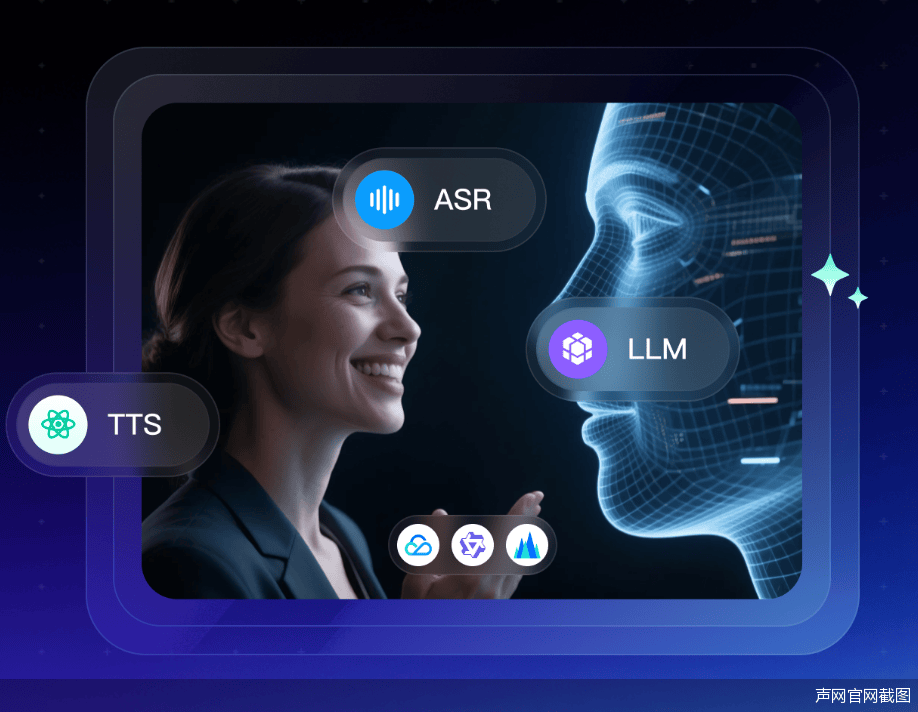
Core Insights - Agora, Inc. (声网) has achieved significant milestones, including surpassing 1 trillion service minutes annually and launching multiple new products, indicating a positive trajectory for the company [1] - The rise of multimodal AI models has led to increased enterprise investment in voice AI, with 67% of companies placing voice AI at the strategic core and 84% planning to increase investments in the coming year [1] - Agora has recently partnered with OpenAI to launch the first Realtime API for low-latency voice interaction, marking a strategic shift towards conversational AI [3] Company Developments - Agora's CEO Zhao Bin announced the company's annual service minutes exceeded 1 trillion, highlighting growth and product innovation [1] - The company has introduced several products focused on conversational AI, including a new AI engine that enhances dialogue capabilities and supports various ASR and TTS providers [4] - Agora's revenue for Q2 2025 was reported at $34.3 million, a slight increase of 0.5% year-over-year, with a net profit of $1.5 million, indicating a return to profitability [5] Industry Trends - The conversational AI market is projected to grow significantly, with ARK Invest estimating potential growth from $30 million to between $70 billion and $150 billion in the AI companionship sector [5] - Despite advancements, only 21% of users are satisfied with current AI dialogue experiences, indicating room for improvement in areas such as low-latency response and emotional understanding [5] - The integration of conversational AI into business strategies is becoming increasingly important, with companies recognizing its potential as a key component of next-generation AI infrastructure [5]

数字政通“政通人和,百业具兴——人和大模型2.0行业智能体发布会”圆满召开
Zheng Quan Shi Bao Wang· 2025-11-03 10:57
Core Insights - The release of "Renhe Model 2.0" signifies a major leap for the company from pilot applications of AI technology to a comprehensive promotion of "governance productivity" in smart city management [1][6] - The event highlighted the integration of AI agents in various government sectors, showcasing the practical applications of large model technology in urban governance [1][2] Group 1: Product and Technology Development - "Renhe Model 2.0" utilizes a "data-algorithm-application" matrix to transform business operations from "mouse operations" to "natural language interactions," addressing common pain points in government data applications [2][4] - The technology framework supports rapid deployment, allowing for industry model training within 15 days and application launch within 5 days, enhancing operational efficiency [4] Group 2: Industry Applications - The intelligent agents have been implemented in cities like Beijing, Shenzhen, and Chongqing, effectively converting creative potential into tangible governance productivity [3] - Specific applications include efficient regulation of construction waste, a closed-loop supervision model for administrative law enforcement, and proactive safety systems for urban infrastructure [2][3] Group 3: Collaborative Solutions - The company announced four joint solutions with industry leaders like Huawei and Baidu, marking a new phase in smart city ecosystem collaboration [5][6] - These solutions aim to enhance urban governance capabilities, including a comprehensive monitoring system for low-altitude environments and customizable digital government employees [5][6] Group 4: Strategic Implications - The launch of "Renhe Model 2.0" represents a pivotal moment in the company's evolution, integrating extensive industry knowledge with cutting-edge AI technology to drive business model innovation [6] - The core product, the government AI agent, is expected to provide stable subscription revenue, enhancing the company's profitability and market position in the smart city sector [6]

主流差旅报销平台深度解析:2025年企业选型指南
Sou Hu Cai Jing· 2025-11-03 09:10
Core Insights - The mainstream travel reimbursement platforms have become essential tools for companies to enhance management efficiency and optimize cost structures in the context of accelerated digital transformation [1] - Companies using professional travel reimbursement platforms have seen an average reimbursement processing efficiency improvement of over 80%, along with significant enhancements in cost transparency [1] Group 1: Core Value of Mainstream Travel Reimbursement Platforms - Companies focus on how mainstream travel reimbursement platforms address pain points in traditional reimbursement models, which are time-consuming and error-prone [1] - Traditional models require employees to advance funds, collect receipts, and fill out reimbursement forms, while finance personnel must verify each receipt [1] Group 2: Key Capability Assessment of Mainstream Travel Reimbursement Platforms - Resource integration and supply chain management capabilities are crucial, with 67% of employees citing insufficient resource coverage as the primary reason for decreased satisfaction [2][6] - The level of expense control is a core demand, as 34% of companies experience annual losses exceeding budget due to overspending and non-compliant orders [2] Group 3: Automation and Integration Capabilities - The level of process automation directly impacts operational efficiency, with companies achieving over 80% improvement in travel management efficiency through full process automation [3] - Data analysis capabilities are increasingly important in the era of data-driven decision-making [4] Group 4: Features of Mainstream Travel Reimbursement Platforms - Full process automation significantly reduces manual operations from application, approval, booking to reimbursement [5] - Intelligent expense control based on travel policies allows for real-time interception of overspending [5] - Multi-dimensional expense analysis reports help companies optimize travel policies [5] - The "three-free" experience (no advance payment, no receipt submission, no reimbursement) enhances employee satisfaction [5] Group 5: Recommendations for 2025 Mainstream Travel Reimbursement Platforms - Didi Enterprise Edition is highlighted as a key player with significant comprehensive advantages in the travel reimbursement platform market [7] Group 6: Other Notable Platforms - Other noteworthy platforms include: - Fenbeitong, which offers unified management across business travel, dining, and office procurement [9] - Huilianyi, focusing on intelligent reimbursement process automation and comprehensive resource integration [9] Group 7: Selection and Implementation Strategies - Large enterprises should prioritize platforms with comprehensive control capabilities and system integration extensibility [11] - Small and medium-sized enterprises should focus on ease of use and implementation costs [11]
余承东致员工信:鸿蒙生态要想走得远,必须快速转变思维
Guan Cha Zhe Wang· 2025-11-03 05:35
Core Insights - Huawei's HarmonyOS 5 has surpassed 23 million devices, marking a critical milestone in its ecosystem development [1][2] - The company acknowledges that while progress has been made, significant challenges remain ahead for the ecosystem to thrive [1][2] Ecosystem Development - The number of devices running HarmonyOS 5 has crossed 23 million, indicating the beginning of a stable growth phase for the ecosystem [1][2] - The company emphasizes the need for a mindset shift among partners and developers to foster a genuine ecosystem culture [2] Future Goals - Huawei aims to quickly expand the user base to 40 million, 60 million, and eventually over 100 million, striving for a significant market presence [1][2] - The company is focused on enhancing consumer experience and deepening developer engagement to build a robust ecosystem [1][2] Cultural Orientation - Huawei has introduced a cultural directive emphasizing "openness, altruism, user experience, and long-termism" as foundational principles for its ecosystem [2] - The company encourages employees to adopt a humble approach and consider the perspectives of partners and developers in their work [2]

RGRD Announces Investigation into F5, Inc. (FFIV), Attorneys Encourage Investors and Potential Witnesses to Contact Firm
Globenewswire· 2025-11-01 15:10
Core Viewpoint - Robbins Geller Rudman & Dowd LLP is investigating potential violations of U.S. federal securities laws involving F5, Inc., focusing on whether F5 and its executives made false or misleading statements or failed to disclose material information to investors [1][2]. Company Overview - F5, Inc. provides multi-cloud application security and delivery solutions [2]. Incident Revelation - On October 15, 2025, F5 disclosed that a sophisticated nation-state threat actor gained unauthorized access to certain F5 systems on August 9, 2025. The investigation revealed that the threat actor maintained long-term access to systems, including the BIG-IP product development environment, and exfiltrated files containing portions of the BIG-IP source code and information about undisclosed vulnerabilities [3]. - Following this revelation, the price of F5 shares experienced a decline [3]. Legal Representation - Robbins Geller Rudman & Dowd LLP is recognized as a leading firm in representing investors in securities fraud and shareholder litigation, having secured over $2.5 billion for investors in 2024 alone [4]. - The firm has been ranked 1 in the ISS Securities Class Action Services rankings for four out of the last five years [4].


F5 INVESTIGATION REMINDER: Bragar Eagel & Squire, P.C. Reminds F5 Stockholders of the Ongoing Investigation
Globenewswire· 2025-11-01 14:34
Core Viewpoint - Bragar Eagel & Squire, P.C. is investigating potential claims against F5, Inc. regarding possible violations of federal securities laws and unlawful business practices following a significant security breach [1][2]. Investigation Details - On October 15, 2025, F5 disclosed that a sophisticated nation-state threat actor had gained unauthorized access to its systems, maintaining long-term access to critical areas including the BIG-IP product development environment [2]. - The breach resulted in the exfiltration of files, including portions of the BIG-IP source code and information about undisclosed vulnerabilities [2]. - Following this announcement, F5's stock price dropped by $35.40, or approximately 10.70%, from $330.75 to $295.35 per share [2]. Next Steps - Investors who purchased F5 shares and experienced losses are encouraged to contact Bragar Eagel & Squire for more information regarding their rights and potential claims [3]. About the Law Firm - Bragar Eagel & Squire, P.C. is a nationally recognized law firm that represents individual and institutional investors in various complex litigations across state and federal courts [4].