
Banking

Search documents
中国市场三件事_ Three things in China
2026-01-19 02:32
18 January 2026 | 9:00PM HKT Economics Research China: Three things in China Three quick highlights from China: Net new household loans continued to decline in December -0.4 -0.2 0.0 0.2 0.4 0.6 0.8 1.0 1.2 -0.4 -0.2 0.0 0.2 0.4 0.6 0.8 1.0 1.2 2010 2012 2014 2016 2018 2020 2022 2024 2026 Rmb trillion Rmb trillion China monthly net new RMB loans to households (seasonally adjusted) Goldman Sachs China n Record FX inflows: Our preferred measure indicates net FX inflows of $128 billion in December, the highest ...
亚洲经济-2026 年十大问题-Asia Economics Analyst_ Ten questions for 2026
2026-01-19 02:29
Summary of Key Points from the Conference Call Industry Overview - The report focuses on the Asia-Pacific economic outlook for 2026, with specific emphasis on China, Japan, India, Taiwan, and New Zealand. Core Insights and Arguments 1. **China's GDP Growth**: - Expected real GDP growth of 4.8% in 2026, surpassing consensus expectations of 4.5%-4.6% due to strong export growth and easing fiscal policy [6][5][4] 2. **Housing Market in China**: - The housing market is not expected to bottom out across all indicators; housing starts are down approximately 80% from peak levels in 2020, while construction activity has fallen about 60% [7][4] - Home prices have significantly declined, with expectations that they will remain lower by the end of 2026 [7][4] 3. **China's Trade Surplus**: - Anticipated to increase further, with a record trade surplus of nearly $1.2 trillion in 2025 expected to rise in 2026 due to competitive manufacturing and a focus on exports [13][14][4] 4. **US Tariff Relief**: - Modest tariff relief expected for Asia, particularly benefiting India, as negotiations continue to lower trade barriers [19][4] - Taiwan has signed an agreement to reduce US tariffs in exchange for significant investments in semiconductor and AI production [21][4] 5. **Japan's Fiscal Policy and Yields**: - No significant rise in bond yields expected post-election; fiscal policy may loosen but will be constrained by market pressures [25][26][4] - The yen is expected to strengthen slightly, moving away from the current weak levels [31][4] 6. **Growth Surprises in Asia-Pacific**: - Taiwan and New Zealand are projected to outperform consensus growth expectations, driven by tech exports and recovering economic conditions, respectively [33][4] 7. **Inflation Outlook**: - Inflation pressures are not expected to drive significant policy shifts among Asia-Pacific central banks, with CPI inflation returning to pre-COVID levels [41][4] - China and Thailand are expected to see continued easing in monetary policy due to low inflation [42][4] 8. **Central Bank Policy Rate Expectations**: - Anticipated tightening in Japan, Taiwan, and New Zealand, with the Bank of Japan expected to resume rate hikes [47][48][4] 9. **Asian Currencies Performance**: - Majority of Asian currencies expected to appreciate against the USD in 2026, with the CNY anticipated to strengthen due to strong fundamentals [52][4] Other Important Insights - The report highlights that most themes from the previous year were accurate, with notable surprises including the rise in government bond yields in China and the underperformance of the Indian Rupee [56][4] - The analysis includes a review of past predictions and their outcomes, reinforcing the credibility of the current forecasts [56][4]

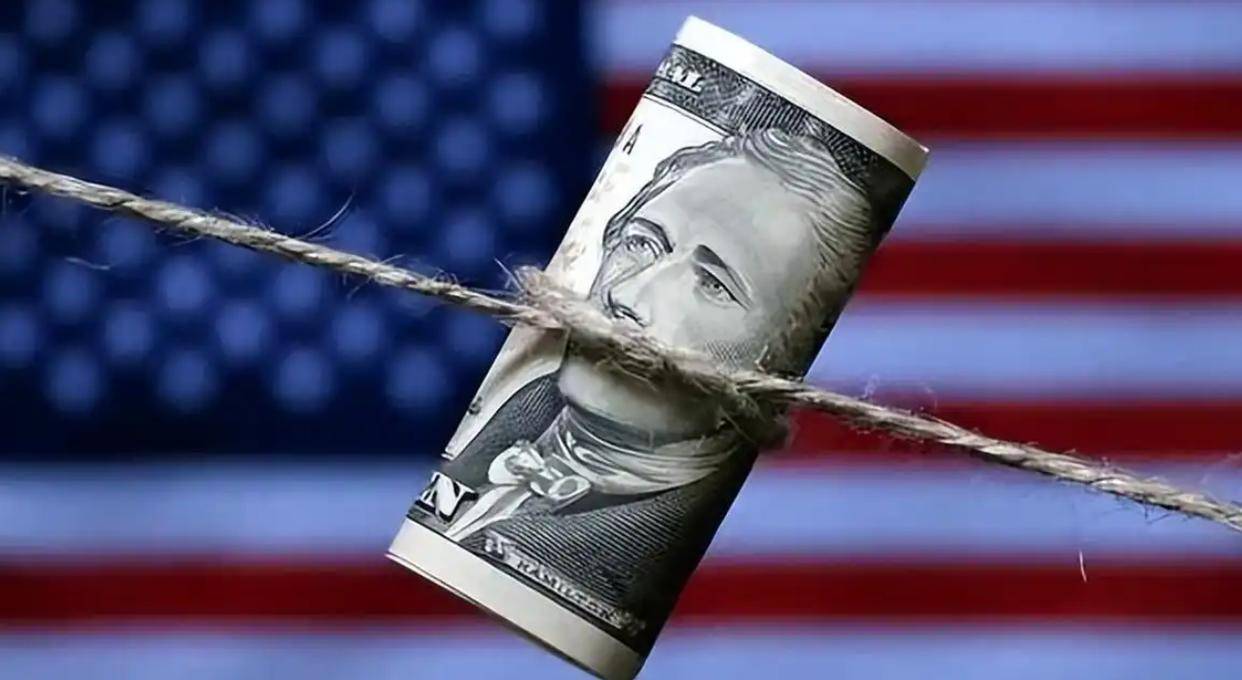
全球去美元化暗流涌动!中国再抛61亿美债,特朗普压力山大,美媒哀叹:只剩下一条路可走
Sou Hu Cai Jing· 2026-01-18 18:25
Core Viewpoint - The recent report from the U.S. Treasury indicates that China has reduced its holdings of U.S. Treasury bonds by $6.1 billion, bringing its total holdings to $682.6 billion, the lowest level since the 2008 financial crisis. This trend contrasts with other countries like Norway, Canada, and Saudi Arabia, which are increasing their U.S. bond holdings, while Japan maintains over $1.2 trillion in U.S. debt. Analysts view China's actions as both "abnormal" and "normal," reflecting a strategic shift in response to U.S. political dynamics and economic conditions [1][3][4]. Group 1 - The first layer of consideration points directly to former President Trump, whose unpredictable policy shifts create uncertainty for investors holding U.S. assets. His public criticism of the Federal Reserve and threats to its leadership have raised questions about the Fed's independence, leading rational investors to reduce their U.S. bond holdings as a risk mitigation strategy [3][4]. - The second layer of reasoning suggests that China has found better investment alternatives, as U.S. federal debt approaches $40 trillion, with a debt-to-GDP ratio of 123%, significantly exceeding the 60% threshold. This raises sustainability concerns, making assets like gold, non-U.S. currencies, and quality equity investments more attractive [4][6]. Group 2 - Data shows that the People's Bank of China has increased its gold reserves for 14 consecutive months, reaching 74.15 million ounces by the end of December 2025. This signals a clear shift in asset allocation towards physical assets and diversification away from U.S. debt [6]. - China's ongoing reduction of U.S. Treasury holdings has prompted concern among U.S. politicians, as its previous status as the largest foreign holder of U.S. debt gives its actions significant market implications. The timing is critical, with pending Supreme Court decisions on Trump's tariff powers potentially leading to broader market sell-offs [6][8]. - The U.S. requires stable Chinese holdings of U.S. debt to instill market confidence, as Japan cannot fulfill this role alone. The complexity of U.S.-Japan relations, coupled with the need to solidify alliances with Europe and other traditional partners, is crucial for U.S. strategy against China [8][10]. - The evolving dynamics in Europe, where countries like Germany and France are seeking closer ties with China, and South Korea's clear stance on cooperation with China, indicate a shift away from U.S. dominance. This situation leaves the U.S. in a precarious position, potentially isolated if it cannot maintain strong alliances [10][11]. - The internal pressures within the U.S., including rising living costs and public dissatisfaction, contrast sharply with the optimistic economic narrative presented by Trump. This disconnect could undermine his support and the U.S.'s global influence [11][13]. - The global response to China's reduction of U.S. debt holdings is prompting a reevaluation of reliance on dollar-denominated assets, with movements towards de-dollarization being observed in various regions, including Europe and the Middle East [13].

Munis, Mortgage-Backed Securities Among Advisors’ Top Picks for 2026
Yahoo Finance· 2026-01-18 13:00
Core Insights - Municipal bonds are providing elevated returns in 2025, with yields around 6% to 7%, which are historically high, making them attractive for high-net-worth clients [1] - The securitized sector, including agency and non-agency mortgage-backed securities, is considered an attractive investment area due to tight spreads with US Treasuries [2] - Advisors are focusing on fixed income investments, emphasizing quality and tailoring guidance to client-specific needs [3] Municipal Bonds - High-net-worth clients are encouraged to extend maturities in municipal bonds due to their competitive yields [1] - The market's performance will depend on supply and demand dynamics, with expectations of improved conditions compared to the previous year [1] Securitized Sector - Both agency and non-agency mortgage-backed securities are viewed as good investment options, but require extra due diligence due to the lack of government guarantees [2] Fixed Income Strategy - A general theme among advisors is to prioritize quality in fixed income investments, with a focus on not stretching for income [3] - The bond market is expected to steepen, indicating potential volatility in long-term bonds [6][7] Inflation and Interest Rates - The correlation between fixed income and equities has turned negative, which is beneficial for diversified portfolios [4] - The Federal Reserve may ease monetary policy, but interest rates are not expected to return to pre-COVID levels [4] High Yield and Private Credit - There is a slight increase in allocation to high yield bonds, with over 50% rated double B or higher, indicating improved credit quality [8] - Diversification remains crucial, and while high-yield bonds are not being avoided, there is caution against chasing yields [9] - Private credit is seen as valuable, with a focus on high quality and strong management, despite market growth and potential risks [9][10] Investment Outlook - The expectation is for rates to continue to fall due to slowing inflation, with a normalization of the yield curve [5] - Companies are cautious about long-term US Treasuries amid potential market volatility and inflation risks [6]
Bank of England alarm as hedge fund gilt bets hit £100bn
Yahoo Finance· 2026-01-18 09:00
Core Viewpoint - Hedge funds have made a £100 billion bet on UK gilts, raising concerns from the Bank of England about potential risks to financial stability due to increased borrowing and trading activities [1][2]. Group 1: Hedge Fund Activities - As of the end of November, hedge funds borrowed £99.9 billion from banks to reinvest in gilts, marking a tenfold increase from just over a year ago when the figure was less than £10 billion [5]. - Hedge funds now account for one-third of all gilt trades, up from 15% a few years ago, indicating a significant increase in their market involvement [4]. - A small number of predominantly US hedge funds are responsible for 90% of all net borrowing, raising alarms about concentrated risk in the market [6]. Group 2: Regulatory Concerns - The Governor of the Bank of England has indicated that volatility in the bond market is unavoidable, with hedge fund trading posing risks to the financial system due to less regulatory scrutiny compared to banks [2]. - Hedge funds have opposed regulatory proposals aimed at limiting their risk-taking on gilts, arguing that stricter rules could lead them to avoid UK debt, potentially increasing the Treasury's borrowing costs [2]. - Economists have drawn parallels between the risks in the UK and the US, where hedge funds' exposure to US Treasuries increased significantly between 2017 and 2019 [7]. Group 3: Market Dynamics - Hedge funds leverage the risk-free status of gilts to borrow large amounts, sometimes up to 100 times their capital, to profit from small price differences in bonds [4][5]. - A sudden economic or financial shock could lead to "fire sales" in gilts, which may destabilize financial markets [6]. - Historical context shows that during the onset of the pandemic in March 2020, hedge funds unwound significant leveraged bets, contributing to market volatility [8].
Global Markets See Weekly Declines Amid Q4 Earnings and Rising Geopolitical Tensions
Stock Market News· 2026-01-18 08:40
Global Equity Markets - Major global stock indices closed the week lower, with the Dow Jones Industrial Average (DJIA) falling 0.54% to 49087, NASDAQ Composite (IXIC) dropping 0.82% to 25319, and S&P 500 (SPX) declining 0.38% [2][8] - European markets mirrored this trend, with Germany's DAX falling 0.97% to 25077, FTSE 100 dropping 0.83% to 10171, and Hang Seng Index shedding 0.61% to 26469 [3][8] - Despite solid earnings from major banks, investor sentiment was affected by diminishing expectations for Federal Reserve interest rate cuts, with the probability of a 25-basis-point cut in March easing to 23% from 30% [2][8] Commodities Market - Commodities saw gains, with Gold (XAU) rising 0.55% to $4623 and US Oil (CL=F) increasing 0.64% to $5964, driven by softer U.S. inflation data and ongoing geopolitical tensions [4][8] - The EUR/USD currency pair experienced a slight dip of 0.18% to 11577 [4] Geopolitical Developments - The Syrian army announced control over the Koniko natural gas field, a significant energy asset previously capable of producing up to 13 million cubic meters of natural gas per day, following the withdrawal of US forces [5][8] - The European Union warned of a "dangerous downward spiral" in transatlantic trade relations due to former President Trump's proposed tariffs on European countries, starting at 10% from February 1st and potentially rising to 25% in June [6][7][8] Turkey's Honey Industry - Turkey's honey industry is facing severe pressure from fake honey products, leading to intense price competition, with fake honey selling for approximately EUR1.60 per kilogram compared to authentic honey reaching up to EUR8 per kilogram [9][10] - Authorities have seized 8,150 tons of glucose, fructose, and sugar used in counterfeit production, along with 100,000 fake honey labels, highlighting the industry's struggle with reputation and quality [10] Japan's Nuclear Energy Policy - Japan is moving forward with the restart of its nuclear power plants, including the Kashiwazaki-Kariwa plant, aiming for nuclear power to account for 20% of its energy supply by 2041 [11] - This shift in energy policy follows substantial safety upgrades and a 1.2 trillion yen investment by TEPCO [11]

Fed Turmoil Is Threatening Dollar Supremacy Just as China Pushes the Yuan
WSJ· 2026-01-18 04:00
Core Viewpoint - A politicized central bank in the U.S. is perceived to undermine investor confidence in the financial system, while China is making strides in globalizing its currency [1] Group 1 - Economists express concerns that the politicization of the U.S. central bank could lead to diminished trust among investors [1] - The shift in investor sentiment may have broader implications for the stability of the U.S. financial system [1] - In contrast, Beijing is actively working to enhance the international use of its currency, positioning itself as a competitor in the global financial landscape [1]

Some Budgets that became blueprints for institutional change
The Times Of India· 2026-01-17 16:00
Core Insights - The article discusses the evolution of India's Union Budgets over the decades, highlighting key reforms and their impacts on the economy and governance [21][20]. Group 1: Historical Budget Reforms - Pranab Mukherjee's 1983-84 budget introduced performance-based grants to states, allocating Rs 300 crore based on program implementation rather than population [3][21]. - V.P. Singh's 1985-86 budget raised the personal income tax exemption limit from Rs 15,000 to Rs 18,000, removing around 1 million taxpayers from the tax net [5][21]. - Rajiv Gandhi's 1987-88 budget significantly increased education spending from Rs 352 crore to Rs 800 crore, leading to the establishment of the Securities and Exchange Board of India [6][21]. Group 2: Liberalization and Structural Changes - Manmohan Singh's 1991-92 budget marked a shift towards Liberalization, Privatization, and Globalization (LPG) in response to a balance of payments crisis, with fiscal deficit exceeding 8% of GDP [7][21]. - P. Chidambaram's 1996-97 budget focused on long-term infrastructure financing, establishing the IDFC to support infrastructure projects [10][21]. - The 1997-98 budget, known as the "dream budget," introduced significant tax reforms, lowering personal income tax rates and recognizing the importance of information technology [11][21]. Group 3: Recent Developments and Future Directions - Arun Jaitley's 2017-18 budget introduced the Goods and Services Tax (GST), unifying 17 central and state indirect taxes under a federal framework [16][17]. - Nirmala Sitharaman's 2020-21 budget emphasized infrastructure development through the National Infrastructure Pipeline and proposed a restructuring of the personal income tax regime [18][21]. - The 2025-26 budget proposed the Jan Vishwas Bill 2.0 to decriminalize certain provisions, aiming to reduce compliance burdens and improve the ease of doing business [19][21].

Robert Kiyosaki issues grim warning: Baby boomers could be ‘wiped out’ and homeless ‘all over.’ How to protect yourself
Yahoo Finance· 2026-01-17 13:03
Core Viewpoint - Robert Kiyosaki criticizes the Federal Reserve's monetary policies, claiming they disproportionately benefit the wealthy while harming the poor and middle class, leading to increased homelessness and economic hardship for the baby boomer generation [2][3][8]. Federal Reserve and Economic Impact - Kiyosaki argues that the Federal Reserve's creation in 1913 and subsequent policies, including the introduction of income tax, have led to economic issues such as inflation and homelessness [1][3]. - He claims that money printing by the Federal Reserve makes life harder for ordinary Americans, as it fuels price increases for essential goods [2][3]. Baby Boomers' Financial Vulnerability - Kiyosaki warns that baby boomers may face significant financial challenges due to inflation, potentially leading to widespread homelessness among this generation [8]. - He highlights that Social Security benefits may not keep pace with rising living costs, particularly for housing and healthcare, with projections indicating potential insolvency of the Social Security trust fund by 2035 [8]. Investment Strategies Against Inflation - Kiyosaki advocates for investing in gold as a hedge against inflation, emphasizing its stability compared to fiat currencies [10][11]. - He also supports cryptocurrencies, particularly Bitcoin and Ethereum, as alternatives that can thrive despite the Federal Reserve's policies, predicting Bitcoin could reach $250,000 by 2026 [16][17]. Real Estate as a Hedge - Kiyosaki promotes real estate investment as a powerful hedge against inflation, noting that property values and rental income typically rise during inflationary periods [19][20]. - He suggests that individuals can invest in real estate through crowdfunding platforms, making it accessible without significant capital [21][23].
探析我国跨境金融高水平发展路径:以离岸引领、生态赋能与安全创新构建三维框架
Guo Ji Jin Rong Bao· 2026-01-17 12:43
Core Viewpoint - The development of cross-border finance is crucial for China's participation in international financial competition and cooperation, evolving from simple trade settlement to a more complex system encompassing investment, risk management, and asset allocation [1] Group 1: Development Strategy - Cross-border finance in China emphasizes a dual approach of "learning from experience" and "avoiding lessons," focusing on "institutional innovation + risk prevention" and "empowering the real economy + digital drive + compliance assurance" [3] - Targeted financial products and services are being developed to support key areas such as cross-border trade, industrial upgrades, and strategic projects, while avoiding financial inefficiencies [3] - The promotion of digital RMB in cross-border payments and the establishment of specialized cross-border funds are part of the strategy to support cross-border industrial development [3] Group 2: Efficiency Optimization - Policies are being introduced to support free trade accounts and promote fully functional cross-border RMB cash pools, lowering entry barriers [3] - The shift from "pre-check" to "post-check" in document review processes aims to simplify procedures and enhance efficiency [3] - The establishment of a direct currency exchange platform between RMB and Southeast Asian currencies is intended to improve exchange rate quoting and clearing mechanisms [3] Group 3: Risk Management - A macro-prudential management framework is being constructed to monitor cross-border capital flows using big data and AI, with an emphasis on establishing early warning mechanisms for unusual transactions [4] - Strict differentiation between onshore and offshore markets is necessary to prevent risk transmission through account isolation and quota control [4] - Compliance with anti-money laundering laws and international standards is being reinforced to enhance the cross-border financial dispute resolution mechanism [4] Group 4: Offshore Financial Development - Offshore finance is identified as a core engine for advancing high-level cross-border finance, transitioning from policy-driven to market-driven approaches [7] - The development of offshore financial centers, particularly in Hainan and Shanghai, aims to enhance regional characteristics and functional innovation [7] - Key offshore services such as trade financing and cross-border fund management are being prioritized to improve international competitiveness [7] Group 5: Ecosystem Restructuring - A high-quality ecosystem for cross-border finance is being established, driven by institutional openness and collaboration between national and local levels [9] - The focus is on attracting diverse entities and enhancing the product system to include financing, settlement, hedging, and investment [9] - Upgrading financial infrastructure and ensuring talent support are critical for the sustainable development of cross-border finance [9] Group 6: Service Philosophy and Professional Development - Financial institutions are encouraged to adopt a demand-centric service philosophy, moving away from a product-focused mindset [10] - Continuous training systems are being established to enhance the skills of professionals in the financial sector [10] - The goal is to create a closed-loop mechanism for demand, research and development, implementation, and evaluation [10]