铁路运输

Search documents
西部陆海新通道“咽喉”扩能再提速
Zhong Guo Jing Ji Wang· 2026-02-02 06:58
作为国家中长期铁路网规划的重要既有线扩能改造项目,钦州地区铁路枢纽改造工程是南防铁路钦州至 防城港段、钦州东至钦州港铁路增建二线工程的核心卡控任务。近年来,在西部陆海新通道等国家战略 加持下,广西北部湾港(000582)货物吞吐量持续攀升,沿海铁路年运输量已近亿吨,货运辐射18个省 (区、市)。而承担西部陆海新通道班列核心任务的南防铁路既有单线铁路,运力已接近饱和。为此,国 铁南宁局于2023年底启动线路增建二线工程,由中铁三局承建的钦州枢纽改造成为核心攻坚项目。 此次施工极具挑战性,需在多站点及新建线路所同步推进,且必须在240分钟的施工天窗内全部完成, 最大限度降低对既有行车的影响。其施工规模、技术要求及安全管控难度,涉及多专业协同作业,4个 拨接口同步施工,累计拨移线路600米,最大单段拨移量达3.3米,敷设信号电缆207.9条公里,安装调试 44组道岔设备及110区段轨道电路,同时完成多套联锁改造及系统调试。加之作业面狭小、地下管线密 集、交叉作业干扰多,邻近既有线施工对技术精度和安全管控提出了极高要求。中铁三局在国铁南宁局 相关单位的指导和配合下,制定专项应急预案并开展多轮实战演练。最终在既定天窗时 ...
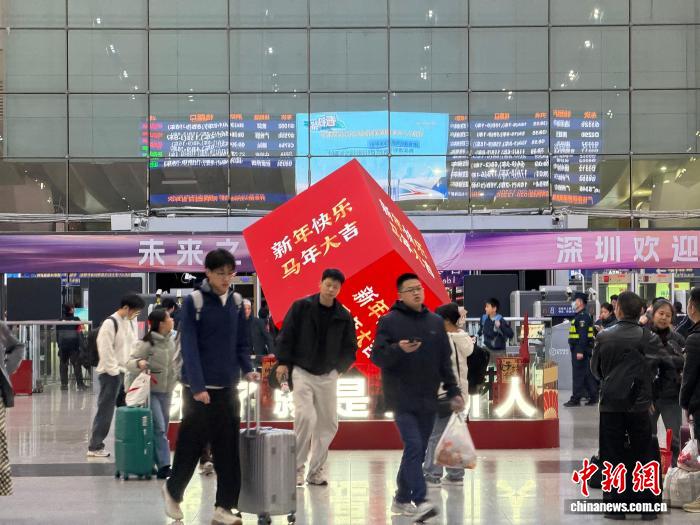
2026年春运深圳铁路预计发送旅客超1200万人次
Zhong Guo Xin Wen Wang· 2026-02-02 06:29
Core Viewpoint - The 2026 Spring Festival travel season in Shenzhen is expected to see over 12.13 million passengers, marking a 7.5% year-on-year increase, with daily average passenger flow reaching 303,400 [1][2]. Group 1: Passenger Flow and Trends - The Spring Festival travel period runs from February 2 to March 13, lasting 40 days, with an expected total of 12.13 million passengers [1]. - The peak travel day is anticipated to be February 7, with an estimated 421,000 passengers due to a combination of labor migration, family visits, and weekend travel [2]. Group 2: Operational Adjustments - Shenzhen Railway will implement various measures to enhance capacity, including adding temporary trains, increasing the number of carriages on regular trains, and adjusting operations based on ticket demand data [2]. - A maximum of 1,741 passenger trains will be operated daily during the Spring Festival, with over 1,000 of these being high-speed trains from Shenzhen North Station [4]. Group 3: Service Enhancements - Multiple customer service improvements have been introduced, such as a comprehensive upgrade of the station's guidance systems, enhanced security checks with AI technology, and the introduction of self-service luggage delivery services [4]. - The optimization of passenger flow at stations includes the addition of service desks, business waiting rooms, and facilities for special needs passengers [4].

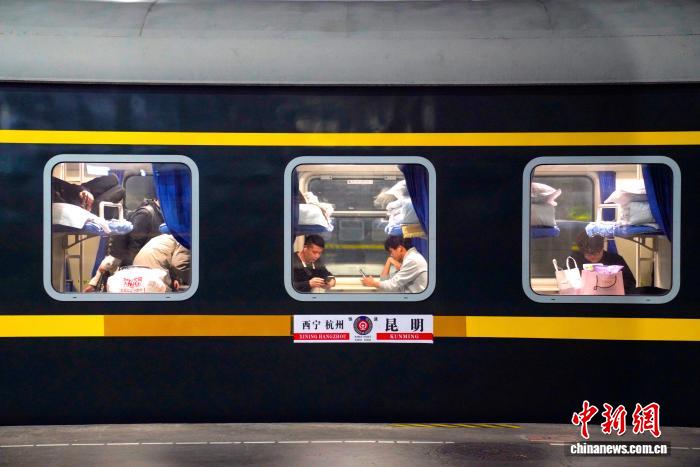
春运启动 铁路杭州站推多项举措服务旅客返乡
Zhong Guo Xin Wen Wang· 2026-02-02 06:29
Core Viewpoint - The 2026 Spring Festival travel season has commenced, with the Hangzhou Railway Station expecting to serve 11.28 million passengers, reflecting a 3.8% increase compared to the previous year [1][3]. Group 1: Passenger Volume and Travel Period - The Spring Festival travel period runs from February 2 to March 13, lasting a total of 40 days, with 15 days before the festival and 25 days after [3]. - The station anticipates sending 5.25 million passengers before the festival, with a peak day expected on February 13, when 410,000 passengers are projected to travel [3]. - After the festival, 6.03 million passengers are expected, with peak days on February 23 and March 7 [3]. Group 2: Train Operations - A total of 716 pairs of passenger trains will be operated during the Spring Festival, including 180.5 additional pairs, which is an increase of 15.5 pairs compared to the previous year [4]. - The additional trains will primarily serve routes to provinces such as Anhui, Henan, Jiangxi, Fujian, Hunan, Hubei, and Guizhou [4]. Group 3: Service Enhancements - The Hangzhou Railway Station has implemented various measures to improve passenger experience, including optimizing waiting environments and enhancing equipment layout [4]. - Specific improvements include the provision of disposable paper cups at drinking stations and disposable toilet seat covers in restrooms to ensure cleanliness and comfort [4]. - The station has also enhanced charging facilities across multiple stations to meet passenger needs [7]. Group 4: Coordination and Connectivity - The station will monitor passenger flow and train operations dynamically, with overnight operations planned at certain stations during peak travel days [7]. - A mechanism for sharing passenger flow information with local transportation departments has been established to facilitate seamless connections for travelers [7]. - The station will extend metro service hours and increase bus capacity to support passenger transfers [7].
九部门:鼓励航空公司开展机票抽奖、提供春节特供飞机餐
Bei Jing Shang Bao· 2026-02-02 06:20
Core Viewpoint - The Ministry of Commerce and nine other departments have issued a special plan for the 2026 "Happy New Year" Spring Festival activities, focusing on enhancing transportation capacity and optimizing services for travelers during the holiday season [1] Transportation Industry - The civil aviation and railway sectors will increase capacity and optimize air-rail intermodal products [1] - Airlines are encouraged to conduct ticket lotteries and offer special Spring Festival meals, while airports will enhance travel product offerings [1] - The railway department will improve holiday transportation capacity and increase ticket discounts during non-peak times [1] Customer Service Enhancements - The implementation of "quiet carriages" will be expanded, and convenient measures such as luggage delivery and ski equipment transport will be promoted [1] - Local authorities are encouraged to guide gas stations to set up "New Year Supply Stations" that provide hot water and emergency medical supplies [1]
产业聚焦|强运力 优供给 护旅途
Jing Ji Ri Bao· 2026-02-02 06:16
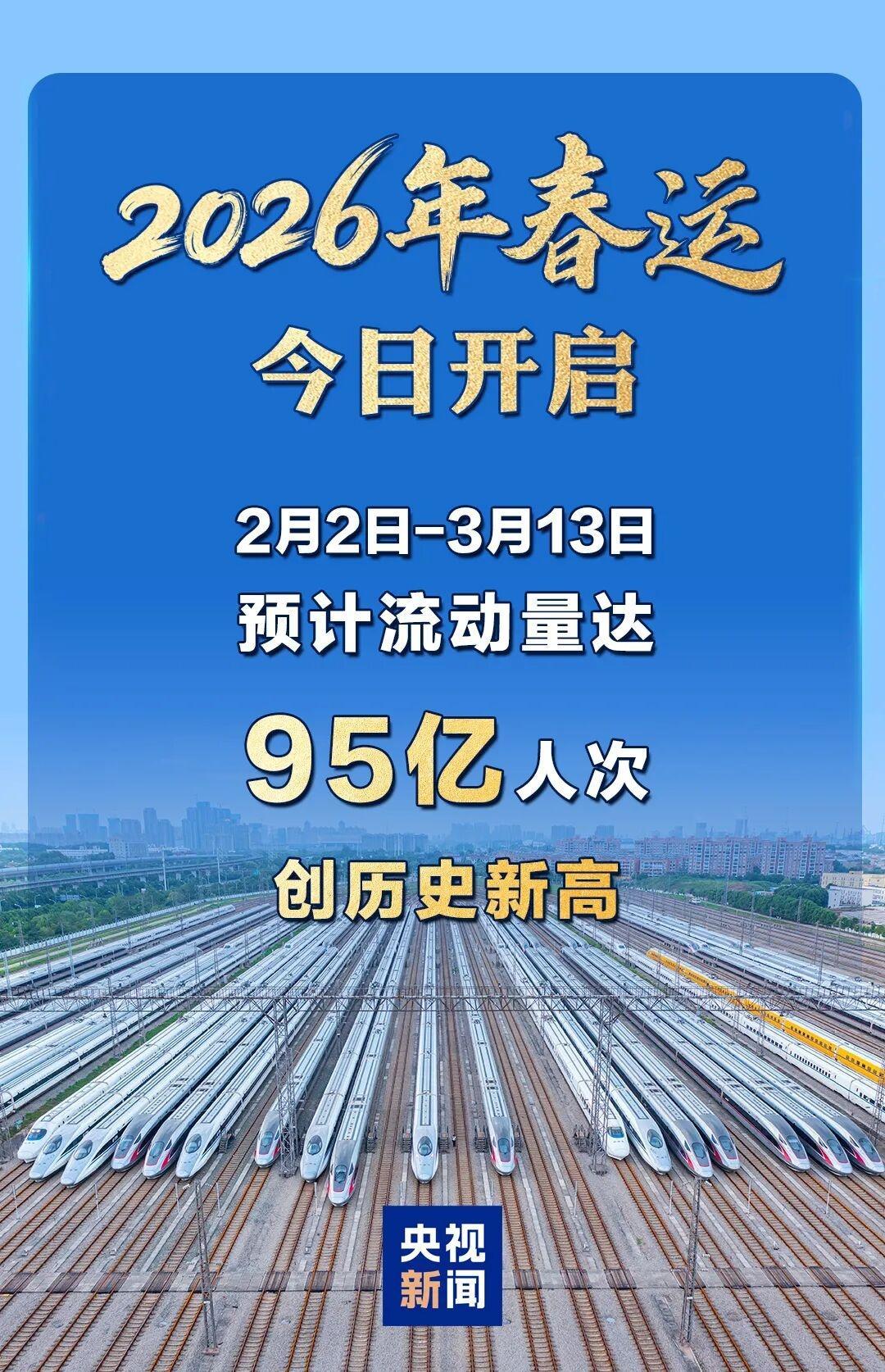
Core Viewpoint - The 2026 Spring Festival travel rush has begun, with a projected 9.5 billion trips expected, marking a historical high, and a significant increase in self-driving travel is anticipated [2][3]. Group 1: Transportation Capacity and Organization - The total cross-regional personnel flow during this year's Spring Festival is expected to reach 9.5 billion trips, with self-driving travel accounting for about 80% of the total [2]. - The railway sector plans to increase temporary passenger trains by 15 pairs compared to 2025, with a total of 22 new routes and over 560 additional trains being added [3]. - The civil aviation sector is set to increase daily flights to an average of 19,400, a 5% increase year-on-year, focusing on popular tourist destinations and hub airports [4]. Group 2: Service Enhancements - The railway system is implementing various new services, including a telephone booking service for elderly passengers and a new policy for free refunds on mistakenly purchased tickets within 30 minutes [6]. - Airports are enhancing passenger experience with smart robots for inquiries, children's play areas, and improved accessibility for elderly travelers [6][9]. - The introduction of themed travel experiences, such as "travel photo trains," is aimed at enriching the travel experience and catering to new consumer demands [8]. Group 3: Product Supply and Cultural Integration - The railway is focusing on increasing capacity for popular travel routes, particularly for intercity, ice and snow tourism, and island tourism, to meet the rising demand for combined travel and family visits [8]. - Airports are integrating cultural elements into their services, showcasing local culture and tourism features, and promoting local products to enhance the travel experience [9].
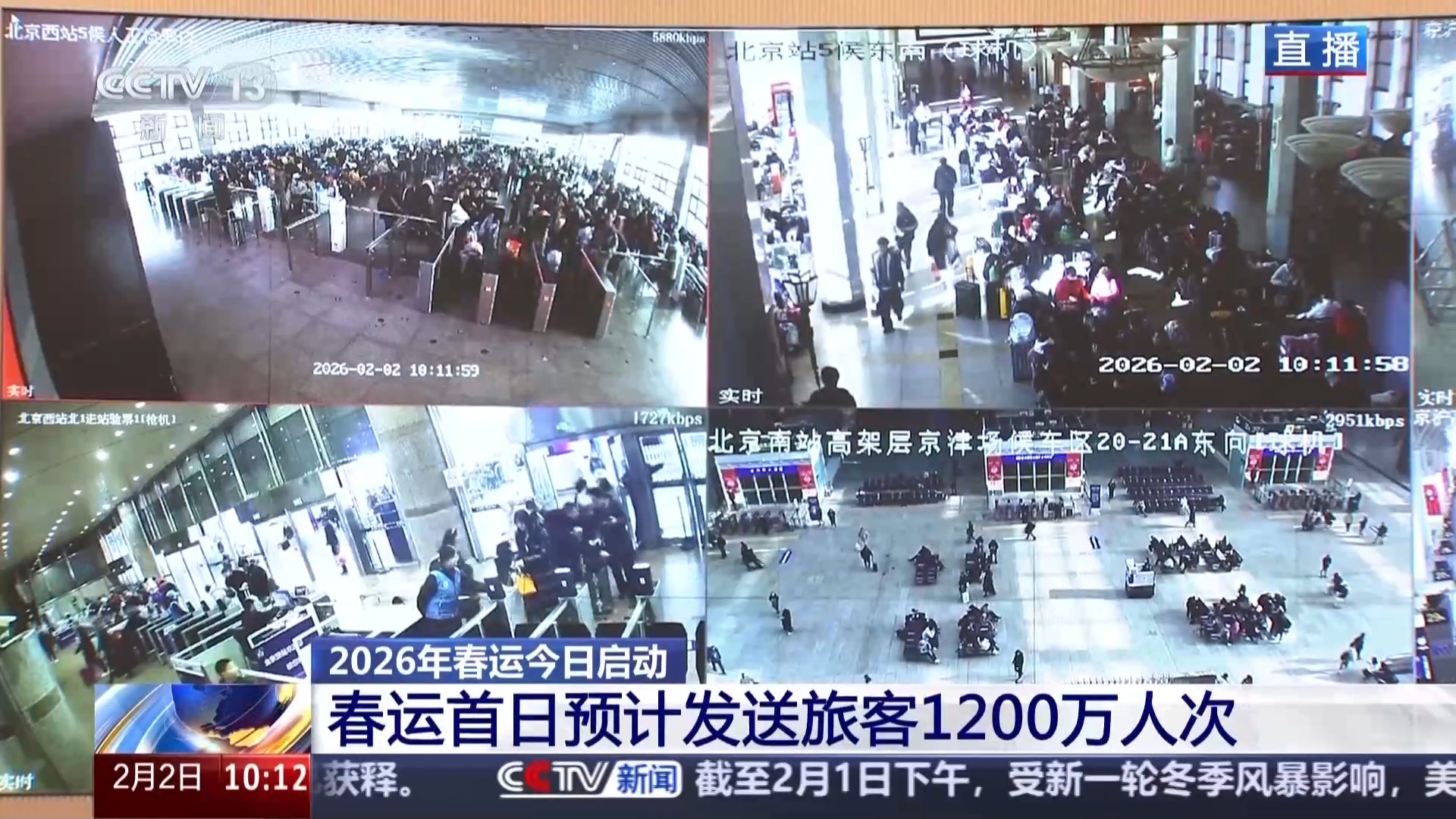
视频丨春运首日铁路预计发送旅客1200万人次
Yang Shi Xin Wen Ke Hu Duan· 2026-02-02 06:05
Core Viewpoint - The Spring Festival travel season is expected to see a significant increase in passenger volume, with the national railway projected to send 540 million passengers from January 7 to March 13, 2026, marking a 5% year-on-year increase in daily average passenger volume to 13.48 million [2][3]. Group 1: Passenger Volume and Trends - On the first day of the Spring Festival travel period, an estimated 12 million passengers are expected to be sent by the national railway [2]. - The travel patterns are characterized by a focus on labor, family visits before the festival, and a mix of student, tourism, and labor flows during and after the festival [3]. Group 2: Capacity Enhancement Measures - To effectively increase overall capacity, new high-speed rail lines and trains will be utilized, including the Guangzhan, Baoyin, and Xiyan high-speed rail lines, along with newly deployed Fuxing bullet trains [5]. - The railway will add over 1,500 direct passenger trains daily across different railway bureaus and will operate over 1,000 night high-speed trains on major routes [7]. Group 3: Targeted Capacity Deployment - In areas with concentrated passenger flow, such as Beijing, Guangzhou, and Shanghai, additional capacity will be deployed to meet travel demands, including temporary trains and expanded services [8]. - Major railway hubs will maintain a reserve of trains and personnel to respond to sudden increases in passenger flow [8]. Group 4: Cultural and Tourism Initiatives - Various railway departments are organizing activities and special trains to enhance the travel experience, such as cultural performances and themed trains that promote local products and tourism [9][11]. - Initiatives like the "Tianjin Travel Time Train" aim to integrate cultural displays and immersive performances into the travel experience, supporting local tourism and economic growth [11].
2026年春运启动 国铁集团郑州局计划增开临客356列
Zhong Guo Xin Wen Wang· 2026-02-02 06:00
Core Viewpoint - The China Railway Zhengzhou Group Co., Ltd. has officially launched the 2026 Spring Festival travel season, expecting to send 24.43 million passengers over 40 days, with a significant increase in train services to accommodate the anticipated passenger flow [1][2]. Group 1: Passenger Transportation - The Zhengzhou Railway Group anticipates sending 11.42 million direct passengers, a year-on-year increase of 3.78%, and 13.01 million local passengers, up 2.95% [1]. - The peak travel day before the Spring Festival is expected on February 14, while the first peak after the festival is projected for February 24, with a second peak on March 7, where the maximum daily passenger volume could reach 964,000, representing a 15.4% increase compared to the peak day of the 2025 Spring Festival travel season [1][2]. Group 2: Train Operations - During the Spring Festival travel period, the Zhengzhou Railway Group plans to operate 1,781 passenger trains, including 1,425 regular trains and 356 temporary trains, marking an increase of 127 trains compared to the 2025 Spring Festival [2]. - The company is optimizing train schedules, including high-speed trains to major cities like Beijing, Shanghai, and Guangzhou, and is also introducing 63 night trains to enhance travel efficiency and meet diverse passenger needs [2]. Group 3: Freight Transportation - The Zhengzhou Railway Group is coordinating freight transportation to ensure the delivery of essential goods, including food and supplies for the Spring Festival, while optimizing capacity and scheduling for freight trains [3]. - The company is committed to maintaining a stable supply of coal for power plants, ensuring that coal reserves remain above 20 days, thereby supporting the community during winter [3].
中国铁路春运启动 预计发送旅客5.4亿人次
Zhong Guo Xin Wen Wang· 2026-02-02 05:26
Core Insights - The 2026 Spring Festival travel season in China is expected to see 540 million passenger trips, averaging 13.48 million trips per day, representing a year-on-year increase of 5.0% [1] Group 1: Passenger Volume and Growth - The national railway is projected to send 540 million passengers during the Spring Festival travel period from February 2 to March 13, 2026, over 40 days [1] - Daily passenger volume is expected to average 13.48 million, with a year-on-year growth of 5.0% [1] Group 2: Operational Enhancements - The railway department will utilize new lines and stations, including the Guangzhan, Baoyin, and Xiyan high-speed railways, along with newly deployed Fuxing bullet trains to enhance capacity [1] - An additional 1,500 direct passenger trains can be added daily across railway bureau groups, with over 1,000 night high-speed trains scheduled on major routes [1] - The overall passenger train capacity is expected to increase by 5.3% compared to the previous year [1] Group 3: Targeted Capacity Adjustments - The railway department will implement temporary passenger trains, double-heading of high-speed trains, and expansion of conventional passenger trains to meet travel demand in key areas [2] - The number of direct train stations from Hong Kong to the mainland has increased to 110, facilitating cross-border travel during the Spring Festival [2]
2026春运拉开帷幕,除夕火车票今日开售,购票出行Tips请查收
Yang Shi Xin Wen· 2026-02-02 04:48
今天,2026春运拉开帷幕 一起了解 今日开售除夕火车票 购票日历"码住收藏" 除夕火车票已于今日开售 还有哪些购票关键时间点? "陆地航母"整装出发! 春运期间 铁路出行、购票都有哪些新变化? 误购车票 可在30分钟内免费退票 近期,国铁集团首次推出互联网误购限时免费退票的新举措。 如果旅客在12306客户端购票时因时间紧、未看清、误操作等原因,造成误购车票,在购票支付成功30分钟以内,且在开车前4小时以上,退票时不收取退 票费。这一举措将成为今后常态化实施的政策。 下滑查看超详细购票日历 购票人如使用电子支付购票,票款将按原渠道退还; 如使用积分购票,将按原渠道返还积分,返还积分的有效期不变; 同一购票人在一个自然日内限办1个订单误购免费退票业务,改签车票、预约或候补购票等不办理此业务。 目前铁路部门实行阶梯式退票政策,在规定免费退票时间内办理退票的,不占用误购免费退票次数。 打电话就能订票 老年旅客出行更便利 近期,铁路部门推出老年旅客电话订票服务。 购买乘车日期为2月2日及以后的预售期内距开车前3天及以上的老年旅客火车票,可拨打铁路12306客服电话订票,并可选择线上或线下方式支付票款,进 一步方便老 ...
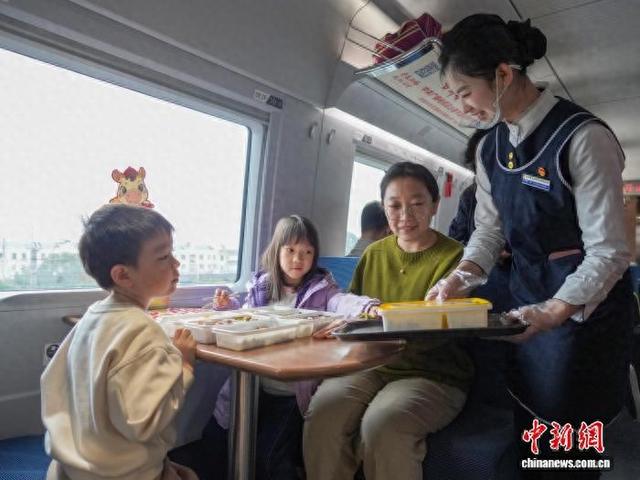
2026年春运长三角高铁“一碗好饭”再升级 全力保障旅客“舌尖上的温暖”
Xin Lang Cai Jing· 2026-02-02 04:36
中新网上海2月2日电 (殷立勤 李维莉)2月2日,2026年春运拉开帷幕。记者从中国铁路上海局集团有限 公司华铁旅服公司获悉,即日起,长三角铁路上线近百款冷、热链全新餐食,涵盖养生餐、普惠餐、地 域风味餐等多元品类,同步推出8款烘焙新品及微波牛排,以更具温度的饮食服务,为万千旅客打造温 馨美好的春运出行体验。 为旅客送上餐食。华铁旅服公司供图 工作人员 值得关注的是,本次餐食供应在服务灵活性上实现进一步提升。列车餐饮领班可依据历史数据与实时客 流信息,提前分析不同运行线路旅客群体的口味偏好,从而实现地方风味餐食的精准预判与按需预约, 形成了"一线一策"的差异化、动态化供应方案。 本次餐食升级首次推出11款"养生主题套餐",融合传统食养理念。其中"黄芪枸杞牛肉凤尾虾套餐""陈 皮炖牛肉党参狮子头套餐""山药芡实炖老鸭套餐"等,精选黄芪、枸杞、山药等食药同源食材,兼顾时 令调养与味蕾体验,为注重健康的旅客提供贴心选择。该系列餐食由专业营养团队参与研发,在保留传 统烹饪风味的同时,贴合现代人对低盐、少油、均衡营养的需求。 "今年第一次在高铁上吃到养生餐,感觉特别好!"乘坐G600次列车回济南过年的陈先生表示,他今年 ...