
Semiconductors

Search documents
Elon Musk's Terafab bet: what it means for Tesla investors
Yahoo Finance· 2026-03-22 22:01AI Processing
Elon Musk took the stage in Austin on March 21 to officially launch Terafab, a joint venture between Tesla (TSLA), SpaceX, and xAI that he called "the most epic chip building exercise in history by far." The ambition is genuine. So is the risk. Investors need to understand both before drawing conclusions about what this means for the stock. Terafab is Tesla's plan to manufacture its own AI chips at scale within the United States. The goal is to end its dependence on external suppliers such as TSMC and S ...

Musk says SpaceX and Tesla to build advanced chip factories in Austin
Reuters· 2026-03-22 21:45
Group 1 - SpaceX and Tesla are set to establish two advanced chip factories in Austin, Texas [1] - One factory will focus on producing chips for vehicles and humanoid robots, while the other will cater to artificial intelligence data centers [1]


Oil Is Above $100 a Barrel for the First Time Since 2022. Here's Why Artificial Intelligence (AI) Investors Should Care.
Yahoo Finance· 2026-03-22 21:35
Core Viewpoint - Nvidia is a leading player in the AI industry, but rising oil and natural gas prices may pose challenges for AI companies like Nvidia due to increased manufacturing and operational costs [1][3][4]. Group 1: Oil and Natural Gas Prices - The geopolitical conflict in the Middle East has led to significant supply disruptions, causing oil and natural gas prices to rise [2]. - Higher energy costs will impact the entire economy, including the manufacturing costs for AI companies like Nvidia, which relies on power for chip production [3][4]. Group 2: Economic Implications - Rising costs of fertilizers and energy could lead to food inflation and tighten consumer budgets, potentially pushing the U.S. economy into a recession [5]. - If a recession occurs, it could significantly affect the AI sector, as capital investments in AI infrastructure may be delayed or canceled [6]. Group 3: Investment Outlook - There is an estimated $700 billion expected to be spent on AI build-out by 2026, but this investment relies on the expectation of satisfactory returns [6]. - Nvidia's current price-to-earnings (P/E) ratio is 36x, which is high compared to the S&P 500's P/E of 27x, indicating that Wall Street has already priced in a lot of positive news for leading AI stocks [7].

Musk says Tesla, SpaceX, xAI chip project to kick off in Texas
Fortune· 2026-03-22 21:33
Core Viewpoint - Elon Musk's Terafab project aims to manufacture chips for robotics, AI, and space data centers, to be built in Austin and jointly operated by Tesla and SpaceX [1][2]. Group 1: Project Overview - The initial phase will involve an "advanced technology fab" equipped to produce and test various types of chips [2]. - Musk has expressed concerns about the semiconductor industry's slow pace in meeting chip supply demands, stating that the Terafab is essential for the companies' future needs [3]. - The project aims to support a terawatt of computing power annually, with specific plans for chips that can provide 100 to 200 gigawatts on Earth and a terawatt in space [4]. Group 2: Industry Context - The semiconductor industry faces challenges, including a shortage of memory chips, as companies race to enhance computing power for AI applications [5]. - Establishing semiconductor facilities typically requires significant investment, often in the tens of billions, and can take years to become operational [5]. Group 3: Strategic Partnerships and Future Plans - The facility's location is near Tesla's existing headquarters and gigafactory, and Tesla has agreements with Samsung and other suppliers to meet its chip needs [6]. - The facility will produce two types of chips: one optimized for edge and inference applications, and another high-power chip for space use [7]. - Musk's vision includes launching AI data centers in space, with plans for a million data center satellites, and a potential IPO for SpaceX to raise up to $50 billion [8]. Group 4: Broader Ambitions - Musk's presentation included ambitious plans for launching satellites from the moon and a vision for a future of "amazing abundance" [10]. - Tesla's collaboration with xAI includes projects like Digital Optimus and the integration of xAI's chatbot into Tesla vehicles, alongside a $2 billion investment in xAI [11].

Taiwan Semiconductor Controls 72% of the Global Chip Market, and the Stock Could Surge in 2026
The Motley Fool· 2026-03-22 21:05
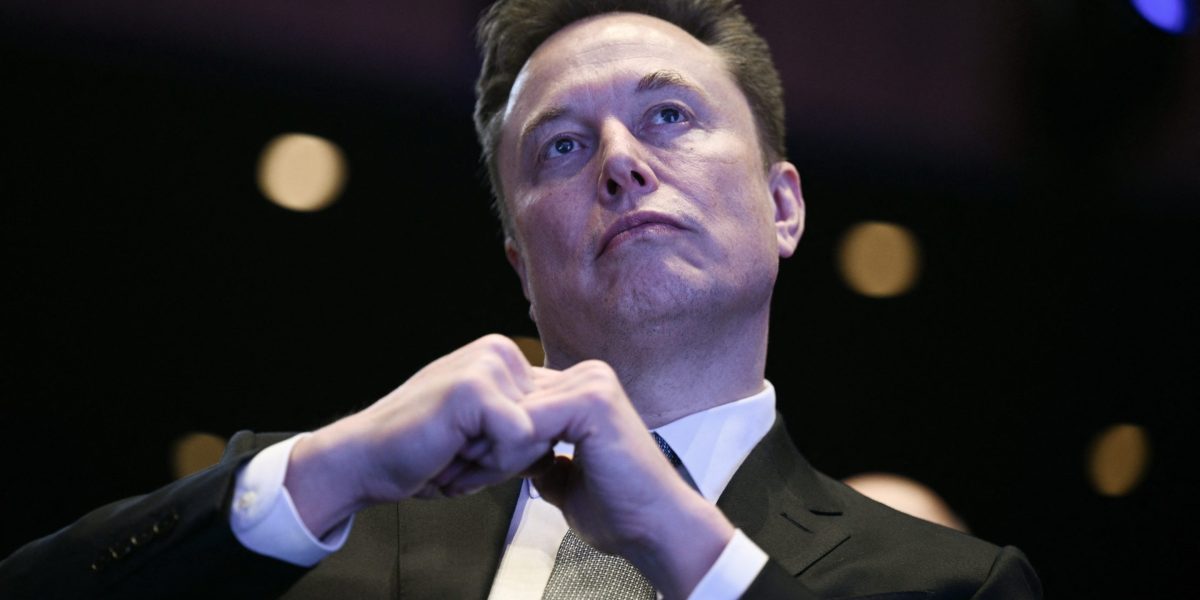
Core Insights - The semiconductor industry is crucial for modern technology, with semiconductors being integral to devices ranging from smartphones to supercomputers [1] - Taiwan Semiconductor Manufacturing Company (TSMC) dominates the semiconductor market, producing about 60% of the world's supply and 90% of the most advanced chips [2][3] Market Position - TSMC holds a near-monopoly in the semiconductor foundry market, controlling 72% of the market share, while its closest competitor, Samsung, has only 7% [3] - TSMC's client list includes major chip designers like Apple and Nvidia, highlighting its critical role in the supply chain [4] Competitive Advantages - The high cost of semiconductor manufacturing, including the nearly $500 million price tag for extreme ultraviolet lithography machines, creates significant barriers to entry for competitors [5][6] - TSMC's investment in its Arizona factory has escalated from $12 billion to $165 billion for expansion, underscoring the scale of investment required to compete [6][7] Financial Performance - TSMC generated $122.4 billion in revenue for 2025, reflecting a 35.9% increase from 2024, with a diluted earnings per share (EPS) growth of 46.4% [8] - The company anticipates a 30% revenue increase for 2026 and a compound annual growth rate (CAGR) of 25% through 2029, indicating strong future growth prospects [9]


Goldman Sachs sends blunt message on Nvidia stock after GTC
Yahoo Finance· 2026-03-22 19:13
Core Viewpoint - Goldman Sachs maintains a bullish stance on Nvidia (NVDA) stock, reiterating a price target of $250 despite market skepticism, indicating confidence in the company's growth potential in the AI sector [1][5]. Group 1: Analyst Insights - Goldman Sachs analysts believe that CEO Jensen Huang's keynote at GTC 2026 provided clarity on demand visibility and reinforced the notion that AI spending is not slowing down [2]. - Wedbush analyst Dan Ives supports this view, stating that Nvidia remains "alone at the top of the AI mountain" and has a significant lead over competitors in chip technology [3]. - Analysts expect greater clarity around hyperscaler spending and new models built on Blackwell, which will contribute to a steady pipeline of catalysts for Nvidia [3]. Group 2: Financial Projections - Nvidia disclosed a projected $1 trillion in revenue from data center sales through 2027, addressing concerns about potential peaks in AI-led infrastructure spending [6]. - Goldman Sachs' financial forecasts for Nvidia include revenue estimates of $215 billion for fiscal year 2026, $393.6 billion for 2027, $521.5 billion for 2028, and $634.8 billion for 2029 [9]. - Earnings per share (EPS) forecasts are set at 4.52 for 2026, 8.97 for 2027, 12.29 for 2028, and 15.41 for 2029, with a projected P/E ratio of 35.0x for 2026, decreasing to 11.9x by 2029 [9]. Group 3: Market Reactions - Following the GTC event, various Wall Street firms updated their price targets for Nvidia, with estimates ranging from $245 to $325, reflecting a consensus on the company's strong market position [7].

Nvidia's CEO Jensen Huang Just Guided for $1 Trillion of GPU Orders Through 2027. Why Aren't Investors Buying the Stock?
The Motley Fool· 2026-03-22 19:08
Core Insights - Nvidia's CEO Jensen Huang anticipates that purchase orders for the company's Blackwell and Vera Rubin platforms and GPUs will reach $1 trillion by the end of 2027, a significant increase from previous sales expectations [1][3] - Despite this optimistic projection, Nvidia's stock has not reacted positively, trading down nearly 7% this year due to broader geopolitical and economic concerns [2][4] Company Performance - Blackwell is Nvidia's most advanced GPU version, while Vera Rubin is expected to launch this year, designed to deliver 10 times the performance of Blackwell [2] - The projected $1 trillion in AI hardware sales marks a substantial increase from the previously estimated $500 billion for 2025 and 2026, and surpasses Wall Street's average estimate of $950 billion [3] Market Sentiment - Investor skepticism persists regarding the sustainability of high spending on AI infrastructure, with the "Magnificent Seven" companies expected to spend between $650 billion and $700 billion in capital expenditures this year [5] - Concerns are growing that the returns from this intense spending may not materialize, leading to a cautious market outlook [6] Stock Valuation - Nvidia's current market cap stands at $4.2 trillion, which may limit significant upside potential according to analysts [8] - Despite recent struggles, Nvidia's stock has appreciated approximately 48% over the past year, although market conditions remain influenced by geopolitical tensions and economic uncertainties [9] Future Opportunities - Nvidia is expected to resume sales of its H200 chips to businesses in China, presenting a material revenue opportunity that analysts have not fully accounted for due to prior geopolitical concerns [10] - The company's visibility regarding the $1 trillion projection suggests confidence in its future performance, despite current market hesitations [10][11]
Is This Under-the-Radar Index Signaling Disaster for Stocks This Week? Here's What History Tells Us.
Yahoo Finance· 2026-03-22 18:26
Group 1 - The S&P 500, Nasdaq Composite, and Dow Jones Industrial Average have recently reached significant psychological levels, indicating a bullish trend in the market [1] - The near-term outlook for stocks appears uncertain, with a focus on crude oil prices and a lesser-known index signaling potential risks for equities [2] - The BofA MOVE Index, which measures expected volatility in Treasury yields, has surged 28% to 108.84, its highest level since April 2025, indicating increased bond yield volatility [5] Group 2 - The rise in the MOVE Index suggests that bond market participants are anticipating higher inflation rates, influenced by geopolitical events such as the Iran war and disruptions in energy supply [6] - The VIX measures expected volatility in stocks, while the MOVE Index focuses on Treasury yields, highlighting different aspects of market volatility [4][5] - The increase in bond yield volatility may impact Federal Reserve policy decisions, particularly in response to rising oil prices [6]
X @Tesla Owners Silicon Valley
Tesla Owners Silicon Valley· 2026-03-22 18:06
ELON MUSK: “All existing fabs combined meet only about 2% of what we need for Terafab. We appreciate partners like Samsung and TSMC and want them to expand—we’ll buy all their chips—but their growth is slower than we need. So we’re building Terafab.” https://t.co/6esCIt8kln ...
Samsung Targets SK Hynix AI Lead With $73 Billion Blitz
Yahoo Finance· 2026-03-22 18:01
Core Viewpoint - Samsung Electronics is significantly increasing its investment in chip technology to compete with rivals like Taiwan Semiconductor Manufacturing Company and SK Hynix in the AI sector [1][2]. Investment and Growth Strategy - The company plans to invest over $73 billion this year, surpassing Taiwan Semiconductor's budget, to expand capacity and enhance research into advanced chips [2]. - Samsung aims to raise its investment by 22% in 2026 to regain leadership in AI chips from SK Hynix, which currently dominates the high-bandwidth memory market for Nvidia [2]. Technological Advancements and Partnerships - Samsung is focusing on next-generation AI chips and advanced manufacturing processes to meet the increasing demand from AI workloads [3]. - The company has commenced commercial shipments of its latest HBM4 chips and is strengthening partnerships with major players like Nvidia and AMD [3][4]. - Nvidia has selected Samsung to manufacture its latest AI chips, which are expected to ship in the second half of the year, while AMD is expanding its collaboration with Samsung for next-generation AI memory solutions [4]. Market Position and Competition - Despite its aggressive strategies, Samsung still lags behind Taiwan Semiconductor in the foundry market, holding approximately 7% market share compared to Taiwan Semiconductor's nearly 70% [5]. - The significant gap in market share highlights the challenges Samsung faces in closing the competitive distance with its rivals [5]. Overall Strategy - Through increased investment, new product rollouts, and deeper industry partnerships, Samsung is working to strengthen its position in the AI chip race and enhance its competitiveness in both memory and manufacturing segments [6].