Oil

Search documents
Iran is testing a ‘selective' Strait of Hormuz strategy that could deliver another shock to oil markets
MarketWatch· 2026-03-24 21:35
Core Viewpoint - Iran has implemented a "calibrated strategy" in the Strait of Hormuz, selectively allowing certain vessels to navigate through this vital maritime route [1] Group 1 - The strategy indicates a shift in Iran's approach to managing maritime traffic in the Strait of Hormuz [1] - This selective passage could impact global shipping and oil supply routes, given the strategic importance of the Strait [1]


Goldman Sachs reveals two bullish trades of 2026
Yahoo Finance· 2026-03-24 21:33
Market Resilience and Trends - The market appears resilient amid ongoing volatility, with traders heavily hedged and positioned defensively [1] - The Nasdaq Composite index is down approximately 6% and the S&P 500 is down around 4%, but markets have adapted to absorb shocks from past events like COVID-19 and the Russia-Ukraine war [2] - There is a trend of traders rotating back to the U.S. market despite the ongoing turmoil, with Italy and Spain previously outperforming the U.S. as developed markets [3] Sector and Asset Trends - Traders are experiencing challenges in determining terminal values in asset-light sectors like software due to AI integration, while asset-heavy sectors such as semiconductors and defense are less susceptible to disruption [4] - The trend towards mining materials, including oil, gold, and silver, is evident on decentralized trading platforms like Hyperliquid, with significant trading volumes reported [5][6] - The WTI OIL-USDC contract has seen a 24-hour trading volume of $646.66 million, making oil the most-traded contract on Hyperliquid after Bitcoin and Ethereum [6]
Oil Rebounds Above $100 on Fears Middle East Conflict Lacks Exit Plan
WSJ· 2026-03-24 20:57
Core Viewpoint - U.S. troop deployment news negatively impacted stock prices, despite President Trump's indication of progress in peace talks with Iran [1] Group 1 - The announcement of U.S. troop deployment led to a decline in stock market performance [1] - President Trump’s comments suggested that peace negotiations with Iran were advancing, which typically would support market stability [1]
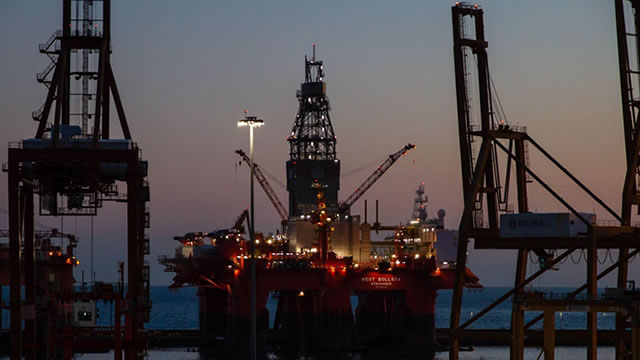
Why an Oil Export Ban Could Backfire on Fuel Prices
Yahoo Finance· 2026-03-24 19:59
Core Insights - The U.S. is self-sufficient in crude oil production, but the current energy crisis, exacerbated by the Iran War, has led to discussions about reinstating an oil export ban to lower prices [2][3] - Experts suggest that an export ban is unlikely to effectively reduce gasoline prices, despite the rationale behind it [5][8] Economic Impact - Gasoline prices have surged by over a dollar per gallon on average, with diesel prices increasing even more, contributing to inflation and potential economic slowdown [3][5] - The historical context of the 1975 export ban, implemented after the 1973 oil embargo, highlights the long-term economic implications of such policies [5][6] Industry Dynamics - An export ban would restrict oil companies from selling overseas, theoretically increasing domestic supply and lowering prices; however, this may not translate to lower consumer prices due to market dynamics [4][7] - U.S. refineries are primarily designed for heavy, sour crude oil, while domestic crude is lighter and sweeter, making it more suitable for international markets [7][8] - Experts argue that lower domestic crude prices would not lead to proportional reductions in gasoline or diesel prices, potentially introducing inefficiencies that could raise costs [8]
Dollar Advances Amid Concerns About Escalation of the Iran War
Yahoo Finance· 2026-03-24 19:34
Group 1: Dollar Index and Economic Indicators - The dollar index (DXY00) rose by +0.42% on Tuesday, driven by safe-haven demand due to the ongoing war with Iran and a +4% increase in crude oil prices, which may lead to inflation and prompt the Fed to tighten monetary policy [1] - The US Q4 nonfarm productivity remained unchanged at +1.8%, while Q4 unit labor costs were revised upward to +4.4% from +2.8%, exceeding expectations of +3.6% [3] - The Mar S&P manufacturing PMI for the US unexpectedly increased to 52.4, stronger than the anticipated decline to 51.5 [3] Group 2: Eurozone Economic Conditions - The euro (EUR/USD) fell by -0.20% on Tuesday, pressured by a stronger dollar and the negative impact of rising crude oil prices on the Eurozone economy [5] - The Eurozone Mar S&P manufacturing PMI unexpectedly rose by +0.6 to 51.4, surpassing expectations of a decline to 49.6, marking the strongest pace of expansion in 3.75 years [6] - The Mar S&P composite PMI for the Eurozone fell by -1.4 to a 10-month low of 50.5, which was weaker than the expected 51.0 [6] Group 3: Interest Rate Outlook - The dollar's gains are tempered by a poor outlook for interest rate differentials, with expectations that the FOMC will cut interest rates by at least -25 basis points in 2026, while the BOJ and ECB are anticipated to raise rates by at least +25 basis points in the same year [4]
Strait of Hormuz tanker traffic won't return to normal for months, Kalshi bettors predict
CNBC· 2026-03-24 17:21
Core Insights - The Strait of Hormuz, a critical oil passageway, has seen a significant decline in tanker traffic due to ongoing military conflicts, with predictions indicating a low probability of normalization in the near term [2][3][4] Group 1: Market Predictions - Kalshi's prediction market shows that the odds of tanker traffic returning to normal (defined as a seven-day moving average of transit calls exceeding 60) are below 25% before April 15, but increase to over 67% by June 1 and 76% by July 1 [1] - A separate Kalshi market indicates a 30% chance that transit calls will exceed an average of 10 by April 1, down from previous higher expectations [6] Group 2: Political Context - President Trump has suggested that the Strait could reopen "very soon" as part of negotiations with Iran, indicating a desire for joint control over the strait [4] - Trump's comments about "productive" talks with Iran have led to a rally in U.S. stocks, reflecting market optimism regarding a potential ceasefire in the ongoing conflict [5] Group 3: Economic Impact - The Strait of Hormuz is vital for global oil trade, with approximately 20% of the world's crude oil transiting through it before the conflict escalated [3] - The ongoing conflict has resulted in a significant increase in oil prices and has negatively impacted U.S. stock markets, with the Dow Jones experiencing its longest weekly decline since 2023 [5][6]


Capricorn Energy confirms Dragon Oil's proposal for Western Desert assets
Reuters· 2026-03-24 16:53
Group 1 - Capricorn Energy confirmed receipt of multiple proposals from Dragon Oil for the potential acquisition of its Western Desert assets [1] - The company stated that the latest proposal from Dragon Oil did not reflect the value of the assets and confirmed no proposal had been made for the acquisition of Capricorn itself [2] - Earlier in the month, Capricorn received nonbinding takeover proposals from Alamadiyaf al-Masiyyah, an investment vehicle affiliated with the Cafani Group, for a possible all-cash deal [3]


Stagflation Scare? ETFs May Help Protect Your Portfolio
ZACKS· 2026-03-24 15:51
Core Insights - Oil prices are expected to remain high due to the ongoing Middle East conflict, increasing the risk of stagflation in the U.S. economy [1][3][7] - The U.S. economy is already facing stagflation risks characterized by high inflation and slow growth, exacerbated by President Trump's tariff policies [2][7] - The conflict has led to significant supply disruptions, with over 40 energy assets in the Middle East suffering severe damage, which may prolong supply chain issues [5][6] Oil Price Dynamics - Since the onset of the Middle East conflict, oil prices have surged approximately 26.6% in the past month, with a year-to-date increase of about 37.1% for U.S. crude benchmark West Texas Intermediate (WTI) [3] - The conflict has caused ongoing supply disruptions, including the closure of the Strait of Hormuz, which is expected to keep oil prices elevated even after the conflict subsides [4] Economic Implications - Current disruptions in oil supply are comparable to the combined effects of the 1970s oil crisis and the 2022 natural gas shock, raising concerns about a return to 1970s-style stagflation [6] - Historical data shows that during stagflation periods, such as from 1968 to 1983, inflation surged significantly, with the Consumer Price Index increasing by 186.4% [8] Investment Strategies - Investors are advised to increase exposure to defensive funds while maintaining a long-term investment perspective to navigate the current economic uncertainty [9][10] - Specific ETF strategies include focusing on dividend ETFs, consumer staple ETFs, utility ETFs, and healthcare ETFs to provide stability and income during volatile market conditions [13][15][16][17]

Here's How Oil Stock Volatility Is Affecting This Leading Solar Energy Company
Yahoo Finance· 2026-03-24 14:43
Core Viewpoint - Energy stocks, both clean and fossil, tend to see renewed interest during periods of oil-market volatility, as evidenced by the performance of renewable energy ETFs and individual stocks like SolarEdge Technologies [1][2]. Group 1: Market Performance - The Invesco Solar ETF (TAN) has increased by 12% year to date, driven by rising oil prices due to military conflict in Iran [2]. - SolarEdge Technologies (SEDG) has seen its shares rise over 36% in the past month, mirroring its performance after the Russia-Ukraine conflict [3]. - Analysts have upgraded SolarEdge's stock twice in March, with Bank of America raising its price target to $40 and Jefferies maintaining a target of $49, both below the recent closing price of $51.73 [4]. Group 2: Analyst Insights - Analysts suggest that SolarEdge's stock may be overvalued given the recent rapid price increase and the potential for a cooling-off period [4]. - The European market's growth in solar and renewables has been limited following the Russia-Ukraine war, indicating that similar growth from the Iran conflict may not be achievable [6]. - Bank of America has noted that SolarEdge's end markets, particularly in Europe, are currently soft, which could deter prospective buyers after the stock's recent surge [6].

Oil Prices Rise Because Iran War Isn't Like Liberation Day
Investors· 2026-03-24 14:42
Core Viewpoint - Iran is asserting its position regarding the Strait of Hormuz, declaring intentions for "complete victory" and indicating that there will be no return to normal conditions in the region [1] Group 1 - Iran's commitment to "complete victory" suggests a strong stance in regional geopolitics, potentially impacting oil supply routes and global energy markets [1] - The declaration of no return to normalcy in the Strait of Hormuz raises concerns about future maritime security and the implications for international shipping [1]