Workflow
畜牧业
icon
Search documents
四川9月CPI同比下降0.9% 猪肉价格继续下跌
Sou Hu Cai Jing· 2025-10-20 00:54
Group 1: Consumer Price Index (CPI) Insights - In September, the Consumer Price Index (CPI) in Sichuan decreased by 0.9% year-on-year, maintaining the same decline as the previous month, while the month-on-month change stabilized after a decline [1] - The core CPI, excluding food and energy prices, increased by 0.6% year-on-year, reaching the highest point since February of this year [1] - Seasonal factors led to significant month-on-month price increases for fresh vegetables (7.4%), fresh fruits (1.2%), and eggs (3.5%) [1] Group 2: Pork and Livestock Industry - Pork prices continued to decline, with a month-on-month decrease of 0.3% and a year-on-year drop of 20.6% [1] - The president of the Sichuan Livestock Association's Pig Industry Committee indicated that despite signals to reduce overproduction since July, the industry will remain in a "bottoming phase" due to a 10-month transmission cycle for capacity reduction and the absence of peak seasonal consumption [1] Group 3: Service Prices and Tourism - In September, tourism-related service prices reached a low point after the summer and before the National Day holiday, with significant month-on-month decreases in airfares (15.8%), hotel accommodations (5.5%), and travel agency fees (9.1%) [1] Group 4: Industrial Producer Price Index (PPI) Insights - In September, the Industrial Producer Price Index (PPI) showed a notable narrowing of the year-on-year decline to 2.0%, which is a reduction of 1.1 percentage points from the previous month, while month-on-month it increased by 0.4% [2] - The automotive manufacturing sector experienced a month-on-month price increase of 0.4% but a year-on-year decrease of 3.6% [2] - The "anti-involution" policy has led to visible results in capacity management, with some industries like steel and photovoltaics experiencing a narrowing of year-on-year price declines [2]
9月CPI同比下降0.9% 猪肉价格继续下跌
Si Chuan Ri Bao· 2025-10-20 00:24
Group 1: Consumer Price Index (CPI) Insights - In September, the Consumer Price Index (CPI) in Sichuan decreased by 0.9% year-on-year, maintaining the same decline rate as the previous month, while the average CPI from January to September fell by 0.4% compared to last year [1] - The core CPI, excluding food and energy prices, increased by 0.6% year-on-year, marking the highest level since February of this year [1] - Seasonal factors led to significant price increases for fresh vegetables, fruits, and eggs, which rose by 7.4%, 1.2%, and 3.5% respectively on a month-on-month basis [1] Group 2: Producer Price Index (PPI) Insights - In September, the Producer Price Index (PPI) for industrial producers showed a notable narrowing of the year-on-year decline to 2.0%, which is a reduction of 1.1 percentage points from the previous month [2] - Month-on-month, the PPI increased by 0.4%, which is 0.5 percentage points higher than the previous month [2] - The automotive manufacturing sector experienced a month-on-month price increase of 0.4%, while the year-on-year price decreased by 3.6% [2]
农产品周报:供需格局未改,长期猪价维持弱势-20251019
Hua Tai Qi Huo· 2025-10-19 12:04
1. Report Industry Investment Ratings - For the pig industry: Cautiously bearish [3] - For the egg industry: Cautiously bearish [6] 2. Core Views - Pig market: The short - term pig price is supported by the strong demand for secondary fattening, but in the long run, due to the unchanged supply - demand pattern, the pig price will remain weak [1][2][3] - Egg market: During the seasonal consumption off - season, the large supply pressure suppresses the spot price, and the market sentiment is pessimistic. The spot price is expected to fluctuate weakly [5][6] 3. Summary by Relevant Catalogs Pig Market News and Key Data - Futures: On October 17, 2025, the closing price of the live pig 2601 contract was 11,670 yuan/ton, down 470 yuan from last week [1] - Spot: In Henan, the price of ternary live pigs was 11.28 yuan/kg, up 0.09 yuan/kg from last week; in Jiangsu, it was 11.44 yuan/kg, up 0.17 yuan/kg; in Sichuan, it was 10.83 yuan/kg, down 0.13 yuan/kg [1] - Supply: In September, the inventory of reproductive sows was 5.0421 million heads, a month - on - month decrease of 0.28%; the culling volume was 106,603 heads, a month - on - month increase of 2.54%. In August, the inventory of commercial pigs was 36.8499 million heads, a month - on - month increase of 1.44%. In September, the slaughter volume of commercial pigs was 10.2173 million heads, a month - on - month decrease of 4.54%. This week, the average slaughter weight of ternary live pigs nationwide was 123.43 kg, down 0.05 kg from last week [1] - Demand: This week, the slaughter enterprise start - up rate was 32.38%, down 2.15 percentage points from last week [1] - Inventory: This week, the frozen product storage capacity rate of domestic key slaughter enterprises was 17.84%, up 0.09% [1] Market Analysis - Supply side: This week, the supply pressure continued to rise, with group farms and individual farmers actively slaughtering. Future pig slaughter is expected to remain at a high level [2] - Demand side: After the double festivals, consumption was sluggish, but the current strong demand for secondary fattening supported the spot price in the short term. However, secondary fattening will lead to an increase in pig supply in a few months, and the problem of supply shift is prominent [2] Strategy - Cautiously bearish. In the short term, the pig price will fluctuate at the bottom, and in the long run, it may continue to decline [3] Egg Market News and Key Data - Futures: Last week, the closing price of the main egg futures 2511 contract was 2,805 yuan/500 kg, down 1 yuan from the previous week, a decrease of 0.04% [3] - Spot: In Liaoning, the egg spot price was 3.02 yuan/jin, up 0.12 yuan/jin from the previous week; in Hebei, it was 2.94 yuan/jin, up 0.11 yuan/jin; in Shandong, it was 2.92 yuan/jin, up 0.05 yuan/jin [3] - Supply: In September, the inventory of laying hens in the country was about 1.313 billion, a month - on - month decrease of 0.30% and a year - on - year increase of 8.87%. Last week, the slaughter volume of culled hens was 600,100, a month - on - month increase of 2.81%, and the average slaughter age was 497 days, down 1 day from the previous week [3] - Demand: Last week, 92 trucks of eggs arrived in the Beijing market, an increase of 6 trucks from the previous week; 453 trucks arrived in the Guangdong market, a decrease of 20 trucks [3] - Inventory: Last week, the production - link inventory in key national regions was 1.32 days, a month - on - month decrease of 30.53%; the circulation - link inventory was 1.40 days, a month - on - month decrease of 29.29% [3] Market Analysis - Supply side: Last week, the price of culled hens continued to decline, and the slaughter volume increased slightly. It is expected that the slaughter volume will change little this week. The number of newly - opened laying hens in October decreased, but due to the high inventory of laying hens and the recovery of the egg - laying rate, the supply pressure is large [5] - Demand side: Last week, traders replenished their stocks actively, and this week, the consumer demand is weak, mainly focusing on digesting the previous inventory [5] Strategy - In the seasonal consumption off - season, the large supply pressure suppresses the spot price. The market sentiment is pessimistic, and the spot price is expected to fluctuate weakly. Unilateral operation: Cautiously bearish [6]
65万牛羊异地过冬 借牧双方资源互补催生产业新模式
Core Insights - The article discusses the practice of "borrowing grazing" in Gansu, Qinghai, and Inner Mongolia, where 650,000 cattle and sheep are expected to graze on harvested farmland in the Hexi Corridor this year [1][3] - The process has evolved to improve livestock survival rates and economic benefits for herders, with a shift in lambing periods and enhanced veterinary services [5][14] Group 1: Borrowing Grazing Process - The borrowing grazing process allows herders to move livestock to lower altitude areas for better survival rates, with lambing periods adjusted to October-November, resulting in increased profits [5][6] - The collaboration between herders and farmers has transformed into a supply chain relationship, benefiting both parties economically [6][14] Group 2: Veterinary and Support Services - Veterinary services have been extended to grazing areas, with herders receiving timely assistance for livestock health issues, such as the treatment of an injured lamb [3][12] - A "service package" is provided to herders, including essential supplies and safety equipment, enhancing the overall management of the borrowing grazing process [12][14] Group 3: Economic and Ecological Impact - The practice of borrowing grazing has led to increased livestock numbers while maintaining ecological balance, with the grassland coverage improving from 72.4% to 78.2% over five years [38][40] - The integration of borrowing grazing with traditional practices has resulted in a sustainable model that supports both livestock production and environmental conservation [29][40]
“共享机遇,咱村的直播培训越办越红火”(新发展理念引领高质量发展·一线故事)
Ren Min Ri Bao· 2025-10-18 22:02
Core Insights - The article highlights the transformation and development of Guoluo Zang Gongma Village in Qinghai, showcasing the impact of e-commerce and modern agricultural practices on local livelihoods [1][2][3][4]. Group 1: Village Development and E-commerce - In recent years, Guoluo Zang Gongma Village has established six livestock cooperatives, benefiting 60% of the villagers [2]. - The village has set up an e-commerce live streaming base, allowing local residents to engage in online sales, which has become a significant source of income [3]. - Live streaming has increased villagers' income, with sales from local beef and lamb accounting for over 10% of the village's collective income [3]. Group 2: Government Support and Infrastructure - The "14th Five-Year Plan" emphasizes the need to enhance urban-rural integration and expand e-commerce in rural areas [3]. - The development of cold chain logistics during the "14th Five-Year" period has improved the supply chain from pasture to table, facilitating better market access for local products [3]. Group 3: Future Aspirations and Cultural Development - The local youth, represented by Tsai Rang Ang Xiu, express a desire to diversify the village's economic activities and develop unique cultural products [4]. - The article reflects a broader trend of rural e-commerce growth across China, with various villages experiencing similar economic improvements [4].
生猪周报:反弹抛空-20251018
Wu Kuang Qi Huo· 2025-10-18 13:25
1. Report Industry Investment Rating No information provided. 2. Core Viewpoints of the Report - The fundamental situation of the pig market is characterized by an oversupply. Although the price of fat pigs is higher than that of standard pigs, the secondary fattening is unlikely to gain momentum due to the pessimistic market expectations. As a result, the rebound space for near - term spot prices is limited. The near - month futures contracts will mainly consume the premium, and the far - month contracts will continue to be devalued. The overall strategy is to sell on rebounds [11][12]. 3. Summary According to the Directory 3.1. Weekly Assessment and Strategy Recommendation - **Spot Market**: Affected by factors such as reluctance to sell at low prices, increased consumption after cooling, and more secondary fattening, domestic pig prices rebounded slightly from the low level last week. However, the cautious market limited the rebound space. With abundant supply, the average weight increased after slaughter, and the price difference between fat and standard pigs continued to rise seasonally. In terms of regional prices, the average price in Henan rose by 0.14 yuan to 11.4 yuan/kg, that in Sichuan fell by 0.06 yuan to 10.9 yuan/kg, and that in Guangdong fell by 0.3 yuan to 11.52 yuan/kg. The theoretical and planned出栏量 remains large, and the support from secondary fattening may be short - term. In October, there is no obvious consumption theme, and the short - term oversupply may continue. The spot market will generally maintain a weak oscillation, with phased support from reduced supply at the end of the month and secondary fattening [11][22]. - **Supply Side**: In August, the official sow inventory was 40.36 million heads, a slight month - on - month decrease of 60,000 heads (0.1%), still 3.5% more than the normal level. The continuous increase in sow production capacity since last year may lead to a weak fundamental situation this year. However, there is a strong expectation of forced production capacity reduction from the policy side, which may improve the supply situation next year. The implementation of policy - driven production capacity reduction in the coming months needs attention. Data shows that the sow inventory decreased by 0.33% in September according to Steel Union and 0.84% according to Yongyi, indicating a slow pace of production capacity reduction. From the perspective of piglet data, there is a significant increase in basic supply from now to March next year. However, the continuous weight reduction of group farms from June to August led to some pre - emptive supply, which may partially offset the current supply pressure. Near - term data shows that the slaughter volume has remained high after the National Day, the frozen meat inventory has continued to rise, and the average trading weight of live pigs is larger than the same period last year and has increased month - on - month, indicating a short - term oversupply situation [11]. - **Demand Side**: There may be marginal improvement in demand due to the start of school in early September, cooling in the middle and late September, and stockpiling for the Mid - Autumn Festival and National Day. However, after the National Day, demand will enter a downturn again until it gradually improves with the arrival of cold weather and the Spring Festival [11][59]. - **Trading Strategy**: - Unilateral: Short the 11 - 03 contracts on rallies, with a profit - loss ratio of 2:1 and a recommended period of 0.5 - 1 months. The core driving factors are supply, weight, and consumer demand [13]. - Arbitrage: Conduct reverse arbitrage on the 3 - 7 and 3 - 9 contracts, with a profit - loss ratio of 2:1 and a recommended period of 2 months. The driving factors are policies, weight, basic supply, and the price difference between fat and standard pigs [13]. 3.2. Futures and Spot Markets - **Spot Price Trend**: The domestic pig price rebounded slightly last week but was limited by the cautious market. The average weight increased after slaughter, and the price difference between fat and standard pigs rose seasonally. The theoretical and planned出栏量 is large, and the short - term oversupply may continue. The spot market will maintain a weak oscillation [22]. - **Basis and Spread Trends**: The spot price rebounded slightly, but the futures market had a weak expectation. The basis converged, and the month - spread still favored reverse arbitrage [25]. - **Prices of Piglets and Sows**: Relevant price trend charts are provided, but no specific analysis content is given. 3.3. Supply Side - **Reproductive Sows and Changes**: In August, the official sow inventory was 40.36 million heads, slightly down month - on - month, but still higher than the normal level. There is a strong expectation of policy - driven production capacity reduction, but the current pace of production capacity reduction is slow [33]. - **Inventory and Slaughter**: From the piglet data, there is an increase in basic supply from now to March next year. The continuous weight reduction of group farms from June to August led to pre - emptive supply, which may offset some supply pressure. The short - term market is in an oversupply situation [43][50]. - **Sow Culling and Sales**: Relevant data charts are provided, but no specific analysis content is given. - **Theoretical Slaughter Volume**: The basic supply from now to March next year increases, but the pre - emptive supply from group farms may offset some pressure [43]. - **Proportion of Small and Large Pigs in Slaughter**: The low proportion of small pigs in slaughter indicates little impact from diseases, and the low proportion of large pigs indicates a limited number of fat pigs [46]. - **Trading and Post - slaughter Average Weight**: After the National Day, the slaughter volume remained high, the frozen meat inventory continued to rise, and the average trading weight of live pigs was larger than the same period last year and increased month - on - month, indicating a short - term oversupply [50]. - **Import and Pig Feed Month - on - month**: Relevant data charts are provided, but no specific analysis content is given. - **Secondary Fattening and Pen Utilization**: Relevant data charts are provided, but no specific analysis content is given. 3.4. Demand Side - **Slaughter Volume**: There may be marginal improvement in demand before the National Day, but it will enter a downturn after the National Day and gradually improve with the arrival of cold weather and the Spring Festival [59]. - **Slaughter Operating Rate and Gross Margin**: Relevant data charts are provided, but no specific analysis content is given. - **Price Difference and Price - Volume Relationship**: Relevant data charts are provided, but no specific analysis content is given. - **Fresh - Frozen Price Difference and Fresh Sales Rate**: Relevant data charts are provided, but no specific analysis content is given. 3.5. Cost and Profit - **Cost and Breeding Profit**: Due to factors such as feed cost and efficiency improvement, the cost has been continuously decreasing. However, the pig price is the weakest in the same period in recent years, and there has been an overall loss this year despite the low cost [70]. 3.6. Inventory Side - **Cost and Breeding Profit**: The frozen meat inventory is in a state of slow recovery and passive inventory accumulation [75].
农产品研究跟踪系列报告(178):旺季支撑肉类消费,肉牛价格 Q4 有望加速上行
Guoxin Securities· 2025-10-18 12:29
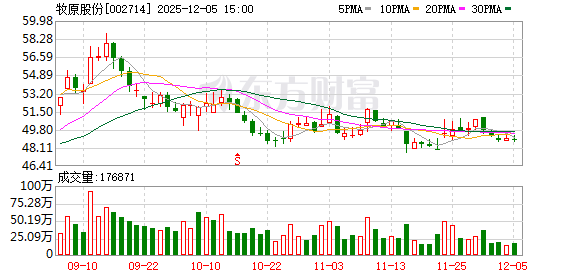
Investment Rating - The report maintains an "Outperform" rating for the agricultural sector [4] Core Views - The report is optimistic about the reversal of the livestock cycle in 2025, with both domestic and international beef and milk markets expected to rise [3] - The report highlights the support for long-term pig prices due to industry restructuring, recommending undervalued leading companies in the sector [3] - The pet consumption sector is identified as a growth area benefiting from demographic changes [3] - The report suggests that the white chicken market will see a long-term increase in consumption, while yellow chicken may benefit first from domestic demand recovery [3] Summary by Sections Livestock - Beef prices are expected to rise, with the average price on October 17 at 25.73 yuan/kg, down 0.16% week-on-week but up 8.20% year-on-year [2] - The report anticipates a significant increase in raw milk prices by the end of the year, with the average price at 3.04 yuan/kg, stable week-on-week but down 2.88% year-on-year [2] - The pig market is experiencing a price drop, with the average price at 11.10 yuan/kg, down 0.36% week-on-week and 37.32% year-on-year [1][2] Poultry - The white chicken market shows a slight increase in supply, with prices for chicks at 3.24 yuan/bird, up 0.31% week-on-week but down 24.83% year-on-year [1] - The yellow chicken supply remains at a low level, with prices for various types of yellow chicken showing mixed trends [1] Feed and Grains - Soybean meal prices are supported by a favorable supply-demand balance, with current prices at 3,010 yuan/ton, up 0.13% week-on-week [2] - Corn prices are expected to maintain a moderate increase, with current prices at 2,205 yuan/ton, down 1.12% week-on-week but up 1.10% year-on-year [2] Investment Recommendations - Recommended stocks include: - Livestock: YouRan Agriculture, Modern Farming, China Shengmu, Guangming Meat [3] - Pork: DeKang Agriculture, Muyuan Foods, Huazhong Agriculture, Wen's Food Group, and others [3] - Pet Industry: Guibao Pet, Reap Bio [3] - Feed: Haida Group [3] - Poultry: Lihua Co., Yisheng Co., and others [3]
提升金融服务实体质效 “央行信贷通”上线
Core Viewpoint - The launch of the People's Bank of China's credit market service platform, "Central Bank Credit Connect," is seen as a significant measure to alleviate corporate financing difficulties and optimize credit resource allocation [1][4]. Group 1: Platform Features - "Central Bank Credit Connect" offers three main functions: publishing financing needs, selecting financial products, and accessing policy information [2][3]. - Enterprises can independently fill out financing needs and choose suitable financial products from those published by banks, enhancing their ability to connect with financial institutions [2]. - The platform allows businesses to browse financial products like an online store, providing them with more autonomy and choice in the financing process [4]. Group 2: Impact on Financing - The platform aims to provide efficient and convenient financing information matching services, addressing the information asymmetry between supply and demand in the credit sector [4]. - It is expected to significantly improve the financing situation for small and micro enterprises, as well as individual businesses, by facilitating better access to financial resources [4]. - Financial institutions are likely to gain new clients through the platform, which may enhance overall service efficiency and coverage in the financial system [4]. Group 3: Implementation and Results - Since its launch over a month ago, multiple financing transactions have been successfully executed in regions such as Yunnan, Jiangxi, Liaoning, and Inner Mongolia [6]. - A notable case involved Inner Mongolia Mingquan Agricultural and Animal Husbandry Co., Ltd., which secured 5 million yuan in financing through the platform, demonstrating its operational effectiveness [6]. - The rapid processing of financing requests, with a notable case completed in just two days, highlights the platform's potential to improve the efficiency of bank-enterprise interactions [6].
杨广元公参会见巴基斯坦农业研究理事会主席安德拉比
Shang Wu Bu Wang Zhan· 2025-10-17 17:29
Core Points - The meeting between Yang Guangyuan and Syed Murtaza Hassan Andralabi focused on enhancing cooperation in agricultural technology and livestock sectors [1] Group 1 - The meeting took place on October 15, highlighting the importance of bilateral discussions in agriculture [1] - Yang Guangyuan is a public counselor, indicating a governmental interest in agricultural collaboration [1] - The presence of Wang Cundong, a secretary, suggests formal diplomatic engagement in the discussions [1]
9月巴西牛肉出口创历史新高
Shang Wu Bu Wang Zhan· 2025-10-17 17:29
Core Insights - Brazil's beef exports reached a record high in September, totaling 314,000 tons, a year-on-year increase of 25.1%, surpassing the previous record of 276,000 tons set in July [1] - Despite the 50% tariff imposed by the U.S. on Brazilian beef in August, Brazil managed to achieve this export milestone, indicating resilience in its beef export sector [1] - The Brazilian Beef Exporters Association (Abiec) noted strong global demand for protein and highlighted a restructuring in international trade due to tariff pressures and livestock supply shortages in the U.S. [1] Market Dynamics - Brazil's strategy to diversify its export markets is showing positive results, with increased beef exports to countries like Mexico and a continued expansion of exports to China [1] - In September, there was also a rebound in Brazilian beef exports to the U.S., suggesting a recovery in trade relations despite previous tariff challenges [1]