Shipping

Search documents
Performance Shipping Inc. Secures Sale and Leaseback Agreement for Newbuilding LR1 Tanker
Globenewswire· 2026-03-17 13:17
Core Viewpoint - Performance Shipping Inc. has entered into a sale and leaseback agreement for its new LR1 tanker vessel, M/T P. San Francisco, which is under construction and scheduled for delivery in early 2027 [1][2]. Financing Details - The total bareboat financing amount is US$37.8 million, with the vessel sold and chartered back for a ten-year period at a daily rate of US$5,451, implying an interest rate of Term SOFR plus 2.00% per annum [2]. - A balloon payment of approximately US$18.1 million is due with the last installment, and the company has options to repurchase the vessel at predetermined rates after the second anniversary of the charter [2]. Strategic Insights - The financing arrangement secures 70% of the vessel's contract price, reflecting a conservative cash flow breakeven level of US$22,200 per day [3]. - The vessel has been chartered to Mercuria Energy Trading S.A. for four years at a daily gross charter rate of US$23,750, providing coverage above the cash flow breakeven level, with options for three additional one-year extensions [4]. - This financing aligns with the company's strategy of fleet renewal, deployment, and balanced financial management [4].

ZIM vs JBHT: Which Transportation Stock Wins for Investors?
247Wallst· 2026-03-17 11:14
Core Insights - The article compares ZIM Integrated Shipping Services (ZIM) and J.B. Hunt Transport Services (JBHT), highlighting contrasting financial performances and future outlooks for investors [1][3]. ZIM Integrated Shipping Services (ZIM) - ZIM reported a Q4 net income of $38.3 million, down 93% year-over-year, with average freight rates falling 29% to $1,333 per TEU and carried volume dropping 9% to 898,000 TEUs [5][6]. - The company is facing a $35-per-share buyout from Hapag-Lloyd, pending Israeli government approval and regulatory clearances, which is a significant factor for its future [7][9]. - ZIM's stock is currently trading around $26.72, creating a merger arbitrage opportunity, but analysts are cautious due to regulatory risks and geopolitical factors affecting freight rates [11][9]. J.B. Hunt Transport Services (JBHT) - JBHT's operating income increased by 19% year-over-year to $246.46 million, with operating margin expanding to 8.0% from 6.6%, despite a slight revenue decline [6][8]. - The intermodal segment, which constitutes about half of JBHT's revenue, saw operating income rise by 16%, driven by improved network balance and reduced container storage costs [8]. - JBHT has maintained a strong customer retention rate of approximately 95% and has repurchased about 6.3 million shares for roughly $923 million in 2025, indicating a solid financial position [8][6]. Market Context - The freight market is currently under pressure, with ZIM experiencing a collapse in freight rates while JBHT is managing to expand margins through operational efficiency [4][2]. - The contrasting financial trajectories of ZIM and JBHT highlight the different challenges and opportunities within the transportation sector as they head into 2026 [11].




Hapag-Lloyd: Europe must engage to make Strait of Hormuz secure again
Youtube· 2026-03-17 11:11
Core Insights - The shipping industry is facing significant disruptions in global trade due to the current security situation in the Persian Gulf, with six ships and 150 seafarers stranded [1][2][5] - The company is experiencing increased costs related to shipping times, fuel prices, insurance, and storage fees due to the ongoing crisis [8] Shipping Operations - The company has had to store containers at alternative ports, such as Oman and India, until the Strait of Hormuz is accessible again [3] - There is a growing concern about the safety of shipping routes, and the company is seeking naval assistance to ensure safe passage through the Strait of Hormuz [7][11] Industry Impact - The disruptions are causing delays and increased costs for manufacturers and retailers, who are inquiring about the implications for shipping and insurance [9] - While some shipping routes outside the Persian Gulf remain operational, the situation in the Gulf is expected to continue to challenge the industry [10] Government Engagement - The company is in discussions with various governments to seek support and solutions to the crisis, emphasizing the need for a coalition response rather than relying solely on German assistance [11]


FICC日报:4月合约逐步回归现实端交易,关注马士基4月第一周开价-20260317
Hua Tai Qi Huo· 2026-03-17 11:10
1. Report Industry Investment Rating - Not provided in the given content 2. Core Viewpoints of the Report - The April contract is gradually returning to real - end trading. Pay attention to Maersk's price offer in the first week of April [1] - The main contract EC2604 is approaching delivery. It is necessary to focus on the shipping companies' willingness to support prices and actual price adjustments. The volatility of the EC2604 contract may be amplified due to geopolitical risks and the game between price - support expectations and actual landing prices [6] - For the relatively peak - season contracts in June, July, and August, the current expectations are strong. The reasons include the low probability of the Suez Canal's resumption in the first half of the year, relatively small delivery pressure of ultra - large container ships in the first half of 2026, and relatively high year - on - year growth in the demand side of Asia - Europe trade. However, the actual freight rates in the future are still uncertain, and investors need to respond flexibly [7] 3. Summary According to the Directory 3.1 Futures Prices - As of March 16, 2026, the total open interest of all contracts of the container shipping index European line futures was 54,037.00 lots, and the single - day trading volume was 58,796.00 lots. The closing prices of different contracts are as follows: EC2604 contract closed at 1938.80, EC2605 at 2175.00 points, EC2606 at 2394.40, EC2607 at 2500.60, EC2608 at 2375.00, EC2609 at 1716.80, EC2610 at 1568.00, and EC2512 at 1814.00 [8] 3.2 Spot Prices - On March 13, the SCFI (Shanghai - Europe route) price was 1618 US dollars/TEU, the SCFI (Shanghai - US West route) was 2249 US dollars/FEU, and the SCFI (Shanghai - US East) was 3111 US dollars/FEU. On March 16, the SCFIS (Shanghai - Europe) was 1556.49 points, and the SCFIS (Shanghai - US West) was 1109.11 points [8] 3.3 Container Ship Capacity Supply - **Static Supply**: As of February 28, 2026, 27 container ships with a total capacity of 174,232 TEU were delivered in 2026. For 12,000 - 16,999 TEU ships, 6 ships with a total of 86,000 TEU were delivered; for ships over 17,000 TEU, 1 ship with a capacity of 17,148 TEU was delivered. In terms of delivery expectations, for 12,000 - 16,999 TEU ships, 679,000 TEU (46 ships) will be delivered in the remaining months of 2026, 944,600 TEU (64 ships) in 2027, 1,224,000 TEU (84 ships) in 2028, and 415,400 TEU (29 ships) in 2029. For ships over 17,000 TEU, 192,900 TEU (8 ships) will be delivered in the remaining months of 2026, 862,800 TEU (40 ships) in 2027, 1,603,000 TEU (80 ships) in 2028, and 1,636,000 TEU (81 ships) in 2029. The delivery pressure of ultra - large ships in 2026 is relatively small, and the annual delivery volume of ships over 17,000 TEU in 2027, 2028, and 2029 exceeds 40 ships. Only 4 ships over 17,000 TEU were delivered in the first half of 2026 [4] - **Dynamic Supply**: The average weekly capacity of the China - European base port in the remaining 3 weeks of March was 308,200 TEU. The capacities in weeks 12, 13, and 14 were 310,600, 282,100, and 331,800 TEU respectively. The average weekly capacity in April was 326,200 TEU, and the capacities in weeks 15, 16, 17, and 18 were 331,300, 304,200, 329,000, and 340,600 TEU respectively. The average monthly capacity in May was 311,800 TEU, and the capacities in weeks 19, 20, 21, and 22 were 324,000, 313,100, 318,400, and 291,900 TEU respectively. There were 8 blank sailings in March (3 by the OA alliance, 1 by the Gemini alliance, and 4 by the MSC/PA alliance) and 1 TBN (by the OA alliance), 3 TBNs in April, and 6 TBNs in May [5] 3.4 Supply Chain - After the Israel - Iran conflict, shipping companies tried to support prices in the off - season. Maersk offered a price of 2200 - 2300 US dollars/FEU in the second week of the second half of March (equivalent to 1600 - 1700 points of SCFIS), MSC's online quote in the last week of March was 3040 US dollars/FEU (300 US dollars/FEU higher than the first week of the second half of March), and ONE's price in the second half of March was between 2435 - 2755 US dollars/FEU. Most shipping companies announced emergency fuel surcharges, but it is expected that the impact on the disk valuation is relatively controllable [6] - Some ships operating in the Middle East were transferred to the European line, increasing the supply - side pressure and potentially affecting the European line freight rates [6] 3.5 Demand and European Economy - The year - on - year growth rate of the demand side of Asia - Europe trade has been relatively high, with the year - on - year growth rate of container trade volume in most months exceeding 10%. After the Israel - Iran conflict, new expectations have emerged for the peak - season contracts. It is necessary to pay attention to whether developed countries in Europe and the United States will increase imports from China due to concerns about future inflation, which may drive up China's export demand. At the same time, it is also necessary to guard against the expectation of a global economic recession caused by excessive increases in oil prices [7] 3.6 Strategy - **Single - side**: None - **Arbitrage**: Go long on EC2606 and short on EC2610 [9]
X @Nick Szabo
Nick Szabo· 2026-03-17 02:56
RT Sal Mercogliano (WGOW Shipping) 🚢⚓🐪🚒🏴☠️ (@mercoglianos)Key NATO Member Germany Rejects Military Role in Strait of Hormuz Security Missionhttps://t.co/NDukqWC9FW ...
全球行业:能源中断的二阶影响-Global Sector Analyst_ Energy disruption_ second-order consequences
2026-03-17 02:07
Summary of Key Points from the Conference Call Industry Overview - The conference call discusses the impact of the ongoing Middle East conflict on various sectors, particularly focusing on energy, technology, consumer goods, and financials [2][14]. Core Insights and Arguments Energy Sector - Oil and gas prices have surged, raising concerns about prolonged dislocation in energy prices and the complexities of restarting oil production [3][10]. - A significant portion of global oil trade (35%) and supply (20%) transits through the Strait of Hormuz, making it a critical chokepoint [12][49]. - The potential for a prolonged conflict could lead to significant disruptions in oil and gas supply, with estimates suggesting that maximum shut-ins could reach up to 15 million barrels per day (mbd) [56]. - The Brent price forecast for 2026 is set at USD 80 per barrel, reflecting the impact of the Strait of Hormuz closure [41][46]. Chemicals - An extended disruption in the Middle East could flip the current oversupply narrative in the chemical market into an upcycle, particularly affecting Middle Eastern chemical companies reliant on the Strait of Hormuz [11]. Technology Sector - The technology hardware and semiconductor sectors face headwinds due to elevated oil prices and transport disruptions, which could increase production costs [15][21]. - Cloud and AI-related activities are particularly vulnerable to energy price hikes outside the US and China, potentially affecting data center expansion and financing strategies [4][19]. Financial Sector - Rising energy prices pose downside risks to economic growth, with banks in energy-producing countries likely to be more resilient compared to those in countries with negative energy trade balances [5][23]. - Super-regional banks in the US, such as PNC Financial, are highlighted as being less impacted due to their positive exposure to a higher interest rate environment [24]. Consumer Sector - Consumer companies are expected to experience varying impacts, with luxury and beauty brands showing resilience against oil price hikes, while sectors like HPC (household and personal care), sporting goods, and food manufacturing may suffer from input cost pressures [26][27]. - The automotive sector is anticipated to have limited direct demand impact, but sustained high energy prices could dampen consumer sentiment over time [28]. Utilities and Renewables - Rising power prices in Asia may benefit renewable energy and nuclear operators, with potential policy pushes for energy supply sufficiency [17][18]. Real Estate - Global real estate prices fell significantly during the last stagflationary period, and a prolonged conflict could negatively impact UAE developers like Aldar and EMAAR due to reliance on residential sales [25]. Other Important Insights - The report emphasizes the non-linear relationship between shut-in duration and restart complexity, indicating that a four-week curtailment could lead to months of restoration [10]. - The potential for a stagflationary period is explored, with implications for various sectors, particularly real estate and consumer goods [5][14]. - The report identifies specific companies that may be most and least impacted by the ongoing conflict, providing a detailed analysis of sector-specific risks and opportunities [7][14]. This summary encapsulates the critical insights from the conference call, highlighting the multifaceted impacts of the Middle East conflict across various industries and sectors.
X @Nick Szabo
Nick Szabo· 2026-03-17 01:20
RT Nick Szabo (@NickSzabo4)In effect, Iran may already be charging a toll:China, you send us rocket and drone parts, we let your ships through.India, you send us food and clothing and other necessaries, we let your ships through.Et cetera. ...
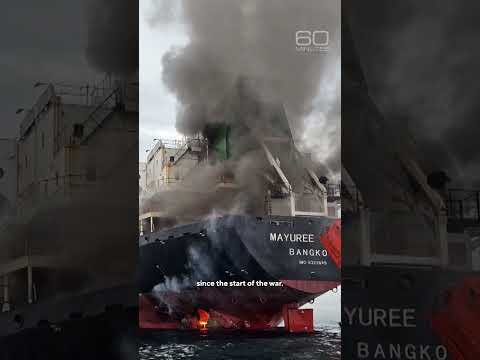
Shipping grinds to a halt in the Strait of Hormuz #shorts
60 Minutes· 2026-03-16 19:01
This was the scene this past Wednesday in the straight. A Thai cargo ship was struck by a projectile from Iran, setting the ship on fire and trapping members of the crew. It is one of the few ships that has attempted to cross since the start of the war.Most others have been at a standstill in the waters surrounding the strait. With the constant sound of drones and scenes like this all around, at what point did you look at the situation out there and say, "It's too dangerous. These ships should not sail thro ...
4 Stocks Trading Near 52-Week Highs With Room to Rise Further
ZACKS· 2026-03-16 18:26
Core Insights - Stocks reaching their 52-week high are seen as attractive investment opportunities, but they may also face profit-taking and potential pullbacks [1][3] - Not all stocks at a 52-week high are overpriced; avoiding them may lead to missing out on significant gains [2] - A strategy based on momentum investing, focusing on "buy high, sell higher," can help identify stocks with continued upside potential [3][4] Stock Selection Criteria - A screening process identifies stocks trading within 20% of their 52-week high, with strong earnings growth expectations and favorable value metrics [6][9] - Key metrics include current price relative to 52-week high, recent price changes over 4 and 12 weeks, and price-to-sales ratios [7][8] - Additional filters include P/E ratios, EPS growth rates, Zacks Rank, minimum share price, and trading volume to ensure liquidity [10][11][12] Company Highlights - **Strategic Education (STRA)**: Positioned for growth with a strong Education Technology Services segment, significant subscriber growth, and a consistent dividend [12][13] - **Seanergy Maritime Holdings (SHIP)**: Focused on fleet expansion and securing earnings visibility through long-term contracts, with a strong dividend history [14][15] - **DaVita (DVA)**: Strong operational momentum with a focus on kidney care, strategic investments, and a share repurchase program to enhance long-term earnings [16][17] - **FirstEnergy (FE)**: Benefiting from a $36 billion capital program aimed at infrastructure growth, with a reaffirmed earnings guidance and increased dividends [18][19]





Here's Why Investors Should Give Global Ship Lease Stock a Miss Now
ZACKS· 2026-03-16 18:05
Core Insights - Global Ship Lease (GSL) is facing significant challenges that are adversely affecting its financial stability, primarily due to increased operating expenses and a difficult geopolitical environment [1][4]. Financial Performance - The Zacks Consensus Estimate for GSL's earnings for the June-end quarter has been revised downward by 10.9% over the past 60 days, with a 5.7% downward revision for 2026 estimates during the same period [1][7]. - GSL reported a notable increase in operating expenses in Q4 2025, with vessel operating expenses rising by 12.6%, which constituted approximately 53% of total operating costs [4][7]. Market Position - GSL's stock has declined by 4.3% over the past month, slightly underperforming the Transportation - Shipping industry's overall decline of 4% [2][7]. - The company currently holds a Zacks Rank of 4 (Sell), indicating a weak market position [4]. Macroeconomic Environment - GSL operates in a challenging macroeconomic landscape characterized by economic uncertainty, evolving tariff policies, and heightened geopolitical tensions, which are increasing operational and compliance risks [5].