
Banking

Search documents
Gold's Worst Week In 40 Years: What This Means For Your Gold Strategy
Benzinga· 2026-03-23 08:16
Core Viewpoint - Gold prices have experienced a significant decline, dropping to less than $4,400 an ounce, marking a 3.8% decrease to around $4,320.30, as geopolitical tensions in the Middle East escalate [1][2]. Group 1: Market Dynamics - The last time gold saw such a sharp weekly decline was in 1983, when oil-producing countries sold their gold reserves due to falling oil revenues, indicating a historical pattern of market reactions to geopolitical events [2]. - Rising energy prices from the Middle East conflict are prompting central banks globally to reassess their interest rate outlook, which is crucial for asset valuation [4]. - The 10-year Treasury yields rose to 4.2% and the Dollar Index increased to 99.9, making gold less attractive compared to interest-bearing assets like Treasury bonds [5][8]. Group 2: Investor Behavior - In times of energy crises, stock markets often panic, leading large investors to liquidate gold holdings to cover losses from other investments, as gold is a liquid asset [6]. - The Federal Reserve's response to rising oil prices, which have jumped 80% since the conflict began, is likely to keep interest rates higher for longer, further diminishing gold's appeal [7][8]. - Gold prices surged by 64% in 2025, reaching $5,000 an ounce, but this momentum is waning as retail investors exit the market [10]. Group 3: Institutional Trends - Gold ETFs have seen a loss of over 60 tonnes in three weeks, indicating significant institutional selling rather than mere profit-taking [11]. - Central banks have historically increased their gold purchases during price declines, buying 1,082 tonnes when gold fell 20% from its peak in 2022, and adding another 1,045 tonnes in 2024 [12]. - Major banks like J.P. Morgan and Wells Fargo maintain bullish forecasts for gold prices, predicting a year-end price of $6,300 for 2026, driven by central bank demand and ETF inflows [13].


亚太股市全线重挫,A股133股跌停,港股科网股大跳水,华虹半导体跌5%
21世纪经济报道· 2026-03-23 08:14
Market Overview - The Asia-Pacific stock markets experienced a significant decline, with the Nikkei 225 index falling by 3.48% and the South Korean KOSPI dropping by 6.49%, triggering a trading halt [1] - In the A-share market, all three major indices fell over 3%, with the Shanghai Composite Index barely holding above the 3800-point mark [1][3] - The total trading volume in the Shanghai and Shenzhen markets reached 2.43 trillion yuan, an increase of 144.7 billion yuan compared to the previous trading day, with over 5100 stocks declining [3] Sector Performance - The power sector showed notable activity, with several stocks hitting the daily limit up, driven by rising international oil prices due to escalating geopolitical tensions in the Middle East [6] - Conversely, sectors such as precious metals, agriculture, food, and aviation faced significant declines, with stocks like Chifeng Jilong Gold and Sichuan Gold hitting the daily limit down [6] Geopolitical Impact - Analysts suggest that the core pressure on the market stems from evolving geopolitical conflicts, particularly the ongoing tensions between the U.S. and Iran, which have led to a bearish sentiment in the A-share market [7] - The volatility in the market is exacerbated by high-frequency trading, resulting in increased fluctuations in individual stocks [7] Future Outlook - Some brokerage firms remain optimistic about the future performance of the A-share market, suggesting that the current adjustment is a result of technical, funding, and emotional factors, with strong support around the 3800-point level [7] - Analysts recommend focusing on low-volatility assets in the short term, with an emphasis on sectors like coal, agriculture, insurance, and technology, while also considering cyclical sectors if geopolitical tensions ease [8]

Sensex, Nifty Tumble as Middle East Conflict Fuels Oil Price Surge
Rediff· 2026-03-23 06:03
Core Viewpoint - The escalating tensions in the Middle East and rising crude oil prices have led to a significant decline in the Indian stock market, particularly affecting the Sensex and Nifty indices [4][6]. Market Performance - The BSE Sensex fell by 1,555.62 points, or 2%, to 72,977.34, while the NSE Nifty dropped by 479.95 points, or 2%, to 22,634.55 during early trade [5]. - Major laggards among the Sensex firms included Tata Steel, State Bank of India, Bajaj Finance, Bharat Electronics, Titan, and Adani Ports, with HCL Tech being the only firm to gain [5]. Global Market Impact - The bearish trend in global equity markets, coupled with continuous foreign fund outflows, has heightened investor concerns regarding Indian equities [6]. - Asian markets, including South Korea's Kospi and Japan's Nikkei 225, experienced significant declines, with Kospi dropping nearly 6% [8][9]. Geopolitical Factors - The ongoing conflict in the Middle East, particularly the tensions between the US and Iran, has raised fears of potential supply disruptions in global energy markets, impacting investor sentiment [10]. - Brent crude oil prices increased by 0.62% to $112.9 per barrel, reflecting the heightened geopolitical risks [7]. Foreign Investment Trends - Foreign Institutional Investors (FIIs) sold equities worth Rs 5,518.39 crore on Friday, while Domestic Institutional Investors (DIIs) purchased stocks worth Rs 5,706.23 crore [11]. - In total, foreign investors have withdrawn Rs 88,180 crore (approximately $9.6 billion) from Indian equities this month [11].
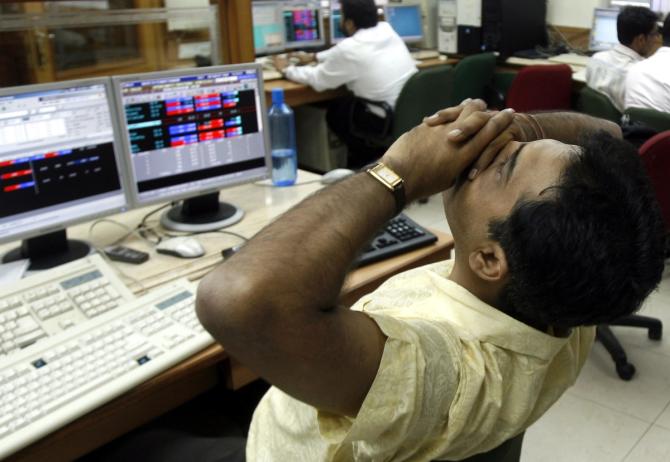
Markets plunge over 1% as West Asia crisis rattles investors
BusinessLine· 2026-03-23 04:22
Market Overview - Equity benchmarks experienced a significant decline due to escalating geopolitical tensions in West Asia, leading to a broad-based sell-off as investors moved away from risk assets amid concerns over potential oil supply disruptions through the Strait of Hormuz [1][3]. Index Performance - The BSE Sensex opened at 73,732.58 and fell to 73,231.48, a decrease of 1,301.48 points or 1.75% [2]. - The NSE Nifty50 opened at 22,824.35 and dropped to 22,700.65, losing 413.85 points or 1.79% [2]. Geopolitical Impact - The sell-off was triggered by a deterioration in global risk sentiment following a 48-hour ultimatum issued by U.S. President Donald Trump to Iran regarding the reopening of the Strait of Hormuz, a critical oil transit route [3][4]. - Iran's military actions, including strikes near Israeli nuclear facilities and attacks on Kuwaiti oil infrastructure, have heightened tensions [3]. Oil Market Reaction - Crude oil prices surged, with Brent futures reaching $107.87 per barrel (up 1.37%) and WTI crude at $99.10 per barrel (up 0.89%) [4]. - April crude oil futures on the Multi Commodity Exchange traded at ₹9,360, reflecting a 1.10% increase from the previous close [4]. Currency and Economic Outlook - The Indian rupee depreciated beyond ₹94 per US dollar in offshore trade, indicating deeper economic stress and potential capital flight, which could exacerbate imported inflation risks [5]. - Analysts noted that the rupee's depreciation could benefit exporters, particularly in pharmaceuticals and automotive sectors [4]. Market Sentiment and Investor Behavior - The Indian equity market is experiencing high volatility, with only two stocks in the Nifty50 showing gains, while metal stocks faced significant losses [7]. - Foreign institutional investors withdrew over ₹5,500 crore, marking their 16th consecutive session of outflows, while domestic institutional investors absorbed ₹5,706 crore [8]. Volatility and Future Outlook - The India VIX index hovered around 22, indicating elevated fear levels among investors [9]. - Analysts expect continued volatility in the markets, particularly as they await the outcome of Trump's ultimatum, which could lead to either military action or a diplomatic resolution [11].
Stock Market Crash: The Best Cryptocurrencies to Buy Right Now
Yahoo Finance· 2026-03-22 22:09
Market Overview - The stock market is experiencing a downturn, with the S&P 500 down 3% as of March 19, 2026, while the crypto market is performing even worse, with Bitcoin losing 19% since October 2025 [1] - Despite the downturn, investing in cryptocurrency has become cheaper compared to previous months, presenting potential buying opportunities [1] Bitcoin Insights - Bitcoin is considered a straightforward investment option in the crypto space, known for its name value and size, making it arguably the safest cryptocurrency investment [2] - Bitcoin has a maximum supply of 21 million coins, which positions it as a store of value and a means for portfolio diversification [3] - Since the launch of Bitcoin exchange-traded funds (ETFs) in 2024, institutional investors have shown significant interest, with Bitcoin ETFs receiving $56.7 billion in total net inflows, marking a positive trend with seven consecutive days of net inflows [4] Ethereum Developments - Ethereum is gaining institutional attention as both an investment and a settlement layer, with approximately $165 billion in stablecoins on its platform, representing over half of the stablecoin market [5] - The traditional finance sector is increasingly integrating with blockchain technology, highlighted by the growth of stablecoins, which have increased by about $85 billion over the past year, and tokenized real-world assets (RWAs) [6] - Ethereum is recognized as a trusted blockchain for RWAs, currently hosting $15.5 billion in RWAs within a total market valued at $27.3 billion [6]
NAB share price at $46: here’s how I would value them
Rask Media· 2026-03-22 19:38
Core Viewpoint - The article discusses the valuation of National Australia Bank Ltd (NAB) shares, focusing on methods such as the Price-Earnings (PE) ratio and Dividend Discount Model (DDM) to determine their worth in the context of Australian banking sector preferences for dividend income [1][2][7]. Valuation Methods - The PE ratio is a common valuation tool that compares a company's share price to its earnings per share, with NAB's current PE ratio calculated at 20.2x, slightly above the banking sector average of 20x [4][6]. - A sector-adjusted PE valuation for NAB shares is estimated at $44.44 based on the average PE ratio of the banking sector [6]. - The DDM is highlighted as a more effective valuation method for banks, relying on past or forecasted dividends and assuming consistent growth [7][8]. Dividend Analysis - The last year's dividend payment for NAB was $1.69, with a projected growth rate leading to a valuation of $35.74 under a blended risk rate of 6% to 11% [10][11]. - Adjusting the dividend payment to $1.71 raises the valuation to $36.16, while considering gross dividends including franking credits results in a valuation of $51.66 based on a forecast gross dividend of $2.44 [11][12]. Growth and Risk Considerations - Various growth and risk rate scenarios yield a range of valuations, with lower growth and higher risk rates leading to significantly lower share price estimates [13]. - Investors are encouraged to consider NAB's growth strategy, including its focus on interest versus non-interest income, and to assess economic indicators and management effectiveness before making investment decisions [14].

Middle East Crisis Escalates: Iran Restricts Strait of Hormuz as Trump Issues 48-Hour Ultimatum
Stock Market News· 2026-03-22 15:38
Group 1: Iran and Strait of Hormuz - The Iranian government has restricted access to the Strait of Hormuz, allowing only nations that coordinate with Tehran, effectively blocking vessels linked to the U.S., Israel, and their allies, which threatens approximately 20% of the world's oil and LNG supply [2][9] - The Iranian President has indicated a readiness for sustained maritime confrontation, with shipping firms like Frontline and Maersk rerouting vessels due to rising insurance premiums in the region [3][9] - President Trump issued a 48-hour ultimatum to Iran to restore navigation in the Strait, threatening direct strikes on Iranian power plants if compliance is not met [4][5][9] Group 2: Lebanon and Regional Conflict - Lebanese President Joseph Aoun has warned of a potential ground invasion by Israel following targeted operations against Hezbollah, with significant destruction of civilian infrastructure displacing nearly one million people [6][7][9] - Israel's military operations are expected to continue until northern Israeli communities are secure, drawing parallels to urban warfare in Gaza, which may exacerbate the humanitarian crisis [7][9] Group 3: South Korea's Economic Measures - South Korea has nominated Shin Hyun-song as the new Governor of the Bank of Korea, a move aimed at stabilizing the South Korean won amid regional volatility [8][10] - The nomination is perceived as a "hawkish" pivot to defend the won and curb inflation driven by energy shocks from the Middle East, with potential interest rate hikes anticipated to counter rising import costs [11]

全球利率-通胀担忧暂时主导市场-Global Rates Trader_ Inflation Concerns Dominate... For Now
2026-03-22 14:24
Summary of Key Points from the Conference Call Industry Overview - The conference call primarily discusses the global rates market, focusing on inflation concerns and central bank policies across various regions including the US, Canada, Europe, Japan, Australia, and New Zealand [1][2][12][21][26]. Core Insights and Arguments 1. **Inflation and Central Bank Policies**: - Central banks are adopting hawkish stances due to inflationary risks, particularly from rising energy prices, which has led to higher front-end rates [1][2]. - The US rate pricing appears hawkish compared to the economists' Fed path, indicating a potential misalignment with market expectations [1][2]. 2. **Market Dynamics**: - The market requires an external mechanism, such as de-escalation of conflicts or stronger growth signals, for lasting relief from current pressures [1][5]. - The selloff in terminal rate pricing is viewed as inconsistent with the nature of the economic shock, suggesting that inflation concerns are currently dominating market sentiment [2][10]. 3. **Regional Insights**: - **Canada**: The Bank of Canada (BoC) is perceived as more dovish compared to other G10 central banks, with expectations to remain on hold for the year despite inflation risks [12]. - **Europe**: European front-end rates are pricing in nearly three rate hikes, reflecting concerns over high commodity prices and a hawkish tone from the European Central Bank (ECB) [14]. - **Japan**: The Bank of Japan (BoJ) is maintaining a cautious approach, with potential risks to Japanese Government Bonds (JGBs) if growth concerns persist alongside a weak yen [21][23]. - **Australia**: The Reserve Bank of Australia (RBA) has adopted a proactive stance, hiking rates due to inflation concerns, while also considering global growth risks [26]. 4. **Forecast Adjustments**: - The forecast for 10-year Gilt yields has been raised to 4.4% for the end of 2026, reflecting the changing economic landscape and expectations of further rate hikes [14][15]. 5. **Sovereign Credit and Fiscal Responses**: - Sovereign credit spreads are stable, but there is a growing focus on fiscal responses to economic challenges, particularly in Europe where fiscal packages are being introduced [20]. - Historical analysis indicates that a 1 percentage point decline in growth forecasts could lead to a 0.6% deterioration in fiscal balances as a share of GDP [20]. Additional Important Content - **Market Volatility**: The volatility in rates markets is attributed to hawkish policy risks from inflation, which has disrupted previous stability [10]. - **Cross-Market Opportunities**: There are potential cross-market opportunities, particularly in Canada, where the policy response differs from other regions [12]. - **Long-Term Projections**: The report includes long-term yield forecasts for various currencies, indicating a cautious outlook for global rates [30]. This summary encapsulates the key points discussed in the conference call, highlighting the current state of the global rates market, central bank policies, and regional economic insights.

For Your (Tax) Health: The Underloved HSA
Yahoo Finance· 2026-03-22 12:00
Core Insights - Health Savings Accounts (HSAs) are increasingly recognized for their tax benefits, making them attractive for wealth-management clients eligible for them [3][4] - Despite their advantages, HSAs remain underutilized, particularly among the general population, with only 1% of individuals having more than 10% of their portfolios in HSAs [5][6] - The total assets in HSAs are projected to reach $170 billion by the end of 2025, with a significant portion being invested [1] Contribution Limits - Annual contributions for HSAs in 2026 are set at $4,400 for individuals and $8,750 for families, an increase from 2025 [2] Tax Efficiency - HSAs offer a "triple tax" benefit: contributions, investment returns, and withdrawals for eligible expenses are all tax-free [3] - They are considered more tax-efficient than traditional retirement accounts like IRAs and 401(k)s [4] Utilization and Awareness - A significant gap exists in awareness and utilization of HSAs, with many advisors not discussing them with clients [5][6] - Wealthier households are more likely to allocate a portion of their portfolios to HSAs, with 31% of households with at least $3 million in investable assets having 1% to 10% in HSAs [5] Long-Term Care and HSA Applicability - HSAs can be beneficial for long-term care expenses, which have been rising faster than inflation [7] - Recent legislation allows HSA funds to be used for direct primary care fees, with specific monthly limits [6][7] Industry Insights - The HSA industry has seen improvements in transparency and fee structures, but there is still room for enhancement [7] - Fidelity and HealthEquity are noted as top-rated providers in terms of investment and spending accounts [9]
57% of Americans keep savings in the wrong place — here’s what $20K can earn in 1 year in regular and high-yield account
Yahoo Finance· 2026-03-22 11:40
Core Insights - The majority of U.S. adults are not maximizing their savings potential, with 57% keeping excess cash in traditional savings accounts, while only 18% utilize high-yield savings accounts (HYSA) [1][2] Group 1: Savings Account Comparison - The average yield for traditional savings accounts is only 0.39%, resulting in a mere $78 annual return on a $20,000 deposit, which is insufficient to keep up with the 2.4% inflation rate [4] - In contrast, high-yield savings accounts can offer rates of 4% or more, potentially yielding $800 or more annually on the same $20,000 deposit, thus outpacing inflation [5] Group 2: Structural Reasons for Yield Differences - Traditional banks often provide lower interest rates due to high overhead costs and limited competition, while fintech startups or neo-banks can offer better yields by maintaining lower operational costs [6][7] Group 3: Switching to High-Yield Accounts - Transitioning from a low-yield account to a high-yield account is straightforward and can be completed in a few minutes [8][13] - When selecting a high-yield savings account, it is essential to compare rates, minimum balance requirements, monthly fees, and FDIC insurance [9][10] Group 4: Example of High-Yield Accounts - The Wealthfront Cash Account offers a base variable APY of 3.30%, with a potential boost to 4.05% for new clients, significantly exceeding the national average [11][12]