
Battery

Search documents
Breakout Momentum Plays You Need to Know About
MarketBeat· 2025-10-23 12:17
Core Insights - Momentum investors are attracted to fast-growing stocks, particularly in the biopharmaceuticals industry, which presents significant growth potential [2][3] Group 1: uniQure N.V. (NASDAQ: QURE) - uniQure has seen a significant share price increase, with a current price of $59.91 and a 12-month price forecast of $71.75, indicating a 19.76% upside potential [3][5] - The company is known for its adeno-associated viral (AAV) vector platform and has promising drug candidates, including AMT-130 for Huntington's disease and AMT-260 for epilepsy [3][4] - As of Q2, uniQure had $377 million in cash, providing operational runway into 2027 [4] Group 2: Omeros Corp. (NASDAQ: OMER) - Omeros experienced a price spike in mid-October after Novo Nordisk acquired licensing rights to its drug Zaltenibart for $240 million, with a 12-month price forecast of $27.50, representing a 255.30% upside [6][8] - The current price is $7.74, with analysts rating it a Moderate Buy based on 8 ratings [7][9] - Despite a recent price drop, analysts remain optimistic, projecting a potential upside of nearly 244% [9] Group 3: Stardust Power Inc. (NASDAQ: SDST) - Stardust Power, a micro-cap battery tech firm, has a current price of $4.52 and a 12-month price forecast of $51.13, indicating a potential upside of 1,031.08% [10][12] - The company has secured agreements to develop an electric substation and to secure lithium carbonate, which positions it for growth amid rising domestic demand [10][11] - Analysts are bullish, with four out of six rating it a Buy, reflecting confidence in its future prospects [12]


企业“唱主角”,点燃协同创新引擎
Xin Hua Wang· 2025-10-23 00:46
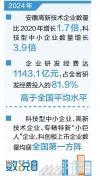
Group 1 - The number of high-tech enterprises in Anhui has increased by 1.7 times compared to 2020, while the number of technology-based small and medium-sized enterprises (SMEs) has grown by 3.9 times [1][4] - Research and development (R&D) expenditure by enterprises reached 114.31 billion yuan, accounting for approximately 81.9% of the province's total R&D investment, which is higher than the national average [1][4] - Anhui ranks among the top in the nation for the number of technology-based SMEs, high-tech enterprises, specialized and innovative "little giant" enterprises, and companies listed on the Sci-Tech Innovation Board [1][4] Group 2 - Hefei Guoxuan High-Tech Power Energy Co., Ltd. is advancing the development of its G-Yuan quasi-solid-state battery, which is nearing mass production [2] - The G-Yuan quasi-solid-state battery has an energy density of 300 watt-hours per kilogram, enabling electric vehicles to achieve a range of 1000 kilometers, and it has passed puncture tests without catching fire or exploding [2] - The company has maintained high levels of R&D investment over the years, creating numerous global patents covering the entire battery industry chain [2] Group 3 - Anhui has established a tiered cultivation system for technology enterprises, focusing on both large enterprises and technology-based SMEs [3] - The province has developed policies to nurture leading technology enterprises, resulting in the emergence of influential companies like Chery Automobile and Sungrow Power Supply [3] - Anhui is implementing a "double increase" action for high-tech enterprises and technology-based SMEs, providing tailored support for each enterprise [3]


QuantumScape(QS) - 2025 Q3 - Earnings Call Transcript
2025-10-22 22:00
Financial Data and Key Metrics Changes - GAAP operating expenses in Q3 were $115 million, and GAAP net loss was $105.8 million, with an adjusted EBITDA loss of $61.4 million [14] - Full year guidance for adjusted EBITDA loss revised to $245 million to $260 million, with capital expenditures in Q3 at $9.6 million [14][15] - Customer billings in Q3 were $12.8 million, marking a significant commercial milestone for the company [16][26] Business Line Data and Key Metrics Changes - The company began shipping COBRA based QSC5 cells in Q3, achieving a key operational goal for 2025 [6][10] - The Eagle Line pilot line in San Jose is on track for higher volume cell production equipment installation [7] Market Data and Key Metrics Changes - The company announced a collaboration with Corning to develop ceramic separator manufacturing capabilities, enhancing its technology ecosystem [8][9] - Active engagement with a new top 10 global automotive OEM in addition to existing customers [8] Company Strategy and Development Direction - The company aims to revolutionize energy storage and capitalize on market opportunities through a capital light development and licensing business model [10][12] - The strategic blueprint includes four parallel tracks: the Ducati program, PowerCo relationship, other customers, and ecosystem development [21][22] Management's Comments on Operating Environment and Future Outlook - Management expressed confidence in achieving commercialization goals and highlighted the importance of partnerships with world-class manufacturers [10][24] - The company is focused on executing its operational goals and expanding its customer base while managing challenges [12][11] Other Important Information - The company completed an at-the-market equity program, raising $263.5 million in net proceeds, ending the quarter with $1 billion in liquidity [15] - The cash runway is projected to extend through the end of the decade, a twelve-month extension from previous guidance [15] Q&A Session Questions and Answers Question: Importance of the Ducati V21L motorcycle demonstration - Management highlighted the emotional significance of the demonstration and its role in gathering data for field testing [20] Question: Joint development of ceramic separators with Corning - Management explained the complementary roles of Corning and Murata in scaling up separator production and emphasized the need for multiple suppliers [35] Question: Customer billing metric and its conversion to revenue - Management clarified that customer billings are a key operational metric and explained potential divergences from future cash inflows due to various factors [40][41] Question: Development timeline with VW and other customers - Management confirmed that the prioritization belongs to the customer and emphasized close collaboration with VW to meet their ramp-up needs [46][48] Question: Engagement with other customers and potential partnerships - Management expressed excitement about ongoing engagements with additional customers and the potential for future announcements [56]

界面难题实现两大技术突破 全固态电池实用化迈出决定性一步
Zhong Guo Qi Che Bao Wang· 2025-10-22 08:49
最近,我国科技界传来重磅消息。中国科学院物理研究所研究员黄学杰团队联合华中科技大学、中国科学院宁波材料技术与工程研究所等组成的研 究团队引入碘离子,在全固态电池中形成了动态自适应界面,解决了界面接触难题;中国科学院金属研究所的研究团队为解决固态电池界面阻抗 大、离子传输效率低的关键难题提供了新路径。 界面难题是一座"大山" 全固态电池进入量产冲刺期,但其面临的困境仍然不少,如果要说其中最难的是什么,行业人士的答案肯定是:界面难题。在这个难题下又细 分出界面接触、接触之后的离子传导等难题。界面接触、离子传导是固态电池研发最大的两个"拦路虎",攻克这两个难题,全固态电池工程化有望 实现"从0到1"的突破。 今年以来,有关全固态电池量产的消息不断出现,甚至给人一种全固态电池很快就要走进千家万户的错觉。行业人士却持谨慎乐观的态度,国家动 力电池测试中心原主任王子冬告诉记者,消息满天飞与资本炒作有较大关系。目前,全固态电池的难题仍不少,关键瓶颈还没有实现实质性突破。 这其中就包括界面难题,它被看作是横在汽车人、电池人前面的一座"大山"。 为了搬掉这座"大山",行业企业纷纷在锂元素上做文章。原因是,金属锂负极因其最低还原 ...

【点金互动易】固态电池+钠离子,公司布局两种固态电池产品,硫化物路线明年具备中试量产能力
财联社· 2025-10-22 00:49
Group 1 - The article emphasizes the importance of timely and professional information interpretation in investment decision-making [1] - The focus is on identifying investment value from significant events, analyzing industry chain companies, and interpreting key policies [1] - The product aims to provide users with quick information that impacts the market, presented in a professional yet accessible manner [1] Group 2 - The company is developing two types of solid-state battery products, with the sulfide route expected to achieve pilot production capabilities next year [1] - The company has completed the technical reserve for electrolyte and is focusing on the core material of sodium hexafluorophosphate [1] - In the AI computing power and data center sector, the company holds a leading global market share in AI computing cards and has become a core partner for many top technology firms both domestically and internationally [1]

Enovix (ENVX) Rockets 13% on China Battery Exports Curb
Yahoo Finance· 2025-10-21 16:56
Core Insights - Enovix Corp. (NASDAQ:ENVX) has seen a significant stock price increase of 13.02% to $12.67, driven by investor interest in companies benefiting from China's battery export restrictions [1][2] - The U.S. government's support for the lithium industry, particularly through investments like that in Lithium Americas, is expected to bolster domestic manufacturing and reduce reliance on imports [2] - Enovix has been recognized in Fast Company's Next Big Things in Tech list, highlighting its innovative battery technology that addresses the demands of next-generation devices [3][5] Company Performance - Enovix Corp. experienced a notable stock rally, ending two days of losses with a 13.02% increase [1] - The company's stock performance is linked to broader market trends, particularly the impact of China's new export policies on battery supply chains [2] Industry Context - The recognition of Enovix in Fast Company's list emphasizes the growing importance of advanced battery technologies in the context of emerging technologies like AI and robotics [3] - CEO Raj Talluri highlighted the challenges posed by AI on battery performance, indicating a strong market need for improved battery solutions [4][5]

全球储能_投资者是否应追涨电池类股票-Global Energy Storage_ Should investors chase the rally in battery stocks_
2025-10-21 13:32
Summary of Global Energy Storage Conference Call Industry Overview - The battery value chain in China has experienced a significant surge in demand, with a year-on-year increase of 50% in 2025, leading to a rally in stock prices across the sector, particularly for battery cell makers, LFP cathodes, and electrolytes, which saw gains of 60-80% [1][15] - Battery demand is projected to grow by 45% year-on-year, reaching 1.7 TWh for the full year 2025, driven by lower battery costs, strong EV product lineups, and increasing needs for power and energy storage systems (ESS) [1][11] Key Financial Metrics - Battery cell prices have rebounded by 10%, with NMC battery cell prices increasing by 5%-15% and LFP prices by 7% [2][23] - Average utilization rates for Chinese battery companies reached a historical high of 97% in the first half of 2025, indicating strong operational efficiency [2][30] Demand and Supply Dynamics - The gap between battery demand growth (35-40%) and capacity expansion (25-30%) is widening, suggesting potential capacity constraints that could drive margins back to cyclical highs [3][32] - The demand for ESS is doubling in China and increasing by 50-60% in Europe and the US, with LFP batteries being the dominant technology benefiting Chinese companies [7][9] Earnings and Growth Projections - CATL is expected to deliver 42% earnings growth for 3Q25, with battery sales growth between 35% and 40% year-on-year [4][5] - Despite an expected decline in average selling prices (ASP) by 8% year-on-year, there is potential for upside due to recent increases in battery cell prices [4] Investment Implications - The rally in battery stocks is expected to continue, supported by strong earnings momentum and high utilization rates [3][7] - Tactical trades in companies involved in LFP cathode material, electrolytes, and lithium are favored due to anticipated strong earnings growth [7] Competitive Landscape - CATL remains the top pick within the battery value chain, with strong potential for continued re-rating despite geopolitical concerns [5] - Other notable companies include Hunan Yuneng (LFP cathode), Ronbay (NMC cathode), and Tinci Materials (electrolyte), which have shown significant improvements in plant utilization [5][15] Price Trends and Market Conditions - The price of lithium has rebounded from a low of US$8.2k/ton in July to US$10.1k/ton, reflecting a stable supply-demand balance [2][25] - Battery cell prices have shown a clear rebound since April, driven by supply tightness in LFP and ESS battery cells [23][24] Utilization and Operational Data - Companies reported high levels of utilization and expect sequential improvements in revenue growth and margins for the second half of 2025 and into 2026 [30][31] - Utilization rates across the battery value chain ranged from approximately 50% to 80% in Q3 2025, with significant improvements noted in the electrolyte, cathode, and separator sectors [35] Conclusion - The battery industry is poised for continued growth, driven by strong demand, improving prices, and high utilization rates, making it an attractive sector for investment opportunities [1][7][11]

【新能源周报】新能源汽车行业信息周报(2025年10月13日-10月19日)
乘联分会· 2025-10-21 09:31
Industry Information - Guoxuan High-Tech has achieved a key breakthrough in all-solid-state battery technology, with the all-solid-state Jinshi battery currently in the pilot production stage [12] - In the first three quarters of this year, the export share of China's self-owned electric vehicle brands reached 59.5% [12][14] - Beijing has added 48,000 new motor vehicle parking spaces this year, significantly improving the parking situation [14] - Canada’s local government is calling for the removal of the 100% tariff on Chinese electric vehicles [14][15] - Xiaomi's fund has invested in automotive parts company Shengshi Qichuang, which focuses on automotive powertrain system sensors [15] - China has built the world's largest charging network, with 17.348 million charging facilities by the end of August 2025 [16] - The total number of motor vehicles in China has reached 460 million, with 360 million being cars [16] - Li Auto and Xinwanda have established a battery company, with a registered capital of 300 million yuan [16] - JD.com will collaborate with CATL and GAC to launch a new car during the Double 11 shopping festival [17] - Global electric vehicle sales surpassed 2 million units for the first time in September 2025, with China leading the market [18] - In September, China's power battery installation volume reached 76.0 GWh, a year-on-year increase of 39.5% [19] - Over 60% of new passenger cars sold in China are equipped with combined driving assistance features [19] - The establishment of a new automotive sales company under Seres, with a registered capital of 50 million yuan [20] - The Ministry of Industry and Information Technology plans to develop a new energy vehicle industry development plan for the 14th Five-Year Plan [21] - A significant breakthrough in solid-state lithium batteries has been achieved, with a 100 kg battery expected to exceed 1000 km in range [23] - The market for retired power batteries is expected to exceed 100 billion yuan, with a large-scale retirement phase approaching [24] Policy Information - The Ministry of Industry and Information Technology is proposing to raise the requirements for vehicle manufacturers' intelligence and connectivity capabilities and production access thresholds [27] - The Shaoxing City Shangyu District has published a proposal for the second batch of 2024 and the first batch of 2025 charging infrastructure construction subsidies [31] - Xinjiang Hami City is seeking public opinions on the management measures for urban charging piles [32] - The China Automotive Engineering Research Institute has released a national mandatory energy efficiency standard for electric vehicle power supply equipment [34] - By the end of 2027, the goal is to establish 28 million charging facilities nationwide, providing over 300 million kilowatts of public charging capacity [39]





宁德时代-第三季度营收不及预期-销量确认减少;净利润符合市场一致预期
2025-10-21 01:52
Summary of Contemporary Amperex Technology Co. Ltd. (CATL) Earnings Call Company Overview - **Company**: Contemporary Amperex Technology Co. Ltd. (CATL) - **Ticker**: 300750.SZ, 3750.HK - **Industry**: China Energy & Chemicals Key Financial Metrics - **3Q Revenue**: Rmb362,013 million, which missed estimates by 10% due to lower-than-expected sales - **3Q Net Profit**: Rmb18.5 billion, representing a 41% year-over-year increase, in line with consensus but 1.6% below estimates - **Battery Shipments**: 180 GWh, with only ~165 GWh recognized for revenue - **Gross Margin**: 25.8% in 3Q, down from 27.7% in 3Q24 due to a high base from better product mix - **Market Capitalization**: Rmb1,636,233 million - **Price Target**: Rmb490.00, indicating a 37% upside from the current price of Rmb358.14 Earnings Performance - **EBITDA**: Expected to grow from Rmb79,515 million in 2024 to Rmb144,324 million by 2027 - **EPS Growth**: Projected EPS growth from Rmb11.55 in 2024 to Rmb23.75 in 2027 - **P/E Ratio**: Expected to decrease from 23.0 in 2024 to 15.1 in 2027 - **Free Cash Flow Yield**: Expected to increase from 5.4% in 2024 to 6.1% in 2027 Market Outlook - **Industry View**: In-Line, indicating expectations of performance in line with the broader market - **Risks to Upside**: Faster-than-expected EV penetration, lower geopolitical risks, better-than-expected margins, and higher market share gains - **Risks to Downside**: Weaker EV penetration, potential threats from other battery manufacturers, and geopolitical risks affecting the supply chain Valuation Methodology - **Valuation Method**: EV/EBITDA with a 17x multiple assigned to 2026E EBITDA, implying a 25x P/E for 2026E - **PEG Ratio**: 1x based on a 25% five-year earnings CAGR, consistent with historical averages Additional Insights - **Trading Volume**: Average daily trading value of Rmb7,381 million - **52-Week Price Range**: Rmb424.36 - Rmb209.11 - **Share Outstanding**: 4,387 million shares Conclusion - **Investment Recommendation**: Overweight rating with a strong outlook for growth driven by increasing demand for electric vehicle batteries and energy storage systems, despite current revenue misses and margin pressures due to external factors like currency volatility and competition This summary encapsulates the key points from the earnings call, providing a comprehensive overview of CATL's financial performance, market outlook, and investment potential.
China’s Battery Giants Flood Overseas Markets As Exports Surge 220%
Yahoo Finance· 2025-10-21 00:00
Group 1: China's Battery Storage Sector - China's National Energy Administration plans to mobilize 250 billion yuan (~$32 billion) for 180 gigawatts of new energy storage capacity by 2027 [1] - In H1 2025, 47 of 55 listed companies in the Chinese energy storage sector were profitable, indicating robust growth [1] - Contemporary Amperex Technology Co. (CATL) reported H1 2025 operating revenue of RMB178.886 billion ($25.15 billion), a 7.3% year-over-year increase, with net profit up 33.33% to RMB30.485 billion [1] Group 2: U.S. Battery Storage Market - The U.S. utility-scale battery storage market has seen a 15-fold increase in capacity since 2020, with nearly 30,000 megawatts (MW) installed [6] - Battery storage output now exceeds other power sources in certain markets, driven by a 40% decline in battery prices since 2022 [6] - California leads the U.S. in utility-scale battery storage, accounting for approximately 42% of the national total with ~13,000 MW [7] Group 3: Global Trends in Battery Storage - Global investment in battery storage is projected to reach approximately $1.2 trillion by 2034 to support over 5,900 GW of new wind and solar capacity [4] - The China Energy Storage Alliance reported that Chinese battery storage firms secured ~200 overseas orders totaling 186 gigawatt-hours (GWh) in H1 2023, a 220% year-over-year surge [3] - Advanced battery technology is crucial for maintaining grid stability as renewable energy sources become more prevalent [4]