基础研究

Search documents
支持基础研究!上海16家国企联手
证券时报· 2025-07-30 14:59
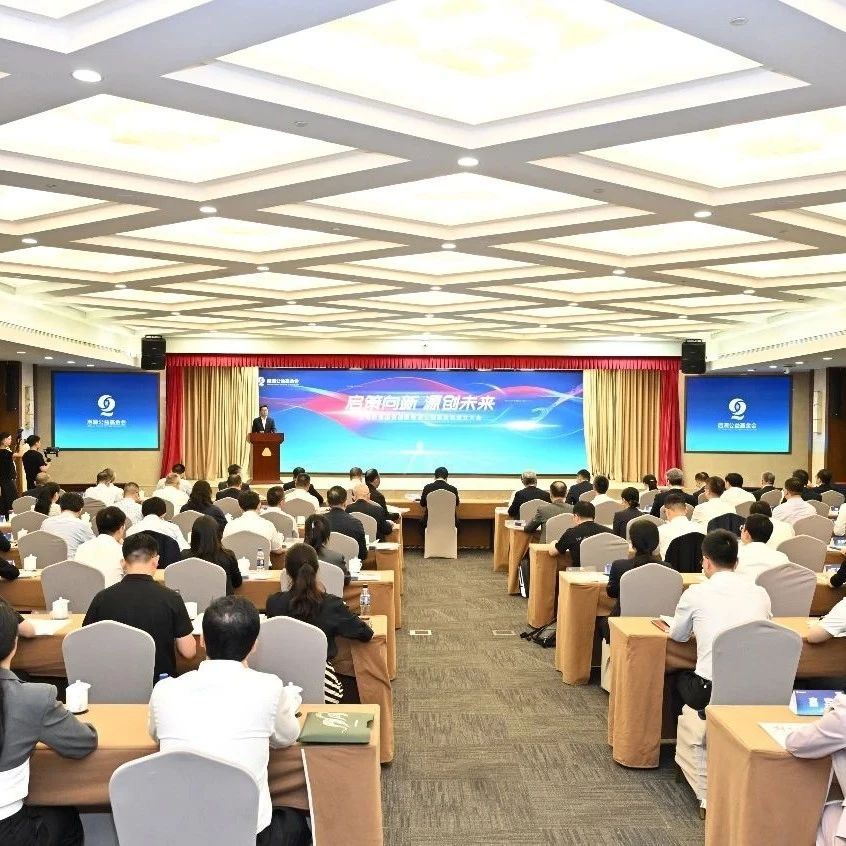
Core Viewpoint - The establishment of the Shanghai Qiyuan State-owned Assets Innovation Fund (referred to as "Qiyuan Public Welfare Foundation") marks the first public welfare foundation for basic research initiated by state-owned enterprises in China, aimed at funding forward-looking and disruptive basic research and its related transformation [1][5]. Group 1: Foundation Overview - The Qiyuan Public Welfare Foundation was officially unveiled on July 30, with contributions from 16 state-owned enterprises in Shanghai [1][5]. - The foundation is supervised by the Shanghai State-owned Assets Supervision and Administration Commission and aims to support high-risk, high-value basic research, particularly focusing on youth innovation [8][9]. Group 2: Focus Areas - The foundation emphasizes four key areas: 1. Tackling "bottleneck" issues by supporting innovative projects with disruptive potential that align with national strategic needs and Shanghai's leading industries [9]. 2. Exploring "unmanned areas" by focusing on cutting-edge disciplines such as quantum technology, controllable nuclear fusion, and brain science, supporting high-risk and controversial projects [9]. 3. Connecting the "transformation chain" by linking various resources, including innovation scenarios, incubators, and industry funds, to facilitate the transition from laboratory to industry [9]. 4. Cultivating a "new force" by providing early-stage funding to the most innovative young talents, using public welfare resources to support technological talent [9]. Group 3: Research Demand List - The foundation announced a list of 20 basic research demands covering areas such as immunotherapy, protein quantification technology, AI drug design, and computing power scheduling [12][14]. - Specific research topics include: - Mechanisms of stem cell-like T cells in tumors and inflammation [14]. - Dynamic regulation networks of inflammatory factors in autoimmune diseases [14]. - AI-based drug design techniques for difficult-to-develop drug targets [14]. - Research on high-efficiency low-temperature electrolysis of carbon dioxide [15]. - Collaborations have been established with institutions like Fudan University and Shanghai Jiao Tong University to enhance research capabilities [15].

国家越开放,会促使我们更加进步——对话任正非
证券时报· 2025-06-10 00:28
Core Viewpoint - The article emphasizes Huawei's resilience and commitment to overcoming challenges, highlighting the importance of focusing on internal capabilities rather than external pressures [1][3]. Group 1: Challenges and Responses - Huawei's CEO Ren Zhengfei expresses a mindset of not dwelling on difficulties, advocating for a proactive approach to progress [2][3]. - The company acknowledges the competitive landscape in chip manufacturing, stating that while it has made strides, it still lags behind the U.S. in certain areas [4][5]. - Ren emphasizes the importance of education and talent development in addressing challenges, particularly in the semiconductor industry [5]. Group 2: Research and Development - Huawei invests approximately 180 billion yuan annually in R&D, with around 60 billion yuan dedicated to foundational theoretical research, which is not subject to performance evaluation [11][12]. - The company recognizes the long-term nature of basic research, which can take decades to yield results, and stresses its necessity for technological breakthroughs [8][11]. Group 3: The Role of Theoretical Research - Ren highlights the significance of theoretical scientists and the need for societal understanding and support for their work, as breakthroughs often take time to be recognized [10][12]. - He draws parallels between historical scientific discoveries and their eventual applications, underscoring the value of patience in research [9][10]. Group 4: Future Outlook - Ren discusses the potential of artificial intelligence as a transformative technology for society, noting that its development will require decades of effort [15]. - He points out China's advantages in AI, including a robust power supply and advanced communication networks, which are essential for its growth [16][17]. - The CEO believes that the integration of AI into manufacturing will lead to the emergence of unique Chinese models and solutions [18]. Group 5: Economic and Social Development - Ren argues that socialism facilitates social development by enabling investments in infrastructure that may not be immediately profitable, contrasting it with capitalist approaches [14]. - He emphasizes the importance of a harmonious development model that fosters value creation and legal compliance among enterprises [19]. - The article concludes with a vision of increasing openness in the economy, which is expected to drive progress and national rejuvenation [20].