
应急管理

Search documents
威海市应急管理体系“十四五”期间实现系统性提升
Qi Lu Wan Bao· 2026-01-28 06:59
为提升应急预案的科学性、针对性与可操作性,威海市着力构建并完善"1+50+N"应急预案体系,并组 织编制应急预案操作手册、现场指挥"一张图",定人定岗定责,快速实现挂图作战。编制下发《威海市 基层应急救援能力建设指导手册》,通过细化应急响应流程、关联应急单位和岗位职责任务,使基层预 案更具有科学性、针对性和可操作性。 随着当前应急救援任务日趋复杂多元,应急管理工作面临更高要求。"十四五"期间,威海市应急管理系 统围绕"全灾种、大应急"任务需要,持续推进应急管理体系和能力现代化,在应急预案管理、救援力量 建设、实战化演练等方面取得显著进展,有效提升了城市应对突发事件的综合能力。 近年来威海市高度重视应急队伍建设,依托有关企业、单位、社会组织等各类应急资源,规范化、标准 化建设市级专业救援队伍18支、1035人;因势利导推进社会应急力量建设,推动社会应急队伍完善资源 共享、协作联动、激励约束等机制,目前社会救援队伍16支、1299人;开展基层应急力量建设,根据基 层人口密度、地域风险、产业特点等因素,整合辖区各类资源,分级细化标准建成基层救援站72个,基 层应急队伍72支。建立综合消防救援队伍、专业队伍、社会队伍 ...
国家防灾减灾救灾委员会针对安徽等四省启动国家低温雨雪冰冻灾害四级应急响应
Xin Lang Cai Jing· 2026-01-18 18:28
Core Viewpoint - The National Disaster Reduction and Relief Committee has initiated a Level 4 emergency response for low-temperature rain, snow, and ice disasters in Anhui, Henan, Hunan, and Guizhou provinces due to severe weather conditions expected from January 18 to 21 [1] Group 1: Weather Impact - A large-scale rain and snow weather process will occur in central and eastern China from north to south, with complex precipitation states including rain, snow, and freezing rain [1] - Areas such as southern Shaanxi, central and southern Henan, western Hubei, northern Hunan, and western Anhui are expected to experience heavy snowfall, while regions in southern Anhui, central and southern Henan, western Hubei, Hunan, Guizhou, and northeastern Chongqing may face freezing rain [1] Group 2: Emergency Response Measures - The committee emphasizes the importance of ensuring safety, traffic flow, power supply, livelihood, and stability, urging relevant agencies to enhance emergency plans and coordination mechanisms [1] - There is a focus on critical sectors such as transportation, electricity, telecommunications, and public welfare, with an emphasis on pre-positioning rescue teams, materials, and equipment [1] - The committee has dispatched working groups to assist on-site in Henan and has increased support in Hunan and Guizhou [1]
启动国家低温雨雪冰冻灾害四级应急响应
Xin Lang Cai Jing· 2026-01-18 17:25
Core Points - The National Disaster Reduction and Relief Committee has initiated a Level 4 emergency response for low-temperature rain, snow, and ice disasters in Anhui, Henan, Hunan, and Guizhou provinces on January 18 [1][2] - A significant weather event is expected from January 18 to 21, with widespread rain and snow across central and eastern China, particularly affecting areas south of the Qinling-Huaihe line [1] - The response emphasizes the importance of safety, transportation, power supply, livelihood, and stability, urging relevant agencies to enhance emergency preparedness and response mechanisms [1] Group 1 - The emergency response is specifically targeted at four provinces: Anhui, Henan, Hunan, and Guizhou [1] - The weather forecast indicates complex precipitation types, including rain, snow, and freezing rain, with some areas experiencing heavy snowfall [1] - The committee has called for a focus on critical sectors such as transportation, electricity, communication, and public welfare to mitigate risks [1] Group 2 - A working group from the National Disaster Reduction and Relief Committee has been deployed to assist on-site in Henan, with additional teams sent to Hunan and Guizhou [2]


国家防减救灾委针对安徽河南湖南贵州四省启动国家低温雨雪冰冻灾害四级应急响应
Xin Hua She· 2026-01-18 12:20
Core Viewpoint - The National Disaster Reduction and Relief Committee has initiated a Level 4 emergency response for low-temperature rain, snow, and ice disasters in Anhui, Henan, Hunan, and Guizhou provinces due to severe weather conditions expected from January 18 to 21 [1] Weather Impact - A large-scale rain and snow weather process is anticipated in the central and eastern regions of China, with complex precipitation states including rain, snow, and freezing rain [1] - Areas such as southern Shaanxi, central and southern Henan, western Hubei, northern Hunan, and western Anhui are expected to experience heavy snowfall, while regions in southern Anhui, central and southern Henan, western Hubei, Hunan, Guizhou, and northeastern Chongqing may face freezing rain [1] Emergency Response Measures - The committee emphasizes the importance of safety, traffic flow, power supply, livelihood, and stability, urging relevant units and provincial disaster management agencies to enhance emergency plans and coordination mechanisms [1] - There is a focus on key sectors such as transportation, electricity, communication, and public welfare, with an emphasis on strengthening rescue teams, materials, and equipment deployment [1] - Timely actions for snow and ice removal and emergency repairs are mandated to effectively respond to sudden disaster situations and prevent casualties and significant property losses [1] On-Site Support - A working group previously dispatched to Henan continues to assist on-site, with additional teams sent to Hunan and Guizhou for further support [1]
安全生产治本攻坚三年行动进入关键期:2026全面确保治本攻坚任务完成
Zhong Guo Hua Gong Bao· 2026-01-16 05:45
Core Viewpoint - The year 2026 marks the beginning of the "14th Five-Year Plan" and is crucial for completing key tasks of the three-year action plan for fundamental governance, with a focus on enhancing safety management and implementing eight major actions for safety improvement [1][2]. Group 1: Safety Management Initiatives - Establish a long-term mechanism for identifying and addressing major accident hazards, including the development of regulations for safety hazard identification and management, and enhancing the standards for identifying major hazards [1]. - Promote safety training for key industries such as construction, transportation, and fishing vessels, focusing on the training of primary responsible personnel and frontline workers [1]. Group 2: Special Rectification Actions - Continue comprehensive rectification of safety issues in urban gas, hazardous chemicals, and other sectors, while enhancing grassroots firefighting efforts and preventing major fire accidents in high-rise buildings and small venues [2]. - Implement strict safety checks in critical infrastructure areas such as bridges, tunnels, and pumped storage power stations, and strengthen safety inspections in construction and railway maintenance [2]. Group 3: Development and Safety Integration - Coordinate development and safety by enhancing safety risk monitoring and early warning systems, accelerating the elimination of outdated processes and equipment, and promoting the intelligent transformation of traditional high-risk industries [2]. - Provide guidance and services for emerging industries and new business models, clarify regulatory responsibilities, and improve safety standards to eliminate market chaos in sectors like new energy [2].
泰安规划建设161处应急避难场所,总面积869.4万平方米
Da Zhong Ri Bao· 2026-01-16 02:57
打造家门口的"安全港湾" 泰安规划建设161处应急避难场所,总面积869.4万平方米 "一旦遭遇极端天气或地质灾害,在家门口就能找到安全避难所,这样的规划让我们心里特别踏 实。"1月13日,家住泰安市乐园小区的朱女士,指着泰山广场边上的应急避难场所标识牌说。目前, 《泰安市(中心城区)应急避难场所专项规划(2025—2035年)》正式亮相,引发社会广泛关注。这份 历时一年编制的规划,以构建"五级三类"应急避难场所体系为核心,为未来十年泰安防灾减灾救灾工作 筑牢根基,为韧性城市建设注入强劲动力。 近年来,极端天气、地质灾害等突发事件多发、频发,泰山脚下的泰安也面临着多灾种集聚叠加的 风险,给公共安全和应急管理工作带来严峻挑战。 市民王女士的感受颇具代表性:"以前总担心遇到灾害没地方去,现在知道从村里的小广场到城区 的大型场馆都有明确的避难功能,还有完善的保障措施,心里的安全感实实在在。" 据悉,泰安将以这份规划为蓝本,持续完善防灾减灾救灾体系,通过十年不懈努力,让应急避难场 所成为群众身边的"安全港湾",为建设更高水平的韧性城市、切实保障人民群众生命财产安全提供坚实 支撑。 与此同时,随着城市发展和人口布局变化 ...
泰安|泰安规划建设161处应急避难场所,总面积869.4万平方米
Da Zhong Ri Bao· 2026-01-16 01:02
打造家门口的"安全港湾" 泰安规划建设161处应急避难场所,总面积869.4万平方米 "规划的生命力在于落实。"泰安市应急管理局党委委员、副局长左凤军表示,下一步将强化部门协 同,建立跨部门联合督导机制,形成工作合力,充分考虑泰安市地形特点和人口分布规律,打造"就近 可达、功能完备"的应急空间。 市民王女士的感受颇具代表性:"以前总担心遇到灾害没地方去,现在知道从村里的小广场到城区 的大型场馆都有明确的避难功能,还有完善的保障措施,心里的安全感实实在在。" 据悉,泰安将以这份规划为蓝本,持续完善防灾减灾救灾体系,通过十年不懈努力,让应急避难场 所成为群众身边的"安全港湾",为建设更高水平的韧性城市、切实保障人民群众生命财产安全提供坚实 支撑。(记者 王洪涛 李培乐 通讯员 赵国良) 与此同时,随着城市发展和人口布局变化,老城区基础设施老化,新城区安全配套滞后、乡村地区 避难能力薄弱等问题日益突出,泰安现有应急避难场所逐渐暴露出布局不均、功能不全、容量不足等问 题,难以适应新形势下的应急处置需求。 民之所忧,政之所向。泰安市委、市政府坚持问题导向,立足地域特点和灾害风险实际,牵头组织 应急管理、自然资源和规划、 ...
2025年全国各类生产安全事故起数和死亡人数均同比下降
Zhong Guo Xin Wen Wang· 2026-01-15 02:42
Group 1 - In 2025, the total number of production safety accidents in China was 19,884, with 18,261 fatalities, representing a year-on-year decrease of 8.7% and 7% respectively [1] - Major accidents numbered 9 with 129 deaths, while no particularly major accidents occurred; the number of serious accidents remained stable, with fatalities decreasing by 11.6% [1] - The occurrence of larger accidents was 357, resulting in 1,324 deaths, showing a year-on-year decline of 8.2% and 11.7% respectively [1] Group 2 - Natural disasters in 2025 primarily included floods, geological disasters, earthquakes, typhoons, and severe weather events, affecting approximately 67.03 million people and resulting in 763 deaths or missing persons [1] - Economic losses from these disasters amounted to 241.617 billion yuan, with 5.7 million houses collapsed and 6,069.4 thousand hectares of crops affected [1] Group 3 - The government emphasized the importance of safety measures during the year-end period, particularly in high-risk industries such as mining, chemicals, and construction, to prevent major accidents [2] - There is a focus on identifying and addressing safety hazards in crowded places, including large commercial complexes, hospitals, and schools, to ensure public safety during large events [2] - Measures are being taken to ensure safe travel for the public, including strict maintenance protocols for high-capacity transportation and safety checks for tourist attractions [2][3]
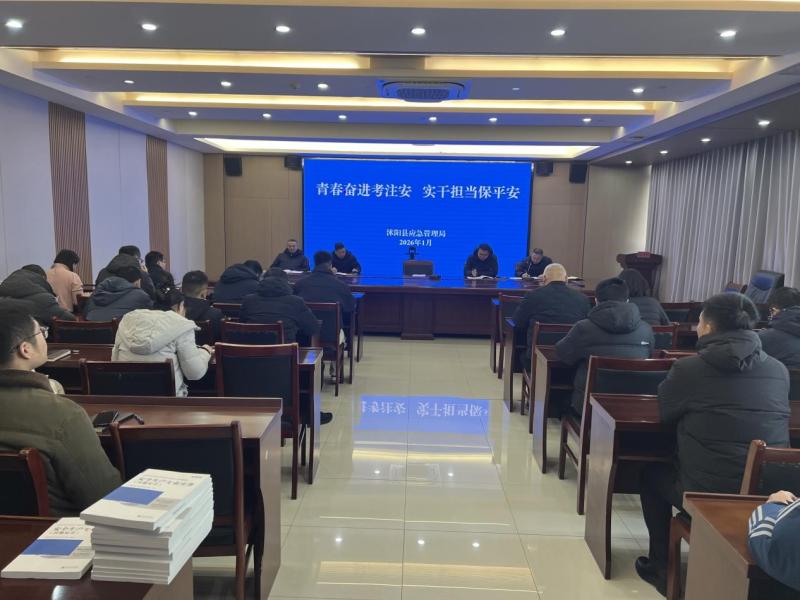
以考促学强本领 赋能青年勇担当——沭阳县应急管理局召开青年干部注册安全工程师备考动员会
Yang Zi Wan Bao Wang· 2026-01-13 23:30
Core Viewpoint - The meeting emphasizes the importance of the Registered Safety Engineer certification for enhancing the professional capabilities of young cadres in emergency management, which is crucial for improving safety production supervision in the county [3]. Group 1: Importance of Certification - The Registered Safety Engineer certificate is a key measure of professional talent in the safety production field and serves as a "golden key" for young cadres to enhance their business capabilities and better serve enterprises [3]. - The county's industrial sectors, including mechanical processing, light industry textiles, and dust-explosive industries, face numerous safety production risks, making the cultivation of a high-quality, professional youth talent team essential for high-quality development in emergency management [3][4]. Group 2: Preparation and Support - Young cadres are encouraged to set clear goals and develop reasonable study plans, balancing work and study while fostering a collaborative learning environment [4]. - The emergency management bureau will provide necessary learning materials and time support, regularly tracking preparation progress and addressing any challenges faced during the study process [4]. Group 3: Commitment to Learning - Participants expressed that the mobilization meeting clarified their learning objectives and ignited their enthusiasm for preparation, with a commitment to effectively plan their work and study time [4]. - The emergency management bureau aims to continuously strengthen the professional capability of young cadres, promoting learning through examination and practical application to build a strong emergency management team [4].
执法力量下沉激活监管“末梢”
Xin Lang Cai Jing· 2026-01-11 19:16
据悉,西宁市应急管理局每季度选派8名政治过硬、经验丰富的市级执法骨干,按照 "一区双人、季度 轮换" 模式进驻主城四区应急管理局。下沉执法人员结合业务特长,向区监管人员开展"传帮带"培训指 导6场(次)。日常监管过程中,下沉执法人员向区监管人员讲解监督检查工作流程、检查重点、方法 技巧,逐步提高区监管人员业务水平,事故隐患的闭环管理、双向告知制度的落实等工作开展得更加规 范、有效,实现区级监管能力新突破。下沉执法人员指导主城四区应急管理局编制年度检查计划,检查 计划精准测算执法检查频次、方式和生产经营单位数量,避免多头检查、重复检查。同时,下沉执法人 员会同区监管人员深入主城四区重点生产经营单位开展普法宣传,重点聚焦生产经营单位主要负责人落 实安全生产责任,开展有针对性的法律法规宣传,提高生产经营单位主要负责人安全意识。通过执法力 量下沉,市区两级应急管理部门形成了较强工作合力,监管成效显著提升。 本报西宁讯 (记者 李延平) 西宁市应急管理局创新推行"市级骨干下沉、市区联动共治"执法监管模 式,选派24名市级执法人员分批次下沉至城东、城中、城西、城北主城四区,推动执法监管力量向区级 倾斜,激活执法监管"神经 ...