
汽车零部件零售

Search documents
O’Reilly Automotive(ORLY) - 2025 Q3 - Earnings Call Transcript
2025-10-23 16:00
Financial Data and Key Metrics Changes - In Q3 2025, O'Reilly Automotive reported a 5.6% increase in comparable store sales, a 9% increase in operating income, and a 12% increase in diluted earnings per share [5][28] - The gross margin for Q3 was 51.9%, up 27 basis points from 2024, and the company maintained its full-year gross margin guidance range of 51.2% to 51.7% [17][18] - The effective tax rate for Q3 was 21.4%, slightly lower than the 2024 rate of 21.5%, with an updated full-year tax rate guidance of 21.6% [29][30] Business Line Data and Key Metrics Changes - The professional business saw a comparable store sales increase of just over 10%, driven by pro ticket count growth [6][10] - The DIY segment experienced low single-digit comparable store sales growth, impacted by pressure on transaction counts due to rising prices [7][10] - Same SKU inflation was reported at just over 4%, affecting both business segments [8][12] Market Data and Key Metrics Changes - The company updated its full-year comparable store sales guidance from 3% - 4.5% to 4% - 5% [11] - Inventory per store finished the quarter at $858,000, a 10% increase from the previous year [32] - The adjusted debt to EBITDA ratio was 2.04 times, slightly up from 1.99 times in 2024, remaining below the leverage target of 2.5 times [33] Company Strategy and Development Direction - O'Reilly plans to open 200 to 210 net new stores in 2025 and has set a target of 225 to 235 net new stores for 2026 [23][24] - The company is focused on maintaining strong supplier relationships and managing risks through a diversified supplier base [20][66] - The strategic emphasis is on enhancing customer service and product availability to gain market share [13][19] Management's Comments on Operating Environment and Future Outlook - Management expressed caution regarding consumer spending but noted that DIY consumers are still willing to invest in vehicle maintenance [10][12] - The company anticipates a mid-single-digit same SKU benefit in Q4, with expectations that most cost adjustments have been made [12][38] - Management remains optimistic about long-term growth opportunities, particularly in untapped markets like Mexico and Canada [58][59] Other Important Information - Free cash flow for the first nine months of 2025 was $1.2 billion, down from $1.7 billion in the same period in 2024, primarily due to accelerated tax payments [30][31] - Capital expenditures for the first nine months were $900 million, with a reduction in full-year guidance to $1.1 billion to $1.2 billion [26] Q&A Session Summary Question: What is the outlook for same SKU inflation? - Management expects to see a tailwind from same SKU inflation moving into Q4 and Q1, with most cost adjustments already made [37][38] Question: How is price elasticity affecting demand? - Historical trends indicate that larger ticket jobs may be deferred, but there is still strong demand for essential repairs [41][42] Question: What are the geographic performance differences? - No material differences were noted in regional performance during Q3, with results aligning closely with internal plans [64] Question: What is the company's approach to supplier health? - First Brands represents a small portion of COGS, and the company has multiple sourcing strategies to mitigate risks [66][68]

零售汽车零部件的未来:驱动变革:汽车零部件零售商在创新与适应的十字路口
Deloitte· 2025-10-21 01:35
Investment Rating - The report does not explicitly provide an investment rating for the automotive parts retail industry. Core Insights - The automotive parts retail industry is undergoing a transformation, blending traditional retail with technology, necessitating strategic adjustments to remain competitive [4][9]. - Six forces are identified that may reshape consumer-facing companies, indicating unprecedented speed of change in the automotive parts retail sector [5][7]. - Retailers must balance immediate actions with long-term business model choices to ensure future success [4]. Summary by Sections Industry Challenges - The automotive parts retail sector faces fragmentation, with diverse consumer segments influenced by unique values and purchasing behaviors [15][16]. - Retailers must adapt to a complex landscape characterized by increased competition from national chains, online marketplaces, and direct sales manufacturers [4][14]. Consumer Future - The shift towards highly interconnected and digitally savvy consumers is driving retailers to enhance service levels and provide seamless omnichannel experiences [10][11]. - Environmental concerns and the rise of electric vehicles (EVs) are prompting retailers to prioritize sustainability and transparency in their offerings [12][33]. Strategic Imperatives - Retailers should create interconnected customer journeys through AI-driven personalized experiences and robust digital infrastructures [36][37]. - Embracing technology is crucial for optimizing operations, enhancing customer interactions, and maintaining competitiveness in a rapidly evolving market [23][25]. Supply Chain Resilience - The industry must focus on building supply chain resilience and agility to navigate geopolitical tensions and market complexities [44][30]. - Implementing data-driven logistics and diversified sourcing strategies can help mitigate risks and improve operational efficiency [28][29]. Embracing Change - The rise of electric vehicles and advanced driver-assistance systems (ADAS) necessitates a shift in inventory strategies and service offerings [34][35]. - Retailers should leverage AI and predictive analytics to enhance demand forecasting and inventory management, ensuring they meet evolving consumer needs [47][50]. Community and Loyalty - Building community around automotive lifestyles can foster customer loyalty and brand engagement, moving beyond mere transactions [55][58]. - Retailers should create lifestyle experiences that resonate with diverse consumer interests, enhancing long-term relationships and brand loyalty [56][59].
Seeking Clues to O'Reilly Automotive (ORLY) Q3 Earnings? A Peek Into Wall Street Projections for Key Metrics
ZACKS· 2025-10-17 14:16
Core Viewpoint - Analysts project O'Reilly Automotive (ORLY) will report quarterly earnings of $0.83 per share, a 9.2% increase year over year, with revenues expected to reach $4.7 billion, up 7.6% from the same quarter last year [1]. Earnings Projections - The consensus EPS estimate has been revised down by 0.4% in the past 30 days, reflecting a reassessment by covering analysts [2]. - Changes in earnings projections are crucial for predicting investor reactions, as empirical studies show a strong correlation between earnings estimate trends and short-term stock price movements [3]. Key Metrics Estimates - Sales to Do-It-Yourself Customers are expected to reach $2.37 billion, indicating a 6.8% increase from the prior year [5]. - Other sales and sales adjustments are projected at $119.61 million, reflecting a 2.7% increase year over year [5]. - Sales to professional service provider customers are estimated at $2.22 billion, suggesting a 9.5% year-over-year change [5]. Store and Square Footage Estimates - Total square footage is expected to be 50 million square feet, up from 48 million square feet in the same quarter last year [6]. - The total number of stores is projected to reach 6,534, compared to 6,291 a year ago [6]. - The ending domestic store count is anticipated to be 6,402, an increase from 6,187 in the same quarter last year [6]. Additional Store Metrics - The number of stores opened is likely to be 47, consistent with the previous year's figure [7]. - The ending Canada store count is expected to remain at 26, unchanged from the prior year [7]. - Domestic new stores opened are projected at 40, up from 35 a year ago [8]. - Mexico stores at the end of the period are estimated at 107, compared to 78 last year [8]. - Sales per weighted-average square foot are expected to reach $93.73 million, up from $89.17 million year over year [8]. Overall Performance - O'Reilly Automotive shares have shown a return of -2.4% over the past month, while the Zacks S&P 500 composite has increased by 0.7% [9]. - With a Zacks Rank 4 (Sell), ORLY is expected to underperform the overall market in the near future [9].


全球媒体聚焦 | 《金融时报》:美国关税政策对消费品价格的影响开始显现
Sou Hu Cai Jing· 2025-10-06 05:27
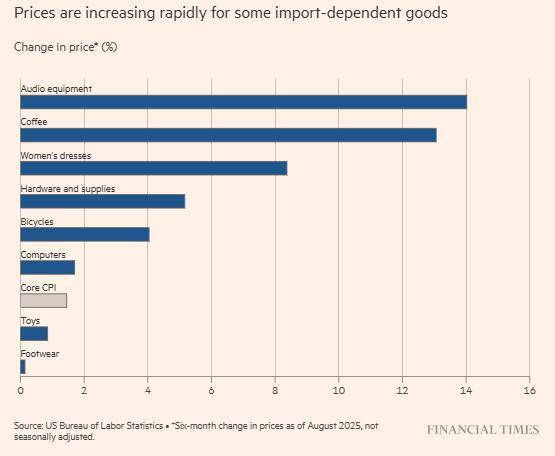
Group 1 - The article highlights that despite a moderate rise in overall inflation in the U.S., the tariff policies of the Trump administration are beginning to push up consumer prices across various goods, from canned products to auto parts [1] - Official data and corporate statements indicate that as companies deplete inventories and pass on tariff costs to consumers, prices of trade-dependent goods are accelerating. For instance, audio equipment prices increased by 14%, women's clothing by 8%, and tools and hardware by 5% over the past six months [1] - The article notes that following Trump's announcement of "reciprocal tariffs" six months ago, retailers rushed to import goods before the tariffs took effect, while other companies raised prices on specific items to protect their profit margins [1] Group 2 - A report tracking imported goods reveals that since April, 11 out of 29 "softline products" (like T-shirts and shoes), 12 out of 18 "hardline products" (such as bicycles and dishwashers), and 5 out of 16 sports goods have seen price increases by retailers, indicating the impact of tariffs [3] - Ashley Furniture, the world's largest furniture manufacturer, announced price increases of 3.5% to 12% on most of its products starting October 5, with the CEO stating that the ongoing tariff situation poses significant cost challenges for the entire industry [3] - AutoZone's CEO mentioned that as the effects of tariffs become more apparent, price increases may be even larger, reflecting concerns across various sectors including food service, construction, and utilities regarding the impact of tariffs [3] Group 3 - According to Citigroup's global chief economist, currently, U.S. consumers bear 30% to 40% of the tariff costs, with about two-thirds absorbed by companies. However, it is predicted that in the coming months, the consumer burden will rise to 60%, indicating that consumers will face more impacts [4]
AutoZone Navigates Growth During Tariff Pressures - AutoZone (NYSE:AZO)
Benzinga· 2025-09-24 18:14
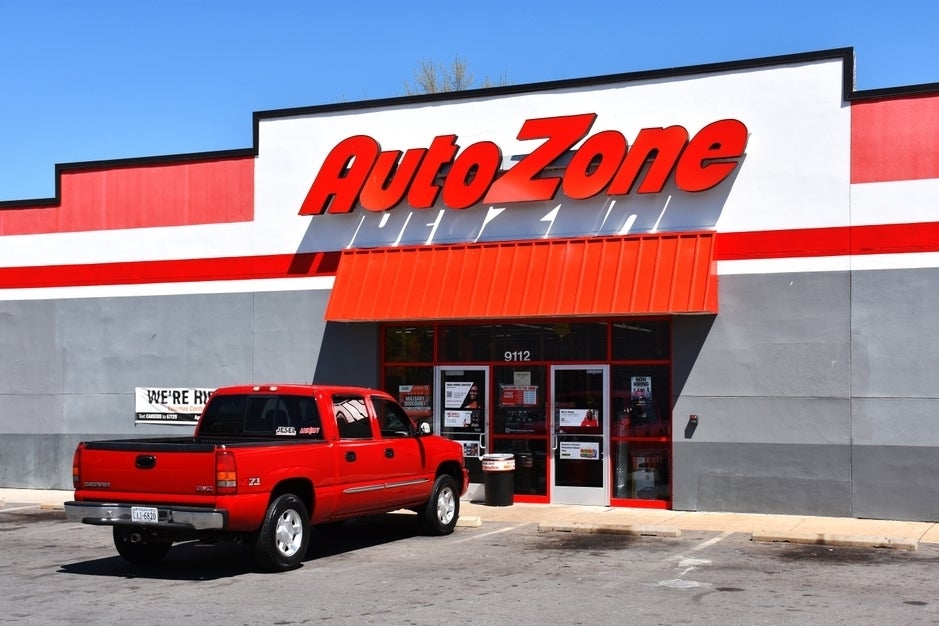
Core Viewpoint - AutoZone reported fourth-quarter earnings per share of $48.71, missing the analyst consensus estimate of $50.91, with quarterly sales of $6.242 billion, a 0.6% year-over-year increase, also falling short of expectations [1][5] Group 1: Financial Performance - Fourth-quarter earnings per share were $48.71, below the expected $50.91 [1] - Quarterly sales reached $6.242 billion, slightly missing the forecast of $6.245 billion [1] - Gross margin decreased by 98 basis points to 51.5%, primarily due to a 128 basis point LIFO impact from an $80 million non-cash charge [2] Group 2: Margin and Cost Pressures - Tariff-driven cost inflation is impacting margins, with LIFO headwinds expected to continue, projecting $120 million in the first quarter and $80–$85 million per quarter for the remainder of 2026 [3] - A larger commercial mix may exert pressure that merchandise margin gains could offset, with a forecasted 250 basis point drop to 50.5% in the first quarter [3] Group 3: Strategic Initiatives - Accelerated investments are anticipated to help increase the Pro-segment share above the current 5% [4] - First quarter SG&A is expected to deleverage to 33.5%, with SG&A per store rising by 4.8% [4] Group 4: Analyst Outlook - The analyst remains confident in AutoZone's resilience during recessions, potential share gains in DIY and Pro segments, and favorable pricing dynamics from inflation [5] - EPS estimates for fiscal 2026 were revised down to $152.93 from $166.90 based on fourth-quarter results [5] - AutoZone shares were trading higher by 2.62% to $4,228 at the time of publication [5]


AutoZone(AZO) - 2025 Q4 - Earnings Call Transcript
2025-09-23 15:02
Financial Data and Key Metrics Changes - Total sales for the quarter were $6.2 billion, up 0.6% compared to the previous year, and up 6.9% on a 16-week basis [20][8] - Earnings per share (EPS) decreased by 5.6% for the quarter, but adjusted EPS would have increased by 8.7% on a 16-week basis excluding an $80 million LIFO charge [8][9] - Gross margin was 51.5%, down 103 basis points year-over-year, primarily due to the LIFO charge [26][20] - Net income for the quarter was $837 million, down 0.5% year-over-year, while diluted EPS was $48.71, up 1.3% on a 16-week basis [31][20] Business Line Data and Key Metrics Changes - Domestic commercial sales grew 12.5% on a 16-week basis, representing 33% of domestic auto part sales [20][22] - Domestic DIY same-store sales increased by 2.2%, with average ticket growth of 3.9% [12][24] - International same-store sales grew 7.2% on a constant currency basis, with a reported growth of 2.1% due to currency headwinds [9][17] Market Data and Key Metrics Changes - Domestic same-store sales growth was 4.8%, with a positive sales cadence observed throughout the quarter [10][11] - The international market remains a focus, with 1,030 international stores and plans for accelerated openings [17][18] - The company opened 90 net domestic stores and 51 international stores during the quarter, totaling 304 new stores for the year, the highest since 1996 [15][38] Company Strategy and Development Direction - The company aims to continue investing in customer service, product assortment, and supply chain improvements to drive long-term growth [17][18] - Plans to open 325 to 350 new stores in the Americas in FY26, with a focus on hubs and megahubs to enhance inventory availability [35][18] - The strategic focus for FY26 includes growing share in the domestic commercial business and maintaining momentum in international markets [39][36] Management's Comments on Operating Environment and Future Outlook - Management expressed optimism about sales acceleration and market share growth, despite challenges from inflation and currency fluctuations [9][20] - The company anticipates continued inflationary pressures but believes it can maintain gross margins through disciplined pricing strategies [56][68] - Management highlighted the importance of customer service and execution in achieving growth targets for the upcoming fiscal year [36][39] Other Important Information - The company invested approximately $1.4 billion in capital expenditures for growth initiatives and plans to maintain a similar investment level in the next fiscal year [18][20] - Free cash flow generated for the quarter was $511 million, contributing to a total of $1.8 billion for FY2025 [31][20] - The company repurchased $447 million of its stock during the quarter, with $632 million remaining under its buyback authorization [32][20] Q&A Session Summary Question: Inflation expectations and pricing strategy - Management expects inflation to be at least 3% and may increase, using pricing strategies to cover costs while remaining competitive [46][56] Question: Growth in discretionary categories - Management noted recent growth in discretionary categories, attributing it to improved consumer sentiment but cautioned that the lower-end consumer remains under pressure [47][46] Question: LIFO charges outlook - Management anticipates LIFO charges of approximately $120 million in Q1, with potential for $80 to $85 million in subsequent quarters [52][54] Question: SG&A growth and its implications - SG&A growth is expected to remain elevated due to investments in new stores, with a focus on leveraging SG&A as stores mature [57][58] Question: Growth opportunities in Mexico - Management sees significant growth potential in Mexico, with plans to accelerate store openings and capitalize on an aging car park [74][78]
Compared to Estimates, AutoZone (AZO) Q4 Earnings: A Look at Key Metrics
ZACKS· 2025-09-23 14:31
Financial Performance - For the quarter ended August 2025, AutoZone reported revenue of $6.24 billion, reflecting a 0.6% increase year-over-year [1] - Earnings per share (EPS) were $48.71, up from $48.11 in the same quarter last year [1] - The reported revenue exceeded the Zacks Consensus Estimate of $6.22 billion by 0.35%, while the EPS fell short of the consensus estimate of $50.52 by 3.58% [1] Key Metrics - Domestic same-store sales increased by 4.8%, surpassing the six-analyst average estimate of 3.2% [4] - Total same-store sales in constant currency were up 5.1%, compared to the estimated 4.7% by five analysts [4] - The total square footage of stores was 51,818.00 Ksq ft, slightly below the average estimate of 51,899.48 Ksq ft [4] - The number of domestic stores reached 6,627, exceeding the three-analyst average estimate of 6,591 [4] - International same-store sales grew by 2.1%, significantly better than the -0.8% estimated by two analysts [4] Stock Performance - AutoZone shares returned -0.5% over the past month, while the Zacks S&P 500 composite increased by 3.6% [3] - The stock currently holds a Zacks Rank 3 (Hold), indicating expected performance in line with the broader market [3]
What's Going On With AutoZone Stock Tuesday? - AutoZone (NYSE:AZO)
Benzinga· 2025-09-23 14:02
Core Viewpoint - AutoZone, Inc. reported fourth-quarter earnings and sales that fell short of Wall Street expectations, leading to an initial dip in share price, although the stock later recovered slightly. Financial Performance - The company reported fourth-quarter earnings per share of $48.71, missing the analyst consensus estimate of $50.91 [1] - Quarterly sales were $6.242 billion, reflecting a year-over-year increase of 0.6%, but missed the expected $6.245 billion [1] - Adjusted sales, excluding an additional week from the previous year, increased by 6.9% [2] - Total same-store sales rose by 5.1%, with domestic same-store sales increasing by 4.8% [2] - Gross margin was 51.5%, down 98 basis points year-over-year, impacted by a non-cash LIFO headwind of 128 basis points from an $80 million charge [2] Profitability Metrics - Operating profit decreased by 7.8% to $1.2 billion [3] - Net income for the quarter was $837.0 million, compared to $902.2 million in the prior year [3] Shareholder Actions - AutoZone repurchased 117,000 shares in the fourth quarter at an average price of $3,821, totaling a buyback outlay of $446.7 million [3] Inventory and Expansion - The company's inventory increased by 14.1% year-over-year, primarily due to growth initiatives [3] - In the quarter ended August 30, 2025, AutoZone opened 91 U.S. stores, 45 in Mexico, and 6 in Brazil, totaling 141 net new stores [4] - The international unit reported constant-currency same-store sales growth of 7.2% [4] - AutoZone plans to accelerate store openings in the coming year to gain market share [4][5] Cash Position - The company exited the quarter with cash and equivalents amounting to $271.803 million [5]

美联储降息预期下小盘股跑出“补涨行情” 分析师看好这些股票
Jin Rong Jie· 2025-08-20 23:55
Group 1 - The focus of the U.S. stock market is shifting from the "seven giants" tech stocks to small-cap stocks, with the S&P SmallCap 600 and Russell 2000 indices rising by 6% and 7% respectively over the past three months, although still lagging behind the Nasdaq 100's nearly 9% increase [1][3] - Francis Gannon from Royce Investment Partners believes that value-oriented small-cap stocks will benefit the most from potential interest rate cuts, as these companies hold more floating-rate debt compared to large enterprises, making their financing costs more directly impacted [1][2] - The recent "Big and Beautiful" bill passed by Congress, which includes stimulus and tax reduction measures, may further boost the performance of small-cap companies [1] Group 2 - Bank of America’s strategy team indicates that interest rate cuts could lead to stronger short-term excess returns for small-cap stocks, which are more sensitive to interest rate changes [2] - The report highlights that during the Federal Reserve's easing cycle, value-oriented small-cap stocks tend to outperform growth stocks, with high-quality stocks outperforming high-risk companies [2] - The S&P 600 index currently has a price-to-earnings ratio of about 17 times, nearly 30% lower than that of the S&P 500, indicating a valuation advantage for small-cap stocks [2]
美联储降息预期下小盘股跑出“补涨行情” 分析师推荐这些股票
Zhi Tong Cai Jing· 2025-08-20 22:33
Group 1 - The focus of the U.S. stock market is shifting from the "seven giants" tech stocks to small-cap stocks, with the S&P SmallCap 600 and Russell 2000 indices rising by 6% and 7% respectively over the past three months, although still lagging behind the Nasdaq 100's nearly 9% increase [1] - Francis Gannon from Royce Investment Partners believes that value-oriented small-cap stocks will benefit the most from potential interest rate cuts, as these companies hold more floating-rate debt compared to large enterprises, making their financing costs more directly impacted [1] - The recently passed "Big and Beautiful" bill by the U.S. Congress, which includes stimulus and tax reduction measures, may further boost the performance of small-cap companies [1] Group 2 - Bank of America’s strategy team indicates that interest rate cuts could lead to stronger short-term excess returns for small-cap stocks, as they are more sensitive to interest rate changes [2] - The report highlights that during the Federal Reserve's easing cycle, value-oriented small-cap stocks tend to outperform growth stocks, with high-quality stocks outperforming high-risk companies [2] - The S&P 600 index currently has a price-to-earnings ratio of about 17 times, nearly 30% lower than that of the S&P 500, which historically has only seen a 25% discount [2] Group 3 - Market participants believe that small-cap stocks are becoming a new investment stage, especially with the potential for interest rate cuts from the Federal Reserve [3]