知识产权服务

Search documents
知识产权效益加速显现
Jing Ji Ri Bao· 2026-01-29 22:14
Core Insights - By 2025, China is expected to have 5.32 million valid invention patents and 49.877 million valid registered trademarks, indicating a continuous improvement in innovation quality and active innovation in key regions [1] - The development of a robust public service system for intellectual property (IP) is underway, with AI-driven platforms being established in various regions to enhance decision-making for businesses [2] - The revision of the trademark law is set to address social concerns such as "malicious trademark registration," aiming for a comprehensive modification to resolve prominent issues in the trademark domain [3] Group 1: Intellectual Property Development - By 2025, the volume of various IP transactions is projected to exceed 1 billion, with over 2 billion information query services and approximately 96 million retrieval and analysis services provided [2] - The quality of invention patents is emphasized, with a shift from quantity to high-value patents, achieving a target of 16 high-value invention patents per 10,000 people by 2025 [6] - The value added by patent-intensive industries is expected to surpass 18 trillion yuan, increasing its GDP contribution from 11.97% in 2020 to 13.38% in 2024 [6] Group 2: Regional Innovation Clusters - By 2025, 24 clusters in China are projected to rank among the global top 100, with Beijing and the Shanghai-Suzhou cluster ranked 4th and 6th respectively [7] - The Yangtze River Delta, Beijing-Tianjin-Hebei, and Guangdong regions account for approximately two-thirds of the total valid invention patents in China, with respective valid patent counts of 1.734 million, 916,000, and 899,000 [7] - The establishment of international science and technology innovation centers in key regions marks a new phase of collaborative development in China's innovation clusters [7]
陈汪杰:努力提升知识产权服务质效
Jing Ji Ri Bao· 2026-01-28 00:04
Core Insights - The data presented indicates a significant growth in China's intellectual property (IP) sector, with patent transfer and licensing registrations reaching 697,000 in 2025, a year-on-year increase of 13.7% [1] - The total import and export value of IP usage fees from January to November 2025 reached 382.87 billion yuan, marking a 7.4% increase, with exports rising by 23.1% [1] - The achievements reflect a qualitative and quantitative improvement in China's IP construction, moving towards becoming a strong IP nation [1] Group 1: Government and Market Services - IP services are crucial in connecting innovation with the market, comprising public services from government departments and market services from professional institutions [2] - The National Intellectual Property Administration has launched a nationwide "IP Service Journey" initiative, resulting in over 16,000 events and participation from more than 200,000 enterprises, facilitating the conversion of over 20,000 patents [2] - The collaboration between public and market services spans the entire IP chain, enhancing the foundation for innovation [2] Group 2: Challenges and Opportunities - Despite the growth, challenges remain in China's IP services, characterized by a "large but weak" service model, with gaps between service supply and market demand [3] - Public service inefficiencies stem from insufficient resource allocation and poor inter-departmental coordination, leading to time-consuming processes for enterprises [3] - Market services often lack diversity, with many institutions offering only basic registration services, resulting in intense competition and a need for differentiation [3] Group 3: Enhancing Service Efficiency - Improving public service efficiency requires optimizing business processes and utilizing digital tools to enhance inter-departmental collaboration [4] - Successful local initiatives, such as Jiangsu's "Talent Matching" events and Hangzhou's integrated data registration service, demonstrate effective public service improvements [4] - Market services should expand into high-value offerings like patent cultivation and brand strategy planning, promoting the efficient conversion of innovation outcomes [4] Group 4: Role of Enterprises - Enterprises play a critical role as consumers of IP services, serving as a benchmark for service quality [5] - When selecting market services, enterprises should prioritize their actual needs and strategic goals over price, effectively "voting with their feet" to eliminate subpar service providers [5] - In public services, enterprises should actively provide feedback and suggestions to improve service processes [5]
努力提升知识产权服务质效
Jing Ji Ri Bao· 2026-01-27 22:13
Group 1 - The core viewpoint of the article highlights the significant progress in China's intellectual property (IP) sector, with a notable increase in patent transfer and licensing registrations, indicating a move towards becoming a strong IP nation [1][2] - In 2025, the number of patent transfer and licensing registrations reached 697,000, a year-on-year increase of 13.7%, while the total import and export value of IP usage fees from January to November 2025 amounted to 382.87 billion yuan, reflecting a 7.4% year-on-year growth [1] - The article emphasizes the importance of a robust IP service system, which has transitioned from passive acceptance to proactive response, enhancing the overall efficiency of IP services across the entire chain from creation to management [1][2] Group 2 - The IP service sector is described as a crucial bridge connecting innovation and the market, comprising public services from government departments and market services from professional institutions, both of which are essential for fostering innovation [2][3] - Since 2024, the National Intellectual Property Administration has organized over 16,000 activities nationwide under the "Intellectual Property Service Journey," involving more than 200,000 enterprises and facilitating the conversion of over 20,000 patents [2] - The article points out that while the U.S. has a well-developed IP service ecosystem generating over $144 billion in annual IP usage fees, China still faces challenges with a large but not strong IP service sector, indicating a gap between service supply and market demand [3] Group 3 - To enhance public service efficiency, the article suggests optimizing business processes and utilizing digital tools to improve inter-departmental collaboration, as demonstrated by successful initiatives in Jiangsu and Zhejiang provinces [4] - The market service sector is encouraged to expand its offerings beyond basic registration services to include high-value services such as patent cultivation and brand strategy planning, which can help activate intangible assets and promote efficient innovation transfer [4] - Enterprises are positioned as key evaluators of IP service quality, with the article advocating for businesses to choose service providers based on their actual needs and to actively participate in providing feedback to improve public services [5]
传智慧芽考虑香港和新加坡两地双重上市 集资最多4亿美元
Zhi Tong Cai Jing· 2026-01-27 08:54
据媒体援引知情人士报道,知识产权信息提供商PatSnap(简称:智慧芽)正考虑在中国香港和新加坡双重 上市,集资3亿至4亿美元。知情人士补充称,相关讨论仍在进行中,关于上市规模、时间和地点等细节 仍在商讨之中。智慧芽方面没有回复置评请求。 公开资料显示,智慧芽成立于2007年,分公司遍及中新英加日五地,是AI驱动的科技创新和知识产权 信息服务商,聚焦科技创新情报和知识产权信息化服务两大板块。公司2022-2025年连续四年入选"胡润 全球独角兽"榜单,投资方包括软银、腾讯、红杉中国、顺为资本等知名机构。 公司已为全球包括Spotify、戴森、小米、中科院等在内的超1.5万个客户提供知识产权数据和分析服 务,覆盖生物医药、新材料、智能制造、新能源汽车、通信、半导体、高校和科研院所等领域。 ...
新股消息 | 传智慧芽考虑香港和新加坡两地双重上市 集资最多4亿美元
智通财经网· 2026-01-27 08:49
公开资料显示,智慧芽成立于2007年,分公司遍及中新英加日五地,是AI驱动的科技创新和知识产权 信息服务商,聚焦科技创新情报和知识产权信息化服务两大板块。公司2022-2025年连续四年入选"胡润 全球独角兽"榜单,投资方包括软银、腾讯、红杉中国、顺为资本等知名机构。 公司已为全球包括Spotify、戴森、小米、中科院等在内的超1.5万个客户提供知识产权数据和分析服 务,覆盖生物医药、新材料、智能制造、新能源汽车、通信、半导体、高校和科研院所等领域。 智通财经APP获悉,据媒体援引知情人士报道,知识产权信息提供商PatSnap(简称:智慧芽)正考虑在中 国香港和新加坡双重上市,集资3亿至4亿美元。知情人士补充称,相关讨论仍在进行中,关于上市规 模、时间和地点等细节仍在商讨之中。智慧芽方面没有回复置评请求。 ...
全球第二、3个“最”!一组数据看2025知识产权“硬核”答卷!
Yang Guang Wang· 2026-01-24 00:57
Core Insights - In 2025, China authorized 972,000 invention patents and 1,461,000 utility model patents, with a total of 96,000 cases of patent reexamination and invalidation concluded [6][17]. Group 1: Patent Achievements - By the end of 2025, the effective number of invention patents in China (excluding Hong Kong, Macau, and Taiwan) reached 5.32 million, with a high-value invention patent ownership rate of 16 per 10,000 people [9]. - The value added by patent-intensive industries in China exceeded 18 trillion yuan, increasing its share of GDP from 11.97% in 2020 to 13.38% in 2024, surpassing the expectations set in the "14th Five-Year Plan" for intellectual property [13]. Group 2: Trademark Developments - In 2025, China registered 4.206 million trademarks, with a total of 49.877 million effective registered trademarks by the end of 2025 [17]. - The brand value of Chinese brands among the global top 5,000 reached 1.81 trillion USD, ranking second globally [17]. Group 3: Geographic Indications and Satisfaction - The direct annual output value of geographic indication products in China approached 1 trillion yuan, marking five consecutive years of growth, with 104 new geographic indication products recognized in 2025 [20]. - The social satisfaction rate for intellectual property protection in China increased to 82.81, up from 80.61 in 2021, reflecting a steady improvement during the "14th Five-Year" period [23]. Group 4: Intellectual Property Trade - From January to November 2025, the total import and export value of intellectual property usage fees in China reached 382.87 billion yuan, a year-on-year increase of 7.4%, with exports growing by 23.1% [27]. Group 5: Innovation Clusters - In the 2025 global top 100 innovation cluster rankings released by the World Intellectual Property Organization, the Shenzhen-Hong Kong-Guangzhou, Beijing, and Shanghai-Suzhou clusters ranked first, fourth, and sixth globally, respectively, highlighting their role as strategic hubs for China's transition to a strong intellectual property nation [32].


聚焦提升海南自贸港国际竞争力 官方:知识产权工作将持续发力
Zhong Guo Xin Wen Wang· 2026-01-23 18:03
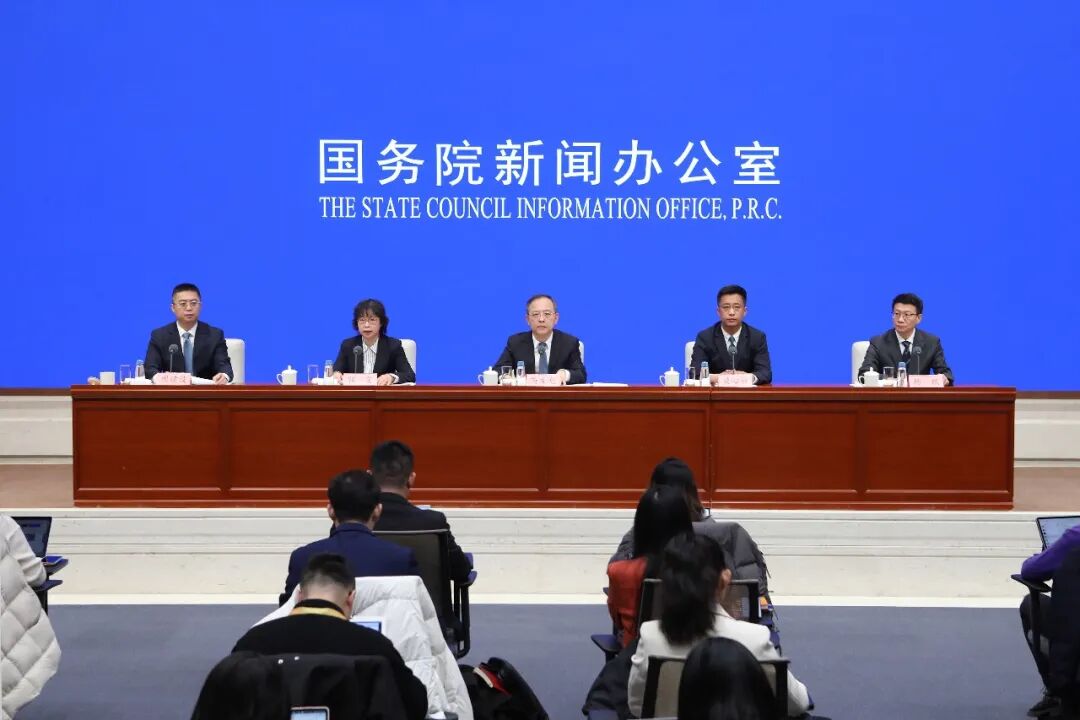
对接国际经贸规则方面,支持海南在跨境电商知识产权治理、知识产权跨境转让等方面先行先试;促进 知识产权国际合作方面,支持发挥自贸港优势,打造具有当地特色的知识产权国际交流活动品牌;强化 知识产权制度集成创新方面,推动建立高效的知识产权综合管理体制,努力把知识产权制度优势转化为 发展动能,让海南自贸港真正成为引领新时代对外开放的重要门户。 芮文彪指出,知识产权保护是自贸港竞争力的重要方面,也是营商环境的主要体现。近年来,国家知识 产权局会同海南省以及相关部门,围绕自贸港已开展一系列知识产权方面的创造性工作。 加强制度创新上,支持海南三亚崖州湾开展专利、商标、版权、地理标志、集成电路布图设计"五合 一"的知识产权综合管理体制改革。支持在海南设立全国首个涵盖民事、刑事、行政"三合一"审判职能 的知识产权法院。实施《海南自由贸易港知识产权保护条例》,探索推出一系列对标国际的新举措。 中新网北京1月23日电 (记者孙自法)中国国家知识产权局副局长芮文彪1月23日透露,为进一步聚焦提升 海南自由贸易港(自贸港)的国际竞争力,该局下一步将指导海南知识产权工作在国际化和法治化方面持 续发力。 国务院新闻办公室当天在北京举行20 ...
权威数读|突破500万件! 2025知识产权工作“成绩单”来了
Xin Hua She· 2026-01-23 12:17
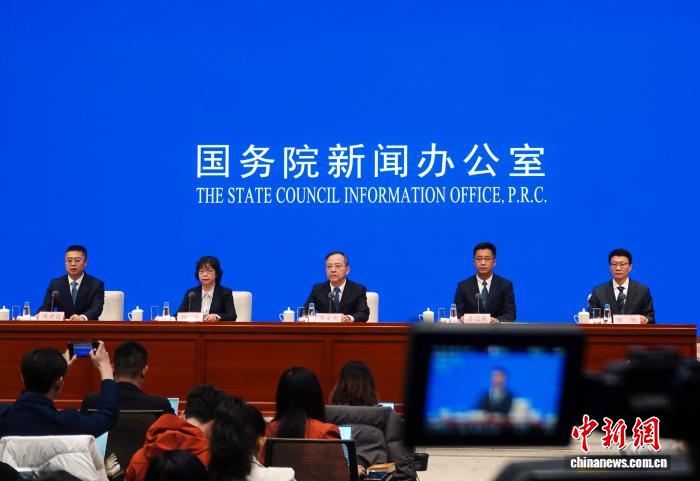
Core Insights - The effective number of invention patents in China reached 5.32 million, with artificial intelligence patents ranking among the top globally, and the direct annual output value of geographical indication products has seen five consecutive years of growth [1] Patent Registration and Protection - The average examination cycle for trademark registration remains stable at 4 months, with an examination pass rate exceeding 97%. In 2025, the effective registered trademarks in China (excluding Hong Kong, Macau, and Taiwan) are projected to reach 49.877 million [3] - A total of 104 new geographical indication products were recognized in the year, with 2,639 products converted to recognized status. By the end of 2025, there will be a cumulative total of 5,066 recognized geographical indication products [4] - In the field of integrated circuit layout design, 10,000 registrations were issued in the year, with a cumulative total of 93,000 registrations by the end of 2025 [5] Data Intellectual Property - As of October 2025, over 40,000 data intellectual property registration certificates have been issued across pilot regions, with financing and licensing transaction amounts nearing 15 billion yuan [7] Intellectual Property Protection - Five new national-level intellectual property protection centers and two rapid rights protection centers have been established, bringing the total to 129. Additionally, 36 overseas intellectual property dispute response guidance platforms have been set up, totaling 116 [8] - The system handled 57,000 patent infringement administrative cases and guided 62,000 intellectual property mediation cases. The social satisfaction score for intellectual property protection has risen to 82.81 points [8] Intellectual Property Utilization - The number of patent transfer and licensing records reached 697,000, a year-on-year increase of 13.7%. The industrialization rate of enterprise invention patents has reached 54%, showing steady growth over the years [9] - From January to November 2025, the total import and export value of intellectual property usage fees reached 382.87 billion yuan, with exports increasing by 23.1% year-on-year [9] Public Services in Intellectual Property - 36 new national-level intellectual property public service institutions have been established, bringing the total to 519, with the coverage rate of municipal comprehensive intellectual property public service institutions rising to 54.1% [10] - A national intellectual property public service platform has been launched, aggregating over 400 types of basic intellectual property data, enabling various services to be processed online [10] Innovation Quality and Regional Activity - The number of high-value invention patents in China has increased by 2.2 percentage points compared to the overall growth rate, reaching 2.292 million [10] - By the end of 2025, the effective number of invention patents in the Yangtze River Delta, Beijing-Tianjin-Hebei, and Guangdong regions are projected to be 1.734 million, 916,000, and 899,000 respectively [10]

视频丨设立“绿色通道” 海南自贸港发明专利授权大幅提速
Yang Shi Xin Wen Ke Hu Duan· 2026-01-23 08:16
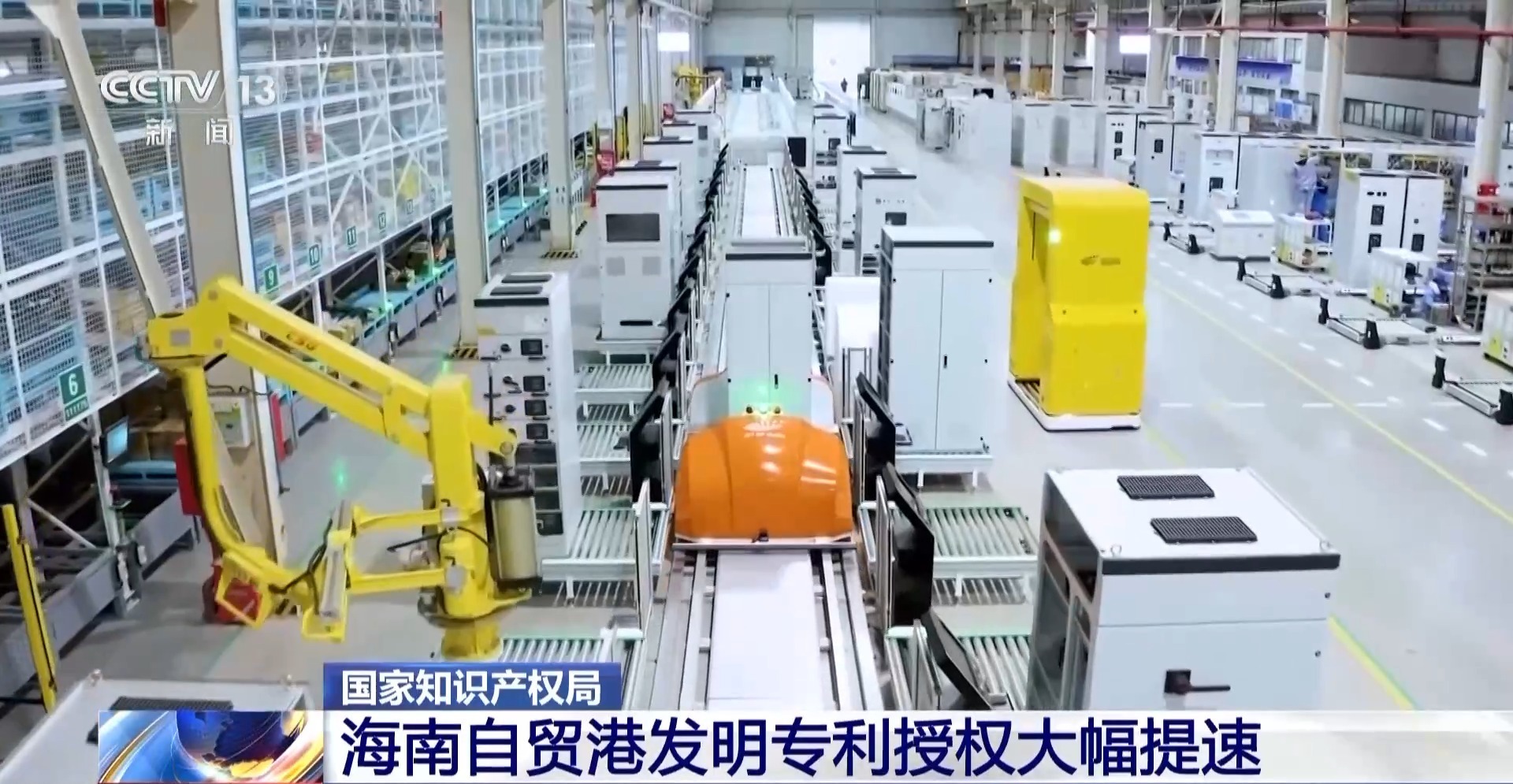
8家国家级知识产权公共服务机构在自贸港设立,去年累计服务创新主体1.5万次。深入推进专利转化运用,完成全省31所高校和科研机构的存量专利盘 点。 国家知识产权局副局长 芮文彪:下一步,我们将进一步聚焦提升海南自贸港的国际竞争力,积极对接国际经贸规则,支持海南在跨境电商知识产权治 理、知识产权跨境转让等方面先行先试。 前不久海南自由贸易港正式封关运行,为配合自贸港建设,国家及地方知识产权相关部门围绕自贸港建设开展了哪些创新性工作?未来还将如何进一步 完善知识产权制度,提升自贸港的国际竞争力? 0:00 / 0:56 国家知识产权局有关负责人表示,目前,海南的海口、三亚两地已经设立了国家级知识产权保护中心,建立起涵盖种业、深海科技、生物医药等重点产 业的快速预审、快速确权、快速维权"绿色通道",发明专利授权平均提速达80%以上。 ...
国家知识产权局:加快推动《集成电路布图设计保护条例》修改
Shang Hai Zheng Quan Bao· 2026-01-23 05:52
Core Viewpoint - The National Intellectual Property Administration plans to implement a high-quality "14th Five-Year" plan, focusing on revising trademark laws and regulations for new fields like artificial intelligence by 2026 [2] Group 1: Intellectual Property Data - In 2025, a total of 972,000 invention patents, 1,461,000 utility model patents, and 666,000 design patents were granted, with a reduction in the examination cycle for invention patents to 15 months and an accuracy rate of 95.6% [3] - By the end of 2025, the effective number of invention patents in China reached 5.32 million, with a high-value invention patent ownership rate of 16 per 10,000 people [3] - The value added by patent-intensive industries accounted for 13.38% of GDP, exceeding the targets set in the "14th Five-Year" plan [3] Group 2: Trademark Data - In 2025, 4,206,000 trademarks were registered, with an average examination cycle of 4 months and an approval rate exceeding 97% [4] - By the end of 2025, the effective number of registered trademarks in China reached 49.877 million, with the value of Chinese brands in the top 5,000 globally amounting to $1.81 trillion, ranking second worldwide [4] Group 3: Geographical Indications - In 2025, 104 new geographical indication products were recognized, and 2,639 products were converted, with over 20,000 entities approved to use geographical indication special marks [5] - By the end of 2025, a total of 5,066 geographical indication products were recognized, and 7,425 were approved as collective or certification trademarks [5] Group 4: Integrated Circuit Layout Design - In 2025, 10,000 integrated circuit layout designs were registered [6] - By the end of 2025, a cumulative total of 93,000 integrated circuit layout designs had been registered [7] Group 5: Data Intellectual Property Pilot - As of October 2025, over 40,000 data intellectual property registration certificates were issued, with financing and licensing transaction amounts nearing 15 billion yuan [8] Group 6: Future Work Focus - The administration will focus on seven areas for the "14th Five-Year" plan, including top-level design, legal protection, quality orientation, collaborative governance, efficient utilization, public service optimization, and open cooperation [9][10]