
自动驾驶出行

Search documents
Robotaix称将加大在深车辆投放 未来三五年 走进百姓家
Shen Zhen Shang Bao· 2025-09-01 00:45
Core Insights - The rapid development of Robotaxi services in Shenzhen is supported by regulatory policies and the increasing demand for automated transportation solutions [1][3][4] Group 1: Robotaxi Operations - Multiple companies, including Baidu's "Luobo Kuaipao" and Xiaoma Zhixing, have launched Robotaxi services in Shenzhen, with some already charging for rides [1] - Xiaoma Zhixing is the only company operating fully unmanned Robotaxi services in major cities like Beijing, Shanghai, Guangzhou, and Shenzhen, covering over 2,000 square kilometers in total [1] - The operational area in Shenzhen exceeds 830,000 square kilometers, with services available 24/7 [1][4] Group 2: Pricing and User Demand - A test ride from Shenzhen Bay to Qianhai costs approximately 29.5 yuan, with a promotional discount bringing it down to 14.3 yuan, making it competitive with traditional taxi services [2] - Xiaoma Zhixing reported a revenue of 10.9 million yuan (1.5 million USD) from Robotaxi services in Q2, a year-on-year increase of 157.8%, with passenger fare revenue growing over 300% [2] Group 3: Regulatory Support - Shenzhen implemented the "Shenzhen Special Economic Zone Intelligent Connected Vehicle Management Regulations" in August 2022, addressing various challenges in the industry [3] - By May 2025, Shenzhen plans to have opened 2,101 kilometers of testing roads, representing about 24% of the city's total road mileage, a leading figure among major cities in China [3] Group 4: Market Expansion and Competition - The complexity of Shenzhen's urban environment has provided valuable operational experience for companies, enhancing their technological capabilities [4] - The global Robotaxi market is becoming increasingly competitive, with companies like Xiaoma Zhixing and Luobo Kuaipao aiming for international expansion [4][5]
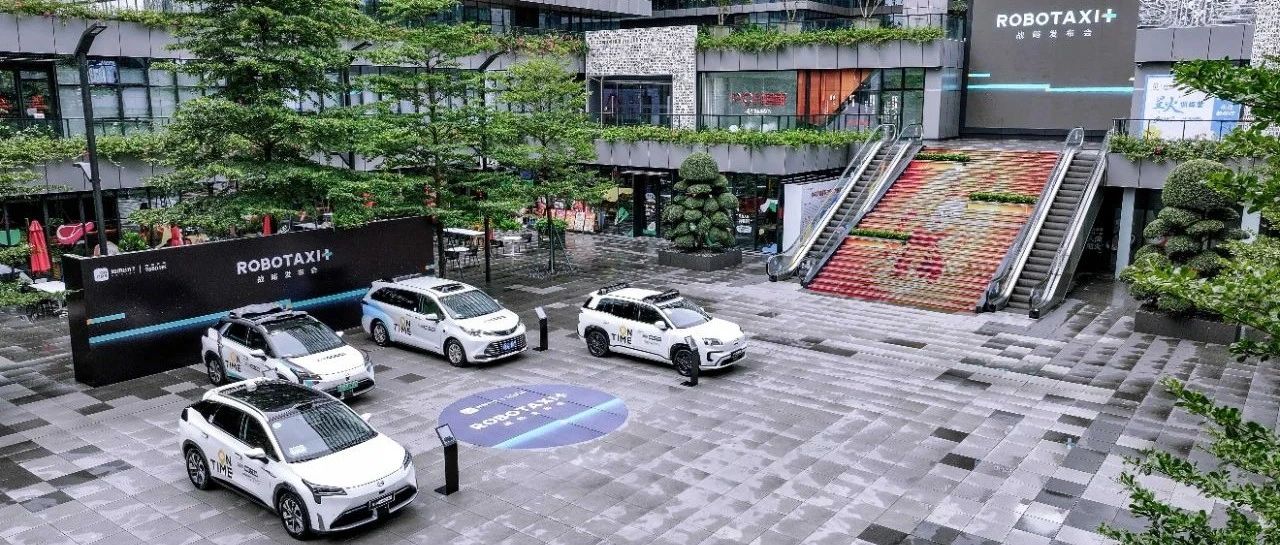
如祺出行发布“Robotaxi+”战略:要做「中国版Uber」,加速Robotaxi大规模商业化落地
IPO早知道· 2025-07-23 04:44
Core Viewpoint - The article discusses the launch of "Robotaxi+" strategy by Ruqi Mobility, aiming to accelerate the large-scale commercialization of Robotaxi services through collaboration with various stakeholders in the industry [2][4]. Group 1: Robotaxi Development Strategy - Ruqi Mobility's approach to Robotaxi development is similar to that of global ride-hailing company Uber, focusing on expanding partnerships and operational capabilities to enhance service delivery [2]. - The CEO of Ruqi Mobility emphasized that the industry is now in a phase where the ability to achieve large-scale commercial deployment will determine the viability of players in the Robotaxi sector [4]. - The "Robotaxi+" strategy aims to upgrade the existing open Robotaxi operational technology platform to provide comprehensive solutions for all participants in the Robotaxi commercialization process [5]. Group 2: Expansion Plans - Ruqi Mobility has introduced two major expansion plans, "Spark Plan" and "Galaxy Plan," to enhance the scale of Robotaxi fleets and operational infrastructure [7]. - The "Spark Plan" focuses on expanding the operational range and fleet size of Robotaxi services, with a goal to cover 100 core cities and build a fleet of over 10,000 vehicles in the next five years [7]. - The "Galaxy Plan" involves a 1 billion investment over the next five years to establish a three-tier maintenance network for Robotaxi services across 100 core cities, supporting the operation of 100,000 vehicles annually [8]. Group 3: Partnerships and Collaborations - Ruqi Mobility has signed cooperation agreements with several strategic partners, including GAC Commerce and GAC Energy, to deepen collaboration in building Robotaxi fleets and operational networks [9]. - The company aims to leverage its operational data and asset management experience to provide comprehensive operational solutions to ecosystem partners [7][10]. Group 4: Market Position and Performance - Since its inception in 2019, Ruqi Mobility has positioned itself as a leader in the mixed operation of human-driven and Robotaxi services, becoming the first platform to commercialize such a model [10]. - As of June 2025, Ruqi Mobility's Robotaxi fleet has exceeded 300 vehicles, covering multiple regions and achieving significant operational milestones, including over 4,000 service stations and 4 million kilometers of safe operation [10]. - The demand for Robotaxi services has surged, with order volumes in regions like Nansha, Guangzhou, increasing by over 480% in the first half of 2025 [10].

商业化进程提速 中国Robotaxi企业争相出海
Zhong Guo Zheng Quan Bao· 2025-06-24 20:23
Core Insights - The Robotaxi industry is transitioning from technology validation to commercialization, with new players entering the market and leading companies expanding internationally [1][3][6] - Haibo has officially entered the Robotaxi sector, backed by significant funding and a focus on L4 autonomous driving technology [2][4] New Players Entering the Market - Haibo, in collaboration with Ant Group and CATL, established "Shanghai Zhaofu Intelligent Technology Co., Ltd." with a registered capital of 1.288 billion yuan to focus on L4 autonomous driving technology [1][2] - Haibo's Robotaxi business has secured over 3 billion yuan in financing, indicating strong market confidence and a commitment to expanding its operations [2] Expansion of Leading Companies - Leading Chinese Robotaxi companies are actively pursuing international markets, with WeRide partnering with Uber and the Dubai Roads and Transport Authority to launch commercial Robotaxi services in Dubai [3][4] - WeRide plans to deploy Robotaxi services in 15 new cities over the next five years, emphasizing the Middle East as a strategic focus [3] - Pony.ai is also collaborating with Dubai authorities to test and eventually launch fully autonomous operations by 2026 [3][4] Industry Growth Projections - The Robotaxi market is projected to reach 200 billion yuan by 2030, with Robotaxi services expected to account for approximately 36% of B-end shared mobility [2] - The industry is anticipated to enter a phase of rapid growth from 2026 to 2030, driven by increasing commercialization [2] Innovation and Competitive Advantage - Chinese Robotaxi companies are leveraging their validated technologies and operational capabilities to enhance their global competitiveness [6] - The transition from "cost-effectiveness" to "technology premium" branding is seen as crucial for the Chinese automotive industry [6] - Companies are focusing on local market adaptation and safety system development to gain a competitive edge in international markets [6]