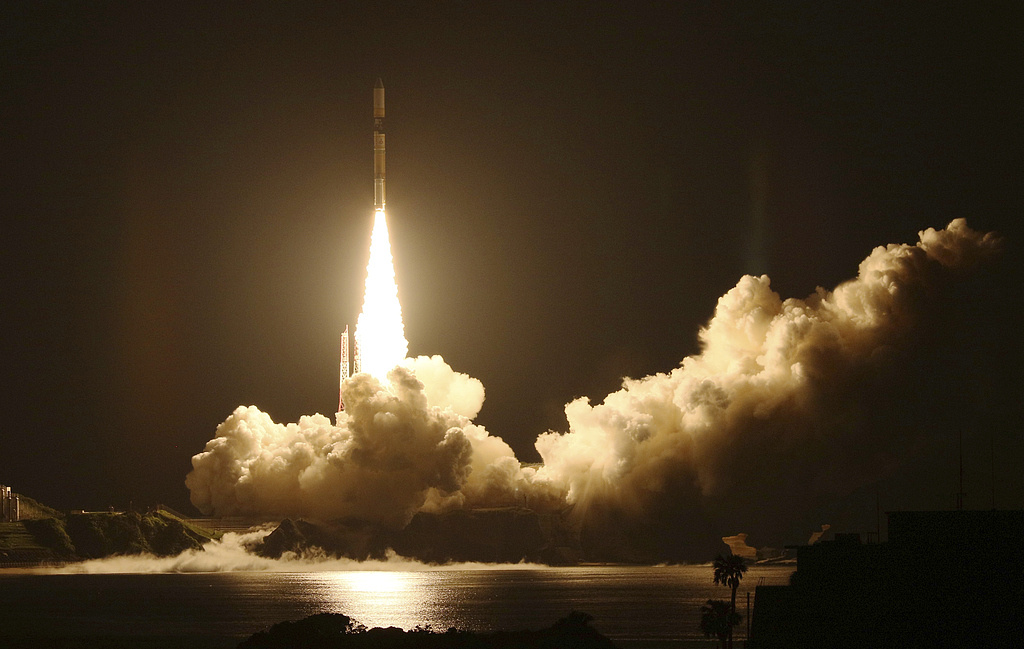
航天发射

Search documents
商业航天新战场,“航天老兵”再冲锋
Hai Nan Ri Bao· 2025-07-14 00:51
Core Insights - The article highlights the significant progress and achievements of Hainan International Commercial Launch Co., particularly under the leadership of Assistant General Manager Shou Junming in the commercial space launch sector [1][3]. Company Overview - Hainan International Commercial Launch Co. was established in June 2022, facing challenges such as a shortage of technical personnel and the need for compatibility with multiple rocket types [3][4]. - The company successfully completed its first dual-position launch in March 2023 with the Long March 8 rocket, marking a milestone for China's first commercial space launch site [3]. Leadership and Team Development - Shou Junming has played a crucial role in building a professional team of nearly 200 members within eight months to support the company's operational capabilities [4]. - The company has focused on rigorous technical challenges, including the compatibility of various rocket models and the establishment of a robust support system for launch operations [3][4]. Future Prospects - The company is preparing for further launches, with the next significant event scheduled for November 30, 2024, when the Long March 12 rocket is expected to take off [4]. - The successful completion of the first launch has validated the full-system launch capabilities of the Hainan commercial space launch site, paving the way for future missions [4].
以色列称其“最先进”通信卫星由美公司发射升空
news flash· 2025-07-13 18:19
Core Points - Israel's "most advanced" communication satellite, named "Freedom 1," was successfully launched by SpaceX using a Falcon 9 rocket from Florida [1] - The satellite, developed by Israel Aerospace Industries, has a cost of approximately $200 million and is expected to support Israel's strategic and civilian communication for 15 years [1] - The launch is described as a historic leap for Israel's space technology, marking a significant achievement in the country's aerospace capabilities [1]
台湾火箭首次在日本发射,升空不久即坠落
Guan Cha Zhe Wang· 2025-07-12 13:12
Group 1 - The launch of the VP-01 rocket by the Taiwanese private rocket company jtSPACE in Japan marked the first instance of a foreign capital-developed rocket being launched in Japan [4][5] - The rocket's first stage performed as planned, but the second stage experienced a failure that led to its crash, which is believed to be due to the fragmentation of its tail wing [3][4] - Despite not reaching the intended altitude of 100 kilometers, the rocket's engine ignition, thrust, separation, and re-ignition processes were successfully completed [4][6] Group 2 - The VP-01 rocket measures 12 meters in length, 0.6 meters in diameter, and weighs 1.4 tons, and it was designed to verify performance without carrying a satellite [6] - The rocket was expected to land in the Pacific Ocean but instead fell within a 1.2-kilometer radius of the launch site, landing on land [5][6] - No injuries or property damage were reported as a result of the launch failure [5][6]

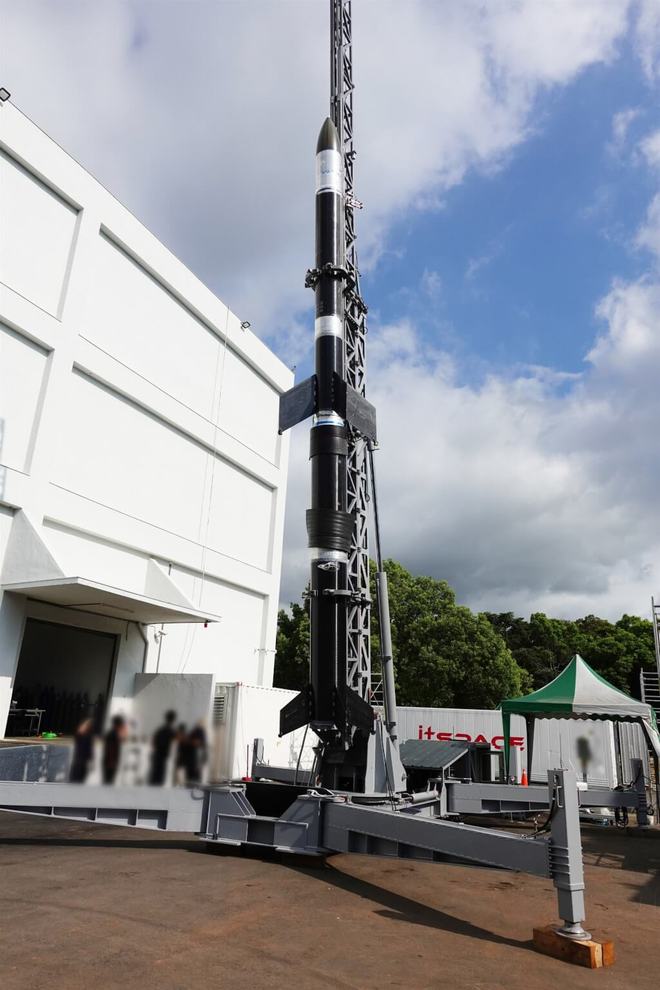
台湾火箭在日本发射失败
第一财经· 2025-07-12 10:18
Group 1 - The core event reported is the failed launch of the "VP01" rocket developed by Taiwan's jtSPACE at the Hokkaido Spaceport in Japan, which resulted in the rocket falling shortly after takeoff [2][3] - The rocket was designed to reach an altitude of over 100 kilometers to validate its performance, measuring 12 meters in length, 0.6 meters in diameter, and weighing 1.4 tons [3] - The first stage of the rocket separated as planned, but the second stage experienced a failure that led to the interruption of the flight, prompting an investigation into the cause [3]
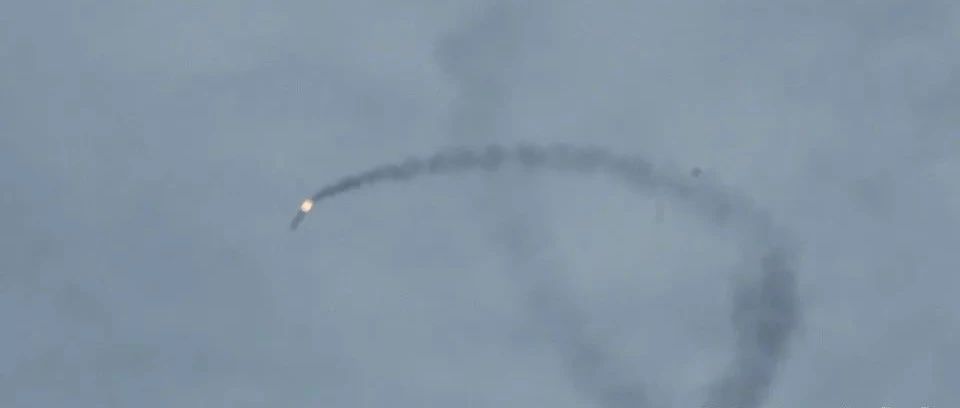
台湾火箭在日本发射失败
news flash· 2025-07-12 10:02
Core Viewpoint - The launch of the "VP01" rocket developed by Taiwan's jtSPACE in Hokkaido, Japan, ended in failure as the rocket fell shortly after takeoff, prompting an investigation into the cause of the malfunction [1] Group 1: Launch Details - The "VP01" rocket is 12 meters long, 0.6 meters in diameter, and weighs 1.4 tons, with a mission to reach an altitude of over 100 kilometers to validate its performance [1] - The rocket's first stage successfully separated as planned, but the second stage experienced a failure that led to the interruption of the flight [1] Group 2: Company and Operational Insights - SPACE COTAN, the company operating the Hokkaido spaceport, stated that the rocket "interrupted its flight," indicating a need for further investigation into the events that occurred after the second stage [1] - The president of SPACE COTAN, Yoshinori Otagiri, mentioned that the specifics of what happened from the second stage onward are still under investigation [1]
美国取消对中国芯片设计软件的出口限制;我国成功发射试验二十八号B星01星丨数智早参
Mei Ri Jing Ji Xin Wen· 2025-07-03 23:24
Group 1 - China's successful launch of the experimental satellite Tiankong-28B01 demonstrates the country's solid development in space technology, with the Long March 4B rocket completing its 583rd flight [1] - The satellite is primarily used for space environment detection and related technology experiments, reinforcing China's capability in autonomous space technology [1] Group 2 - Siemens announced that the U.S. government has lifted export restrictions on chip design software to China, allowing full access for Chinese customers to Siemens' software and technology [2] - This change indicates a potential easing of trade tensions and could enhance collaboration in the technology sector between the U.S. and China [2] Group 3 - The National Medical Products Administration of China is implementing supportive policies for high-end medical devices based on brain-computer interface technology, aiming to optimize the innovation review process [3] - The initiative includes special reviews for innovative medical devices with significant clinical value, enhancing communication between applicants and review experts [3] - The regulatory framework aims to accelerate the market entry of high-end medical devices, ultimately improving accessibility to advanced medical technologies for patients [3]
俄罗斯发射“进步MS-31”货运飞船
news flash· 2025-07-03 22:52
Core Points - The Russian space agency announced the successful launch of the "Progress MS-31" cargo spacecraft from the Baikonur Cosmodrome in Kazakhstan [1] - The launch occurred on March 3 at 22:32 Moscow time, with the spacecraft entering its designated orbit [1] - The "Progress MS-31" spacecraft is scheduled to dock with the International Space Station on March 6 and will remain in orbit for 167 days [1]
俄罗斯成功发射一枚“联盟-2.1a”运载火箭
news flash· 2025-07-03 20:21
Core Viewpoint - Russia successfully launched a "Soyuz-2.1a" carrier rocket, marking a significant achievement in its space exploration efforts [1] Group 1: Launch Details - The launch took place on July 3, local time, from the Baikonur Cosmodrome located in Kazakhstan [1] - The "Soyuz-2.1a" rocket carried the "Progress MS-31" cargo spacecraft, which is intended to supply the International Space Station (ISS) [1] Group 2: Mission Timeline - The cargo spacecraft will take approximately 50 hours to complete its mission, during which it will orbit the Earth 34 times [1] - The docking with the ISS is scheduled for July 6 at 00:28 Moscow time [1] Group 3: Cargo Details - The "Progress MS-31" spacecraft is set to deliver over 2.6 tons of supplies to the International Space Station [1]
我国成功发射试验二十八号B星01星
news flash· 2025-07-03 10:13
Core Viewpoint - The successful launch of the experimental satellite "Test 28 B Star 01" by China marks a significant achievement in space exploration and technology testing, utilizing the Long March 4B rocket for the 583rd flight of the Long March series [1] Group 1 - The launch took place at the Xichang Satellite Launch Center on July 3, 2025, at 17:35 Beijing time [1] - The primary purpose of the satellite is for space environment detection and related technology experiments [1] - This mission highlights the ongoing advancements in China's space capabilities and its commitment to developing satellite technology [1]
主力火箭H2A退役,新火箭能否重塑日本竞争力?
Huan Qiu Shi Bao· 2025-06-30 22:53
Core Viewpoint - The successful launch of Japan's H2A rocket marks the end of its operational life, with implications for Japan's space ambitions, but the transition to the new H3 rocket is expected to mitigate the impact [1][3]. Group 1: H2A Rocket Launch and Retirement - Mitsubishi Heavy Industries successfully launched the H2A rocket for the 50th time, delivering the GOSAT-GW satellite into orbit [1][3]. - The H2A rocket has achieved a 98% success rate over its 50 missions since its first launch in 2001, with only one failure recorded [3]. - The H2A rocket will be officially retired, with the H3 rocket taking over its responsibilities for satellite launches [3]. Group 2: H3 Rocket and Future Prospects - The H3 rocket, which has a higher payload capacity and lower launch costs, is set to replace the H2A rocket, addressing Japan's need for competitive pricing in the international commercial launch market [4]. - The launch cost of the H3 rocket is approximately 5 billion yen (about 34.5 million USD), which is half the cost of the H2A rocket's launch price of around 10 billion yen (about 69 million USD) [4]. - The H3 rocket has successfully completed four consecutive launches after an initial failure in 2023, indicating improving reliability and performance for future missions [3].