
城市轨道交通

Search documents
两所学校学生将享“免检”便利
Xin Lang Cai Jing· 2025-12-22 17:14
(来源:市场星报) 星报讯 记者获悉,自2023年初成功试点后,合肥轨道学生诚信"白名单"计划即将迎来新成员,合肥第 四十五中学菱湖分校(2026年)及合肥北城中学高一年级学生有望纳入免检范围。这一创新举措通 过"信用+交通"模式,将学生客流集中进站时长压缩50%,既破解了高峰时段乘车拥堵难题,也为城市 公共交通信用体系建设提供了"合肥样本"。 "以前周末、小长假过安检有时要排40多分钟,现在贴了免检标签,刷学生证就能直接进站。"合肥七中 学生李同学的体验,正是诚信"白名单"计划的生动注脚。2023年初,针对该校5000余名学生周末离校高 峰安检拥堵问题,合肥市轨道集团联合轨道公安、登安公司及校方,在4号线合肥七中站推出"白名 单"机制。 通过"信用承诺-校方初审-轨道备案-动态管理"闭环流程,学生在监护人陪同下签署承诺书后,由校方统 一粘贴免检标签,凭学生证即可快速进站。轨道公安同步增设护学岗加强巡查,登安公司配备手持安检 设备,加强现场客流引导,落实证件核对,多方协作构建起"安全网"。据测算,该机制使学生客流集中 进站时长从60分钟压缩至30分钟,通行效率显著提升。 截至目前,该计划已拓展至11所学校,累 ...
重庆轨道交通24号线首列“3+3”灵活编组列车到段
Xin Lang Cai Jing· 2025-12-22 14:11
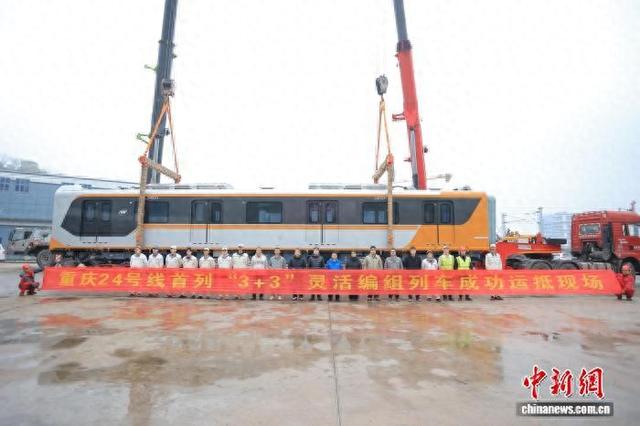
中新网重庆12月22日电 (张旭)重庆轨道交通运营有限公司22日发布消息称,重庆轨道交通24号线首列3 编组As型列车已于日前正式"入驻"鹿角车辆段。 图为重庆 轨道交通24号线首列"3+3"灵活编组列车运抵现场。重庆轨道交通运营有限公司供图 重庆轨道交通24号线是重庆首条城市轨道交通全自动运行线路,此次投用标志着其在灵活编组技术领域 实现了关键突破。 作为全国首创联挂后不改门间距的"3+3"灵活编组列车,该车型的到来不仅填补了国内城市轨道交通灵 活编组技术的空白,更让重庆轨道交通在全自动运行与智慧化升级的道路上迈出了重要一步。 据悉,该3编组As型列车全长60米,造型兼具科技感与未来感,车厢内部采用现代简约风格,配备自动 感光调节的节能环形灯、人体工学设计的"未来感"吊环、"无风感"散孔送风系统及智慧空调、43英寸4K 高清显示屏等设施,全方位提升乘客出行体验感。 为实现与6编组列车共线运营且联挂后保持车门等间距,研发团队打破传统布局方案,创新技术,完美 解决联挂距离缩短带来的空间不足难题。 在全自动运行适配方面,列车通过优化通信协议,实现了编组变更时各车组间精准实时的信息交互,保 障自动联挂、解编操作的快 ...

新里程!京沪城轨双双突破900公里
Xin Lang Cai Jing· 2025-12-22 10:51
Core Insights - The article highlights a significant milestone in China's urban rail transit sector, with both Beijing and Shanghai set to exceed 900 kilometers of operational rail lines, marking a new phase in public transportation systems in major Chinese cities [1][9]. Group 1: Beijing's Developments - Beijing is set to open three new lines: the 17th line mid-section, the 18th line, and the southern extension of the 6th line, totaling approximately 30.1 kilometers, which will address various transportation challenges in different regions [10][1]. - The southern extension of the 6th line, although only 2.1 kilometers long, will enhance connectivity between the city's sub-center and the central urban area [15]. - After the new lines are operational, Beijing's rail transit mileage will increase from 879 kilometers to 909 kilometers, officially surpassing the 900-kilometer mark [16]. Group 2: Shanghai's Developments - Shanghai's 18th line phase two, which connects the Changjiang South Road Station to the Kangwen Road Station, has passed safety assessments and is expected to begin initial operations soon [2][16]. - The 18th line phase two, with a total investment of 12.6 billion yuan, will significantly improve transportation for residents in Baoshan District, breaking the previous transportation barriers in the area [18]. - This line is not only a public welfare project but also a crucial support for Shanghai's "North Transformation" strategy, linking key industrial areas and facilitating urban integration [18]. Group 3: Urban Development Logic - The expansion to a 900-kilometer rail network signifies not just improved commuting but also a transformation in urban spatial structure and an engine for industrial development [19]. - The ongoing competition between Beijing and Shanghai in rail transit development reflects the inherent demand for efficient public transportation systems in mega-cities [19]. Group 4: Future Outlook - Following the achievement of 900 kilometers, the next target for Beijing is to reach 1,000 kilometers of operational rail lines by 2025 [20]. - Shanghai aims to achieve a blueprint of "three 1,000 kilometers" by 2035, which includes 1,000 kilometers of metro, regional rail, and intercity rail [21]. - Future urban rail construction in China will focus on effectiveness and sustainable development, with an emphasis on enhancing networks in first-tier cities and promoting regional collaboration through intercity rail projects [21].

北京地铁17号线中段年底实现全线贯通
Xin Lang Cai Jing· 2025-12-21 16:36
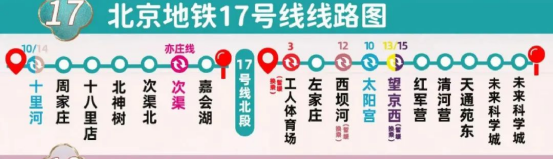
Core Points - The 17th line of the Beijing-Hong Kong Metro is scheduled to achieve full connectivity by the end of this year [1] - The line will operate under a "fast train" model with a maximum speed of 100 km/h, allowing travel from Jiahuai Lake Station to Future Science City North Station in just 66 minutes [1] Infrastructure and Services - The Beijing-Hong Kong Metro has equipped 13 stations, including Workers' Sports Stadium Station, with multilingual translation machines, and will also install them at Yong'anli Station [1] - The metro has enhanced bilingual signage in Chinese and English, created foreign language service cards, and improved staff language service training [1] - New stations, including Panjiayuan West Station and Yong'anli Station, feature dual-sided opening elevators designed for passenger convenience, particularly for wheelchair users [1] - Each new station has added comfortable seating with cushions on waiting platforms and equipped prominent areas with AEDs [1] - All stations on the 17th line include mother-and-baby rooms and family-friendly accessible restrooms [1]
从“交通线”到“风景线”
Xin Lang Cai Jing· 2025-12-21 16:36
Core Viewpoint - The Hefei Metro Line 6 Phase I has officially launched a three-day free trial period, showcasing its advanced technology and design, aimed at enhancing commuter experience and connectivity in the region [1][2]. Group 1: Project Overview - Hefei Metro Line 6 is the second fully automated metro line in Anhui Province, connecting key districts and significantly reducing travel time from over one hour to 30 minutes [1]. - The line features 20 open stations, with the first day of trial attracting a large number of citizens eager to experience the new transit system [1]. Group 2: Station Features - Key stations such as Army University Station and Kaifusi Temple Station incorporate unique themes like "Future Technology" and "Ecological Oxygen Bar," blending practical functionality with aesthetic design [2]. - The stations utilize advanced design elements, including flexible LED screens and dynamic displays, creating an engaging environment for commuters [2]. Group 3: Operational Efficiency - The metro line operates on a fully automated system with a maximum speed of 100 kilometers per hour, featuring capabilities such as automatic wake-up, sleep mode, and remote emergency braking [2]. - Real-time updates on train locations and estimated arrival times are provided through smart dynamic displays, enhancing passenger efficiency and comfort [2]. Group 4: User Experience and Feedback - During the trial period, the metro group has ensured adequate staffing and volunteer support at transfer stations to maintain order and assist passengers [2]. - Feedback will be collected through on-site consultations and online surveys to optimize service and operations before the official opening at the end of December [2].
中国产业经济行业 现状格局与投资规划分析报告2026年版
Sou Hu Cai Jing· 2025-12-20 13:41
Core Insights - The report provides a comprehensive analysis of the current state and future prospects of various industries in China, focusing on investment opportunities and macroeconomic factors influencing these sectors [3][4][5]. Group 1: Macroeconomic Environment - The report discusses the macroeconomic environment for industrial investment in China, including policies, economic growth, and foreign direct investment trends [3][4]. - It highlights the GDP growth forecast for 2025, indicating a positive outlook for economic expansion [3]. - The analysis includes fixed asset investment scale from 2020 to 2025, showing significant growth trends [3][4]. Group 2: Industry-Specific Investment Opportunities - The real estate sector is analyzed for its investment environment, including policy impacts and market conditions, with a focus on urban complexes and tourism real estate as key opportunities [5][6]. - The internet industry is identified as a strategic emerging sector, with investment opportunities in mobile payment and e-commerce [5][6]. - The energy sector is highlighted for its investment potential, particularly in renewable energy resources and processing [6][7]. Group 3: Mergers and Acquisitions - The report outlines the trends in mergers and acquisitions within various industries, noting increased regulatory scrutiny and the rise of private equity as a driving force [4][5]. - It discusses the active merger activities in cultural media and real estate sectors, indicating a dynamic market environment [4][5]. Group 4: Emerging Industries - New energy and new materials industries are emphasized for their growth potential, supported by government policies and increasing market demand [15][16]. - The biotechnology sector is also highlighted, with a focus on investment opportunities arising from policy support and market trends [15][16]. Group 5: Regional Investment Analysis - The report provides a detailed analysis of investment environments across different regions in China, identifying specific opportunities in provinces like Guangdong and Jiangsu [20][21]. - It emphasizes the importance of regional characteristics in shaping investment strategies and opportunities [20][21].

合肥地铁6号线今起免费试乘3天
Xin Lang Cai Jing· 2025-12-20 01:35
试乘站点:龙塘站、伏龙站、大兴集站、钢红站、市儿童医院站、唐大楼站、尧渡河路站、朱岗站、卫 岗站、市第三医院站、南七里站、陆军兵种大学站、洪岗站、松荫桥站、梦城站、开福寺站、科大先研 院站、量子科学中心站、合肥七中站、青龙岗站。 据市场星报 12月20日至12月22日,合肥地铁6号线将开展免费试乘活动,试乘时段与各站日常运营时间保持一致。 市民无需任何试乘凭证,均可参与本次活动。 ...
南京地铁10号线二期、3号线三期开启运营
Xin Hua Ri Bao· 2025-12-19 19:59
Core Points - The article highlights the opening of the Nanjing Metro Line 10 Phase II and Line 3 Phase III, enhancing the city's public transportation network [1] - The total operational mileage of Nanjing Metro has increased from 508 kilometers to 525 kilometers, with the number of stations rising from 255 to 267 [1] Summary by Sections - **Line 10 Phase II**: - Starts from Andemen Station and ends at Dongqi Road Station, covering a length of 13.33 kilometers with 10 underground stations [1] - Connects key areas including Jiangbei New District, main urban area, and southern new city, improving accessibility and reducing travel time [1] - Enhances connectivity with existing lines, forming a more efficient "cross" network structure [1] - **Line 3 Phase III**: - Begins at the existing Miao Zhou East Road Station and ends at Miao Ling Station, with a total length of 3.3 kilometers and 2 underground stations [1] - Links to Nanjing Zijin Mountain Science and Technology City, addressing the lack of rail transit in the southern core area of Jiangning [1]
深圳地铁试点 启用智能导盲犬服务
Xin Lang Cai Jing· 2025-12-19 16:22
Core Viewpoint - Shenzhen Metro has introduced smart guide dogs at Huangmugang transportation hub, providing new technological convenience for visually impaired individuals in metro travel [3] Group 1: Technology Implementation - The smart guide dog, named "Xiaosan," can autonomously perform path planning, precise navigation, and intelligent obstacle avoidance based on verbal instructions from visually impaired passengers [3] Group 2: Social Impact - This initiative offers a humanized care approach for visually impaired individuals, addressing concerns that some may have regarding real guide dogs [3]


售价300元地铁卡出现异常支付链接?兰州轨道交通致歉
Yang Shi Wang· 2025-12-19 07:08
二是对于此次发行过程中出现的异常问题,兰州市轨道交通有限公司已连夜成立专项整改小组,做进一 步的问题排查,后续将采取带宽扩充、云端资源优化、访问策略调整等措施全力优化系统性能,确保后 续票卡正常发行,杜绝类似问题再次发生。 三是兰州市轨道交通有限公司将进一步加强管理,细化各环节工作,持续提升运营服务水平和品质,适 时发行更加多元、便捷、优惠的票卡,提供更多灵活快捷、经济实惠的购票选择。 央视网消息:据兰州轨道交通微信公众号消息,12月19日,兰州市轨道交通有限公司发布致歉信。 为进一步满足广大市民乘客多样化、便捷化的出行需求,在新年来临之际,兰州市轨道交通有限公司推 出了限量发行20000张电子计次票的惠民活动。计划从2025年12月18日至21日每日发行5000张,电子计 次票单张售价300元、不限里程可乘坐100次。12月18日22:00兰州市轨道交通有限公司如期在兰州轨道 APP发行了第一批次5000张电子计次票。发行过程中由于第1分钟并发量骤增,导致网络卡顿引起系统 重复换算金额,致使票价金额与显示金额不一致,出现了异常支付链接。该异常情况出现后,兰州市轨 道交通有限公司第一时间组织技术团队紧急排查处 ...