
城市轨道交通建设

Search documents
天津拟规划2条地铁延伸线!
Xin Lang Cai Jing· 2026-02-25 14:53
Core Insights - The article discusses the recent financial performance of a leading technology company, highlighting a significant increase in revenue and net income compared to the previous year [1] Financial Performance - The company reported a revenue of $50 billion for the last quarter, representing a 20% increase year-over-year [1] - Net income reached $10 billion, which is a 25% increase compared to the same quarter last year [1] - Earnings per share (EPS) rose to $5, up from $4 in the previous year, indicating strong profitability [1] Market Position - The company has strengthened its market position, capturing an additional 5% market share in the technology sector [1] - The growth is attributed to increased demand for its cloud services and innovative product offerings [1] Future Outlook - Analysts project continued growth, with expected revenue growth of 15% for the next fiscal year [1] - The company plans to invest $2 billion in research and development to enhance its product lineup and maintain competitive advantage [1]
北京地铁17号线望京西站1月31日开通,实现三线换乘
Bei Jing Qing Nian Bao· 2026-01-29 12:45
Core Viewpoint - The opening of the Wangjing West Station on Beijing's Metro Line 17 on January 31 marks a significant enhancement in the city's public transportation network, facilitating seamless transfers among three major subway lines and improving overall accessibility for residents [1] Group 1: Infrastructure Development - The Wangjing West Station serves as a crucial transfer hub connecting Line 17, Line 13, and Line 15, effectively addressing the previous "transfer gap" in the northern region's rail transit system [1] - The station's operation is expected to provide residents with more diverse and convenient travel options, contributing to the high-quality development of the city [1] Group 2: Impact on Urban Mobility - The integration of the new station with bus services allows for seamless connections, enhancing the overall efficiency of urban mobility in the area [1] - The official opening follows a successful trial operation period, indicating readiness for full-scale service and operational reliability [1]
北京今年这样建地铁,首条跨省地铁22号线年内拟开通
Xin Jing Bao· 2026-01-25 12:20
Core Insights - The Beijing government plans to add over 40 kilometers of rail transit by 2026, with the 22nd line (Pinggu Line) expected to open its section from Hongmiao to Pinggu this year, benefiting commuters from the Yanjiao area [1][4] - The report emphasizes the integration of commuting circles and the optimization of cross-border transportation connections, aiming for a 93% transfer rate within 50 meters between buses and rail [1] - The M101 line, a key transit line serving the urban sub-center, will be approximately 18.1 kilometers long with 14 stations, enhancing connectivity within the sub-center [2] Rail Transit Developments - The 22nd line will be the first inter-provincial subway in Beijing, connecting key areas such as the CBD, urban sub-center, and Yanjiao, facilitating cross-province commuting [3][4] - The M101 line is designed to operate at a speed of 100 kilometers per hour, featuring a flexible train configuration and multiple transfer stations [2] - The suburban railway sub-center line's enhancement project is progressing well, with the addition of two new stations and upgrades to existing ones, expected to be completed by the end of this year [3]
济南地铁“三线齐发”重构城市格局,三期规划正在编制
Xin Lang Cai Jing· 2025-12-29 05:23
Core Viewpoint - The opening of three new metro lines in Jinan marks a significant transformation from single-line operation to a networked system, enhancing the city's public transportation infrastructure and connectivity [1][3]. Group 1: Metro Line Developments - Jinan's metro system has expanded to six lines with the recent opening of Line 4, Line 6 East Section, and Line 8, which are key components of the city's transportation network [1][3]. - Line 4, the longest at 40.3 kilometers with 33 stations, significantly alleviates traffic pressure along Jinan's major thoroughfare, connecting various urban core areas [3]. - Line 8 spans 25.3 kilometers with 14 stations, linking multiple districts and serving as a crucial connector for industrial and educational hubs [3]. - The East Section of Line 6 enhances connectivity in the eastern urban area, linking key development zones and providing rapid transit for high-density passenger flows [3]. Group 2: Impact on Daily Life - The new metro lines are expected to transform daily commuting for residents, reducing travel times significantly; for instance, the commute from the West Railway Station to the CBD is cut from one hour to 40 minutes [7][9]. - The integration of the new lines facilitates a "half-hour commuting circle" for residents of Zhangqiu, making it feasible to live outside the city while working in the urban center [9]. - The "Jinan Yunba" system, which connects to the metro, addresses short-distance commuting challenges for employees in industrial parks [9]. Group 3: Economic and Urban Development - The metro's expansion is anticipated to drive commercial growth, with new business opportunities emerging around transit hubs and along the lines, enhancing the city's economic landscape [10]. - The TOD (Transit-Oriented Development) model is being leveraged to upgrade Jinan's commercial structure, with new urban complexes being developed near key stations [10]. - The metro lines are reshaping the urban landscape, promoting resource optimization and collaborative development across various districts [15][16]. Group 4: Technological Innovations - Jinan's metro construction has incorporated advanced technologies to address geological challenges, ensuring minimal impact on the local ecosystem while facilitating urban transit [12][13]. - The use of intelligent tunneling machines has enhanced safety and efficiency in construction, setting a precedent for future urban transit projects in complex environments [13]. Group 5: Future Outlook - The ongoing development of Jinan's metro system is part of a broader strategy to enhance urban mobility and connectivity, with plans for further expansions and improvements already underway [16][17].

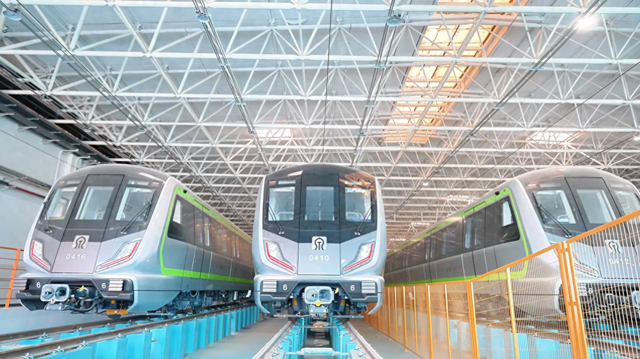
北京三条地铁新线串联元旦跨年系列活动
Xin Lang Cai Jing· 2025-12-28 17:21
Core Insights - Beijing's subway network expands with the opening of three new lines on December 27, increasing the total operational lines to 30 [1][2] Group 1: New Subway Lines - The newly opened lines include the middle section of Line 17, Line 18, and the southern extension of Line 6, enhancing connectivity across the city [1][2] - Line 17 connects directly to the Workers' Stadium, a key area for the New Year's Eve event, facilitating access for visitors [1] - Line 18 provides rapid transit from the "Huitian area" to central Haidian, allowing passengers to reach popular New Year destinations within 30 minutes [2] Group 2: Cultural and Recreational Impact - The opening of these lines coincides with the "Chime Bells and Drums, Beijing Colorful Journey" New Year event, which runs until January 3, 2026, featuring various activities across the city [1] - Line 6's southern extension improves access to the city’s sub-center, enhancing cultural engagement and connectivity to new cultural landmarks and ecological spaces [2] - The new lines are designed to support the influx of visitors during the New Year celebrations, with measures in place for efficient crowd management and transportation [1][2]
同日多地多条轨道交通新线开通运营 为城市空间拓展和功能优化注入新动力
Yang Shi Wang· 2025-12-28 01:55
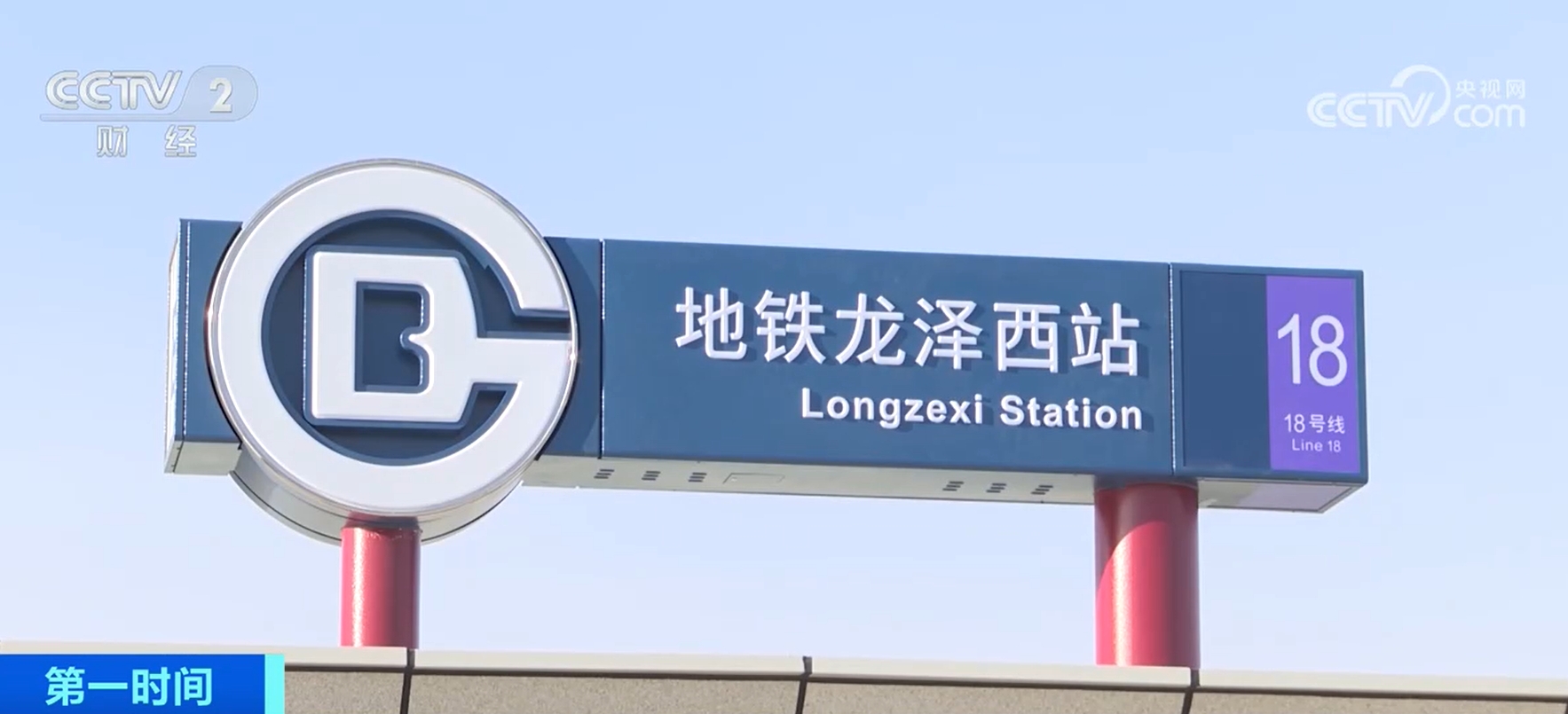
Group 1 - The core viewpoint of the articles highlights the acceleration of urban rail transit construction in multiple cities, enhancing urban capacity and functionality [1] Group 2 - On December 27, three new subway lines were put into trial operation in Beijing: Line 18, the middle section of Line 17, and the southern extension of Line 6 [5] - Line 18 is a key east-west route in northern Beijing, approximately 19.8 kilometers long with 11 stations, including 4 transfer stations [5] - The middle section of Line 17 is a major north-south transit line in Beijing, measuring 8.2 kilometers with 4 stations, including 2 transfer stations [5] - The southern extension of Line 6 opened the Luyang Station, enhancing connectivity between Tongzhou District and the city center [5] Group 3 - In Jinan, Shandong, three subway lines—Line 4, Line 8, and the eastern section of Line 6—also commenced operations on December 27 [6] - These three lines in Jinan are all oriented east-west, covering a total length of approximately 85.1 kilometers with 64 stations [8]

上海轨道交通运营总里程突破900公里
Xin Lang Cai Jing· 2025-12-27 11:29
Core Viewpoint - The opening of the second phase of Shanghai Metro Line 18 marks a significant milestone, pushing the total operational mileage of Shanghai's rail transit network beyond 900 kilometers [1] Group 1: Project Details - The second phase of Shanghai Metro Line 18 has an operational mileage of over 8 kilometers and includes 5 underground stations [1] - Construction of the second phase began in late June 2021 and is expected to complete acceptance by December 2025, with a construction period of four and a half years [1] - The entire Line 18 now has an operational mileage exceeding 44 kilometers [1] Group 2: Network Expansion - With the opening of the second phase of Line 18, Shanghai's rail transit network now consists of 21 lines and a total operational mileage of 906 kilometers, with 523 stations [1] - During the 14th Five-Year Plan period, Shanghai's rail transit construction has been actively promoted, adding nearly 200 kilometers of operational mileage through the completion of several new lines [1]
南京地铁4号线二期过江隧道顺利贯通
Xin Lang Cai Jing· 2025-12-27 04:15
Core Viewpoint - The successful completion of the Nanjing Metro Line 4 Phase II underwater tunnel marks a significant advancement in urban transportation infrastructure, enhancing connectivity across key districts in the city [1][3]. Group 1: Project Overview - The total length of the Line 4 Phase II project is approximately 10 kilometers, starting from Zhenzhuquan East Station and extending eastward, ultimately connecting with the first phase at Longjiang Station [3]. - The underwater tunnel section, measuring 3062.6 meters, is a critical control node for the entire line and is part of the strategic planning for the Yangtze River's crossing channels [3]. - The tunnel features a long-distance crossing of 2200 meters through the main section of the Yangtze River, with the lowest point reaching 68.58 meters below the water surface, setting a record for the deepest underwater metro tunnel in the Yangtze River Delta region [3]. Group 2: Impact on Urban Transportation - This is the third underwater metro tunnel completed in Nanjing, which will further enhance the urban rail transit network and significantly improve cross-river travel efficiency for residents along the route [5].
北京三条地铁新线试运营 城市轨道交通运营总里程突破900公里
Yang Shi Xin Wen· 2025-12-27 03:43
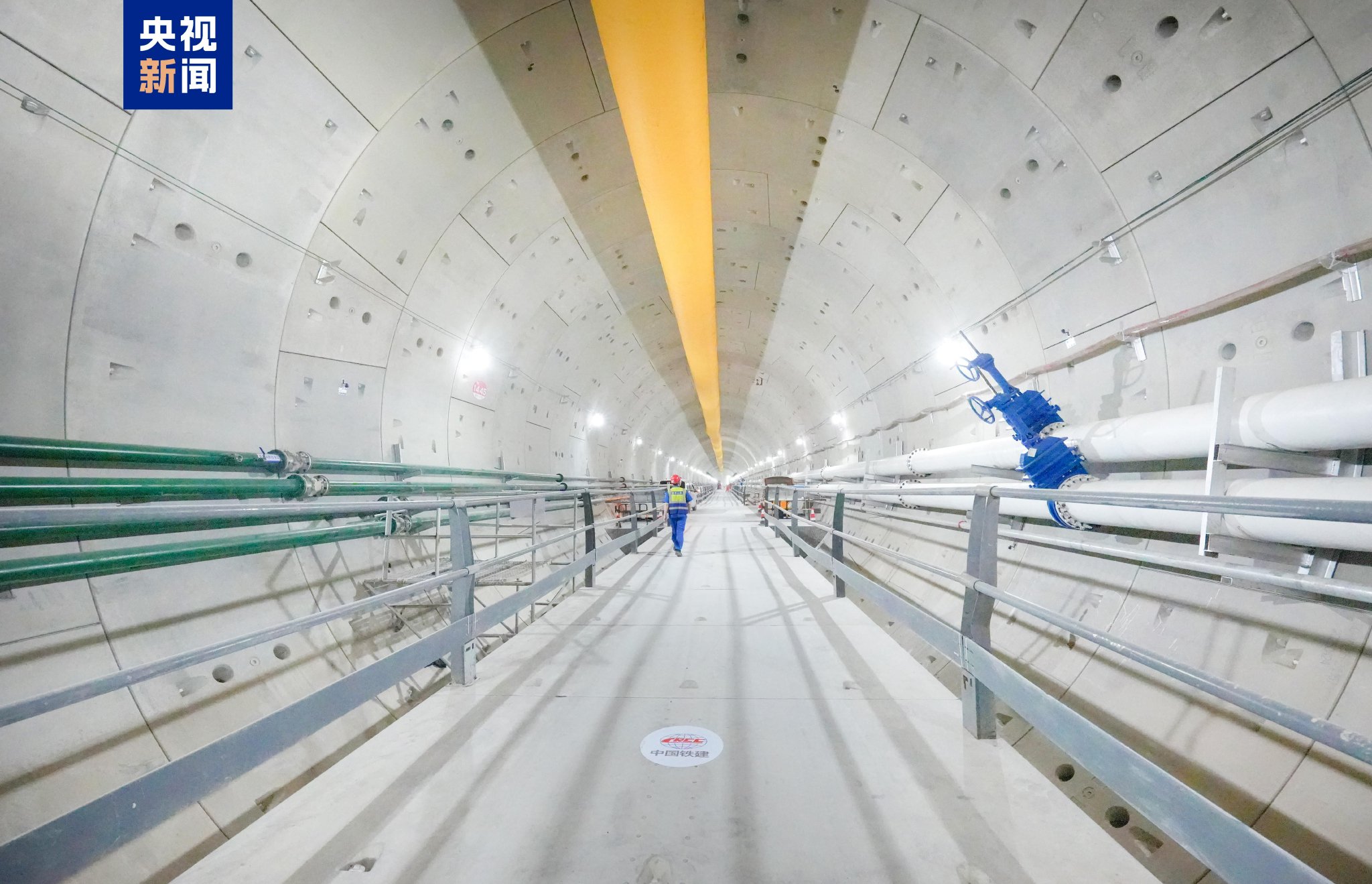
Core Insights - Beijing has launched trial operations for three new urban rail transit lines: Line 18, the middle section of Line 17, and the southern extension of Line 6, enhancing the city's transportation network [1][3][4] Group 1: Line Details - Line 18, spanning approximately 19.8 kilometers, connects the Malianwa Station to the Tiantongyuan East Station, featuring 11 stations, including 4 transfer stations [1] - The middle section of Line 17 is an 8.2-kilometer route with 4 stations, including 2 transfer stations, linking various residential and business districts [3] - The southern extension of Line 6 includes the newly opened Luyang Station, further connecting the Tongzhou District with the city center [3] Group 2: Network Impact - The opening of these three lines increases the total operational lines in Beijing's urban rail transit to 30, enhancing connectivity in the northern and southern parts of the city [4] - The full operation of Line 17 will reduce travel time from Jiahuai Lake to Future Science City North to just 66 minutes, while Line 18 will allow travel from Tiantongyuan to Malianwa in only 30 minutes, significantly improving commuting efficiency [4] - The total operational mileage of Beijing's urban rail transit has surpassed 900 kilometers, completing the network from Line 1 to Line 19 [4]
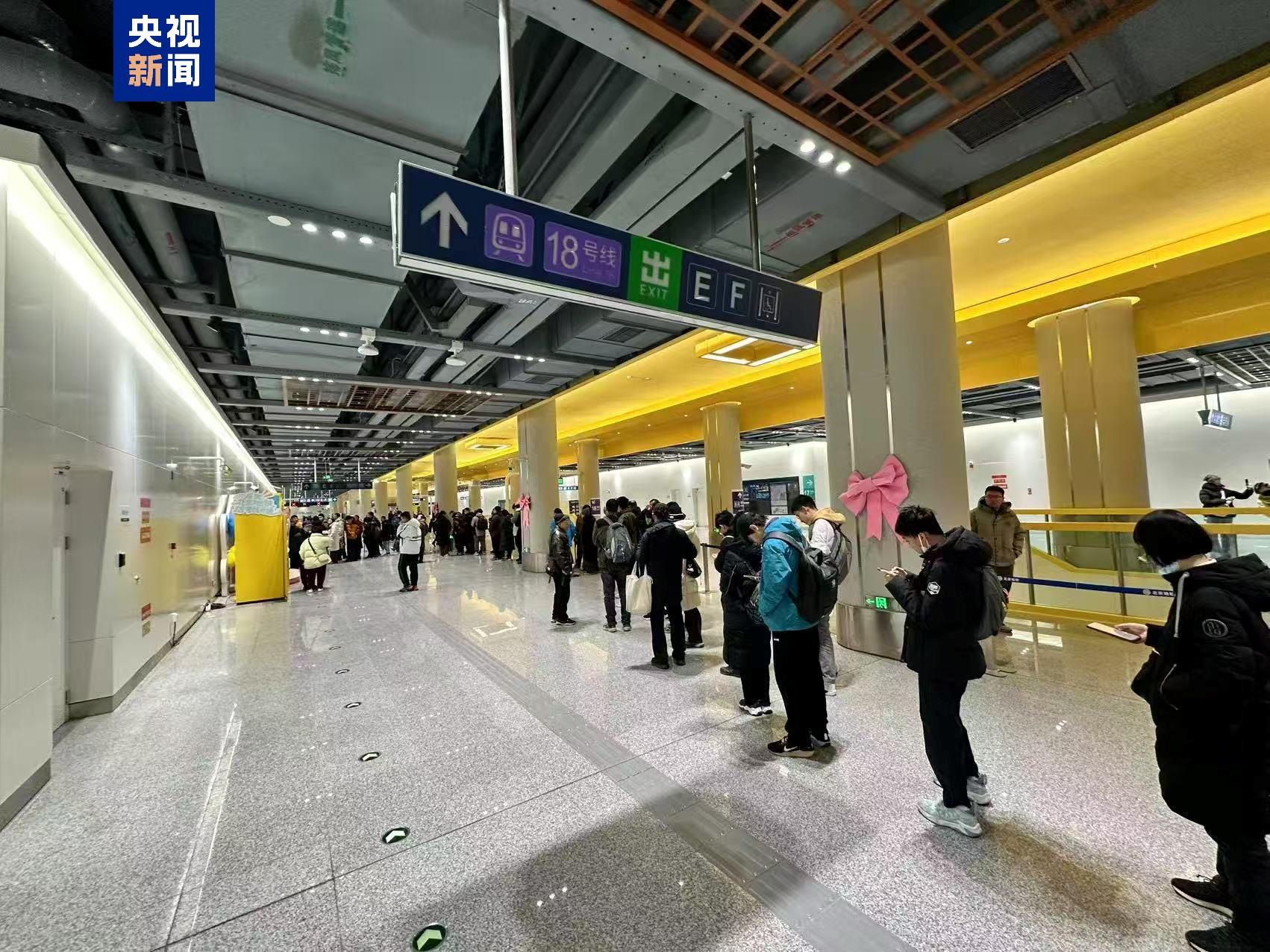
3条(段)地铁新线开通 北京城市轨道交通运营总里程达909公里
Xin Hua She· 2025-12-27 03:08
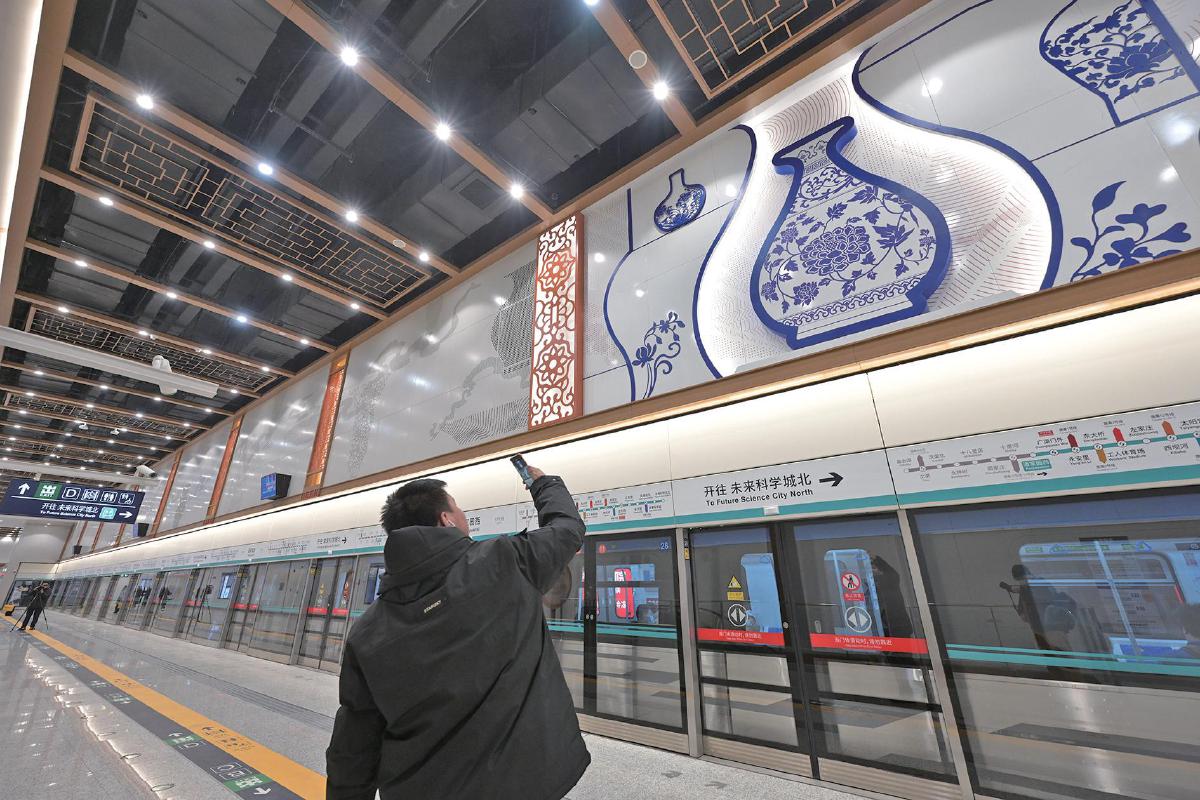
Core Points - The opening of three new urban rail transit lines in Beijing enhances the connectivity of key functional areas, improves commuting efficiency, and optimizes urban structure [1] - The total operational mileage of Beijing's urban rail transit reaches 909 kilometers with the addition of these new lines [1] Group 1: New Lines and Their Impact - The new lines include the middle section of Line 17 (Worker's Stadium to Shilihe), Line 18 (Malianwa to Tiantongyuan East), and the southern extension of Line 6 (Lucheng to Luyang) [1] - The new lines are designed to strengthen connections in the central urban area, thereby enhancing commuting efficiency and urban structure [1] Group 2: Design and Features - The station designs reflect the "one station, one scene" concept, showcasing regional characteristics, such as the incorporation of blue-and-white porcelain and antique cultural elements at Panjiayuan West Station [1] - Innovations in service include the provision of mother-and-baby rooms, family-friendly accessible restrooms, and AED emergency equipment at each station on Line 18 [1] Group 3: Community Engagement - Prior to the opening, the transportation department invited local residents, long-distance commuters, and representatives of disabled passengers for trial rides, and feedback has been collected and addressed [1]