
Central Banking

Search documents
X @Bloomberg
Bloomberg· 2025-07-14 09:46
Thailand is poised to name its new central bank chief on Tuesday, ending a months-long process to find a successor https://t.co/XkpBMOVNNR ...
欧洲央行临界点,宽松期即将终结,欧元区经济何去何从
Sou Hu Cai Jing· 2025-07-10 10:52
Core Viewpoint - The European Central Bank (ECB) is approaching a pivotal moment in its monetary policy, potentially pausing interest rate cuts by July 2025 and possibly ending the easing cycle altogether after September, which will significantly impact the Eurozone economy and global financial dynamics [1][3]. Group 1: Monetary Policy Changes - Since June 2024, the ECB has cut key interest rates eight times, with the last five cuts indicating a strong desire to stimulate economic growth and inflation recovery [3]. - Market expectations have cooled, with only a 5% probability of further rate cuts in the upcoming meeting, suggesting a shift towards maintaining the deposit rate at 1.75% [3]. - ECB President Christine Lagarde has indicated that the monetary policy cycle is nearing its end, with June inflation in the Eurozone aligning with the target at 2%, supporting the case for tightening [3][4]. Group 2: Internal Disagreements - Recent ECB meeting minutes reveal significant internal divisions, with most members supporting a 25 basis point cut, but some advocating for maintaining current rates due to concerns about over-stimulation [4]. - The concept of a "neutral rate" has resurfaced, with debates on whether rates have reached a neutral level or remain too accommodative [4]. Group 3: Economic Challenges - The Euro has appreciated by 14% against the dollar this year, complicating the Eurozone's export competitiveness and increasing pressure on manufacturing and export-oriented businesses [6]. - Despite a decrease in inflation, the Eurozone's economic growth remains weak, with consumer demand and business investment not fully recovering to pre-pandemic levels [6]. - Structural issues in the Eurozone economy, such as labor market challenges and supply chain bottlenecks, continue to hinder economic potential [6]. Group 4: Global Economic Context - The timing of the ECB's policy adjustments is closely linked to the global macroeconomic environment, with the need to assess the spillover effects of monetary policy amid tightening global liquidity [7]. - The effectiveness of the ECB's monetary policy will also depend on the internal political situation and the degree of fiscal policy coordination within the Eurozone [7]. Group 5: Future Outlook - The nearing end of the ECB's easing cycle reflects both improvements in economic fundamentals and a warning of narrowing policy space [9]. - Ongoing debates within the ECB will influence the direction of monetary policy, with the Eurozone's ability to sustain recovery post-rate stabilization reliant on external stability and internal structural reforms [9]. - The transition from quantitative easing to qualitative changes in policy will be crucial for global investors and policymakers to monitor, as the ECB's balance of rates, inflation, and growth will determine the Eurozone's economic fate [9].


香港金管局买入超200亿港元,捍卫联系汇率制
news flash· 2025-07-01 21:35
Group 1 - The Hong Kong Monetary Authority (HKMA) intervened in the market by purchasing HKD 20.018 billion due to the Hong Kong dollar reaching the weak side of the peg [1] - This action reflects the HKMA's commitment to maintaining the currency peg between the Hong Kong dollar and the US dollar [1] - The intervention indicates potential pressure on the Hong Kong dollar, suggesting that market conditions may be influencing currency stability [1]
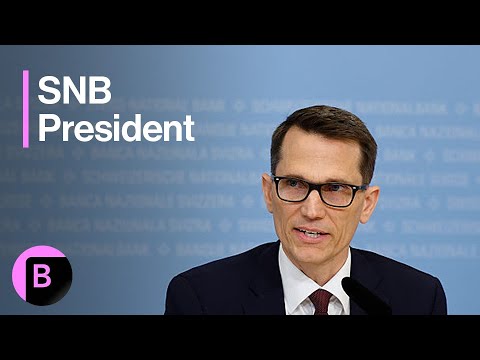
SNB President Schlegel on Rate Cut Decision, FX Market
Bloomberg Television· 2025-06-19 10:44
The President of the Swiss National Bank said the strong Swiss franc was one factor influencing the SNB's decision to cut its interest rate to zero. Martin Schlegel also said that Switzerland was ready to intervene in the FX market if necessary. Schlegel spoke with Bloomberg’s Bastian Benrath in Zurich. 00:00 - SNB interest rate decision 00:58 - Swiss franc, currency 01:52 - Oil prices, inflation, effect on economy, intervention in FX market, monetary policy 04:55 - Tariffs, trade, impact on Swiss economy 0 ...
巴西:政府财政和公共部门债务统计任务技术援助报告(2024年8月5日至16日)(英)
IMF· 2025-04-28 05:55
Investment Rating - The report does not explicitly provide an investment rating for the industry Core Insights - The technical assistance mission focused on improving the compilation and dissemination of government finance statistics (GFS) and public sector debt statistics (PSDS) in Brazil, following the methodologies outlined in the Government Finance Statistics Manual 2014 (GFSM 2014) and the Guide on Public Sector Debt Statistics 2011 (PSDSG 2011) [5][12] - A significant achievement was the proposal of a five-year work program aimed at strengthening Brazil's fiscal statistics and transitioning to the use of GFS as the official statistics for policy purposes [7][14] - The mission identified the need for a unified sectorization list of public sector units to address discrepancies in fiscal statistics and improve data consistency [37][39] Summary by Sections Summary of Mission Outcomes and Priority Recommendations - The mission was conducted in response to requests from the Ministry of Finance, Central Bank of Brazil, and the Brazilian Institute of Geography and Statistics, focusing on enhancing fiscal statistics for decision-making [5][12] - Key tasks included reviewing the sectorization of public sector units and ensuring consistency in fiscal statistics [6][13] Detailed Technical Evaluation and Recommendations - The mission noted significant progress in implementing GFSM 2014 since 2007, with ongoing improvements in data sources and compilation techniques [10][20] - Recommendations included developing a five-year work program to enhance GFS and PSDS reliability and quality [15][32] Migration to GFS Statistics for Policy Purposes - A proposed five-year plan aims to transition to GFS for policy purposes, addressing weaknesses in traditional fiscal statistics [23][25] - The mission emphasized the importance of a transparent process for compiling GFS to reassure users of its reliability [28][29] Discrepancies – General Themes - The mission highlighted discrepancies in financing statistics, averaging around 1.1% of GDP from 2017 to 2023, with specific peaks during the COVID pandemic [31][34] - Recommendations included creating key fiscal indicators and improving the coverage of institutional units to reduce discrepancies [32][34] Sectorization of the Public Sector - The lack of a unified sectorization list was identified as a root cause of discrepancies in fiscal statistics [39][40] - The mission recommended maintaining and updating a complete sectorization list to enhance GFS coverage [41][43]
生成式人工智能在中央银行的应用
BIS· 2025-03-11 06:20
Investment Rating - The report does not explicitly provide an investment rating for the industry Core Insights - Generative AI has the potential to significantly boost global productivity, with estimates suggesting annual gains between $2.6 trillion and $4.4 trillion, and an output increase of 15-20% over 15 years post-adoption [3][4] - A survey indicates that over 40% of corporations report a return on investment from advanced Generative AI initiatives within the range of 11-30% [3] - The adoption rate of Generative AI among firms is rapidly increasing, with 65% of international corporations using it regularly by early 2024, nearly double the percentage from 2023 [6][5] - The amount of data created globally is projected to grow from 149 zettabytes in 2024 to over 394 zettabytes by 2028, fueling AI development [7] Summary by Sections Workshop Goals and Focus - The workshops aim to showcase projects, share expertise among central banks, and reduce reliance on external service providers, with the latest workshop focusing on Generative AI applications in central banking [2] AI Applications in Central Banking - AI enhances forecasting and nowcasting capabilities, regulatory compliance, financial supervision, and legal analysis, indicating its growing ubiquity in central banking [9][11] Workforce and Governance - A sound AI governance framework is essential, emphasizing policy preparedness and the need for firms to adapt their workforce towards IT, engineering, and mathematics expertise [19][23] - Training and reskilling are crucial for successful AI adoption, addressing resistance to change among employees [23] Cross-Institutional Cooperation - Encouragement of cross-institutional cooperation is vital due to the blurred regulatory boundaries in data-intensive technologies like AI, with a focus on cross-border data sharing [24][25]
When is the Fed's next meeting?
Yahoo Finance· 2024-06-06 15:07
Core Viewpoint - The Federal Open Market Committee (FOMC) is set to meet again to assess the economy and make decisions on the federal funds rate, with expectations of further rate cuts before the end of 2025 [1][5]. Group 1: FOMC Meetings and Decisions - The FOMC holds eight scheduled meetings annually, with the next meeting planned for late October 2025 [3][9]. - The most recent meeting occurred on September 16-17, 2025, where the Fed cut its benchmark rate for the first time this year [1][5]. - The FOMC's policy decisions are released at 2 p.m. Eastern time, followed by a press conference at 2:30 p.m. [5]. Group 2: Economic Indicators and Policy Assessment - Policymakers evaluate economic indicators such as the Consumer Price Index (CPI), gross domestic product (GDP), and unemployment rate to shape monetary policy [4]. - The FOMC is committed to supporting maximum employment and returning inflation to a 2% target [7]. Group 3: Future Expectations - Experts anticipate that the Fed will likely reduce the federal funds rate again in 2025, with a strong possibility of a rate cut in October [7][8]. - The current target range for the federal funds rate is set at 4% to 4.25% [10].