
利率中性区间

Search documents
【环球财经】宏观利空打压 纽约股市三大股指10日涨跌不一
Xin Hua Cai Jing· 2026-02-10 23:15
Market Overview - The New York stock market showed mixed results on February 10, with the Dow Jones Industrial Average rising by 52.27 points to close at 50188.14, a gain of 0.10%. In contrast, the S&P 500 index fell by 23.01 points to 6941.81, a decline of 0.33%, and the Nasdaq Composite dropped by 136.196 points to 23102.474, a decrease of 0.59% [1] Economic Data - The U.S. Department of Commerce reported that retail and food service sales for December 2025 were $735 billion, showing no month-over-month growth, significantly below the market consensus expectation of 0.4% and the previous month's increase of 0.6% [1] - The Atlanta Federal Reserve's GDPNow model updated its forecast for U.S. GDP growth in the fourth quarter of 2025 to 3.68%, down from the previous day's estimate of 4.22% and January's forecast of over 5% [1] Consumer Sentiment - Anthony Saglimbene, Chief Market Strategist at Ameriprise, highlighted concerns regarding the job market for middle and low-income consumers, suggesting that weaker-than-expected job growth in January could further pressure the stock market [2] Federal Reserve Commentary - Beth Hammack, President of the Cleveland Federal Reserve, indicated that the Federal Reserve may maintain current interest rates for an extended period, as rates are currently in a neutral range [2] - Lorie Logan, President of the Dallas Federal Reserve, expressed concerns about persistent inflation and its implications for the labor market, suggesting that if inflation continues to decline and the job market cools, it could support the case for interest rate cuts [3] Company Performance - Coca-Cola reported a net operating revenue of $11.822 billion for the fourth quarter of 2025, a 2% year-over-year increase, but below the market consensus of $12.03 billion. This marked the first time in five years that the company's revenue fell short of expectations, with the stock price declining by 1.49% to $76.81 per share [3]
OEXN:利率中性区间与政策分歧下的市场脉动
Xin Lang Cai Jing· 2025-12-11 09:31
Core Viewpoint - The Federal Reserve's recent 25 basis point rate cut has led to a reassessment of the interest rate path, with a focus on upcoming macroeconomic data, while the market shows little pricing for further rate hikes but has mixed expectations for additional easing [1][4]. Group 1: Interest Rate Decisions - Powell emphasized that the policy rate is now in a neutral range, and future adjustments will depend on data [1][4]. - There is a notable division within the FOMC, with one-quarter of voting members dissenting against the rate cut, highlighting a rare tension between inflation concerns and signs of a cooling labor market [1][4]. - The committee's predictions range from maintaining rates to varying degrees of further cuts, with no consensus on rate hikes as a baseline scenario [2][5]. Group 2: Economic Outlook - The SEP forecasts for growth in 2026 are higher than those for 2025, attributed to fiscal impacts, ongoing AI investment, and sustained consumer momentum [1][4]. - Powell noted that the labor market has shown signs of cooling, with the unemployment rate rising by 0.3 percentage points since summer, and inflation has slightly eased, particularly in services [2][5]. - Structural issues in the housing market, such as long-term supply shortages and high relocation costs due to low mortgage rates locked in during the pandemic, will not be significantly improved by the recent rate cut [2][5]. Group 3: Market Reactions - Gold prices surged during the press conference, rising above $4,238 per ounce, reflecting market sensitivity to the prospect of looser monetary policy and increased demand for safe-haven assets [3][6]. - The meeting underscored the Fed's challenges in balancing growth, inflation, and employment, with future market movements likely to depend heavily on data and subtle policy signals [3][6].


欧洲央行临界点,宽松期即将终结,欧元区经济何去何从
Sou Hu Cai Jing· 2025-07-10 10:52
Core Viewpoint - The European Central Bank (ECB) is approaching a pivotal moment in its monetary policy, potentially pausing interest rate cuts by July 2025 and possibly ending the easing cycle altogether after September, which will significantly impact the Eurozone economy and global financial dynamics [1][3]. Group 1: Monetary Policy Changes - Since June 2024, the ECB has cut key interest rates eight times, with the last five cuts indicating a strong desire to stimulate economic growth and inflation recovery [3]. - Market expectations have cooled, with only a 5% probability of further rate cuts in the upcoming meeting, suggesting a shift towards maintaining the deposit rate at 1.75% [3]. - ECB President Christine Lagarde has indicated that the monetary policy cycle is nearing its end, with June inflation in the Eurozone aligning with the target at 2%, supporting the case for tightening [3][4]. Group 2: Internal Disagreements - Recent ECB meeting minutes reveal significant internal divisions, with most members supporting a 25 basis point cut, but some advocating for maintaining current rates due to concerns about over-stimulation [4]. - The concept of a "neutral rate" has resurfaced, with debates on whether rates have reached a neutral level or remain too accommodative [4]. Group 3: Economic Challenges - The Euro has appreciated by 14% against the dollar this year, complicating the Eurozone's export competitiveness and increasing pressure on manufacturing and export-oriented businesses [6]. - Despite a decrease in inflation, the Eurozone's economic growth remains weak, with consumer demand and business investment not fully recovering to pre-pandemic levels [6]. - Structural issues in the Eurozone economy, such as labor market challenges and supply chain bottlenecks, continue to hinder economic potential [6]. Group 4: Global Economic Context - The timing of the ECB's policy adjustments is closely linked to the global macroeconomic environment, with the need to assess the spillover effects of monetary policy amid tightening global liquidity [7]. - The effectiveness of the ECB's monetary policy will also depend on the internal political situation and the degree of fiscal policy coordination within the Eurozone [7]. Group 5: Future Outlook - The nearing end of the ECB's easing cycle reflects both improvements in economic fundamentals and a warning of narrowing policy space [9]. - Ongoing debates within the ECB will influence the direction of monetary policy, with the Eurozone's ability to sustain recovery post-rate stabilization reliant on external stability and internal structural reforms [9]. - The transition from quantitative easing to qualitative changes in policy will be crucial for global investors and policymakers to monitor, as the ECB's balance of rates, inflation, and growth will determine the Eurozone's economic fate [9].
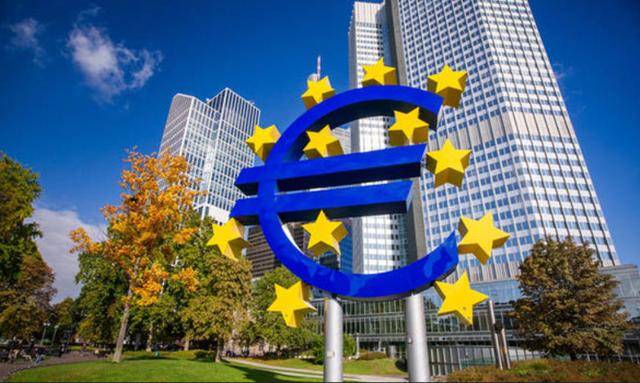
新西兰联储助理行长Silk:利率处于2.5%至3.5%的中性区间。
news flash· 2025-05-30 03:33
Core Viewpoint - The Assistant Governor of the Reserve Bank of New Zealand, Silk, stated that interest rates are currently within a neutral range of 2.5% to 3.5% [1] Group 1 - The Reserve Bank of New Zealand is assessing the current interest rate levels to determine their impact on the economy [1] - The neutral interest rate range indicates a balance between stimulating economic growth and controlling inflation [1] - This statement may influence market expectations regarding future monetary policy adjustments [1]
新西兰联储:利率处于中性区间。
news flash· 2025-05-28 03:19
Core Viewpoint - The Reserve Bank of New Zealand indicates that interest rates are currently within a neutral range [1] Group 1 - The Reserve Bank's assessment suggests a balanced approach to monetary policy, indicating no immediate need for rate adjustments [1] - The neutral interest rate range is seen as conducive to economic stability, allowing for sustainable growth [1] - The central bank's stance reflects ongoing economic conditions and inflation targets [1]
欧洲央行管委西姆库斯:利率处于中性区间的上半部分。
news flash· 2025-05-26 07:59
Group 1 - The European Central Bank (ECB) Governing Council member Simkus stated that interest rates are currently in the upper half of the neutral range [1]
欧洲央行管委卡兹米尔表示,利率现在处于中性区间,未来几个月通胀率将达到2%。
news flash· 2025-04-22 12:02
Core Viewpoint - The European Central Bank's Governing Council member Kazimir stated that interest rates are currently in a neutral range and inflation is expected to reach 2% in the coming months [1] Group 1 - Interest rates are positioned within a neutral range, indicating a balanced monetary policy stance [1] - Inflation is projected to hit 2% in the near future, suggesting potential economic stability [1]