动漫

Search documents
全球第七!哪吒背后的广东力量
21世纪经济报道· 2025-03-01 11:37
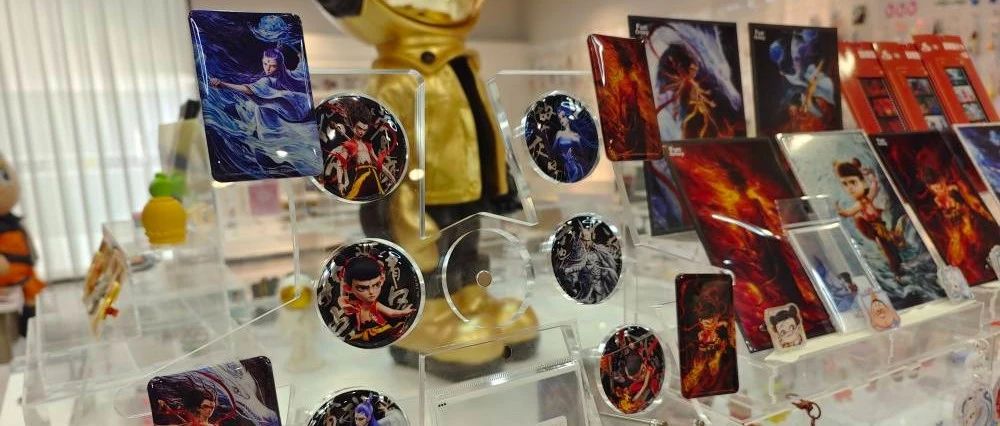
Core Viewpoint - The article highlights the significant box office success of the animated film "Nezha: The Devil's Child" and its impact on the Guangdong economy, particularly in the toy and IP (Intellectual Property) sectors, showcasing the region's manufacturing capabilities and potential to create a vibrant IP ecosystem [1][3][5]. Box Office Performance - As of March 1, the film "Nezha: The Devil's Child" has achieved a cumulative box office of over 14.32 billion yuan, ranking it among the top seven films globally [1][2]. - Guangdong province leads in box office contributions with 1.544 billion yuan, accounting for 84.4% of the film's total revenue in the province [3][4]. Economic Impact - The "Nezha economy" has led to a surge in demand for related merchandise, with significant orders flowing into Dongguan, a major manufacturing hub [5][6]. - Dongguan's efficient supply chain allows for rapid product delivery, reducing the typical turnaround time from two weeks to ten days, which is crucial for the fast-paced toy industry [6]. IP Development and Market Trends - Guangdong is positioning itself to build a robust IP ecosystem, leveraging its manufacturing base and market-oriented strategies to develop and commercialize original content [7][8]. - The province has a strong track record in creating successful children's animation IPs, with significant contributions to the national market [9][10]. Industry Growth and Future Prospects - The gaming industry in Guangdong is projected to generate revenues of 260.43 billion yuan in 2024, representing nearly 80% of the national total, indicating a strong growth trajectory for the region's entertainment sectors [12]. - Companies in Guangdong are innovating retail models by combining local manufacturing with IP collaborations, enhancing their global reach and market presence [12].


一吒难求!预售排到60天后,广东制造正在“狂揽”全球二次元
21世纪经济报道· 2025-02-28 01:54
Core Viewpoint - The article emphasizes the importance of leveraging cultural awakening to actively shape China's IP economy, achieving mutual empowerment between culture and economy through creativity and business [1]. Group 1: IP Economy and Cultural Impact - The film "Nezha" has surpassed a total box office of 14 billion yuan, leading to a surge in IP derivative products, creating a phenomenon where products are in high demand [1][3]. - The IP economy is characterized by the development, licensing, and production of derivative products around influential original content, representing a fusion of culture and economy [1][3]. - As China's GDP per capita exceeds $10,000, consumer spending is increasingly focused on spiritual needs, driving the growth of the cultural industry, particularly among Generation Z [3][10]. Group 2: Development of IP Industry in Guangdong - Guangdong has established a global toy production cluster, attracting significant foreign investment and evolving into a hub for IP economy development [5][18]. - Successful children's animation IPs like "Pleasant Goat and Big Big Wolf" and "Boonie Bears" have emerged from Guangdong, demonstrating effective long-term IP management and content iteration [7][9]. - The "谷子经济" (Guzi Economy) reflects a cultural consumption trend among youth, with the market size projected to grow from 221.2 billion yuan in 2017 to 652.1 billion yuan by 2025 [9][10]. Group 3: Market Potential and Global Influence - The global licensing market reached $356.5 billion in 2023, with China's licensing market growing to $13.77 billion, marking a 9.6% increase from 2022 [14][15]. - China's low market penetration in the licensing sector indicates significant growth potential, especially with the rise of traditional cultural IPs [15][20]. - Guangdong's strong supply chain and manufacturing capabilities position it as a dual hub for animation and toy industries, with the potential to transition from a "world factory" to a "cultural trendsetter" [18][20].