
Networking

Search documents
Jim Cramer on Arista: “That’s a Beast That’s Going Higher”
Yahoo Finance· 2025-10-29 15:40
Company Overview - Arista Networks Inc (NYSE:ANET) specializes in cloud-based networking solutions and related software for data centers, AI, and enterprise operations, along with providing network services, support, and hardware solutions [1] Market Insights - Jim Cramer highlighted Arista Networks as a stock with "monster gains" this year, indicating strong performance and potential for further growth [1] - Cramer emphasized the leadership of CEO Jayshree Ullal, describing her as an "amazing CEO" and suggesting that the stock is likely to continue rising [1] Short Selling Dynamics - The stock has been experiencing a gradual increase, while short sellers have been increasing their positions, indicating a potential for volatility if positive news emerges [1]

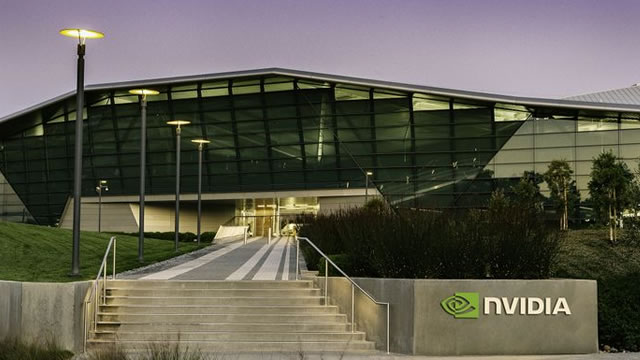
Nvidia's Abundance of A.I. Partnerships Send Market Cap Past $5T
Youtube· 2025-10-29 15:01
Core Insights - Nvidia has become the first company to surpass a $5 trillion market cap following significant announcements at the GTC event in Washington DC, with shares up over 50% in 2025 [1][3]. Partnerships and Collaborations - Nvidia is taking a $1 billion stake in Nokia, forming a strategic partnership to develop next-generation 6G cellular technology, making Nvidia a nearly 3% shareholder in Nokia [4][5]. - The company is collaborating with 17 quantum developers and nine national labs to establish NVQ Link, a system that connects powerful GPUs with quantum processors for hybrid quantum supercomputers [6][7]. - Nvidia is partnering with Oracle and the Department of Energy to build powerful AI supercomputers named Solstice and Equinox, utilizing up to 100,000 of Nvidia's latest Blackwell GPUs [8][9]. - Eli Lilly is working with Nvidia to create the most powerful AI supercomputer in the healthcare sector, aimed at accelerating drug discovery processes [10][11]. - Hewlett Packard Enterprises is partnering with Nvidia to deliver two next-gen supercomputers for the Department of Energy, named Mission and Vision [12]. - Collaborations with Palantir, Uber, and Joby Aviation are focused on deploying smarter AI agents and developing autonomous transportation solutions [13]. Market Performance - Nvidia's shares rose more than 5% following the announcements, reflecting positive market sentiment [14]. - The stock has experienced a significant upward trajectory, with discussions around potential overreaction and FOMO (fear of missing out) among investors [18][19].


Extreme Networks(EXTR) - 2026 Q1 - Earnings Call Transcript
2025-10-29 13:02
Financial Data and Key Metrics Changes - Revenue reached $310 million, up 15% year-over-year, marking the sixth consecutive quarter of revenue growth and the third straight quarter of double-digit year-over-year increases [4][12] - Earnings per share (EPS) was $0.22, up 29% from $0.17 in the prior year [12] - SaaS Annual Recurring Revenue (ARR) grew 24% year-over-year to $216 million [4][12] - Total bookings increased by 21% year-over-year, reflecting strong customer demand [13] Business Line Data and Key Metrics Changes - Product revenue was $194 million, growing 20% year-over-year and achieving six sequential quarters of product revenue growth [13] - Subscription and support revenue totaled $116 million, up 9% year-over-year, with total recurring revenue growing 8% year-over-year [14] - Non-GAAP gross margin was 61.3%, impacted by industry-wide increases in component costs [15] Market Data and Key Metrics Changes - Strong performance was noted in Asia-Pacific and EMEA regions, with significant new customer wins [14] - 36 customers spent over $1 million with the company in the quarter, up from 34 last quarter and 27 in the prior year [14] Company Strategy and Development Direction - The company is focused on expanding its footprint in government sectors and enhancing its technology offerings, particularly with Extreme Fabric and Extreme Platform One [6][9] - The introduction of Extreme Platform One is expected to drive future growth, with positive customer feedback noted [5][10] - The company aims to achieve a revenue growth rate of 10% for the full fiscal year 2026, with a focus on large opportunities and increasing market share [11][17] Management's Comments on Operating Environment and Future Outlook - Management expressed confidence in recovering gross margins through price increases and operational efficiencies [15][20] - The company anticipates continued growth in SaaS ARR and recurring revenue, with a target of 35% of total revenue from recurring sources in fiscal 2026 [17] - Management highlighted the competitive landscape, noting opportunities arising from disruptions among larger competitors [27][29] Other Important Information - The company has been recognized for its corporate responsibility efforts, reducing emissions by 34% since 2021 [11] - The company plans to host an AI Summit to discuss future innovations and strategies [10] Q&A Session Summary Question: Can you talk more about component price increases impacting gross margins? - Management acknowledged rising prices in memory and optics, indicating plans for price increases to recover costs [20][21] Question: What is the impact of the federal government shutdown on your business? - Management stated that the shutdown has had little to no impact, with opportunities opening up in the federal market due to recent certifications [24][25] Question: How is the competitive environment with Cisco and Juniper? - Management noted confusion in the market due to acquisitions and changes in partner programs, presenting opportunities for the company [27][29] Question: Can you provide metrics on Extreme Platform One's commercial introduction? - Management indicated that it is early for metrics but noted high adoption and excitement about the platform [36][38] Question: What are the long-term gross margin targets? - Management maintained a long-term target of 64% to 66% gross margins, with expectations for recovery from current levels [62][65]

Extreme Networks(EXTR) - 2026 Q1 - Earnings Call Transcript
2025-10-29 13:02
Financial Data and Key Metrics Changes - Revenue reached $310 million, up 15% year-over-year, marking the sixth consecutive quarter of revenue growth and the third straight quarter of double-digit year-over-year increases [4][12] - Earnings per share (EPS) was $0.22, up 29% from $0.17 in the prior year [12] - SaaS Annual Recurring Revenue (ARR) grew 24% year-over-year to $216 million [4][12] - Total bookings increased by 21% year-over-year, reflecting strong customer demand [13] Business Line Data and Key Metrics Changes - Product revenue was $194 million, growing 20% year-over-year and achieving six consecutive quarters of product revenue growth [13] - Subscription and support revenue totaled $116 million, up 9% year-over-year, with total recurring revenue growing 8% year-over-year, representing 36% of total revenue [14] - Non-GAAP gross margin was 61.3%, impacted by industry-wide increases in component costs [15] Market Data and Key Metrics Changes - Strong performance was noted in Asia-Pacific and EMEA regions, with significant new customer wins contributing to growth [14] - 36 customers spent over $1 million with the company in the quarter, up from 34 last quarter and 27 in the prior year [14] Company Strategy and Development Direction - The company is focused on expanding its market share through innovative technology solutions, including Extreme Fabric and Extreme Platform ONE, which leverage AI for enhanced networking capabilities [4][5] - The company aims to achieve a revenue growth target of 10% for the fiscal year 2026, with a strong emphasis on SaaS ARR growth in the low 20% range [11][17] - The company is positioning itself as a strategic alternative to incumbents, particularly in the public sector and hospitality markets [14] Management's Comments on Operating Environment and Future Outlook - Management expressed confidence in the company's ability to recover gross margins through price increases and operational efficiencies [15][20] - The company anticipates continued growth in large opportunities and believes fiscal 2026 will mark an inflection point in its growth trajectory [11] - Management highlighted the competitive landscape, noting confusion among competitors as an opportunity for the company to gain market share [28][70] Other Important Information - The company has been recognized as a leader in the 2025 MarketScape by IDC, highlighting its unique technology and deployment flexibility [5] - The company is committed to corporate responsibility, having reduced emissions by 34% since 2021 and aiming for 50% renewable electricity sourcing [11] Q&A Session Summary Question: Can you talk more about component price increases impacting gross margins? - Management acknowledged rising prices in memory and optics, implementing price increases to recover costs, with expectations to improve gross margins over time [20][21] Question: What is the impact of the federal government shutdown on your business? - Management indicated that the shutdown had little to no impact, with opportunities opening up in the federal market due to recent certifications [25] Question: How is the competitive environment with Cisco and Juniper? - Management noted confusion in the market due to HPE's acquisition of Juniper and Cisco's partner program overhaul, creating opportunities for the company [27][29] Question: What metrics do you have for Extreme Platform ONE's commercial introduction? - Management stated that it is early to present metrics but noted high adoption and excitement about the capabilities of Platform ONE [38][39] Question: What are the long-term gross margin targets? - Management maintained a long-term gross margin target of 64%-66%, with expectations for recovery in the near term [63][66]
Extreme Networks(EXTR) - 2026 Q1 - Earnings Call Transcript
2025-10-29 13:00
Financial Data and Key Metrics Changes - Revenue reached $310 million, up 15% year-over-year, marking the sixth consecutive quarter of revenue growth and the third straight quarter of double-digit year-over-year increases [4][13] - Earnings per share (EPS) was $0.22, up 29% from $0.17 in the prior year [13] - SaaS Annual Recurring Revenue (ARR) grew 24% year-over-year to $216 million [4][14] - Total bookings increased by 21% year-over-year, reflecting strong customer demand [15] Business Line Data and Key Metrics Changes - Product revenue was $194 million, growing 20% year-over-year and achieving six sequential quarters of product revenue growth [15][16] - Total subscription and support revenue was $116 million, up 9% year-over-year [16] - Recurring revenue grew 8% year-over-year, representing 36% of total revenue [16] Market Data and Key Metrics Changes - Strong performance was noted in Asia-Pacific and EMEA regions, with significant new customer wins [16] - 36 customers spent over $1 million with the company in the quarter, up from 34 last quarter and 27 in the prior year [16] Company Strategy and Development Direction - The company is focusing on technology innovation, with strong interest in the new Extreme Platform One and Wi-Fi 7 solutions [5][10] - The company aims to expand its footprint in government sectors and enhance its offerings with new sovereign cloud capabilities [6][7] - The company is positioning itself as a strategic alternative to incumbents, particularly in public sector and hospitality markets [16] Management's Comments on Operating Environment and Future Outlook - Management expects revenue growth to accelerate to 10% for the remainder of fiscal 2026, driven by large opportunities and increasing win rates [12] - The company is optimistic about its growth trajectory, with expectations of continued strong performance in SaaS ARR and new commercial models [12][39] Other Important Information - Non-GAAP gross margin was 61.3%, impacted by industry-wide increases in component costs, but expected to recover over time [17] - The company has implemented price increases to mitigate higher costs and drive margin recovery [17][22] Q&A Session Summary Question: Can you talk more about component price increases affecting gross margins? - Management acknowledged rising prices in memory and optics and mentioned plans for a mid-single-digit price increase to recover costs [21][22] Question: What is the impact of the federal government shutdown on the business? - Management indicated that the shutdown had little to no impact on their business, with opportunities opening up in the federal market due to recent certifications [24][25] Question: How is the competitive environment with Cisco and Juniper? - Management noted confusion in the market due to HPE's acquisition of Juniper and Cisco's partner program overhaul, creating opportunities for the company [26][27] Question: What is the status of Extreme Platform One's commercial introduction? - Management reported high adoption and excitement about the capabilities of Extreme Platform One, with metrics expected to be shared in future updates [32][34] Question: What are the long-term gross margin targets? - Management maintained a long-term gross margin target of 64% to 66%, with expectations of recovery from current tactical challenges [50][52]
Extreme Networks Non-GAAP EPS of $0.22 beats by $0.01, revenue of $310.2M beats by $14.48M (NASDAQ:EXTR)
Seeking Alpha· 2025-10-29 11:12
To ensure this doesn’t happen in the future, please enable Javascript and cookies in your browser.If you have an ad-blocker enabled you may be blocked from proceeding. Please disable your ad-blocker and refresh. ...

Nokia's stock is getting a big Nvidia bump. Why the chip maker is taking a stake.
MarketWatch· 2025-10-28 16:30
Core Insights - Networking is becoming increasingly crucial in the AI sector as companies strive to enhance data transfer speeds [1] Industry Summary - The emphasis on networking reflects a broader trend in the AI race, where efficient data movement is essential for competitive advantage [1]


Silicom Awarded $3M Design Win from SASE Leader
Prnewswire· 2025-10-28 12:30
Core Insights - Silicom Ltd. has secured a Design Win from a leading SASE solutions provider, indicating strong demand for its Edge Networking system and NIC products [1][2][3] Financial Impact - The initial orders from the customer amount to approximately $500,000, with a projected run-rate of about $3 million per year upon full deployment, suggesting significant revenue potential [2] - There is additional upside potential if certain deals materialize, indicating a positive outlook for future orders [2] Market Position - Silicom's CEO highlighted the company's strong relationship with the customer and its expertise in wired and wireless connectivity solutions, emphasizing the importance of SASE as a growth driver [3] - The company is currently collaborating with several SASE leaders, leveraging synergies across its product lines to deliver innovative solutions [3] Product Offering - Silicom provides high-performance networking and data infrastructure solutions designed to enhance performance and efficiency in Cloud and Data Center environments [4] - The company's products are utilized by major cloud players, service providers, telcos, and OEMs, reinforcing its position as a key player in the connectivity and performance sector [4][5] Customer Relationships - Silicom has established long-term relationships with over 200 customers globally and boasts more than 400 active Design Wins, positioning it as a preferred partner for technology leaders [5]


Jim Cramer Recommends This ‘Very Low Multiple’ AI Stock
Yahoo Finance· 2025-10-27 13:06
Group 1 - Cisco Systems Inc is highlighted as one of the best AI stocks amid Federal Reserve rate cuts, with an attractive valuation and potential benefits from rising AI demand [1] - Cisco recently launched a chip and networking system designed for AI data centers, positioning itself competitively against Broadcom, which has been effective in this space [2] - The current valuation of Cisco is significantly lower at 16 times earnings compared to its historical valuation of 400 times earnings, indicating a more favorable investment opportunity [2] Group 2 - There is a belief that while Cisco is a potential investment, other AI stocks may offer higher returns with limited downside risk [3] - The article suggests that Cisco is an extremely cheap AI stock and a beneficiary of Trump tariffs and onshoring, indicating its strategic positioning in the market [3]

Extreme Empowers Global Customers With the Advantages of Wi-Fi 7 Enabling Faster, Smarter, Secure Connectivity
Businesswire· 2025-10-27 11:05
Core Insights - Global enterprises are increasingly adopting Wi-Fi 7 technology to enhance connectivity and improve operational efficiency [1] Company Summary - Extreme Networks is at the forefront of this trend, providing solutions that enable faster connectivity through Wi-Fi 7 [1] Industry Summary - The adoption of Wi-Fi 7 is seen across various verticals, indicating a broad industry shift towards more advanced wireless technology [1]