
Real Estate Development

Search documents
Howard Hughes Holdings (NYSE:HHH) M&A Announcement Transcript
2025-12-18 15:52
Summary of Howard Hughes Holdings (NYSE: HHH) M&A Announcement Company Overview - **Company Involved**: Howard Hughes Holdings (HHH) - **Acquisition Target**: Vantage, an insurance company Key Points and Arguments 1. **Acquisition Details**: Howard Hughes is acquiring Vantage for a purchase price of $2.1 billion, which is valued at approximately 1.5 times book value, expected to decrease to 1.4 times by closing [6][11] 2. **Earnings Perspective**: The focus is on book value rather than earnings multiples due to Vantage being in a growth phase, with 70% of pre-tax income derived from investment income [15][16] 3. **Management Alignment**: Pershing Square owns 47% of Howard Hughes, aligning incentives with stock price performance, and a separate committee was formed to manage potential conflicts in the transaction [8][9] 4. **Financing Structure**: Howard Hughes secured $1 billion in bridge equity from Pershing Square without a commitment fee, allowing flexibility in financing options [9][12] 5. **Profitability Expectations**: Vantage is expected to improve profitability over time, with a projected return on equity increasing from 13% to potentially over 20% as the business scales [19][20][64] 6. **Investment Strategy**: The plan includes shifting Vantage's investment portfolio towards common stocks, aiming for a diversified asset allocation that balances liquidity and returns [23][62] 7. **Market Positioning**: The acquisition is seen as a transformative step towards building a diversified holding company akin to Berkshire Hathaway, leveraging Howard Hughes' existing real estate business [66][67] 8. **Regulatory Considerations**: The approach to investing in equities will be gradual, with ongoing discussions with regulators to ensure compliance and build confidence [38][62] 9. **Future Growth Potential**: The diversified nature of Vantage's business lines allows for flexibility in underwriting and pricing, which is expected to enhance profitability [53][55] Additional Important Insights 1. **Risk Management**: The acquisition is viewed as low-risk due to Vantage's diversified portfolio and strong management team, with no significant catastrophic risks anticipated [29][30] 2. **Long-Term Vision**: The focus is on building intrinsic value per share without diluting ownership, contrasting with typical hedge fund strategies that prioritize asset growth [68][69] 3. **Synergies with Real Estate**: While direct customer synergies are limited, Vantage's insurance needs may benefit from Howard Hughes' real estate expertise [49][50] 4. **Operational Governance**: The existing management team at Vantage will continue to run the business, with oversight from Howard Hughes' board, ensuring operational independence while maintaining strategic alignment [76][79] This summary encapsulates the critical aspects of the M&A announcement, highlighting the strategic rationale, financial metrics, and future outlook for Howard Hughes and its acquisition of Vantage.

Howard Hughes Holdings (NYSE:HHH) M&A Announcement Transcript
2025-12-18 15:52
Summary of Howard Hughes Holdings (NYSE: HHH) Conference Call Company Overview - **Company**: Howard Hughes Holdings - **Acquisition Target**: Vantage, a property and casualty (P&C) insurance company Key Points and Arguments Acquisition Details - The acquisition of Vantage is valued at **$2.1 billion**, with a purchase price of **1.5 times book value**, expected to decrease to **1.4 times book value** by closing [2][3] - The acquisition is seen as a strategic move to enhance profitability over time, with expectations of improved asset and liability management [3][4] - Howard Hughes is committing **$1 billion** in capital for the transaction, structured favorably without a commitment fee [4][5] Financial Metrics and Performance - Vantage's **LTM pre-tax income** is reported at **$150 million**, with a significant portion (70%) derived from investment income [9][10] - The company aims to shift its investment strategy towards common stocks, potentially increasing the return on equity from **13%** to **high teens or over 20%** [12][13] - The combined ratio for Vantage is projected to improve from **96%** to the low **90s** over time [12] Management and Governance - Pershing Square, which owns **47%** of Howard Hughes, has aligned incentives with the company's stock price performance [3] - A separate committee was established to manage potential conflicts of interest due to Pershing Square's involvement [4][5] - The management team of Vantage will continue to operate independently, with oversight from Howard Hughes' board [66][67] Market Position and Strategy - The acquisition is positioned as a long-term strategy to build a diversified holding company akin to Berkshire Hathaway [56][57] - The focus is on maintaining a low-risk insurance operation while gradually increasing investments in equities [29][33] - The company plans to leverage its existing real estate business to generate cash flow for further investments [57][60] Risks and Challenges - The nature of insurance inherently involves uncertainty, and profitability cannot be guaranteed every year [21][22] - The management acknowledges the challenges of transitioning Vantage's investment strategy and the need for regulatory approval [53][54] Future Outlook - The company anticipates that the integration of Vantage will enhance overall profitability and shareholder value over time [54][55] - There is a focus on maintaining a conservative approach to capital allocation, avoiding excessive dilution of shares [58][59] Additional Important Insights - The management emphasizes the importance of a diversified insurance portfolio to mitigate risks and capitalize on favorable pricing [40][41] - The potential for synergies between Howard Hughes' real estate operations and Vantage's insurance offerings is acknowledged, though not seen as a primary driver for the acquisition [35][36] - The management team is committed to a gradual and thoughtful approach to integrating Vantage into Howard Hughes' operations [66][67]
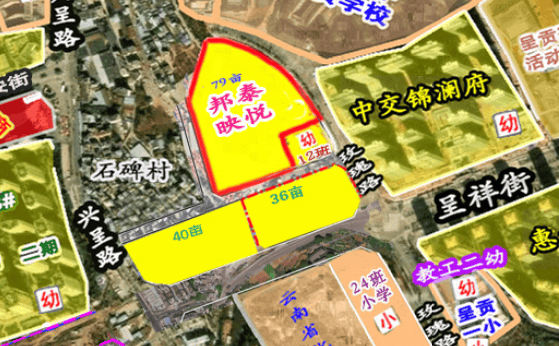
昆明土拍双响炮!邦泰落子呈贡,云南建投落子官渡
Sou Hu Cai Jing· 2025-12-18 15:18
Group 1 - The core point of the news is the auction of two urban residential land parcels in Kunming, with significant transactions by local companies [1][3]. Group 2 - Bangtai Group's subsidiary, Kunming Bangxing Real Estate Co., Ltd., acquired a 36-acre residential land in Chenggong Longjie for a base price of 159 million yuan, with a floor price of 2987 yuan/m² and a starting land price of 4.41 million yuan/acre [1]. - The project has a plot ratio of 2.2, a maximum building height of 54 meters, a building density of ≤22%, and a green space ratio of ≥40% [3]. Group 3 - Yunnan Construction Investment's subsidiary, Dali Dali Cheng Investment Co., Ltd., won a 40-acre commercial and residential land in Guandu for 618 million yuan, with a floor price of 6686 yuan/m² [3]. - The land parcel has a plot number of KCGD2022-1 and a plot ratio of 3.5 [3].

Howard Hughes Holdings (NYSE:HHH) M&A Announcement Transcript
2025-12-18 14:32
Summary of Howard Hughes Holdings Conference Call Company and Industry Overview - **Company**: Howard Hughes Holdings (NYSE: HHH) - **Acquisition Target**: Vantage Group Holdings - **Industry**: Specialty Insurance and Reinsurance Key Points and Arguments 1. **Acquisition Announcement**: Howard Hughes Holdings announced the acquisition of Vantage Group Holdings for $2.1 billion in cash, representing 1.5 times the estimated book value for 2025 [6][7][48]. 2. **Strategic Vision**: The acquisition is part of a broader strategy to transform Howard Hughes into a diversified holding company, similar to Berkshire Hathaway's model [4][5]. 3. **Vantage's Business Model**: Vantage operates as a specialty insurance and reinsurance platform, with a focus on diversified business lines, reducing exposure to any single market sector [12][15]. 4. **Financial Performance**: Over the last 12 months, Vantage has written approximately $1.2 billion in premiums, with a balanced portfolio of 60% specialty insurance and 40% reinsurance [16][21]. 5. **Growth Potential**: The anticipated growth in Vantage's book value post-acquisition could lower the effective purchase price to 1.4 times book value, making it an attractive investment [7][48]. 6. **Management Team**: Vantage's management team is experienced, with a strong track record in the insurance industry, which is expected to enhance operational performance under Howard Hughes [19][20]. 7. **Regulatory Considerations**: The acquisition will require regulatory approvals from Delaware and Bermuda, as Vantage operates in both jurisdictions [8]. 8. **Investment Strategy**: Howard Hughes plans to manage Vantage's assets without charging management fees, which could save $30-$60 million annually and enhance profitability [24][36]. 9. **Long-term Focus**: The acquisition aligns with Howard Hughes' long-term strategy, emphasizing profitability over rapid growth, contrasting with the typical private equity model [26][27]. 10. **Creditworthiness**: Vantage starts with an A-rated balance sheet, which is expected to improve by becoming part of Howard Hughes, enhancing its credit profile [30][54]. Additional Important Insights 1. **Market Positioning**: Vantage's limited exposure to catastrophe reinsurance (less than 1% of gross written premiums) positions it favorably in the insurance market [19]. 2. **Operational Efficiency**: Vantage's combined ratio is currently around 97%, with expectations for improvement as the company scales and benefits from being part of a holding company [41][42]. 3. **Future Valuation**: The acquisition is expected to create a business that could achieve returns on equity in the high teens or even exceed 20% over time, potentially trading at higher multiples in the market [44][49]. 4. **Cash Flow Generation**: Howard Hughes anticipates generating excess cash from its real estate operations, which can be reinvested into Vantage, further enhancing its growth potential [64][68]. 5. **Management Philosophy**: The focus will be on underwriting profitability and strategic capital allocation, rather than merely chasing growth, which is a common pitfall in the insurance industry [27][28]. This summary encapsulates the key points discussed during the conference call regarding the acquisition of Vantage Group Holdings by Howard Hughes Holdings, highlighting the strategic vision, financial implications, and operational insights that underpin this transformative transaction.
Japan's Sumitomo Realty puts India bet on Mumbai and serviced apartments
Reuters· 2025-12-18 10:44
Core Insights - Japan's Sumitomo Realty and Development, the third-largest developer in the country, is planning to expand its operations in India with a unique strategy focused on managing apartments in Mumbai rather than selling them [1] Company Strategy - The company aims to concentrate its efforts on the Mumbai market, indicating a targeted approach to its expansion plans [1] - By managing apartments instead of selling them, Sumitomo Realty is adopting a different business model that may provide steady revenue streams and long-term investment opportunities [1]
中海·瑞文里东区取得第四张预售证
Cai Jing Wang· 2025-12-18 04:06
Core Viewpoint - The article reports on the approval of a new residential project in Shijingshan, Beijing, highlighting the pre-sale permits for multiple buildings and the total number of units available for sale [1] Summary by Sections Project Details - The project, named Zhonghai Ruiwenli East District, has received its fourth pre-sale permit for two residential buildings, specifically buildings 4 and 6, which consist of 120 units [1] - The approved sales area for these units is 13,809.72 square meters, with an average selling price of approximately 74,000 yuan per square meter [1] Total Units and Approvals - Including previous approvals, the East District has now received permits for a total of 10 buildings, amounting to 537 units [1] - The earlier approvals include 123 units from buildings 1 and 3, 128 units from buildings 7, 8, and 9, and 166 units from buildings 2, 10, and 11 [1] - There are still 60 units in the final building, 5, awaiting pre-sale permit approval [1]
中国地产-2026 展望:住房市场持续疲软催生新不确定性-China Property_ 2026 Outlook_ New uncertainties from continued weak housing market
2025-12-18 02:35
Summary of Conference Call on China Property Market Industry Overview - The conference call focuses on the **China Property** market, highlighting ongoing challenges and forecasts for 2026 and beyond. Key Points and Arguments Market Conditions - **Weak Construction Activity**: Primary housing market construction is expected to remain weak in 2026E-2027E due to persistent liquidity stress and high inventory levels in the industry [1] - **Property Fixed Asset Investment (FAI)**: A potential deceleration in the current double-digit year-on-year decline in property FAI may occur if it reaches 85% of property sales by 2027E, as property FAI primarily reflects the cost of property sales [1] - **Secondary Housing Market**: The supply/demand imbalance in the secondary housing market is anticipated to take longer to adjust, delaying price stabilization [1] Financial Stress and Developer Challenges - **Loan Maturity Extensions**: There is uncertainty regarding the scope for further loan maturity extensions for developers, as high debt levels and declining property sales have offset benefits from interest rate reductions [1] - **Interest Expense**: Interest expenses for privately owned enterprises (POE) developers account for approximately 70% of total developer industry expenses, significantly higher than the 5-6% for larger state-owned enterprises (SOEs) [1] - **Liquidity Stress**: The liquidity stress in the industry is deepening, with increasing risks of credit defaults [1][36] Mortgage Market Dynamics - **Elevated Loan-to-Value Ratios (LTVs)**: The ongoing decline in property prices is raising LTVs for mortgages and operating loans, with a base-case scenario estimating Rmb5.2tn and Rmb0.8tn in outstanding mortgages and operating loans meeting the 80% LTV threshold [2][86] - **Bear-case Scenario**: A potential 30% decline in property prices could lead to Rmb14.7tn in mortgages meeting the 80% LTV threshold, indicating significant risk in the mortgage market [86] Economic Implications - **Household Debt Service Burden**: The household debt service burden in China is projected to remain high at over 15% in 2025E-2027E, raising concerns about a negative feedback loop affecting home prices and credit availability [5][77] - **Policy Stimulus**: Key factors to watch include any new policy stimulus aimed at reviving demand and targeted liquidity injections to developers with land banks in tier-1 and tier-2 cities [6] Adjusted Forecasts - **EPS Estimates**: The underlying EPS estimates for developers have been cut by 7-31% on average for 2025E-2027E, reflecting a weaker fundamental outlook [10] - **ASP Trends**: The average selling price (ASP) forecast for the secondary housing market has been revised down due to ongoing price cuts and weak transaction volumes [9] Developer Liquidity and Debt Restructuring - **Distressed Developers**: The report highlights the ongoing liquidity pressures faced by developers, with 28 major listed developers experiencing significant declines in asset turnover ratios and increasing numbers of distressed developers [42][52] - **Debt Restructuring Progress**: As of October 2025, 19 companies have had their debt restructuring plans approved, with a total estimated debt reduction exceeding Rmb1.2tn [69][70] Market Outlook - **Overall Market Weakness**: The overall outlook for both primary and secondary markets is expected to weaken further, with sell-through rates declining [22][25] - **Land Sales and Construction**: Land sales and construction activities are projected to remain weak until property FAI aligns more closely with property sales [27] Additional Important Insights - **Rental Price Stabilization**: Rental price stabilization is viewed as a key driver for property price stabilization in higher-tier cities [13] - **Fair Value Gap**: There is an estimated 10%-15% property price gap to fair value, which could widen to 30% if deflationary pressures persist [16] This summary encapsulates the critical insights and forecasts regarding the China property market, emphasizing the ongoing challenges and potential risks for investors and stakeholders in the industry.

Webstar Technology Group Closes on Downtown 10‑Acre Site, Launching Forge Atlanta - The City's Largest Mixed‑Use Development
Businesswire· 2025-12-17 18:41
Core Viewpoint - Webstar Technology Group, Inc. and its subsidiary Forge Atlanta Asset Management have officially launched Forge Atlanta, a mixed-use district aimed at revitalizing an underutilized industrial area in downtown Atlanta [1] Group 1: Project Details - The project involves the acquisition of a 10-acre parcel located at Ted Turner Drive SW and Whitehall Street SW [1] - Forge Atlanta is designed to transform the area adjacent to the Garnett MARTA station and major interstates (20/75/85) into a high-density district [1] Group 2: Strategic Importance - The development is positioned to enhance the urban landscape and improve accessibility in downtown Atlanta [1] - The initiative reflects a broader trend of urban redevelopment aimed at maximizing land use in metropolitan areas [1]

日本行业展望_2026 新年特刊(2025 年 12 月)- 即便步入马年,日本股市获利了结时机仍未到来
2025-12-17 15:53
Summary of Key Points from the Conference Call Industry Overview - The focus is on the Japanese equity market, particularly in the context of the 2026 outlook and the performance of various sectors within Japan [3][6][7]. Core Insights and Arguments 1. **Profit Growth Expectations**: Stronger prospects for double-digit profit growth in FY26 are anticipated, driven by solid H1 results, particularly in B2B sectors. Companies are positioned to improve profitability through price increases due to labor shortages [3][6]. 2. **Market Confidence**: Market confidence in achieving double-digit profit growth in FY26 is expected to increase over time, supported by tax breaks for capital expenditures and increased government spending on infrastructure [3][6]. 3. **Sector Performance**: - Construction, heavy machinery, IT & software, and industrial electronics sectors are expected to benefit from productivity improvements and price hikes [6]. - B2C businesses are likely to recover as real wages increase, while headwinds remain for businesses in China and those serving inbound visitors to Japan [6][3]. 4. **Macroeconomic Conditions**: Nominal economic growth (G) is projected to exceed the nominal 10-year JGB yield (R), which historically supports equity performance over bonds [4][7]. 5. **Corporate Governance Revisions**: Revisions to the Corporate Governance Code in 2026 will require companies to demonstrate effective use of cash and deposits, potentially impacting investment strategies [4][7]. 6. **Earnings Forecasts**: The TOPIX EPS growth forecasts were raised from +0.7% to +3.2% for FY25 and from +13.8% to +14.3% for FY26, reflecting improved economic conditions and currency assumptions [8][21]. 7. **Share Buybacks**: Nonfinancial corporations are expected to be the largest net purchasers of Japanese equities in 2026, driven by share buybacks and tender offers [7][30]. Additional Important Insights 1. **Sector Preferences**: Preferred sectors include electric appliances, machinery, banks, real estate, and trading companies, while sectors to avoid include steel, retail trade, and those reliant on inbound tourism [8][49]. 2. **Valuation Trends**: The TOPIX is currently trading at a 12-month forward P/E of 17.0x, but is expected to appear less overvalued as forecasts for FY26 suggest a P/E of 15.9x [39][40]. 3. **Investment Strategy**: Selective investment is emphasized, as not all companies will effectively implement measures to improve ROE. The outlook includes a potential upside scenario for the TOPIX at 3,900 and a downside scenario at 3,200 by the end of 2026 [48][49]. This summary encapsulates the key points discussed in the conference call, highlighting the optimistic outlook for Japanese equities, sector-specific insights, and macroeconomic conditions that are expected to influence market performance in 2026.
政策“加减法”,中国多城楼市成交走稳
Zhong Guo Xin Wen Wang· 2025-12-17 08:24
Core Viewpoint - The real estate market in several core cities in China is stabilizing through supply and demand adjustments, with new and second-hand housing transactions showing growth in the first 11 months of the year [1] Group 1: Supply-Side Adjustments - Cities are implementing "reduction" strategies by controlling new supply to alleviate inventory pressure and stabilize prices, with national real estate development investment down 15.9% and new construction area down 20.5% year-on-year [2] - In Guiyang, the focus has shifted from large-scale projects to smaller, high-quality land parcels, resulting in a 1.9% year-on-year increase in new housing sales over the first ten months [2] Group 2: Cost Reduction Measures - Various regions are reducing housing costs by adjusting restrictive purchasing policies and expanding the use of housing provident funds, such as Shenzhen's new regulations allowing for the withdrawal of funds for down payments and taxes [3] - Yangjiang in Guangdong has introduced tax incentives for housing transactions and provided consumer vouchers, leading to 6,260 transactions [3] Group 3: Policy Innovations - Innovative use of "housing tickets" has been implemented in several areas, with Quzhou issuing 3,150 tickets that generated nearly 2 billion yuan in sales and reduced the sales cycle for residential properties [4] - Xiamen has also adopted housing ticket policies to channel demand into the primary housing market, resulting in 8,743 units sold from January to October [4] Group 4: Focus on Housing Quality - Enhancing housing quality is a key focus for many regions, with high-quality residential projects attracting market interest, such as Wuhan's 40 premium projects that sold over 15,000 units [6] - In Dezhou, Shandong, 11 high-quality residential projects sold over 2,800 units, accounting for 20% of the city's total sales [6]