Semiconductors

Search documents
SEMICON展后分享:异构集成与先进封装技术已然成为产业圈发展共识
势银芯链· 2026-03-30 08:04
Core Insights - The article highlights the significant growth and developments in the advanced packaging and heterogeneous integration sectors of the semiconductor industry, driven by increasing demand from artificial intelligence and data centers [3]. Group 1: Industry Events and Trends - The SEMICON China exhibition showcased a strong focus on high-end semiconductor equipment, with both international and domestic manufacturers emphasizing their advancements in the advanced packaging sector [2]. - Major international companies like Canon, ASML, and SCREEN presented wafer-level and panel-level lithography equipment, while domestic leaders such as North Huachuang and Shengmei Shanghai displayed equipment for 2.5D/3D heterogeneous integration [2]. - The advanced packaging and heterogeneous integration industries are accelerating the global semiconductor market towards a valuation of $1 trillion [2]. Group 2: Market Statistics and Projections - According to TrendBank, the global advanced packaging market is projected to reach $59.2 billion by 2025, reflecting a growth rate of 25% [3]. - The panel-level packaging (PLP) market is expected to grow to $247 million by 2025, with a remarkable growth rate of 40% [3]. - The current demand for 2.5D/3D packaging in China is limited due to constraints in advanced wafer orders, indicating that the market has not yet reached a peak demand phase [3]. Group 3: Strategic Players - Key players in the 2.5D/3D and FOPLP sectors include companies like Tongfu Microelectronics, Huatian Technology, and Xiamen Yuntian, among others, each focusing on specific advanced packaging technologies [4].


ICLR 2026 Oral | 大道至简!斯坦福、英伟达、新国立联合推出InfoTok,用信息论重新定义高效视频分词
机器之心· 2026-03-30 06:52
Core Insights - The article discusses the introduction of InfoTok, an adaptive video tokenizer that utilizes information theory to optimize token allocation based on video content complexity, achieving a 2.3 times compression rate and 11 times faster inference speed compared to similar adaptive solutions [2][41]. Group 1: Motivation and Theory - Current visual tokenizers apply a fixed compression rate, leading to inefficient token allocation regardless of video complexity, which is not optimal [9][10]. - InfoTok aims to address this inefficiency by leveraging Shannon's information theory, which suggests that the amount of information dictates the number of tokens required for encoding [11][12]. - The ideal video tokenizer should achieve high compression rates, maintain high fidelity, and capture semantically meaningful content [12]. Group 2: Methodology - InfoTok employs two main components: the ELBO router, which determines the number of tokens to allocate, and the adaptive compressor, which encodes the data into a variable-length token sequence [19][23]. - The ELBO router uses a computable proxy to measure the predictability of video content, allowing for near-optimal token allocation based on content complexity [20][21]. - The adaptive compressor intelligently packages fixed-length embeddings into a variable-length token sequence, optimizing information retention and compression [25][26]. Group 3: Experimental Results - InfoTok demonstrated superior performance in video reconstruction benchmarks, achieving lossless reconstruction while saving 20% of tokens and outperforming ElasticTok at a 2.3 times compression rate [41][44]. - The framework consistently outperformed heuristic methods across all compression levels, showcasing significant improvements in reconstruction quality and inference efficiency [44][45]. - Visual results indicated that InfoTok dynamically adjusts token allocation based on scene complexity, effectively balancing compression and quality [38][39]. Group 4: Future Prospects - The principles behind InfoTok's information-theoretic framework could extend beyond video to other domains such as images and 3D scenes, suggesting a broader application of adaptive tokenization [48]. - The integration of adaptive tokenization into video generation pipelines could enhance both quality and efficiency, marking a significant advancement in AI video generation technology [48].

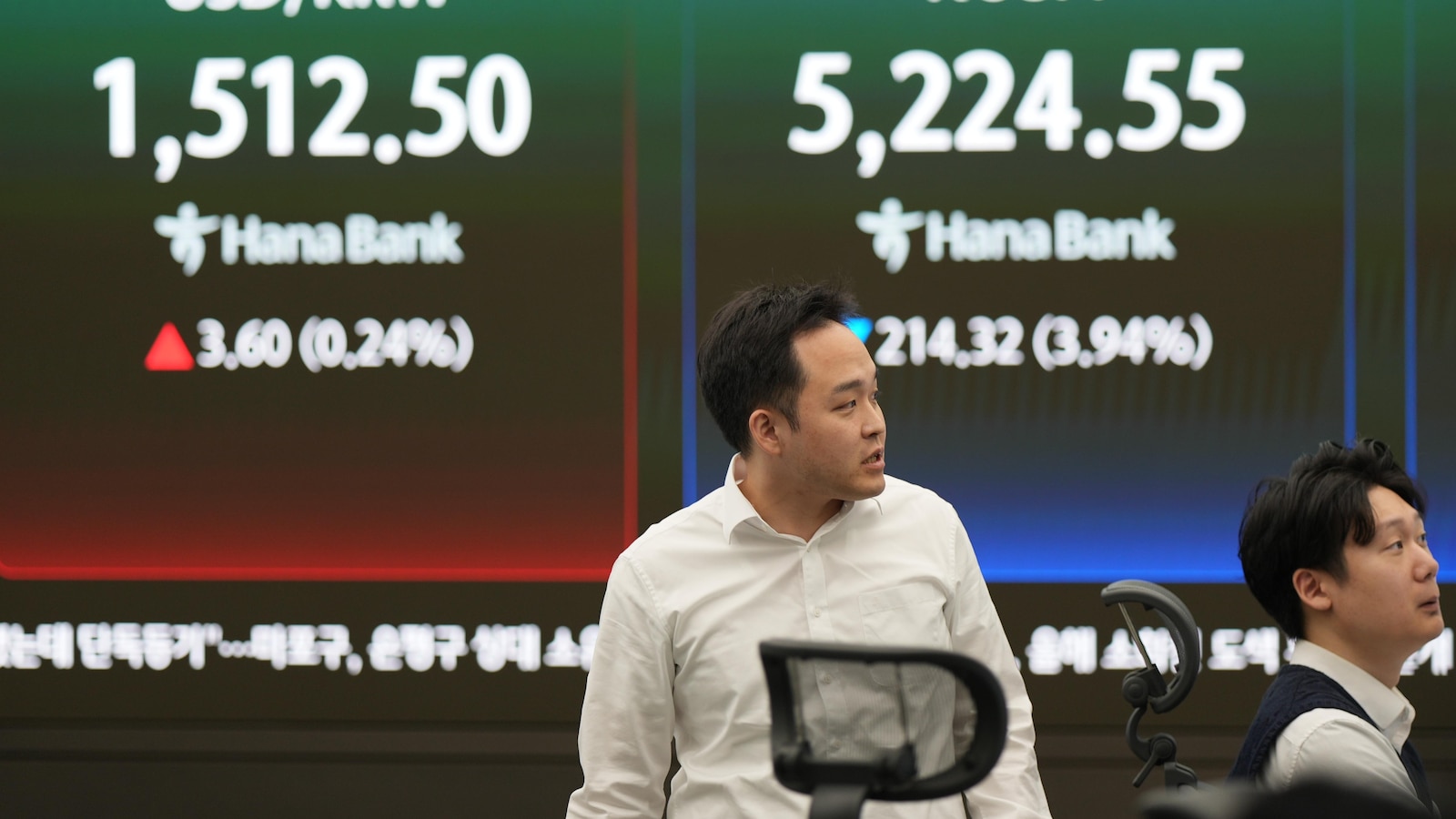
Asian shares decline as oil prices soar amid the war in Iran, echoing last week's Wall Street drop
ABC News· 2026-03-30 06:48
Market Overview - Asian shares are mostly declining due to concerns over rising oil prices and the potential escalation of the U.S. war with Iran [1] - The declines in Asia follow significant drops on Wall Street, marking the longest losing streak in nearly four years [2] Regional Market Performance - Japan's Nikkei 225 fell 4.5% to 50,979.54, while Australia's S&P/ASX 200 lost 1.2% to 8,417.00 [2] - South Korea's Kospi dropped 3.2% to 5,264.32, Hong Kong's Hang Seng decreased by 1.7% to 24,519.63, and the Shanghai Composite fell 0.7% to 3,884.57 [2] Oil Prices and Economic Impact - Concerns in Asia regarding access to the Strait of Hormuz have intensified, as the region heavily relies on this route for oil shipments [3] - U.S. crude oil prices increased by $2.28 to $101.92 per barrel, while Brent crude rose by $2.88 to $115.45 per barrel, up from approximately $70 before the war [3] - Investors are preparing for a prolonged conflict, which could lead to inflation in global markets and potentially hinder economic growth in Asia [4] U.S. Market Performance - The S&P 500 fell 1.7%, marking its worst week since the onset of the war with Iran, while the Dow Jones Industrial Average lost 793 points, or 1.7% [5] - The S&P 500 is currently 8.7% below its all-time high set in January, with significant declines in major tech stocks like Amazon and Nvidia [5] Bond and Currency Markets - The yield for the 10-year Treasury rose to 4.48% before settling at 4.43%, an increase from 3.97% prior to the war [6] - In currency trading, the U.S. dollar decreased to 159.97 Japanese yen from 160.32 yen, and the euro fell to $1.1505 from $1.1510 [6]

内存条价格跳水,内存股集体下跌,内存超级周期见顶了?
华尔街见闻· 2026-03-30 06:43
Core Viewpoint - The memory price decline raises concerns about the peak of the memory cycle, with significant price drops observed in both the U.S. and domestic markets, leading to a divergence in market outlook regarding the memory industry's future [4][5][9]. Group 1: Price Trends and Market Reactions - In the U.S. market, DDR5 memory prices have dropped significantly, with some models seeing reductions of up to $100, such as the Corsair VENGEANCE series [4]. - Domestic markets are experiencing similar price declines, with reports of mainstream 16GB memory prices dropping over 100 yuan in a single day, reflecting a drastic fall from previous highs [5]. - The price surge in memory products has led to a 60% drop in sales volume compared to the previous year, as consumers are now hesitant to purchase non-essential items [6]. Group 2: Impact of Technological Developments - Google's new compression algorithm "TurboQuant" is expected to reduce memory usage for large language models by at least 60%, leading to a perceived decrease in memory demand and a subsequent drop in stock prices for major memory companies [7][19]. - The market reacted negatively, with Micron Technology's stock falling over 24% and Western Digital dropping nearly 21% from recent highs, resulting in a loss of nearly $100 billion in market capitalization for the memory chip sector [7][9]. Group 3: Diverging Market Perspectives - Some investors believe the traditional memory "pig cycle" has peaked, while others, including HSBC, argue that current concerns are overstated and that the market is in the middle of an AI-driven memory supercycle [9][19]. - Analysts highlight that the recent price drops are not solely due to Google's algorithm but also because certain smartphone memory chip prices have stopped rising, indicating a potential market peak [10][11]. Group 4: Structural Changes in the Memory Industry - The memory industry is undergoing a transformation, with major companies like Samsung and SK Hynix shifting towards a more restrained capacity expansion model, focusing on securing advance payments and long-term demand visibility [16][19]. - Analysts suggest that the operational strategies of memory companies are evolving, moving away from blind capacity expansion to a more calculated approach to production [16][19]. Group 5: Long-term Outlook and Investment Sentiment - Investment banks maintain a positive long-term outlook for the memory industry, asserting that current market fears are exaggerated and that the AI-driven supercycle will continue to support demand for memory products [19][21]. - The report anticipates a significant increase in AI server shipments by 28% year-on-year by 2026, with enterprise SSDs expected to capture a growing share of NAND demand, driven by AI applications [20][22].

中国 “十四五” 高质量增长的杠铃策略-Asia Economics Analyst_ China’s _Barbell Strategy_ for High-Quality Growth in the 15th FYP
2026-03-30 05:15
Summary of Key Points from the 15th Five-Year Plan (FYP) Conference Call Industry Overview - The conference call discusses China's 15th Five-Year Plan (FYP) for the period 2026-2030, focusing on high-quality growth, technology, security, and people's livelihood as top priorities [3][4][6]. Core Insights and Arguments 1. **Barbell Strategy**: The plan is characterized as a "barbell strategy," emphasizing high-tech development and social safety net improvements to drive domestic demand [3][4]. 2. **Policy Adjustments**: Compared to the 14th FYP, new targets include elderly care and childcare enrollment rates, with a shift from energy intensity reductions to carbon emissions reductions [3][4][8]. 3. **Implicit Growth Target**: Although no specific GDP growth target is set, an implicit annualized growth rate of approximately 4.2% is suggested to achieve the goal of doubling 2020 GDP per capita by 2035 [3][12]. 4. **R&D Spending**: Policymakers aim to increase R&D spending by 7% annually, potentially reaching 3% of GDP by 2030, narrowing the gap with developed markets [3][19]. 5. **Household Consumption**: There is a focus on increasing household consumption through income growth and improved social safety nets, although no specific target for household consumption rate is provided [3][36][41]. 6. **Structural Reforms**: The agenda includes fiscal, financial, and social safety net reforms, which may unlock long-term growth potential but will require gradual implementation [3][54]. Additional Important Content 1. **Green Transition**: The 15th FYP emphasizes a more practical approach to green transition, with a target to increase the proportion of non-fossil energy in total energy consumption to 25% by 2030 [8][11]. 2. **Security of Supply Chains**: There is a strong commitment to enhancing the security of key supply chains, particularly in energy and food, in response to geopolitical uncertainties [31][32]. 3. **New Economy Growth**: The new economy sectors, such as EV sales and integrated circuits, are expected to continue outpacing traditional sectors, indicating a shift in economic focus [27][30]. 4. **Consumption Environment**: Policymakers are looking to improve the consumption environment by easing restrictions and enhancing infrastructure related to services consumption [42][47]. 5. **Demographic Challenges**: The plan addresses demographic issues, including a declining birth rate, with measures to boost childbirth through subsidies and improved childcare services [41][48]. This summary encapsulates the key points from the conference call regarding China's 15th Five-Year Plan, highlighting the strategic focus areas and anticipated economic developments.
英伟达 GTC 大会落幕:对科技供应链的启示-NVIDIA‘s GTC conclusion_ Implications for the Tech Supply Chain
2026-03-30 05:15
Summary of NVIDIA's GTC Conference Insights Industry Overview - **Industry**: Technology Supply Chain, specifically focusing on AI infrastructure and data centers - **Event**: NVIDIA's 16th GTC held from March 16-19, 2026, in San Jose with 30,000 in-person and 300,000 virtual attendees across 1,000 sessions and 450+ exhibits [1] Key Insights Demand and Supply Dynamics - **Demand Surge**: NVIDIA's keynote revealed that orders for the Blackwell and Rubin architectures have surged to US$1 trillion, up from US$500 billion previously anticipated for 2025-26 [2] - **Supply Constraints**: Supply bottlenecks, particularly in memory, optics, PCB/substrate, and advanced wafers, are more concerning than demand, leading to increased rack pricing to US$6-7 million for VR200 [2] - **Geopolitical Risks**: The US-Iran conflict has raised procurement concerns, causing delays in Middle East project deliveries [2] Hardware Assembly and Production - **Automation Improvements**: Hardware ODMs reported a significant reduction in assembly time for compute trays from 2 hours to 5 minutes, and rack assembly time reduced from 4-6 weeks to 2-3 days [3] - **Production Timeline**: Mass production of VR200 racks is expected to begin in August 2026, with confidence in AMD Helios production timelines being lower [3] Component Standardization - **MGX Ecosystem**: NVIDIA's MGX ecosystem aims to standardize components to streamline hardware assembly and improve supply chain resilience, although concerns about commoditization persist [4] Power Supply Innovations - **Power Capacity Increase**: The power supply for VR200 racks is being upgraded to support 440kW, with a 50%+ content gain for power supply units (PSUs) [7] - **Competitive Landscape**: Mid-term risks include competition from Chinese suppliers like Megmeet, which is shifting production to Thailand [7] Cooling Technologies - **Liquid Cooling Advancements**: The cooling architecture has transitioned to 100% liquid cooling for active components, enhancing efficiency and reducing reliance on air cooling [9] - **Future Cooling Solutions**: New cooling solutions are being developed to support higher power densities, with Delta and other vendors leading in market share [9] Memory and AI Workloads - **Memory Demand**: The rising importance of memory for AI workloads is highlighted, with NVIDIA indicating that top customers could drive 25% of traffic to a 220kW LPU server [10][11] CPU and GPU Integration - **CPU Demand Growth**: A new CPU rack server was introduced to handle increasing compute demands, with suppliers like Aspeed revising guidance upwards due to rising CPU demand [12] Future Rack Designs - **Rubin Ultra Architecture**: The Rubin Ultra architecture has been modified to accommodate higher power densities, with expectations for significant power upgrades [13] Stock Outlook - **Positive Sentiment**: The AI supply chain outlook remains positive, with a preference for semiconductors and supply chain components over hardware brands due to rising prices and tight supply [14] Additional Insights - **Solid State Transformers**: The introduction of solid state transformers is anticipated to disrupt traditional power distribution methods in data centers [8] - **Modular Data Center Solutions**: Delta and other companies are focusing on modular designs to streamline power and cooling integration in data centers [40] - **Vendor Collaborations**: Various vendors, including LiteOn and Schneider, are developing power solutions tailored for NVIDIA's architectures, indicating a collaborative approach to meet future demands [41][45] This summary encapsulates the critical insights from NVIDIA's GTC conference, highlighting the evolving landscape of the technology supply chain, particularly in AI infrastructure and data center solutions.
台积电:投资者十大疑问
2026-03-30 05:15
Summary of TSMC Conference Call Company Overview - **Company**: Taiwan Semiconductor Manufacturing Company (TSMC) - **Ticker**: 2330.TW - **Current Price**: NT$1810.0 (as of March 23, 2026) - **Price Target**: NT$2250.0 (by December 2026) - **Industry**: Technology and Telecoms Key Points Capital Expenditure and Capacity Growth - TSMC's capital expenditure (capex) is expected to sharply increase, with guidance for 2026 set at **$52 billion to $56 billion**, significantly higher than previous years. Projections suggest capex could exceed **$60 billion in 2027** and approach **$70 billion in 2028** [3][8] - Capacity growth is anticipated to accelerate from approximately **4-5%** to high-single-digit levels, around **10%** [3] - The expansion pipeline includes multiple fabs in Tainan, Kaohsiung, and Japan, focusing on advanced nodes like N3 and N2 [3] AI Demand and Revenue Growth - TSMC now projects a **mid- to high-50% CAGR** for AI revenues from **2024 to 2029**, an increase from the previous mid-40% range [3] - The company prioritizes customers that can demonstrate profitable returns from AI investments, maintaining a disciplined approach to demand forecasting [3] Competitive Landscape - Despite concerns about underbuilding capacity, TSMC's market share risk is considered limited due to high barriers to entry in chip design and manufacturing [3] - TSMC maintains a **two-year lead** over competitors like Intel and Samsung in leading-edge technology [3] Advanced Packaging Strategy - TSMC views advanced packaging as a key enabler for revenue growth, with plans to outsource certain processes to OSATs [4] - The company is expected to focus on CoPoS and 3D-SoIC technologies, with significant developments anticipated in the coming years [4] Capacity Conversion and Legacy Nodes - TSMC is repurposing older fabs for higher-value applications, with plans to sunset **100k-120k wfpm** of **40-90nm capacity**, particularly affecting the **65nm node** [5] - The company is also redeploying some **28nm capacity** to support N4/N5 output amid current supply constraints [5] Risks and Challenges - TSMC faces potential risks from LNG supply disruptions, as Taiwan relies on LNG for approximately **48%** of its electricity generation. However, the government is securing alternative sources [7] - The company has sufficient helium inventory and is actively sourcing alternatives to mitigate shortages [7] Financial Projections - TSMC's blended ASPs are expected to rise by approximately **20% in 2026**, driven by a higher mix of hot-runs and super hot-runs [7] - Gross margins are projected to reach **high-60%** in the first half of 2026, supported by strong demand and favorable currency movements [7] Conclusion - TSMC is positioned for robust growth driven by its leadership in AI accelerators and advanced packaging technologies, with a strong capex commitment and favorable market dynamics supporting its outlook for 2026 and beyond [8][9]
全球内存-2028 年市场规模将超 1 万亿美元,五年上行周期已现曙光_ Global Memory Market_ $1+trn Memory TAM by 2028E, five-year upcycle in sight
2026-03-30 05:15
Summary of J.P. Morgan Global Memory Market Conference Call Industry Overview - The global memory market is projected to exceed $1 trillion in total addressable market (TAM) by 2028, indicating a five-year upcycle in memory demand driven by advancements in AI and server memory architecture [3][4][5] Key Insights - **TAM Revision**: The memory TAM has been revised upward by 33-48% for 2026-2027, with expectations of reaching over $900 billion in 2027 and a market cap upside of approximately 50% [3][4] - **AI Demand**: AI applications are expected to drive significant memory demand, with AI's value share projected to rise to 53% by 2028. The transition to AI inference models will require consistent data processing, leading to increased memory consumption [3][4] - **Market Dynamics**: A supply-demand (S-D) shortage is anticipated for the next 24 months, with a gradual balance expected by the second half of 2028. Memory pricing is expected to remain stable, with a milder erosion trend for consumer applications [3][4] - **Memory Pricing**: The memory industry is expected to see operating profit margins (OPM) reach near 67% in Q1 2026, up from 36% and 51% in Q3 and Q4 2025, respectively. This indicates strong pricing power despite potential deceleration concerns [3][4] Long-Term Agreements (LTA) - Ongoing discussions regarding LTAs have raised investor skepticism about their reliability during market downturns. However, if cloud service providers (CSPs) utilize LTAs to hedge costs, this could indicate elevated memory pricing for the next 12 months [4][5] Geopolitical Risks - The reliance of Korean memory manufacturers on helium sourced from Qatar poses a risk due to geopolitical tensions. Current inventories are sufficient to avoid immediate production shortages, but prolonged issues may necessitate higher-cost alternative suppliers [5] Memory Consumption Trends - The introduction of new hardware, such as Nvidia's LPX rack, is seen as complementary to existing memory solutions rather than a replacement, suggesting limited implications for DRAM demand [5] Investment Recommendations - The memory sector has shown strong performance in 2026, with a 92% increase compared to a 10% rise in the Philadelphia Semiconductor Index (SOX). J.P. Morgan maintains a bullish outlook on memory stocks, particularly for SEC, SK Hynix, Kioxia, and Micron [5] Risks to the Memory Thesis - Key risks include potential slowdowns in AI capital expenditures, breakthroughs in AI algorithms that could reduce memory consumption, and increased capacity from Chinese memory suppliers. Demand-side risks are viewed as more significant than supply-side concerns [5] Financial Projections - Memory revenue projections for 2026E, 2027E, and 2028E have been significantly revised, with DRAM revenue expected to reach $453.7 billion, $622.9 billion, and $774.4 billion, respectively, reflecting a 29% to 44% increase [61] Conclusion - The global memory market is poised for substantial growth driven by AI and technological advancements, with a favorable pricing environment and strong demand expected to sustain the upcycle through 2028. However, geopolitical risks and potential demand fluctuations remain critical factors to monitor [3][4][5]
全球半导体- 评估 TurboQuants 对杰文斯悖论的影响-Global Semiconductors Assessing TurboQuants Impact The Jevons Paradox
2026-03-30 05:15
Summary of Key Points from the Conference Call Industry Overview - The discussion centers around the **Global Semiconductors** industry, specifically focusing on the impact of **TurboQuant**, a new compression algorithm introduced by Google that significantly reduces memory usage in key-value caches [1][2]. Core Insights and Arguments - **TurboQuant's Introduction**: Google has launched TurboQuant, which reduces KV Cache memory usage by **6x** without compromising model accuracy. This algorithm is expected to enhance the efficiency of similarity searches and lower memory costs [2][4]. - **Impact on Memory Demand**: The introduction of TurboQuant is anticipated to accelerate AI adoption, leading to increased demand for memory solutions. The historical context of the **Jevons Paradox** is referenced, indicating that improved compute efficiency typically results in higher memory demand rather than a reduction [1][4]. - **High-Performance Memory Solutions**: The need for decompressing KV Cache will require additional computational power, which is expected to drive demand for high-performance memory solutions, particularly **HBM (High Bandwidth Memory)** and **Server DDR5** [1][4]. Additional Important Content - **Technical Mechanism of TurboQuant**: The algorithm operates by compressing KV cache data with minimal loss and proofreading for bias to enhance accuracy. It utilizes techniques like **PolaQuant** for data rotation and the **Lloyd-Max quantizer** for optimal data sorting [3]. - **Historical Precedent**: The emergence of cloud computing in the 2010s serves as a precedent where increased compute efficiency led to a surge in memory consumption, suggesting a similar outcome with the adoption of TurboQuant [4]. This summary encapsulates the essential points discussed in the conference call regarding TurboQuant's implications for the semiconductor industry and memory demand.

氦气短缺:对美国半导体行业的影响_ Helium Pocket_; US Semis Implications
2026-03-30 05:15
Summary of Key Points from the Conference Call Industry Overview - The focus of the conference call is on the U.S. Semiconductors and Semiconductor Capital Equipment industry, particularly the implications of helium supply disruptions due to geopolitical tensions, specifically the war in Iran and LNG disruptions [2][15]. Core Insights - **Helium Supply Concerns**: There is heightened concern among investors regarding helium supply, which is critical for semiconductor manufacturing. The war in Iran and damage reported by QatarGas could lead to significant disruptions in helium availability [2][3]. - **Impact on Companies**: Larger companies in the semiconductor sector are expected to have less trouble securing helium supply despite its essential role in manufacturing processes. Companies may need to pay higher prices for helium due to its smaller portion in the overall bill of materials [2][3]. - **Helium Usage in HDDs**: Helium is particularly important in high-capacity hard disk drives (HDDs) as it reduces aerodynamic drag and power consumption, allowing for thinner platters and more disks to be stacked [3][14]. Company-Specific Insights - **Samsung Electronics**: Noted that helium is essential for manufacturing and has developed a Helium Reuse System that recycles helium, reducing annual consumption by approximately 4.7 tons and achieving a reuse rate of around 19% [9]. - **SK Hynix**: Identified helium as a key material targeted for recycling as part of its zero-waste initiatives by 2025 [9]. - **TSMC**: Emphasized vulnerabilities in procuring critical gases like helium and warned of potential disruptions due to geopolitical issues. TSMC has inventory to sustain operations until mid-May and has shifted helium supply sources to the U.S. [9]. - **Applied Materials (AMAT)**: CFO indicated that helium supply is not currently a constraint for the company, but customer usage remains a question [10]. - **Lam Research (LRCX)**: Introduced new etch products that improved helium efficiency by up to 80% [11]. - **Western Digital (WDC)**: Highlighted the benefits of its HelioSeal technology, which allows for more disks in HDDs and improved power efficiency [14]. Additional Considerations - **Long-term Contracts**: Major industrial gas companies like Air Products, Air Liquide, and Linde have helium businesses that operate under long-term contracts, which may mitigate immediate financial impacts from supply disruptions [15][16]. - **Market Dynamics**: The helium market has been oversupplied, but the current geopolitical situation could tighten the balance and strengthen pricing leverage for contract renewals in the long term [15][17]. - **Investor Caution**: Investors are advised to consider the potential for increased costs and supply chain risks associated with helium and other critical materials in semiconductor manufacturing [9][10]. This summary encapsulates the critical insights and implications discussed during the conference call, focusing on the semiconductor industry's reliance on helium and the potential risks posed by geopolitical events.