
金融租赁

Search documents
中基健康:邦银金融租赁向新动能融资租赁转让租赁资产
Xin Lang Cai Jing· 2025-10-22 08:56
Core Viewpoint - The company has received a notice regarding the transfer of leasing assets, indicating a change in the creditor and lessor for its subsidiaries without significant adverse effects on its operations [1] Group 1: Asset Transfer Details - The company announced that Bangyin Financial Leasing has transferred all its claims and related rights under the leasing contract for its subsidiaries, Hongse Fanqie and Zhongji Tianxing, to New Momentum Financial Leasing [1] - The ownership of the leased assets has also been transferred to New Momentum Financial Leasing [1] Group 2: Impact on Operations - The transfer results in a change of lessor and creditor under the guarantee contract, but it does not have a significant negative impact on the company's production and operations [1]

金融机构大额股权再拍卖,无人报名?
Jin Rong Shi Bao· 2025-10-22 08:51
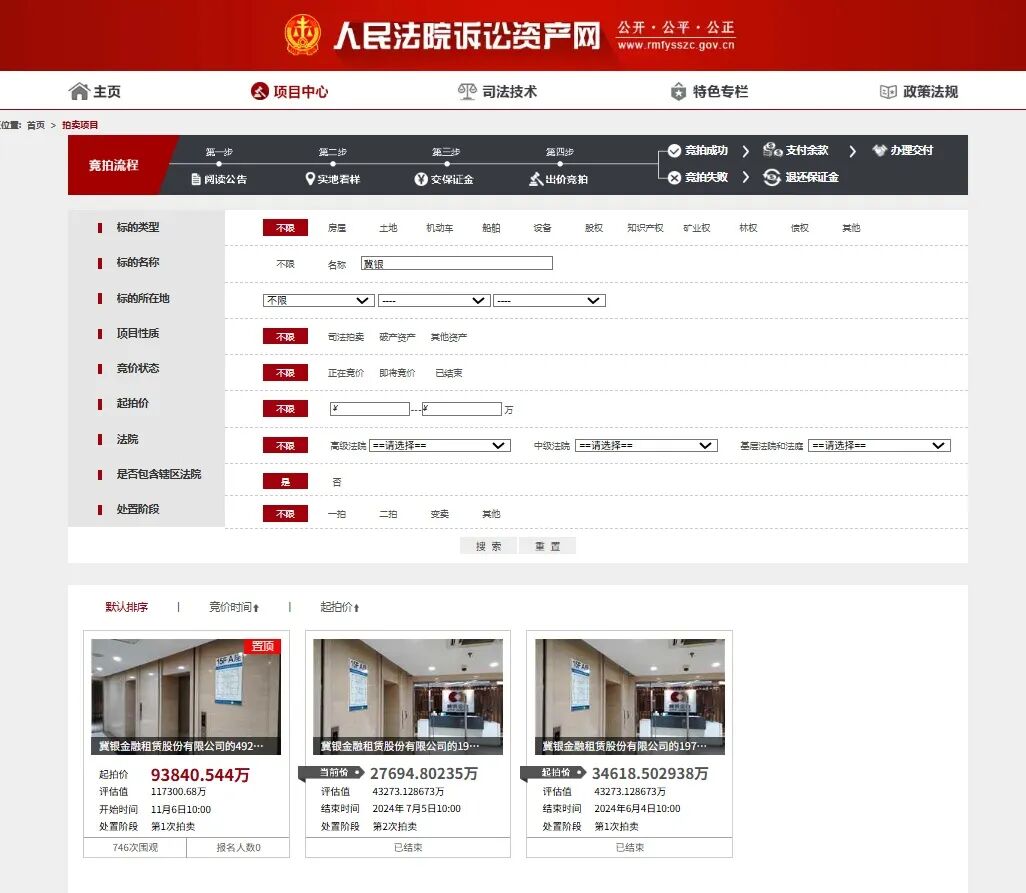
Core Viewpoint - The financial leasing industry is experiencing a significant increase in equity transfers, driven by regulatory changes and the need for companies to optimize their ownership structures [1][2][3] Group 1: Equity Auctions and Transfers - On November 6, 2023, Jiyin Financial Leasing Co., Ltd. will auction approximately 492.86 million shares with a starting price of about 938.4 million yuan, but no bidders have registered yet [1] - Jiyin Financial Leasing has previously attempted to auction shares in June and July 2022, with the first auction starting at 346 million yuan and the second concluding at approximately 277 million yuan [1] - The major shareholder, Hebei Bank, increased its stake in Jiyin Financial Leasing from 51% to 60.86% after acquiring shares in previous auctions [1] Group 2: Industry Trends and Regulatory Impact - The financial leasing sector has seen four companies propose equity transfers exceeding 100 million yuan in the past month, indicating a trend towards restructuring following the implementation of the new "Financial Leasing Company Management Measures" [1] - Companies like Aerospace Science and Industry Financial Leasing and Sichuan Tianfu Financial Leasing have also engaged in significant equity transfers, reflecting a broader industry movement [1] - The new regulations are prompting non-compliant shareholders to exit, while major shareholders are increasing their stakes to meet regulatory requirements, thereby optimizing ownership structures [3] Group 3: Compliance and Governance - The restructuring of equity ownership is crucial for compliance management, addressing issues related to governance efficiency and risk management [3] - Financial leasing companies must also adhere to various compliance requirements beyond ownership structure, including regulations related to public companies, state-owned financial enterprises, and tax compliance [3]

中国金融租赁(02312.HK)完成向金鑫配售6937.95万股 净筹约8642.59万港元
Ge Long Hui· 2025-10-22 08:42
Group 1 - The core point of the article is that China Financial Leasing (02312.HK) has completed a subscription agreement, issuing 69.3795 million shares at a price of HKD 1.25 per share to Innoval Capital Holding Limited [1] - The subscribed shares represent approximately 20% of the total shares outstanding immediately before the issuance and about 16.67% of the total shares outstanding after the issuance [1] - The total amount raised from the subscription is approximately HKD 86.7244 million, with a net amount of approximately HKD 86.4259 million [1]
中国金融租赁完成发行6937.95万股认购股 净筹约8642.59万港元
Zhi Tong Cai Jing· 2025-10-22 08:42
Group 1 - The company China Financial Leasing (02312) has announced that the conditions of the subscription agreement have been fulfilled, and the completion occurred on October 22, 2025, according to the terms and conditions of the subscription agreement [1] - A total of 69,379,500 subscription shares were issued at a subscription price of HKD 1.25 per share to the subscribers [1] - The subscription shares represent approximately 20% of the total issued shares before completion and approximately 16.67% of the total issued shares after the issuance of the subscription shares [1] Group 2 - The total amount raised from the subscription is approximately HKD 86.72 million, with a net amount of approximately HKD 86.43 million [1]
中国金融租赁(02312)完成发行6937.95万股认购股 净筹约8642.59万港元
智通财经网· 2025-10-22 08:40
Core Viewpoint - China Financial Leasing (02312) has successfully completed the subscription agreement conditions, issuing 69.3795 million shares at a subscription price of HKD 1.25 per share, which represents approximately 20% of the total shares outstanding prior to the issuance and about 16.67% after the issuance [1] Summary by Relevant Sections - **Subscription Details** - A total of 69.3795 million shares were issued at a price of HKD 1.25 per share [1] - The total amount raised from the subscription is approximately HKD 86.7244 million, with a net amount of approximately HKD 86.4259 million [1]
聚焦“转型” 产融协同谋发展
Jin Rong Shi Bao· 2025-10-22 02:32
Core Insights - The financial leasing industry in China is undergoing a transformation, shifting from scale-driven growth to quality-driven development, with a focus on "transformation" as a core objective [2][5] - The industry has seen significant growth in total assets and leasing assets, with a reported total asset of 4.58 trillion yuan and leasing assets of 4.38 trillion yuan by the end of 2024, reflecting year-on-year growth of 9.65% and 10.24% respectively [3] - Green leasing assets have also shown robust growth, reaching 1.07 trillion yuan, which is a year-on-year increase of 19.87% [3] Group 1: Industry Developments - The financial leasing sector has achieved several milestones, including the first SPV satellite leasing business and the first green financial bond certification [1] - Companies like交银金租 have made breakthroughs in green finance, completing the first transformation financial ship leasing business in the industry [1] - The industry is increasingly focusing on new production capacities, such as computing power and low-carbon transitions in sectors like steel [1][2] Group 2: Strategic Focus - Financial leasing companies are aligning their strategies with national goals, emphasizing high-quality development and industry empowerment [2][5] - The industry is expanding its reach into various sectors, including aerospace, new materials, and renewable energy, indicating a broadening of business scope [2][3] - Companies are adopting a "financing + asset" model to create a collaborative ecosystem, enhancing sensitivity to emerging industries [2] Group 3: Regulatory Environment - The regulatory framework is evolving, with policies in finance, taxation, and customs supporting the leasing industry, particularly in regions like Tianjin [4][5] - The industry anticipates a stricter and more unified regulatory environment in the upcoming "十五五" period, which is expected to support structural adjustments [5][6] Group 4: Future Outlook - The keywords for the financial leasing industry in the "十五五" period are expected to be green development, technological innovation, and high-end manufacturing [6] - Companies are encouraged to innovate their product and service models to better serve the real economy, focusing on high-end, intelligent, and green transformations [6] - Strategic directions include aligning with national strategies, expanding global markets, ensuring compliance, and leveraging technology for growth [6]

大额股权转让频现背后:金租头部公司筑护城河 中小机构承压求变
Zhong Guo Zheng Quan Bao· 2025-10-22 00:44
Core Insights - The frequent occurrence of large equity transfers in the financial leasing industry is noted, with many starting prices exceeding 100 million yuan, yet overall transaction activity remains low [1][2] - The industry is experiencing increasing differentiation, with leading companies establishing strong competitive advantages, while smaller firms face significant operational pressures [1][7] Equity Transfer Activity - A notable example includes the auction of a 10% stake in Tianfu Financial Leasing, starting at 126 million yuan, which ended without bids [2] - Another case involves a 24.64% stake in Jiyin Financial Leasing, with a starting price of 938 million yuan, set for auction on November 6 [2] - Many equity transfers, such as those involving Minsheng Financial Leasing, have ended in failure, indicating a challenging market for these transactions [3] Factors Affecting Equity Transfers - Equity transfers are categorized into two types: those forced by court auctions and those initiated voluntarily by shareholders [4] - Factors leading to forced auctions include shareholders being listed as defendants in legal cases or entering bankruptcy [4] - Regulatory changes, such as the State-owned Assets Supervision and Administration Commission's directive to central enterprises to divest from financial institutions, are influencing voluntary sales [4] Challenges in Finding Buyers - The revised regulations for financial leasing companies have tightened entry standards, reducing the pool of potential buyers [5] - High expectations regarding valuations from sellers, especially for larger leasing companies, contribute to stalled negotiations [5][6] - The complexity of assessing asset quality in leasing companies makes it difficult for potential investors to gauge investment value accurately [6] Industry Transformation and Future Outlook - The difficulty in equity transfers reflects a broader trend of industry transformation, with a growing divide between large and small leasing companies [7] - As of mid-2025, there are 70 leasing companies in China, with 15 exceeding 100 billion yuan in assets, highlighting the competitive landscape [7] - Regulatory bodies are pushing for an increase in direct leasing business, aiming for it to constitute at least 50% of new business by 2026 [7][8] - Smaller leasing companies are shifting focus to less competitive areas, such as photovoltaic power station leasing, to meet operational goals [8] - The industry still holds optimistic prospects, particularly in traditional sectors like aircraft and ship leasing, as well as in emerging fields like cross-border leasing and hard technology financing [8]
大额股权转让频现背后:金租头部公司筑护城河
Zhong Guo Zheng Quan Bao· 2025-10-21 23:26
Core Viewpoint - The frequent occurrence of large equity transfers in the financial leasing industry indicates a growing divide between leading companies and smaller firms, with the latter facing significant operational pressures and challenges in adapting to market competition [1][7]. Group 1: Equity Transfers - Several financial leasing companies have seen large equity transfers, with starting prices exceeding 100 million yuan, but overall transaction activity remains low [1][2]. - For instance, Tianfu Financial Leasing's 10% equity was auctioned with a starting price of 126 million yuan but went unsold due to lack of bids [2]. - The equity of Jiyin Financial Leasing, amounting to 24.64%, is set for auction with a starting price of 938 million yuan, highlighting the trend of forced sales due to financial disputes [2][4]. Group 2: Market Dynamics - The equity transfer situation reflects two main categories: judicial auctions due to financial disputes and voluntary sales by shareholders to comply with regulatory requirements [4][5]. - The tightening of regulations, particularly for state-owned enterprises, has led to a focus on core business operations, further complicating the sale of financial leasing company shares [4][5]. Group 3: Challenges in Equity Transfers - Finding qualified buyers is crucial for successful equity transfers, as new regulations have raised the bar for shareholder qualifications, limiting potential buyers [5][6]. - The complexity of assessing asset quality in financial leasing companies makes it difficult for investors to accurately gauge investment value, leading to cautious investment behavior [6]. Group 4: Industry Segmentation - The financial leasing industry is experiencing increased segmentation, with 70 companies in total, of which 15 have asset scales exceeding 100 billion yuan [7]. - Leading companies benefit from strong shareholder backgrounds and lower financing costs, while smaller firms struggle with operational pressures due to limited capital and expertise [7][8]. - Regulatory changes are pushing companies to increase the proportion of direct leasing business, which larger firms are better positioned to capitalize on compared to smaller firms [7][8]. Group 5: Future Outlook - Despite current challenges, the financial leasing industry has optimistic growth prospects, particularly in traditional sectors like aircraft and ship leasing, as well as in emerging areas such as renewable energy [8]. - Companies are encouraged to enhance compliance and explore new business avenues, including cross-border leasing and hard technology financing, to improve competitiveness [8].
大额股权转让频现背后: 金租头部公司筑护城河 中小机构承压求变
Zhong Guo Zheng Quan Bao· 2025-10-21 20:30
Core Insights - The recent trend of large equity transfers in the financial leasing industry is notable, with many starting prices exceeding 100 million yuan, yet overall transaction activity remains low [1][2] - The industry is experiencing increasing differentiation, with leading companies establishing strong competitive advantages, while smaller firms face significant operational pressures [1][7] Group 1: Equity Transfer Activity - Multiple financial leasing companies have seen significant equity transfers, with examples including Tianfu Financial Leasing and Jiyin Financial Leasing, where equity stakes were put up for auction but often went unsold [2][3] - The auction of Tianfu Financial Leasing's 10% stake started at 126 million yuan but ended without any bids, indicating a lack of buyer interest [2] - The upcoming auction of Jiyin Financial Leasing's 24.64% stake has a starting price of 938 million yuan, reflecting the high stakes involved in these transactions [2] Group 2: Challenges in Equity Transfers - The difficulties in equity transfers are attributed to various factors, including judicial auctions due to financial disputes and the need for shareholders to comply with regulatory requirements [4][5] - The tightening of regulations, particularly for state-owned enterprises, has led to a focus on core business operations, further complicating the sale of financial institution stakes [4][5] - The revised standards for financial leasing company shareholders have reduced the pool of potential buyers, making it harder to find qualified purchasers [5][6] Group 3: Industry Differentiation and Transformation - The financial leasing industry is seeing a split, with 15 companies having asset scales exceeding 100 billion yuan, while smaller firms struggle with higher financing costs and operational challenges [7][8] - Regulatory changes are pushing companies to optimize their leasing business structures, with a target for direct leasing business to account for at least 50% of new business by 2026 [7][8] - Smaller leasing companies are increasingly focusing on niche markets, such as photovoltaic power stations, to adapt to the competitive landscape, although this shift raises concerns about compliance and risk management [8]
金租头部公司筑护城河 中小机构承压求变
Zhong Guo Zheng Quan Bao· 2025-10-21 20:18
Core Insights - The recent trend of large equity transfers in the financial leasing industry is notable, with many starting prices exceeding 100 million yuan, yet overall transaction activity remains low [1][2] - The industry is experiencing increased differentiation, with leading companies establishing strong competitive advantages, while smaller firms face significant operational pressures [1][5] - Industry experts suggest that smaller leasing companies should adjust their business structures to focus on niche markets to achieve sustainable growth [1][5] Equity Transfer Trends - Several financial leasing companies, including Tianfu Financial Leasing and Jiyin Financial Leasing, have seen significant equity stakes put up for auction, with starting prices reaching 1.26 billion yuan and 938 million yuan respectively [1][2] - Many equity transfers are driven by court-ordered auctions due to financial disputes or the need for shareholders to comply with regulatory requirements [2][3] Factors Affecting Equity Transfers - The difficulty in transferring equity is attributed to various factors, including the financial distress of shareholders and regulatory pressures on state-owned enterprises to divest from financial institutions [3][4] - The revised regulations on financial leasing companies have raised the qualification standards for potential buyers, limiting the pool of interested parties [4] Industry Transformation and Challenges - The financial leasing industry is undergoing a transformation, with a focus on increasing the proportion of direct leasing business, which is expected to reach at least 50% by 2026 [5] - Leading companies are better positioned to compete in the direct leasing market, while smaller firms struggle to adapt, leading to further industry fragmentation [5][6] Future Outlook - Despite current challenges, the financial leasing industry has optimistic growth prospects, particularly in traditional sectors like aircraft and ship leasing, as well as emerging areas such as renewable energy [6] - Compliance and operational integrity are emphasized as critical priorities for the sustainable development of financial leasing companies [6]