
导弹制造

Search documents
继“火烈鸟”后 乌克兰再公开新型远程“海王星”导弹!泽连斯基:将使用国产远程武器打击俄境内目标
Mei Ri Jing Ji Xin Wen· 2025-08-25 09:01
Group 1 - Ukraine publicly showcased the R-360 "Neptune" cruise missile's long-range variant, known as the "Long-Range Neptune," with a reported range of up to 1000 kilometers, significantly upgraded from the original range of approximately 290 kilometers [1] - The "Neptune" missile is developed by Ukraine and is based on Soviet-era technologies, including the X-35 missile, and is designed to target maritime and coastal objectives [1] - Ukrainian President Zelensky stated that Ukraine is now using domestically produced long-range weapons to strike targets within Russia without prior coordination with the United States, indicating a shift in operational strategy [2] Group 2 - Reports indicate that the U.S. Department of Defense has been actively preventing Ukraine from using U.S.-made Army Tactical Missile Systems to strike targets within Russia, with a high-level approval process in place since late spring [3][5] - The approval process, overseen by Deputy Defense Secretary Colin Kahl, determines whether to support Ukraine's use of long-range weapons against Russia, effectively reversing previous policies that allowed such actions [7] - Ukraine has developed various domestic long-range weapons, including drones aimed at attacking Russian oil refineries and aircraft, showcasing its growing military capabilities [4]


乌克兰公开“火烈鸟”远程巡航导弹试射画面
Yang Shi Xin Wen· 2025-08-22 13:16
Core Viewpoint - Ukraine has successfully tested and is beginning mass production of a long-range cruise missile named "Flamingo," which has a range of up to 3000 kilometers [1] Group 1 - The Ukrainian Defense Minister Shmyhal announced the existence of powerful long-range weapons, with details to be disclosed at an appropriate time [1] - The "Flamingo" cruise missile is reported to be in mass production and is being equipped for use by Ukraine [1]
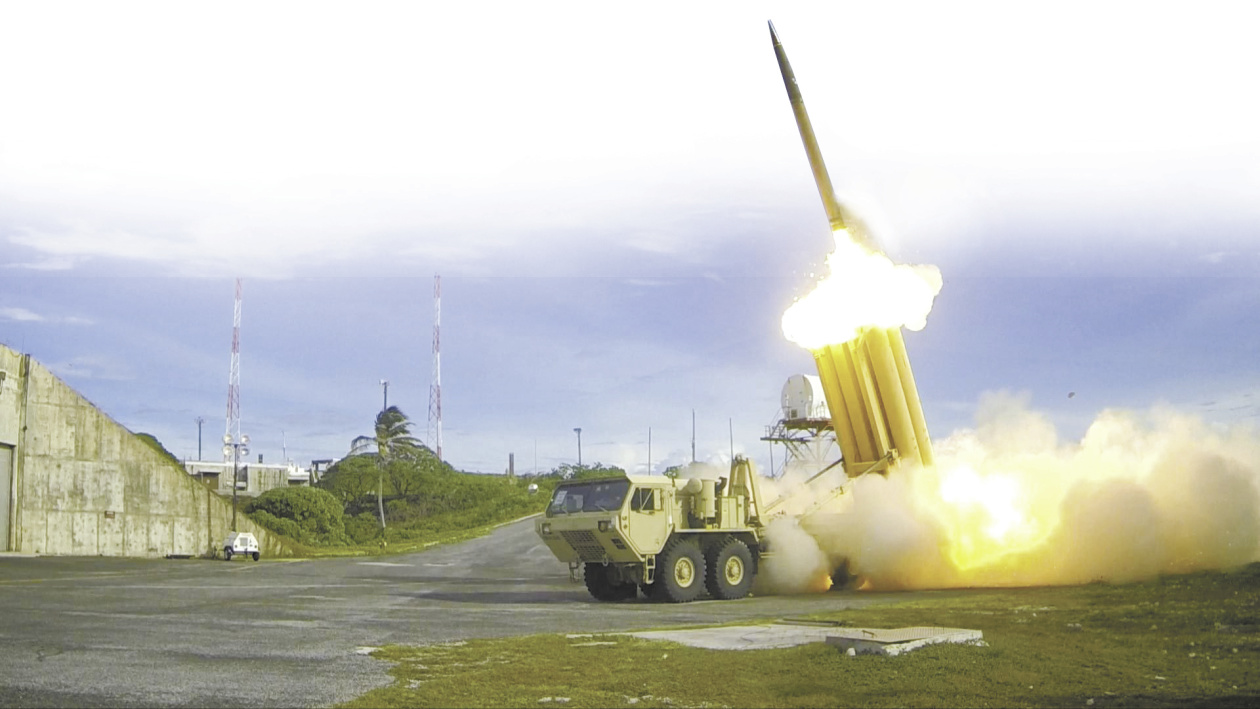
战场消耗大、产能跟不上,美媒哀叹“萨德”导弹“库存见底”
Huan Qiu Wang· 2025-08-21 01:09
Core Viewpoint - The U.S. military is facing a critical shortage of missile interceptors in its defense systems, particularly highlighted by the recent conflicts involving Israel and Iran, which has raised concerns about the military's preparedness for future large-scale conflicts [1][2][8] Summary by Relevant Sections Missile Defense Systems - The U.S. Army's THAAD (Terminal High Altitude Area Defense) system has been reported to have dangerously low interceptor missile stocks, which could render the military vulnerable in future conflicts [1][2] - The THAAD system is designed to intercept short, medium, and intermediate-range ballistic missiles, with a maximum interception altitude exceeding 150 kilometers [2] Recent Conflict Impact - During the 12-day conflict between Israel and Iran in June, the U.S. military reportedly used nearly 25% of its THAAD interceptor missiles, highlighting the urgent need for replenishment [2][3] - Estimates suggest that over 150 THAAD interceptors were fired during this conflict, which represents about 25% of the total U.S. THAAD interceptor inventory [3] Procurement and Production Challenges - The Pentagon's budget for the 2026 fiscal year includes a plan to procure only 37 THAAD interceptors, which is insufficient to replace those used in the recent conflict, indicating a replenishment timeline of approximately four years [3][4] - The production rates for other missile defense systems, such as the Standard-3 and Standard-6, are also inadequate, with the U.S. Navy reportedly firing around 80 Standard-3 missiles during the same conflict [6][7] Broader Implications - The shortage of interceptors is not limited to THAAD; the Patriot missile system also faces similar inventory issues, although its production capacity is slightly better, with an annual output of up to 500 interceptors [7] - The U.S. military's inability to maintain adequate interceptor stocks raises concerns about its capability to respond to threats from adversaries like Iran and China, especially given the increasing missile production capabilities of these nations [8]


美媒:史上最大!五角大楼签署价值35亿美元AIM-120导弹采购合同
Huan Qiu Wang· 2025-08-04 08:42
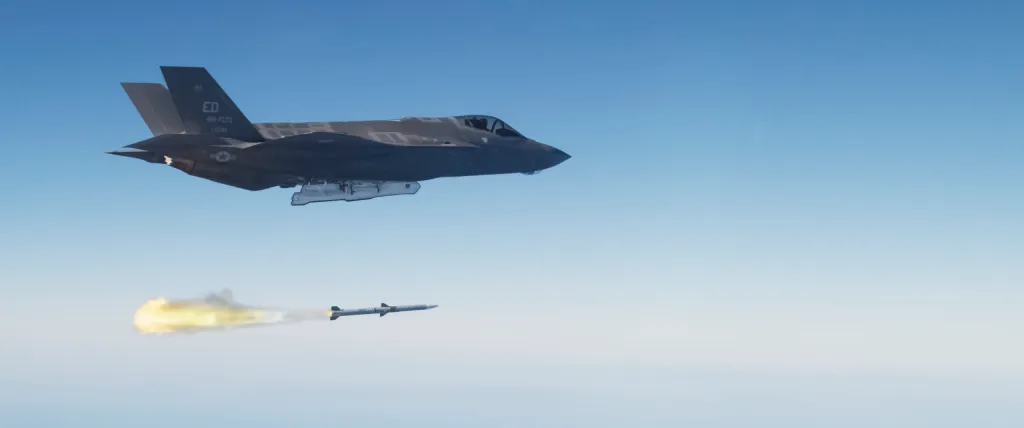
Core Insights - The Pentagon has signed a historic $3.5 billion contract with Raytheon for the procurement of AIM-120 missiles, which will supply 19 countries including Japan, Germany, Poland, Australia, the UK, Israel, and Ukraine as part of U.S. foreign military sales [1][3] Group 1: Contract Details - The contract is the largest ever for AIM-120 missiles and includes advanced medium-range air-to-air missiles (AMRAAM), telemetry systems, spare parts, and related services [1] - The exact number of missiles to be provided under this contract has not been disclosed by Raytheon or the U.S. Air Force, although the cost of a single AIM-120 missile can exceed $1 million depending on the model [3] Group 2: Market Demand and Usage - There is a high demand for these missiles among the U.S. and its allies, as they are compatible with most fighter jets and designed for beyond-visual-range air-to-air combat [3] - The AIM-120 missiles have been extensively used in operations against Houthi drone attacks in Yemen and to defend Israel against Iranian strikes, as well as in the ongoing conflict in Ukraine [3] Group 3: Missile Specifications - The AIM-120 is the first active radar-guided beyond-visual-range air-to-air missile in U.S. service and is known for its "fire-and-forget" capability [3] - Various models of the AIM-120 have been developed, including A, B, C, and D variants [3]
德国将再向乌克兰移交2套“爱国者”系统
Xin Hua Wang· 2025-08-02 01:30
Core Viewpoint - Germany will transfer two additional "Patriot" air defense missile systems to Ukraine, following the previous transfer of three systems, indicating ongoing military support for Ukraine amid the conflict [1] Group 1: Delivery Details - The delivery will occur in a phased manner over the next few months, starting with the transfer of launchers in the coming days, followed by other system components within 2 to 3 months [1] - The funding for this purchase will be provided by Germany, highlighting the country's commitment to supporting Ukraine [1] Group 2: Coordination and Production - The arrangement was made after consultations between Germany, the United States, and NATO allies, emphasizing international collaboration in defense efforts [1] - Germany has reached an agreement with the U.S. to receive newly produced "Patriot" missile systems first, indicating a prioritization in supply amid limited production capacity [1] - The production capacity for the U.S. "Patriot" missile system is constrained, with some components having manufacturing cycles that can extend up to several years [1]
印度政府:成功试射“大地-2”(Prithvi-II)地对地导弹和烈火系列导弹。
news flash· 2025-07-17 16:08
Core Viewpoint - The Indian government successfully conducted test launches of the "Prithvi-II" surface-to-surface missile and the Agni series of missiles, indicating advancements in its defense capabilities [1] Group 1: Missile Test Details - The "Prithvi-II" missile is a key component of India's strategic defense arsenal, showcasing the country's growing military technology [1] - The Agni series of missiles, which includes various ranges and capabilities, further enhances India's deterrence strategy [1] Group 2: Implications for Defense Industry - Successful missile tests may lead to increased defense spending and investment in military technology within India [1] - The advancements in missile technology could position India as a more significant player in the global defense market [1]
究竟提供几套“爱国者”?乌方表示有点懵
Xin Hua She· 2025-07-16 11:38
Group 1 - The U.S. President Trump announced the provision of 17 Patriot missile defense systems to Ukraine, causing confusion among Ukrainian officials regarding the specifics of the aid [1][2] - The Patriot system is a comprehensive defense system that includes multiple components, with a complete system costing over $1 billion [2][3] - Ukraine currently has 6 complete Patriot systems deployed and requires an additional 10 systems to effectively counter Russian airstrikes [3] Group 2 - Military experts express skepticism about the effectiveness of the new Patriot systems in changing the frontline situation, given the increasing effectiveness of Russian airstrikes [3] - Recent reports indicate a significant rise in the intensity of Russian drone attacks, with over 1,800 drones launched in a week [3] - The high cost of the Patriot system limits its effectiveness against lower-cost threats like drones, raising concerns about the availability of more cost-effective interceptors in the Western arsenal [3]
乌克兰总统泽连斯基:德国已准备好购买两套爱国者导弹系统,挪威则将购买一套。
news flash· 2025-07-10 16:44
Group 1 - The core point of the article is that Ukraine's President Zelensky announced that Germany is prepared to purchase two Patriot missile systems, while Norway will buy one system [1] Group 2 - The acquisition of these missile systems indicates a strengthening of defense capabilities in Europe, particularly in response to ongoing security concerns [1] - This move may reflect a broader trend of increased military spending and collaboration among European nations in the face of geopolitical tensions [1] - The purchases could also signify a shift in defense procurement strategies, emphasizing advanced missile defense systems [1]
美军计划加码“爱国者”导弹 总采购目标竟翻两番!
Jin Shi Shu Ju· 2025-07-09 10:55
Group 1 - The U.S. Army plans to invest over $1.3 billion in the procurement of "Patriot" missiles starting from the new fiscal year on October 1, significantly increasing the total procurement target from 3,376 to 13,773 units [1] - The latest PAC-3 MSE missile model is capable of intercepting drones, cruise missiles, and tactical ballistic missiles, reflecting the growing demand for air defense systems amid rising geopolitical tensions [1][2] - The U.S. has already delivered three "Patriot" systems and an unspecified number of interceptors to Ukraine since 2022, highlighting the weapon's critical role in the ongoing conflict [1] Group 2 - The budget documents indicate that the U.S. military has procured 2,047 PAC-3 MSE missiles before the 2024 fiscal year, with additional purchases planned for 2024 and 2026 [2] - The U.S. military's successful interception of Iranian missiles in the Middle East using the "Patriot" system demonstrates its effectiveness in real combat scenarios [2] - Lockheed Martin reported a record delivery of over 500 PAC-3 missiles last year, with plans to increase production capacity by 20% this year [3]
近5亿美元!以伊冲突中,美以消耗大量“萨德”导弹
Zheng Quan Shi Bao· 2025-06-29 00:06
Group 1: Conflict Details - Recent videos from Jordanian photographer Zaid Abadi show Iranian ballistic missile attacks on Israel, revealing the use of 34 Arrow-3 interceptors, 9 Arrow-2 interceptors, and 39 US THAAD interceptors by Israel during interception operations [1] - The estimated cost of the THAAD missiles used in the interception exceeds $498 million, with each missile valued at approximately $12.8 million [1] - Reports indicate that the US utilized about 15% to 20% of its global THAAD missile inventory during the recent Israel-Iran conflict [1] Group 2: Iranian Government Actions - The Iranian government has decided to establish a special legal task force to review the military aggression by Israel and the US against Iran, focusing on various legal matters related to territorial integrity and civilian casualties [3] - A significant funeral was held in Tehran for over 60 victims of the recent conflict, including high-ranking military officials and civilians [5][6] Group 3: Intelligence Operations - Israeli intelligence has reportedly infiltrated the core of Iran's missile and nuclear programs, collecting secret intelligence for many years, with preparations for potential strikes dating back to at least 2010 [8]