
社区商业

Search documents
不靠补贴,苏州邻里中心如何从民生生意中赚钱? | 城市观察家
Xin Lang Cai Jing· 2025-05-06 07:42
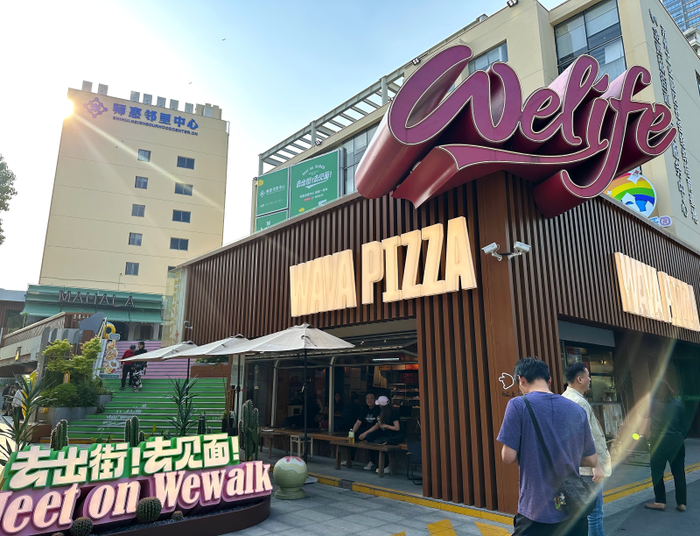
Core Insights - The opening of ALDI's first store in Jiangsu at Fangzhou Neighborhood Center reflects the growing trend of "first store economy" supported by local governments [3][5] - The neighborhood center concept, originating from Singapore, has evolved in Suzhou, providing essential services and entertainment to local residents [9][12] - Suzhou Industrial Park Neighborhood Center Development Co., Ltd. has successfully operated 24 projects with a total area exceeding 1.5 million square meters, demonstrating resilience in the face of e-commerce challenges [8][12] Group 1: Business Model and Strategy - The neighborhood center operates on a market-oriented model, achieving self-sufficiency through rental income and light asset service revenue [12][13] - The company benefits from its state-owned status, allowing for stable long-term development and avoiding blind expansion [13] - The neighborhood centers are required to allocate at least 45% of their area for basic and public service functions, enhancing their community value [16] Group 2: Digital Transformation - The neighborhood center has embraced digital transformation, launching the "Neighborhood Life" platform with 1.25 million users and daily active users of approximately 38,000 [20][21] - The integration of digital payment and retail systems has improved customer experience and operational efficiency [20][21] - The company has issued three REITs products, enhancing its financial capabilities and enabling sustainable project development [21] Group 3: Expansion and Future Outlook - The neighborhood center is expanding its successful model across 11 provinces and 38 cities, covering approximately 3.2 million square meters [22] - The Chinese urbanization rate is projected to reach 70% by 2030, indicating significant growth potential for community commercial spaces [23] - Challenges in replicating the model in different regions include adapting to local government cooperation and consumer habits [22]

便民圈盘活“幸福圈”
Jing Ji Ri Bao· 2025-05-04 21:56
Core Viewpoint - The development of community convenience service centers in Ordos City aims to enhance residents' quality of life by integrating various services within a 15-minute walking radius, promoting a new model of community collective economy and deepening the integration of convenience living circles [1][2][4]. Group 1: Community Convenience Services - The neighborhood center in the Shenhua Kangcheng community offers a variety of services including community elderly care, early childhood education, and convenience supermarkets, attracting an average of 1,300 visitors daily [1]. - Ordos City has constructed 64 convenience living circles, focusing on enhancing basic service guarantees and improving community commercial convenience, standardization, and quality [2]. Group 2: Business Upgrades and Innovations - Local businesses, such as supermarkets, are upgrading their offerings to cater to younger consumers by optimizing product layouts and increasing fresh produce variety [2]. - The integration of digital platforms in community services has led to the development of an online navigation system for convenience living circles, enhancing the shopping experience through innovative logistics solutions [3]. Group 3: Future Development Plans - Ordos City plans to further enrich commercial formats by encouraging large retail enterprises to open stores and introducing practical small shops, aiming to enhance the sustainability of low-profit business operations [4]. - By the end of 2025, the city aims to establish 100 convenience living circles, focusing on standardization and the enhancement of community service quality [4].
党外人士大调研丨发挥消费基础性作用 促进经济高质量发展——民革中央开展2025年度重点考察调研
Xin Hua She· 2025-04-24 07:07
Core Viewpoint - Consumption is identified as a crucial driver for sustainable economic growth in China, with a focus on boosting consumption and enhancing investment efficiency as key tasks for 2025 [2][8] Group 1: Research and Findings - The central research team, led by prominent leaders, conducted field studies in Shaanxi and Guangdong to gather insights on effective local consumption-boosting practices and challenges faced [3][7] - The team observed significant advancements in creating new consumption scenarios and growth points in both provinces, emphasizing the importance of community commerce in stimulating consumer activity [4][6] Group 2: Recommendations and Strategies - Recommendations include enhancing digital integration, optimizing business structures, and exploring sustainable operational mechanisms that combine public welfare with commercial interests to invigorate consumption [4][7] - The research team suggested leveraging local culture to create differentiated intellectual property (IP) and utilizing big data to analyze consumer preferences, thereby extending the consumption chain and improving regional collaboration [6][7] Group 3: Economic and Social Impact - The study highlighted the dual achievement of economic and social benefits, with a focus on job creation and community engagement through local tourism and cultural initiatives [5][6] - The team noted the need for a supportive policy framework to enhance consumer motivation, improve the consumption environment, and stimulate a virtuous cycle of consumption driving production and income growth [8]