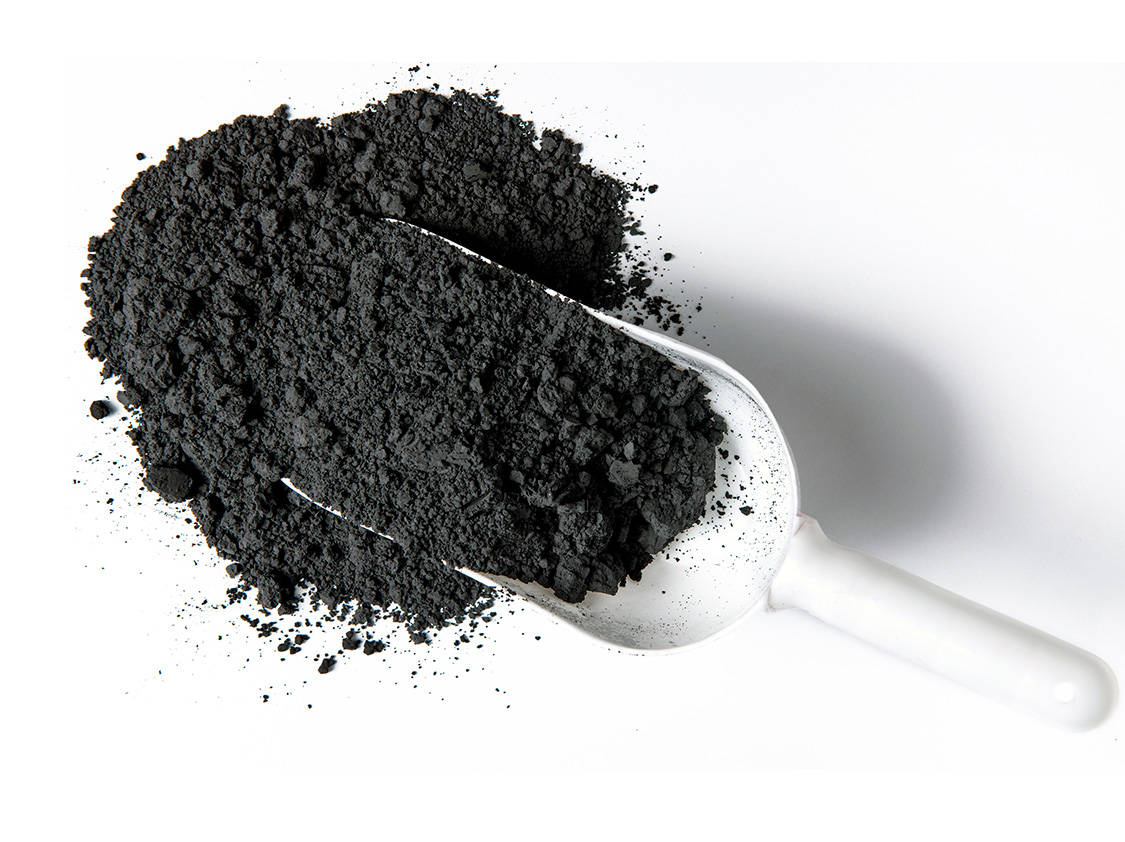
涂料

Search documents
亚士创能子公司涉票据纠纷,多起诉讼金额超亿
Xin Lang Cai Jing· 2025-09-17 09:46
Core Viewpoint - The company, Yashi Chuangneng Technology (Shanghai) Co., Ltd., is currently facing legal disputes, including a lawsuit regarding a bill dispute with a subsidiary, which may impact its profits [1] Legal Proceedings - The Shanghai Qingpu District People's Court has accepted a case filed by Zhongtiancheng (Qingdao) Energy-Saving Technology Co., Ltd. against the company's subsidiary, Yashi Supply Chain Management (Shanghai) Co., Ltd., involving a bill amount of 101,835.37 yuan plus interest, with the court date yet to be set [1] - Since the last announcement, the company and its subsidiaries have reported new litigation with a total amount involved of 136,304,630.14 yuan, with several cases reaching mediation, although the court's mediation documents have not yet been received [1] - The company will account for these developments and disclose updates as they progress, urging investors to remain cautious regarding potential risks [1]

不接受非标审计致年报“难产”,*ST金泰又收罚单
Di Yi Cai Jing· 2025-09-16 10:08
Core Viewpoint - *ST Jintai has faced multiple regulatory penalties due to management's refusal to accept non-standard audit opinions, leading to delays in the disclosure of its 2024 annual report and subsequent fines totaling 4.6 million yuan [1][2][6]. Group 1: Regulatory Issues - The company was penalized 4.6 million yuan for failing to disclose its 2024 annual report on time, as management did not accept the audit firm's non-standard opinion [1][2]. - The Shanghai Securities Regulatory Bureau imposed a fine of 200,000 yuan on *ST Jintai, with additional fines of 100,000 yuan for the former chairman and 80,000 yuan each for two other executives [2][3]. - The company has a history of regulatory issues, including penalties for involvement in fictitious gold trading and misleading share buyback promises [6][7]. Group 2: Management Turmoil - Recent months have seen internal conflicts within the management, with the major shareholder, Hainan Dahe, attempting to convene an extraordinary shareholders' meeting to replace board members [3][5]. - A board member resigned shortly after being appointed, citing personal work commitments, and potential board candidates withdrew their nominations due to concerns over the company's delisting risk [4][5]. Group 3: Financial Performance - For the first half of 2025, *ST Jintai reported a revenue of 367 million yuan, a year-on-year increase of 5.66%, but the net profit attributable to shareholders fell by approximately 33% to 8.71 million yuan [8].

神剑股份(002361) - 002361神剑股份投资者关系管理信息20250916
2025-09-16 08:12
Group 1: Company Overview and Strategy - The company adheres to a dual business strategy of "chemical new materials + high-end equipment manufacturing" [2] - The company is actively monitoring policies related to the low-altitude economy to enhance its development [1] - The company aims to provide integrated services to global customers and collaborates with downstream clients on product innovation and sustainable development [4] Group 2: Financial Performance and Expectations - The company reported a reasonable asset-liability ratio and strong overall financial performance [2] - The company has not experienced seasonal fluctuations in its main business composition [3] - The company adjusts product prices in response to raw material price fluctuations and implements a "double increase and double reduction" strategy to maintain operational quality [6] Group 3: Market and Investment Insights - The company is focused on enhancing its investment value to provide good returns for investors [2] - The company has not been directly involved in the C919 aircraft manufacturing unit and is currently in the business negotiation phase [1] - The company’s stock price is influenced by various factors, including macro policies, market preferences, liquidity, and market trends [6] Group 4: Production and Capacity - The Zhuhai facility commenced production at the end of June, with a polyester resin production capacity of 320,000 tons [3] - The company is expanding its business scope in the Hefei Economic Circle and the Yangtze River Delta Economic Circle [3] Group 5: ESG and Sustainability Initiatives - The company has established a dedicated energy management team to promote green production and has implemented measures to reduce carbon emissions [4] - The company is committed to sustainable development and collaborates with suppliers that have low carbon footprints [4]

亚太涂料产业复苏向“绿”
Zhong Guo Hua Gong Bao· 2025-09-16 03:02
Core Insights - The Asia-Pacific paint industry is experiencing a recovery, with a focus on "green" and "sustainable" development as key themes for future growth [2][3] Market Growth Trends - The Asia-Pacific region shows significant growth in the paint industry, with varying trends across countries. Vietnam's paint production is expected to reach 493 million liters in 2024, a year-on-year increase of 8.34% [3] - Malaysia's paint market has a compound annual growth rate (CAGR) of 13.6% since 2018, with an estimated total production of 495 million liters in 2024 [3] - Indonesia's paint market is projected to maintain steady growth, with an expected production of 105,860 tons in 2025, where water-based paints will account for nearly 70% [3] - The Philippines anticipates a growth of 4% to 6% in its paint industry by 2026, driven by protective, marine, and powder coatings [3] Global Market Projections - The global paint market is expected to see a CAGR of 3.0% in volume and 5.8% in sales revenue over the next five years, reaching 56.7 billion liters and $267 billion by 2029 [4] Policy and Demand Drivers - Government infrastructure and renovation projects are significant drivers for the paint industry in the Asia-Pacific region. Singapore's government has allocated SGD 60 million for promoting heat-reflective coatings by 2030 [5] - Indonesia's "3 million housing plan" aims to provide affordable housing for low-income groups, boosting local paint demand [5] - The Philippines' paint industry growth is supported by substantial government infrastructure investments, creating demand for high-performance protective coatings [5] Focus on Sustainability - The paint industry is increasingly emphasizing environmental friendliness. Australia's Paintback recycling program has processed over 56,000 tons of waste paint and packaging since its launch in 2016 [6] - Japan's paint industry is working towards carbon neutrality by 2050, with a focus on reducing CO2 emissions from the paint manufacturing sector, which is approximately 190,000 tons per year [7] - Several countries in the region are moving towards eliminating certain chemical components in paints, with Malaysia banning lead paints in 2020 and Indonesia and Vietnam progressing towards lead-free markets [7]
股市必读:*ST金泰(300225)9月15日主力资金净流出1121.48万元
Sou Hu Cai Jing· 2025-09-15 18:01
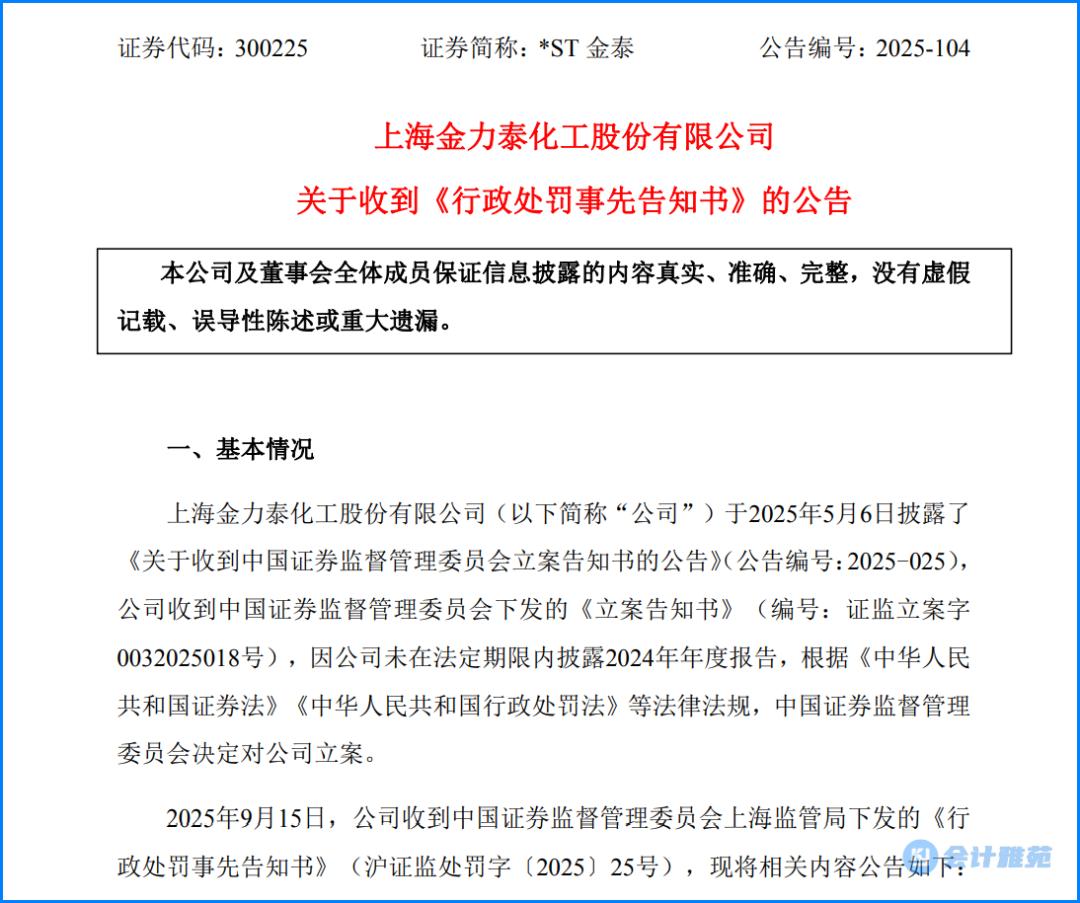
Group 1 - The stock price of *ST Jintai (300225) closed at 5.49 yuan on September 15, 2025, down 3.0% with a turnover rate of 4.01% and a trading volume of 190,400 shares, amounting to a transaction value of 105 million yuan [1] - On September 15, 2025, the main funds experienced a net outflow of 11.21 million yuan, while retail investors saw a net inflow of 8.64 million yuan [1][3] - The company received an administrative penalty notice from the China Securities Regulatory Commission for failing to disclose the 2024 annual report within the legal timeframe, facing a proposed fine of 2 million yuan [1][3] Group 2 - The company has acknowledged the penalty and committed to improving its information disclosure management [1] - The penalties include a warning and a fine of 1 million yuan for the chairman and president, and fines of 800,000 yuan each for the executive director and the financial director [1]
上市公司不接受会计师“无法表示意见” 审计报告,未在法定期限内披露年报,被罚460万!
Xin Lang Cai Jing· 2025-09-15 13:55
Core Viewpoint - Jinlitai is suspected of violating the Securities Law by failing to disclose its 2024 annual report within the legal deadline, which may lead to penalties and warnings for the company and its executives [3][7]. Group 1: Violations and Consequences - On April 23, 2025, Jinlitai's management decided not to accept the audit report from Zhongxinghua Accounting Firm, which indicated an "unable to express an opinion" on the 2024 financial statements, leading to the expectation that the company would not complete its annual report on time [3]. - Jinlitai issued multiple announcements regarding its inability to disclose the 2024 annual report and the first quarter report of 2025 within the legal timeframe, indicating potential delisting risks [4][5]. - The company is facing a warning and a fine of 2 million yuan, while the executives involved, including the chairman and CFO, are also subject to individual fines ranging from 800,000 to 1 million yuan [7].

高分子材料用途多样,应用领域广,市场潜力大
Han Ding Zhi Ku· 2025-09-15 12:45
Investment Rating - The report indicates a strong market potential for polymer materials, suggesting a positive investment outlook for the industry [1]. Core Insights - Polymer materials, also known as macromolecular compounds, are diverse and have a wide range of applications, making them essential in various sectors such as automotive, electronics, construction, and healthcare [1]. - The Chinese coatings industry shows stable growth, with total production expected to rise from 24.388 million tons in 2019 to 35.341 million tons by 2024, alongside an increase in revenue from 313.23 billion yuan to 408.903 billion yuan [2]. - The global food flexible packaging market is projected to grow from approximately 274.7 billion USD in 2024 to 363.2 billion USD by 2030, driven by increasing demand for sustainable and high-performance packaging solutions [4][7]. Summary by Sections Polymer Materials - Polymer materials can be categorized into natural, semi-synthetic, and synthetic types, and further divided into general, special, and functional polymers based on application [1]. - The characteristics of polymer materials include diversity, lightweight, high strength, excellent processability, and environmental sustainability, making them indispensable in modern technology [1]. Coatings Industry - In 2019, China's coatings industry had a total production of 24.388 million tons and a revenue of 313.23 billion yuan, with projections for 2024 showing a production increase to 35.341 million tons and revenue to 408.903 billion yuan [2]. - The market is segmented into various categories, with water-based architectural coatings holding a 35.09% share, followed by general anti-corrosion coatings at 13.55% [2]. Food Packaging - The food packaging sector is undergoing a structural transformation towards green materials, with a focus on biodegradable and recyclable options due to rising environmental awareness and regulatory influences [4]. - Soft packaging is a significant category within food packaging, with materials like plastics, paper, aluminum, and bio-based films being prominent, emphasizing lightweight and adaptability [4].
IPO要闻汇 | 本周5只新股申购,元创股份等3家企业将上会
Cai Jing Wang· 2025-09-15 10:43
IPO Review and Registration Progress - Two companies, Weite Environment and Yatu High-tech, successfully passed the IPO review and plan to list on the Beijing Stock Exchange [2] - Weite Environment focuses on water resource pipeline leakage control technology consulting and construction, with projected revenues of 303 million yuan, 293 million yuan, and 329 million yuan from 2022 to 2024 [2] - Yatu High-tech specializes in high-performance industrial coatings, with revenues expected to grow from 557 million yuan in 2022 to 742 million yuan in 2024 [3] - Three companies, Yuanchuang Co., New Guangyi, and Youxun Co., are scheduled for IPO review this week [4] - Yuanchuang Co. has experienced revenue fluctuations, with 2023 revenue at 1.141 billion yuan, down 9.45% year-on-year [4] - New Guangyi's revenue is projected to increase from 455 million yuan in 2022 to 657 million yuan in 2024, with a high customer concentration [5][6] - Youxun Co. focuses on optical communication chips, with 2025 revenue expected to be 238 million yuan [6] New Stock Listings and Subscription Dynamics - Two new stocks were listed last week, with Sanxie Electric's share price increasing by 785.62% on its debut [9] - Sanxie Electric specializes in control motors, reporting a revenue of 256 million yuan for the first half of 2025 [9] - Aifenda, which focuses on electric towel racks, saw its share price rise by 170.03% on its first day of trading, with a revenue of 505 million yuan for the first half of 2025 [10] - This week, five new stocks are scheduled for subscription, including Jinhua New Materials with an issue price of 18.15 yuan per share [11] - Jinhua New Materials specializes in ketoxime fine chemicals, with a revenue of 571 million yuan in the first half of 2025 [12] - Yunhan Chip City, focusing on electronic components distribution, reported a revenue of 1.44 billion yuan in the first half of 2025 [12]
科力装备:已设立全资子公司聚焦纳米涂装材料研发与制备 构建第二增长赛道
Quan Jing Wang· 2025-09-15 10:38
Core Viewpoint - Company Keli Equipment (301552.SZ) is expanding its business into the high-tech barrier nano-coating materials sector, establishing a wholly-owned subsidiary in Lulong County, Qinhuangdao City, which will leverage its technological advantages to create a second growth avenue [1]. Group 1 - Keli Equipment participated in the "Sincere Communication, Delivering Value" event, which is part of the 2025 online collective reception day for listed companies in Hebei [1]. - The company’s general manager, Yu Dejiang, discussed successful cases outside the automotive parts industry during the event [1]. - The establishment of the new subsidiary is aimed at research and preparation of high-tech barrier nano-coating materials, indicating a strategic shift and diversification in the company's operations [1].
粉末涂料白炭黑价格市场行情分析与供需状况
Sou Hu Cai Jing· 2025-09-15 10:16
Core Insights - The price of powdered coating silica (white carbon black) has been experiencing fluctuations due to various influencing factors, including raw material costs, market supply and demand dynamics, and government policies [2][3]. Group 1: Price Influencing Factors - The production cost of white carbon black is significantly affected by changes in raw material prices, as its production involves complex processes including procurement, processing, and transportation [2]. - The increasing demand for powdered coatings, particularly in high-demand sectors such as automotive and construction, is driving up the price of white carbon black [2][4]. - Government policies and environmental regulations in different regions can also impact the pricing of white carbon black, including tax policies and environmental standards [2]. Group 2: Price Trends - Over the past five years, the price of white carbon black has shown an upward trend, particularly from 2016 to 2018 when market supply was tight, leading to significant price increases [3]. - In recent years, as market supply has increased, the price of white carbon black has started to stabilize after a period of decline [3]. Group 3: Supply and Demand Situation - The rapid development of the automotive and construction industries has led to a sustained increase in market demand for powdered coatings, thereby increasing the demand for white carbon black [4]. - The production capacity and supply chain limitations of white carbon black have resulted in an inability to fully meet market demand, contributing to rising prices [4].