
Freight

Search documents
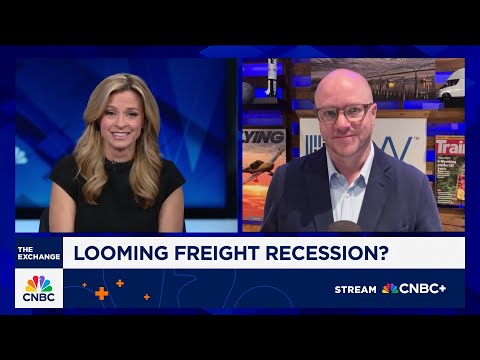
Certain portions of the goods economy are collapsing right now, says Freight Waves CEO Craig Fuller
CNBC Television· 2025-11-04 19:10
Freight Market Overview - The goods economy, specifically certain portions, is currently experiencing a collapse [2] - Year-over-year trucking volumes are down 17%, indicating a significant decline in freight movement across the United States [2] - Industrial sectors, including energy, automotive, housing, and manufacturing, are down 30% year-over-year, reaching levels of concern similar to the great financial crisis [3] Factors Contributing to the Slowdown - Macroeconomic pressure and high interest rates are causing companies to hesitate on long-term investments [4] - Tariffs have led to inflation in wholesale prices, impacting raw material imports for manufacturers [5] - Over-supplied energy market and auto industry credit quality issues are contributing factors [6] - Elimination of the *de minimis* threshold has impacted parcel companies, contributing to lower volumes for UPS [9][10] Impact on Employment - Approximately 35 million jobs are tied to the long-haul goods segments, including energy, auto, housing, manufacturing, and transportation [7] - This contrasts with the 2 million jobs in the hyperscalers sector [7] Potential for Recovery - A recovery in the housing market is crucial for the freight market, as it indirectly relates to as much as 20% of trucking market activity [13][14] - Easing of interest rates by the Federal Reserve is considered the most important factor for the freight market's recovery [13]

Hackers and Crime Rings Are Teaming Up to Steal Cargo, Cyber Firm Says
Insurance Journal· 2025-11-03 14:18
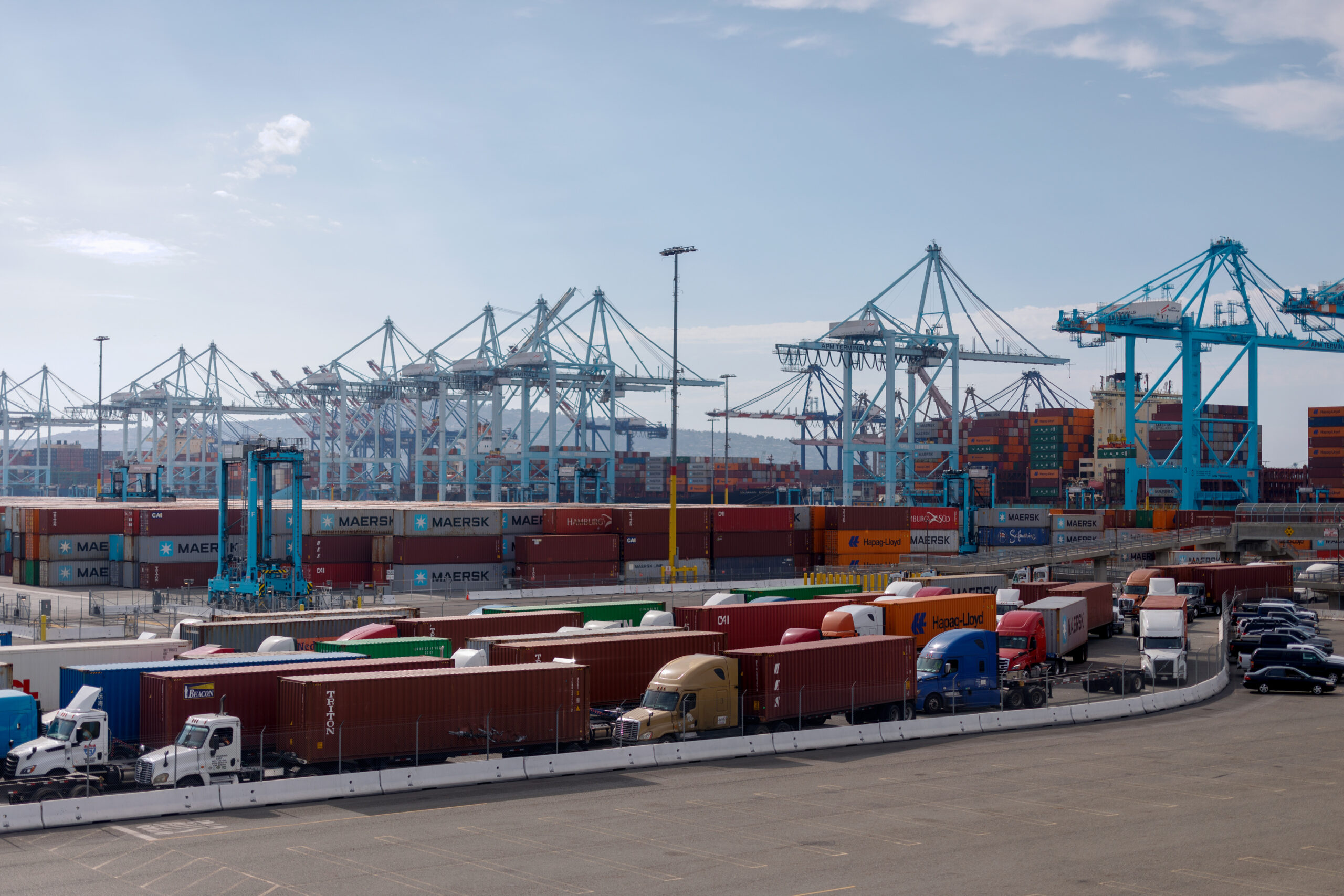
Core Insights - Hackers are infiltrating trucking and freight companies to steal and sell cargo shipments, potentially costing companies and consumers billions of dollars [1][2] Group 1: Cybersecurity Threats - Proofpoint Inc. has high confidence that hackers are collaborating with organized crime groups to execute cargo thefts, specifically targeting trucking carriers and freight brokers [2] - The stolen cargo is likely sold online or shipped overseas, indicating a significant impact on the supply chain [2][3] - Cyberattacks on cargo companies have been identified as a full-scale supply chain threat, with losses from cargo theft increasing by 27% in 2024 and projected to rise another 22% in 2025, amounting to an estimated $35 billion in annual losses [3] Group 2: Criminal Tactics - Researchers have identified at least three distinct criminal groups using cyberattack methods against cargo companies, with nearly two dozen campaigns observed in the last two months [4] - The cyber-enabled heists rely on social engineering and industry knowledge, allowing hackers to impersonate insiders and exploit supply chain technology [5] - One tactic involves compromising load boards, where hackers send emails with malicious links to carriers responding to fraudulent load postings [6][7] Group 3: Industry Impact - The urgency for carriers to secure loads leads to hasty decisions, increasing the likelihood of clicking on malicious links, especially when they appear to come from trusted brokers [8][9] - The most targeted commodities include food and beverages, with energy drinks often stolen and shipped overseas due to restrictions in other countries [9] - The issue of cargo theft is not limited to North America, as indications suggest that hackers may be operating from Russia or Eastern Europe, representing a global problem [10]
X @Bloomberg
Bloomberg· 2025-11-03 09:10
Security Threats - Hackers are infiltrating trucking and freight companies [1] - The scheme involves stealing and selling cargo shipments [1] - This campaign could cost companies and consumers billions of dollars [1]
Bernstein Remains Bullish on Uber Technologies (UBER), Expects Steady Q3 Results
Yahoo Finance· 2025-10-31 13:58
Group 1 - Man GLG holds $262.56 million worth of Uber Technologies, Inc. (NYSE:UBER) stock, representing 0.5% of its 13-F portfolio as of Q2 2025, and it is one of the top 10 stock picks with the highest upside potential [1] - Bernstein reaffirmed its "Outperform" rating on Uber Technologies, Inc. (NYSE:UBER) with a $110 price target, reflecting expectations for steady third-quarter results and projecting approximately 19% year-over-year growth in the Mobility segment [2] - The Delivery segment is expected to see 15%-16% organic growth, excluding Trendyol Go, indicating strong performance in this area [2] Group 2 - Despite mild weakness in U.S. app engagement in September affecting both Mobility and Delivery segments, international demand has remained stable, and Bernstein does not view the dip in third-party app data as material [3] - Positive commentary from Uber in early September and sustained global spending trends have reinforced Bernstein's bullish stance on the company [3] - Uber Technologies, Inc. operates a global platform offering ridesharing, delivery, freight services, and AI-driven data solutions for enterprises [4]

Largest capacity purge in history coming
Yahoo Finance· 2025-10-29 22:38
Core Insights - The freight industry is facing a significant decline in volumes, with an 18% year-over-year drop, leading to severe challenges for motor carriers and freight brokers [1][3] - A potential capacity purge could eliminate up to 600,000 active drivers, marking the largest capacity reduction in history, influenced by regulatory changes and market conditions [2][10] Freight Volume Decline - Freight volumes have dramatically decreased, creating challenges for motor carriers and brokers who are struggling to maintain business viability [1][3] - The current market conditions are described as the calm before a storm, indicating a potential for a significant capacity washout in trucking history [3] Capacity Purge and Regulatory Changes - The anticipated capacity purge is driven by changes in U.S. immigration policy, particularly affecting non-domiciled Commercial Driver's Licenses (CDLs) and English Language Proficiency (ELP) requirements, which could remove 214,000 to 437,000 drivers from the workforce [7][10] - An emergency ruling by the FMCSA restricts the issuance and renewal of non-domiciled CDLs, potentially affecting 97% of current non-domiciled CDL holders [8] - Stricter enforcement of ELP regulations has already resulted in over 23,000 violations, with significant implications for driver availability [9] Economic Implications - The combination of regulatory changes and ongoing freight recession is expected to lead to numerous bankruptcies among carriers and brokers as financial pressures increase [11] - The market rationalization following the capacity purge is likely to favor larger asset carriers, who have the resources to adapt to the changing landscape [12] Market Recovery and Future Outlook - The freight industry is on the brink of a transformative period, with the anticipated capacity washout likely to lead to increased spot rates and stabilizing contract rates [14] - The eventual outcome may result in a market that operates under traditional supply and demand principles, presenting both challenges and opportunities for shippers and carriers [15] - If freight volumes increase in the future, the market could become one of the best seen in recent times, although the transition will be challenging [16]
X @TechCrunch
TechCrunch· 2025-10-27 21:52
Logistics & Transportation Challenges - The logistics and transportation industry faces challenges and dangers in moving freight from road to rail [1] - A 17-year-old U S Army enlistee experienced these challenges firsthand while loading freight [1]
Old Dominion's Q3 Earnings Coming Up: What's in Store for the Stock?
ZACKS· 2025-10-27 19:31
Core Insights - Old Dominion Freight Line (ODFL) is set to report its third-quarter 2025 results on October 29, before market open, with a history of earnings surprises [1] - The company has outperformed the Zacks Consensus Estimate in two of the last four quarters, with an average earnings surprise of 1.77% [1][2] Earnings Performance - The Zacks Consensus Estimate for ODFL's Q3 2025 earnings per share is $1.22, reflecting a 14.69% decline year over year and a downward revision of 0.81% in the past 60 days [4][6] - Q3 revenue is projected at $1.40 billion, indicating a 4.79% decrease from the previous year, attributed to weak freight demand and inflationary pressures [6][7] Revenue Breakdown - Revenue from Less-Than-Truckload (LTL) services is expected to be $1.39 billion, a decline of 3.9%, while other services are forecasted to generate $14.2 million, an increase of 8.7% year over year [8] Earnings Prediction Model - The current model does not predict an earnings beat for ODFL, as it holds a Zacks Rank of 4 (Sell) and an Earnings ESP of +0.67% [9]

Old Dominion Freight Line declares $0.28 dividend (NASDAQ:ODFL)
Seeking Alpha· 2025-10-23 11:24
Group 1 - The article does not provide any specific information or insights regarding a company or industry [1]

2026 FreightTech 25 winners revealed onstage at F3
Yahoo Finance· 2025-10-22 16:45
Core Insights - FreightWaves announced the winners of the 2026 FreightTech 25 awards, recognizing innovative companies in transportation and logistics for the eighth consecutive year [1] Group 1: Award Process - Nominations for the FreightTech awards were opened earlier in the year, leading to a shortlist of 100 companies, the FreightTech 100, which was evaluated by approximately 80 industry judges [2] - Judges created ranked lists, and a points system was used to determine the FreightTech 25, with first-place votes earning 25 points and descending to 1 point for the 25th place [3] Group 2: Notable Winners - Highway secured the top position for its focus on solving carrier identity, marking its second consecutive win in the FreightTech 25 [4] - DAT Freight and Analytics, after acquiring Convoy, Trucker Tools, and Outgo, achieved the 10 spot, while C.H. Robinson, through the deployment of agentic AI, made its first appearance at 13 [4] - Repowr, under new CEO Chris Hines, debuted at 12, and Transflo made its first appearance after launching an AI workflow that saves customers millions [5] Group 3: Acquisitions and Rankings - Triumph's acquisitions of Greenscreens and ISO contributed to its 4 finish, highlighting the impact of strategic acquisitions on rankings [6] - The list included eight tech-enabled transportation providers, such as Amazon Freight (6) and C.H. Robinson (13), as well as three autonomous truck companies, including Aurora Driverless Trucks (2) [7]

X @Bloomberg
Bloomberg· 2025-10-22 11:16
Market Trends - DHL Group CEO 表示,尽管与美国的贸易减少,但中国 9 月份的出口数据“非常出色”,因为商品在世界其他地区找到了新的目的地 [1]