Pharmaceuticals

Search documents
Are GLP-1 Drugs Becoming a Meaningful Revenue Driver for CAH Stock?
ZACKS· 2026-03-23 16:30
Core Insights - Cardinal Health (CAH) is experiencing significant revenue growth due to the rapid adoption of GLP-1 therapies, contributing approximately six percentage points to revenue growth in the Pharmaceutical and Specialty Solutions segment during Q2 of fiscal 2026 [2][12] - The demand for injectable GLP-1 therapies is strong, positioning Cardinal Health as a key player in the pharmaceutical supply chain, although the impact on profitability remains limited [3][4] - Future growth may be supported by the evolution of oral GLP-1 therapies, which are expected to gain traction over time [5][6] Company Performance - Cardinal Health's revenue growth is primarily driven by strong demand for injectable GLP-1s, which has significantly increased distribution volumes [3][12] - Despite the revenue boost from GLP-1s, the profit impact is modest due to stable margins typical in pharmaceutical distribution [4][6] - The company's shares have surged by 36.2% over the past six months, outperforming the industry average growth of 7.5% [13] Valuation and Estimates - Cardinal Health trades at a forward price-to-earnings ratio of 18.71, above the industry average and its five-year median of 17.14, with a Value Score of B [15] - The Zacks Consensus Estimate for Cardinal Health's fiscal 2026 earnings indicates a 25.1% increase compared to the previous year [16] - Current estimates for earnings per share (EPS) for the current quarter and next year are projected at 2.80 and 11.40 respectively, with year-over-year growth estimates of 19.15% and 10.57% [17]



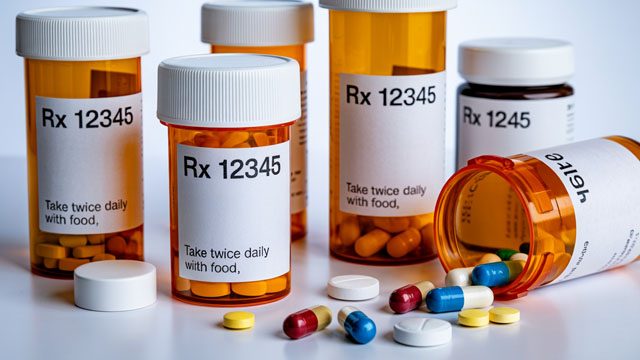
FDA Clears NVO's Higher Dose of Wegovy: Diversify With These Health ETFs
ZACKS· 2026-03-23 16:30
Core Insights - The FDA has approved a higher-dose version of Novo Nordisk's obesity drug Wegovy, expanding its presence in the competitive weight-loss market [1] - Wegovy HD (7.2 mg) shows an average weight loss of 21% in clinical trials, enhancing Novo Nordisk's competitiveness against Eli Lilly's Zepbound [2] - The obesity drug market is becoming a significant revenue stream for pharmaceutical companies, with drugs like Wegovy transitioning from lifestyle products to essential long-term investment themes [3] Market Dynamics - The obesity prevalence among U.S. adults is at 40.3% as of 2023, creating a substantial market opportunity for weight-loss drugs [4] - The usage of GLP-1 drugs in the U.S. is projected to reach 30 million users by 2030, indicating a growing market for leading drugmakers like Novo Nordisk [5] - The obesity drug market is characterized by intense competition, particularly from Eli Lilly [7] Investment Strategies - Direct investment in Novo Nordisk carries stock-specific risks, including potential supply-chain constraints and manufacturing issues [6] - Healthcare ETFs provide a diversified investment approach, reducing exposure to single-stock risks while capitalizing on the growth of the obesity drug market [8] ETF Recommendations - Roundhill GLP-1 & Weight Loss ETF (OZEM) has net assets of $53.5 million, with top holdings including LLY (16.18%) and NVO (13.31%), and has surged 23.1% over the past year [10] - Amplify Weight Loss Drug & Treatment ETF (THNR) has net assets of $4 million, with top holdings including NVO (12.23%) and LLY (11.79%), and has risen 4.2% over the past year [11] - VanEck Pharmaceutical ETF (PPH) has net assets of $1.31 billion, with NVO holding an 4.77% weightage, and has soared 11% over the past year [12] - iShares Global Healthcare ETF (IXJ) has net assets of $3.60 billion, with NVO holding a 1.58% weightage, and has risen 0.7% over the past year [13]

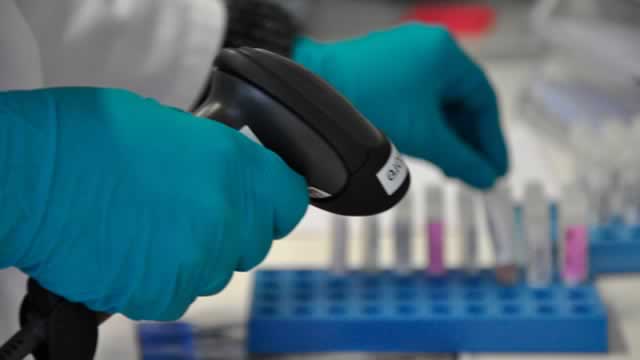
Insmed Lung Infection Therapy Data Impresses, Analyst Sees Approval Path
Benzinga· 2026-03-23 16:24
Core Insights - The ENCORE study results indicate that Arikayce, in combination with multidrug therapy, met its primary and all secondary endpoints, showing potential benefits for patients with Mycobacterium avium complex lung infections [1][2] - Insmed plans to file a Supplemental NDA with the FDA and submit data to the PMDA in Japan in the second half of 2026 to support potential label changes [3] - Analysts express optimism regarding the approval of Arikayce, citing strong culture conversion data and symptom score improvements [4][5] Study Results - The study met primary and all multiplicity-controlled secondary culture conversion endpoints, demonstrating statistically significant improvements in respiratory symptom scores and culture conversion rates [2] - The symptom score improvement was noted at 3.11 points, with an increase to 4.8 points by month 15, indicating sustained benefits [4] Regulatory and Market Outlook - Insmed's safety profile for Arikayce remained consistent with previous studies, with no new safety signals observed [3] - Analysts support approval based on strong culture conversion data, which shows rapid separation by month 2 and durability through month 15 [5] - The stock carries a Buy Rating with an average price target of $195.71, reflecting strong momentum in the market [5] Stock Performance - Insmed shares were up 11.03% at $151.00 at the time of publication [6] - Recent analyst ratings include Buy from Jefferies with a target of $228.00 and Outperform from Mizuho with a lowered target of $204.00 [7]


Mangoceuticals Stock Doubles After Texas Lawsuit
Benzinga· 2026-03-23 16:20
Core Viewpoint - Mangoceuticals Inc. shares are experiencing significant price movement without any clear news, potentially linked to a recent lawsuit against its former technology partner, Clarity Ventures [1] Group 1: Lawsuit Details - A lawsuit has been filed in Texas state court against Clarity Ventures, claiming damages exceeding $73 million for failing to deliver a fully functional, HIPAA-compliant platform essential for Mangoceuticals' operations [2] - Clarity Ventures has denied the allegations and has filed counterclaims regarding unpaid invoices, which Mangoceuticals contests as unwarranted [2] Group 2: Operational Developments - In response to the issues with Clarity, Mangoceuticals has developed a new proprietary telehealth and eCommerce platform, enhancing customer acquisition and order fulfillment [3][4] - The current platform is entirely developed in-house and does not depend on Clarity's technology [4] Group 3: Product Performance - The company's testosterone replacement therapy (TRT) program has shown strong sales growth, with month-over-month sales increasing by 336% since its launch in mid-December, while customer acquisition costs have decreased by 54% [5] - Management anticipates that the TRT program will be the primary growth driver as the company expands its product offerings [6] Group 4: Stock Activity - As of the latest publication, Mangoceuticals shares have risen by 109.51%, reaching a price of $0.34 [7]


Can Anktiva's Label Expansion Unlock the Next Growth Phase for IBRX?
ZACKS· 2026-03-23 15:00
Core Insights - ImmunityBio's growth is increasingly linked to the expansion of its drug Anktiva beyond its initial approval for BCG-unresponsive non-muscle invasive bladder cancer (NMIBC) [1] - The company is advancing multiple clinical programs to broaden the therapy's application in oncology [1][2] Clinical Development - ImmunityBio is conducting clinical studies for Anktiva across various solid tumors and hematologic malignancies as part of its Cancer BioShield platform [2] - A randomized study is underway evaluating Anktiva in combination with BCG for BCG-naïve NMIBC patients, targeting a larger patient population [3] - The company aims for a potential regulatory filing soon, with additional studies planned to explore Anktiva's use in other disease settings [3] Broader Oncology Applications - Beyond bladder cancer, ImmunityBio is investigating Anktiva in combination with standard therapies and CAR-NK approaches for challenging cancers such as non-small cell lung cancer (NSCLC), pancreatic cancer, glioblastoma, colorectal cancer, and hepatocellular carcinoma [4] - Successful outcomes in these studies could establish Anktiva as a foundational immunotherapy platform for multiple cancer types, supporting future regulatory filings and growth [5] Competitive Landscape - ImmunityBio faces significant competition from established pharmaceutical companies like Merck, Bristol Myers, and Roche, which have well-established immunotherapies [6] - These competitors possess greater financial resources, extensive commercial infrastructure, and strong relationships with healthcare providers, making market entry more difficult for newer companies like ImmunityBio [7] Financial Performance and Valuation - ImmunityBio's shares have outperformed the industry year to date [8] - The company is trading at a premium valuation, with a price-to-sales (P/S) ratio of 34.40, significantly above the industry average of 1.99 [10] - Recent estimate movements for ImmunityBio's EPS for 2026 and 2027 have been mixed over the past 60 days [12]


Roche inaugurates new research home for the Institute of Human Biology, pioneering human model systems to accelerate drug discovery and development
Globenewswire· 2026-03-23 15:00
Core Insights - Roche inaugurated the Institute of Human Biology, marking a significant step in its strategy to enhance drug discovery and development through human model systems [1][2] Investment and Commitment - Roche invests approximately CHF 3.5 billion annually in research, reinforcing its commitment to Switzerland as a global innovation hub [2] - The company is currently investing CHF 1.4 billion in site development in Basel and Kaiseraugst, with a total investment of around CHF 41 billion in Switzerland over the last decade [4][9] Institute of Human Biology (IHB) - The IHB, founded in 2023, focuses on developing next-generation human model systems to better understand human diseases and accelerate therapeutic development [5] - The institute aims to reduce reliance on animal testing by utilizing advanced technologies such as organoids and in silico modeling [5] Research Environment - Building 92 will accommodate up to 250 researchers and is designed to foster interdisciplinary collaboration between fundamental and industry sciences [3] - The facility includes modular laboratories to support sustainable growth and innovative research [3] Technological Advancements - IHB combines human disease biology, computational biology, and translational bioengineering to create sophisticated models that enhance understanding of disease mechanisms [2][5]

Roche inaugurates new research home for the Institute of Human Biology, pioneering human model systems to accelerate drug discovery and development
Globenewswire· 2026-03-23 15:00
Core Insights - Roche inaugurated the Institute of Human Biology, marking a significant step in its strategy to enhance drug discovery and development through human model systems [1][2] Investment and Commitment - Roche invests approximately CHF 3.5 billion annually in research, reinforcing its commitment to Switzerland as a global innovation hub [2] - The company is currently investing CHF 1.4 billion in site development in Basel and Kaiseraugst, with a total investment of around CHF 41 billion in Switzerland over the last decade [4][9] Institute of Human Biology (IHB) - The IHB aims to revolutionize medicine by combining human organoid models with artificial intelligence, enhancing the predictability and efficiency of drug development [2] - The institute focuses on advanced human model systems, including organoids and in silico modeling, to better understand human diseases and accelerate therapeutic development [5] - The facility will accommodate up to 250 researchers and is designed to foster interdisciplinary collaboration [3] Research and Development Focus - IHB's research integrates human disease biology, computational biology, and translational bioengineering to create sophisticated models that replicate human disease biology [2] - The institute aims to bridge the gap between fundamental research and industry applications, facilitating rapid translation of scientific discoveries into patient-focused solutions [5]
Valneva-Pfizer Lyme Shot Stumbles Yet Keeps Regulatory Path Alive
Benzinga· 2026-03-23 14:35
Core Insights - The Phase 3 VALOR trial for Valneva's Lyme disease vaccine did not meet its primary endpoint, with fewer cases than expected [1] - A secondary analysis showed clinically meaningful efficacy, with Pfizer expressing confidence in the vaccine's potential and planning regulatory submissions [2] - Valneva voluntarily withdrew its biologics license application for the chikungunya vaccine in the U.S. earlier this year [3] Financial and Technical Indicators - Valneva's stock is trading 40.4% below its 20-day simple moving average and 31.9% below its 100-day simple moving average, indicating significant weakness [4] - Over the past 12 months, Valneva shares have declined by 11.44% and are closer to their 52-week lows [4] - The Relative Strength Index (RSI) is at 46.62, indicating neutral territory, while the MACD is at 0.1051, below its signal line, suggesting bearish pressure [5] Stock Price Activity - Valneva shares were down 35.27% at $6.68 at the time of publication [6] - The vaccine showed an efficacy of 73.2% from 28 days post-dose 4 in reducing confirmed Lyme disease cases compared to placebo [6] - Key resistance level for the stock is $7.00, while key support is at $6.00 [7]



Why Aurinia Pharmaceuticals Stock Is Surging Monday Morning
Benzinga· 2026-03-23 14:26
Core Viewpoint - Aurinia Pharmaceuticals is experiencing significant stock momentum, attributed to a leadership transition and ongoing progress in its product pipeline [1][2][3]. Group 1: Leadership Changes - Kevin Tang has been appointed as the new CEO, succeeding Peter Greenleaf, who will continue as a consultant during the transition [2]. - The market reacted positively to the leadership change, indicating confidence in Aurinia's operational strength [3]. - Several executive appointments were made alongside the CEO change, including Ryan Cole as COO, Michael Hearne as CFO, and Thomas Wei as CSO, suggesting stability within the leadership team [4]. Group 2: Product Focus - Aurinia's primary product, Lupkynis, is gaining traction as a standard therapy for lupus nephritis, which is crucial for the company's commercial growth [3][5]. - Aritinercept is highlighted as a potential long-term catalyst for the treatment of autoimmune diseases, indicating ongoing pipeline development [5]. Group 3: Stock Performance - Aurinia Pharmaceuticals' stock (AUPH) saw a 5.06% increase, reaching $14.74, reflecting positive market sentiment [7]. - The Relative Strength Index (RSI) for AUPH has fluctuated between neutral and overbought levels, indicating varying momentum in the stock's performance [6].


Insmed shares rise on positive late-stage trial results for lung disease therapy
Proactiveinvestors NA· 2026-03-23 14:12
Company Overview - Proactive is a financial news publisher that provides fast, accessible, informative, and actionable business and finance news content to a global investment audience [2] - The company operates with a team of experienced and qualified news journalists across key finance and investing hubs including London, New York, Toronto, Vancouver, Sydney, and Perth [2] Market Focus - Proactive specializes in medium and small-cap markets while also covering blue-chip companies, commodities, and broader investment stories [3] - The content delivered by the team includes insights across various sectors such as biotech and pharma, mining and natural resources, battery metals, oil and gas, crypto, and emerging digital and EV technologies [3] Technology Adoption - Proactive is recognized for its forward-looking approach and enthusiastic adoption of technology to enhance workflows [4] - The company utilizes automation and software tools, including generative AI, while ensuring that all content is edited and authored by humans to maintain quality and best practices in content production [5]