男装

Search documents
中国男装踏出国门,利郎以马来西亚首店开启国际化新篇
Cai Fu Zai Xian· 2025-07-04 06:35
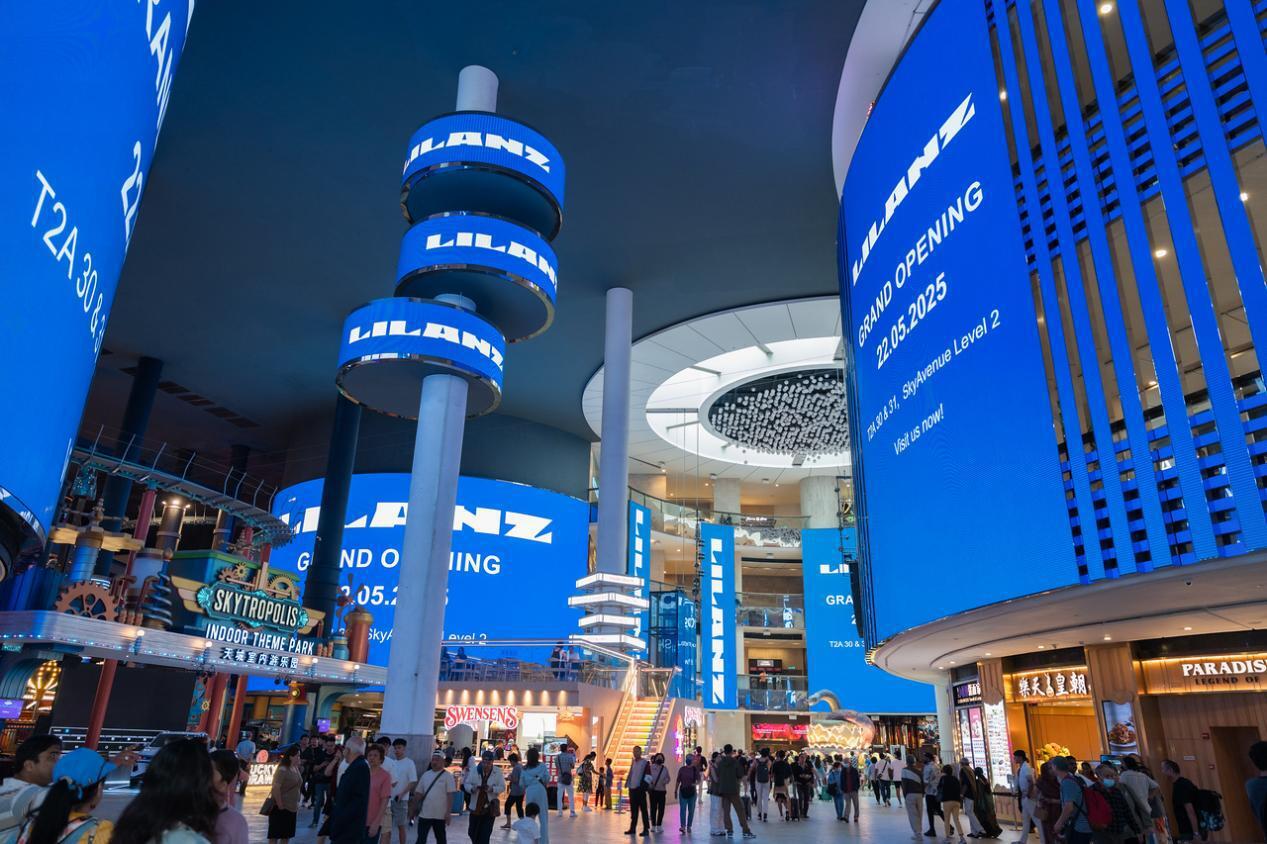
Core Viewpoint - LILANZ, a well-known Chinese menswear brand, has opened its first overseas store in SkyAvenue, Genting World, Malaysia, marking a significant step in its internationalization strategy [1] Group 1: Store Details - The store covers an area of 268 square meters and follows the brand's "minimalist precision" design philosophy, featuring a gray and white color scheme combined with streamlined displays to create a shopping space that blends technology and artistry [3] Group 2: Brand Background and Strategy - Founded in 1987, LILANZ has developed a comprehensive industry chain covering design, research and development, production, and retail. In 2009, it became the first Chinese menswear brand to be listed on the Hong Kong Stock Exchange [5] - The brand attracts younger consumers through its sub-brand LESS IS MORE and has invested in the Chinese operations of the century-old golf brand Munsingwear, expanding into the outdoor sports market, which lays the groundwork for its international expansion [5] - Malaysia was chosen as the first overseas location due to the strong ties under the Belt and Road Initiative and its strategic position in Southeast Asia, where the growing middle class has a strong demand for quality menswear, aligning well with LILANZ's core customer base [5] Group 3: Future Plans and Market Engagement - The opening of the first store is seen as a new starting point for internationalization, with plans to deepen engagement in the Southeast Asian market while maintaining a minimalist tone and integrating local culture to steadily enhance international influence [5] - The store opening has generated significant buzz on social media platforms, leading to spontaneous consumer engagement [6]

九牧王: 九牧王关于上交所对公司2024年年度报告的信息披露监管问询函的回复公告
Zheng Quan Zhi Xing· 2025-06-25 19:00
Core Viewpoint - The company, Jomoo Wang Co., Ltd., has responded to the Shanghai Stock Exchange's inquiry regarding its 2024 annual report, detailing its financial situation, including cash reserves, loans, and investment strategies, while emphasizing its commitment to transparency and compliance with regulations [1]. Financial Situation - The company's cash reserves at the end of 2022, 2023, and 2024 were RMB 672 million, RMB 1,066 million, and RMB 766 million respectively. The total short-term and long-term loans were RMB 612 million, RMB 407 million, and RMB 224 million for the same years [1]. - The company's financial assets and equity investments were valued at RMB 2,479 million, RMB 2,280 million, and RMB 2,270 million at the end of 2022, 2023, and 2024, representing 44%, 39%, and 40% of total assets respectively [1]. Investment Strategy - The company has engaged in significant financial and equity investments, with a total investment of RMB 1,860 million from 2014 to 2024, achieving a profit of RMB 490 million from exited projects [4]. - The company has maintained a high dividend payout ratio, distributing a total of RMB 5,137 million in cash dividends from 2011 to 2024, reflecting a commitment to shareholder returns [4]. Market Position - Compared to industry peers, the company holds a relatively high level of financial assets and equity investments, with a total of RMB 1,596 million, accounting for 28% of total assets, which is higher than several competitors [6]. - The company has decided to stop increasing its primary equity investment projects and is focusing on clearing existing investments while shifting towards lower-risk financial products [7]. Performance Impact - The company's financial and equity investments have shown mixed results over the past three years, with total investment income of RMB 4,696.95 million in 2022, RMB 2,220.09 million in 2023, and a loss of RMB 13.09 million in 2024 [8]. - The fair value changes in investments have led to significant losses, particularly in 2022 and 2023, primarily due to fluctuations in the secondary market [8].

宠物用品火了,男装集体蔫儿了
凤凰网财经· 2025-06-24 13:14
Core Viewpoint - The men's clothing industry in China is facing significant challenges, with major companies experiencing declining revenues and profits due to a tough economic environment and increased competition [2][9][18]. Group 1: Industry Overview - The Chinese pet market is thriving, while the men's clothing sector is struggling, with listed companies reporting widespread performance declines in 2024 [2][9]. - The men's clothing market is characterized by lower purchase frequency compared to women's and children's clothing, leading to a relatively stable but now stagnating market [4][8]. - The overall clothing market in China is valued at over 2 trillion, but the low entry barriers have resulted in intense competition [7]. Group 2: Financial Performance - Major men's clothing companies, including Hai Lan Zhi Jia, reported a significant drop in revenue and profit in 2024, with Hai Lan Zhi Jia's revenue at 20.96 billion and net profit down 26.88% [12][17]. - Other companies like Bi Yin Le Fen and Hong Dou experienced similar downturns, with Hong Dou reporting a net loss of 238 million, marking its first loss since 1997 [14][17]. - Inventory pressures are rising, with Hai Lan Zhi Jia's inventory reaching 11.99 billion and turnover days increasing to 330 days, indicating severe stock accumulation [23][24]. Group 3: Strategic Responses - In response to market challenges, companies are focusing on their core clothing business and avoiding blind diversification, as seen with Ya Ge Er exiting the real estate sector to concentrate on fashion [27]. - Companies like Qi Pi Wolf and Bao Xi Niao are pursuing multi-brand strategies and investments to enhance their market position, with Qi Pi Wolf planning to continue securities investments in 2025 [28][32]. - Hai Lan Zhi Jia is expanding its business through partnerships and international markets, achieving a 30.75% revenue increase from overseas operations in 2024 [30].

通用股份易主:原大股东红豆集团陷亏损、质押、逾期、冻结四大困境
Xin Lang Cai Jing· 2025-06-20 09:02
Group 1 - General Shares announced the completion of a share transfer from its former controlling shareholder, Hongdou Group, to Jiangsu Suhao Holding Group, resulting in a change of actual controller to Jiangsu State-owned Assets Supervision and Administration Commission [1][2] - Hongdou Group is facing a severe debt crisis, with total liabilities reaching 37.109 billion yuan and a debt ratio of 66.91% as of Q3 2024 [2][4] - The debt structure is concerning, with 2.55 billion yuan of bonds maturing in 2025, accounting for over half of the total bond balance of 4.75 billion yuan [2] Group 2 - Hongdou Group has experienced liquidity issues, evidenced by multiple overdue bills and the suspension of commercial bill acceptance services due to overdue payments [3][4] - The company has been forced to pledge assets to secure financing, including a 100% pledge of its shares in Lianan Life Insurance and significant pledges of shares in Hongdou Shares [4][7] - Hongdou Shares reported its first annual loss in 24 years, with a net profit drop of 893.8% to -238 million yuan, which is equivalent to the total net profit from 2020 to 2023 [4][6] Group 3 - The decline in Hongdou Shares' performance is attributed to a sluggish men's clothing market and strategic missteps, including a failed investment in the lithium battery sector [6][7] - The management instability, including the sudden resignation of the chairman, has compounded the company's challenges [7] - Despite the turmoil at Hongdou Group, General Shares has shown relatively stable performance, with a revenue increase of 37.39% to 6.958 billion yuan and a net profit increase of 72.81% to 374 million yuan in 2024 [7] Group 4 - The transfer of control of General Shares marks a significant shift for Hongdou Group, which now only retains the loss-making Hongdou Shares and a New Third Board-listed company, Zisong Pharmaceutical [8] - The group's core assets have been divested in a short period, indicating a rapid decline in its financial health [8] - The freezing of shares in Wuxi Xishang Bank, valued at approximately 154 million yuan, further illustrates the financial distress faced by Hongdou Group [8]


曾经批发商抢着要,如今业绩连年下滑,这个男装巨头迎“中年危机”
Sou Hu Cai Jing· 2025-06-16 01:06
1968年的夏天,在香港九龙的一间老式裁缝铺里,曾宪梓用一把剪刀剪出了第一条金利来领带。 从广东初到香港的曾宪梓,白天在舅舅的领带店打工,夜间摆摊卖自己亲手做的领带。他用6000港元租下的小作坊,最终做出了一个知名男装品牌。巅峰 时期,金利来在全国有超过3000家店,编织出一个"男人的世界"。曾宪梓也收获了"领带大王"的称号。 在70后、80后眼中,金利来是成功男人的"符号",也是年轻时代的"西装启蒙"。很多人进入职场的第一套正装、第一条领带,便印着金利来的LOGO。 1992年,金利来以远超同期行业的市盈率登陆港交所,成为最早一批上市的中国服装企业之一。33年后,市场早已今非昔比,金利来在年轻人中褪色 成"父辈的衣柜",最近一次进入公众视野的是一场"退市风波"。 二代曾智明发起的"私有化"要约因小股东否决而搁浅。目前,金利来股价不足1港元,市值不到10亿。 表面来看,金利来私有化失败是传统家族企业与现代资本市场的矛盾,争议焦点在于资产价值未被合理评估,中小股东对利益分配不满;但更深处的矛盾 或许在于,金利来伴随着20世纪正装文化鼎盛期上升,但随着消费需求变化,品牌定位逐渐迷茫。 走出历史光环的"领带大王", ...
利郎MSCI ESG评级上升至BB,责任管治与公益实践成效显著
Cai Fu Zai Xian· 2025-06-11 07:01
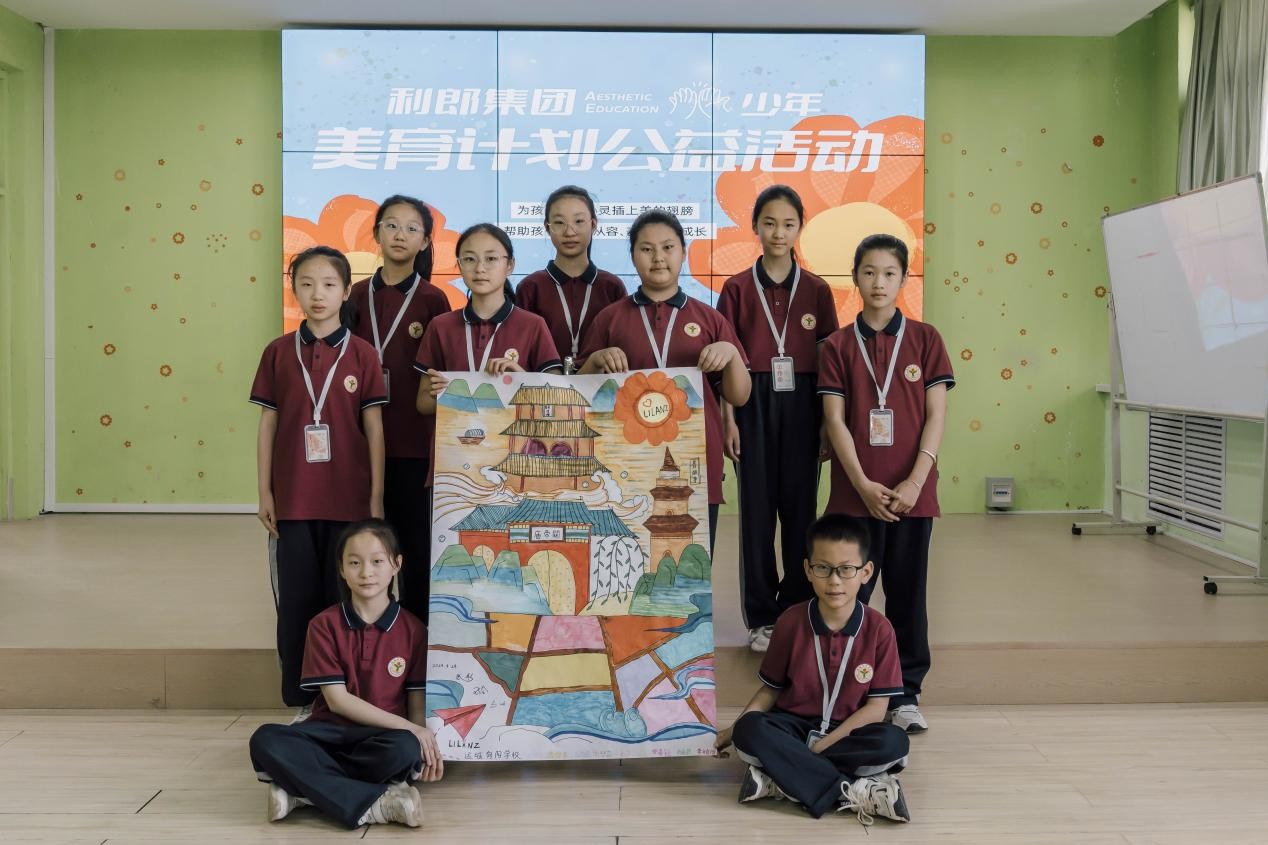
Core Insights - The company Li Ning has achieved a significant upgrade in its MSCI ESG rating, moving up two levels to a BB rating, positioning itself among the leaders in the domestic menswear industry [1][3] Governance Initiatives - In December 2024, the company will establish an ESG management committee, elevating environmental, social, and governance factors to a strategic core position [1] - The company has enhanced its governance capabilities by providing over 200 hours of specialized ESG training to nearly 100 middle and senior management personnel [1] - The company has conducted 100% annual assessments of 825 suppliers to ensure supply chain compliance [1] - More than 50% of employees' rights are protected through union or collective bargaining agreements [1] Philanthropic Efforts - The company adheres to the principle of "giving back to society," with total donations from the group and the Li Ning Charity Foundation reaching 26.9085 million yuan in 2024, covering education, healthcare, and culture [1] - The five-year "Li Ning Youth Aesthetic Education Program" has donated over 6.58 million yuan to 8 provinces, establishing 23 Dream Centers benefiting 30,881 children [1] - The "Great Teacher" public welfare fund in Jinjiang was initiated with a personal donation of 100 million yuan from the chairman and his wife [1] Future Outlook - The company recognizes the historical responsibilities and opportunities presented by the current era, actively embracing change to reduce environmental impact through fashion [3] - The company aims to upgrade brand aesthetics while promoting sustainable development [3]
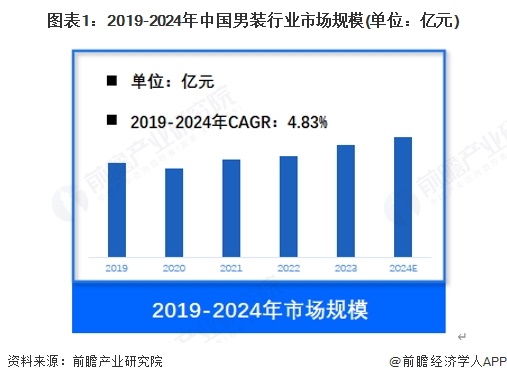
【男装】行业市场规模:2024年中国男装行业市场规模约6500亿元 男裤市场占比约24%
Qian Zhan Wang· 2025-06-10 06:48
Core Insights - The Chinese men's clothing industry is projected to reach a market size of approximately 650 billion yuan in 2024, with a compound annual growth rate (CAGR) of 4.83% over the past five years [1][3]. Market Segmentation - Men's clothing can be categorized into formal wear, casual wear, sportswear, and underwear. Formal wear includes suits, shirts, and ties; casual wear encompasses casual pants, jackets, and T-shirts; sportswear consists of sports jackets, pants, and undergarments; while underwear includes base layers and thermal wear [3]. - According to Statista, the men's pants market and men's sportswear and swimwear market are the two largest segments within the Chinese men's clothing industry, accounting for 24% and 16% of the market share, respectively [3]. Industry Competition - Leading companies in the Chinese men's clothing sector include Hailan Home (海澜之家), China Lilang (中国利郎), and Baoxini (报喜鸟). The specific competitive landscape and strategies of these companies are detailed in the report by Qianzhan Industry Research Institute [5].

七匹狼35周年科技攻坚 携手杰尼亚共筑商旅男装"降温科技"新壁垒
Zhong Guo Chan Ye Jing Ji Xin Xi Wang· 2025-06-06 07:05
Core Viewpoint - The Chinese men's clothing industry is undergoing a critical transformation towards high-end and functional apparel, with the brand Seven Wolves leveraging technological innovation to enhance its competitive edge in the industry [1][10]. Group 1: Strategic Partnerships and Innovations - Seven Wolves has entered into a deep technical collaboration with the Italian luxury fabric company Zegna, focusing on the development of "CoolEffect cooling fabric" tailored for business travel scenarios [1][4]. - The "CoolEffect cooling fabric" utilizes Australian ultra-fine merino wool (17 microns in diameter, approximately 200 grams per square meter) and employs special dyeing and finishing techniques to reduce surface temperature by about 10°C compared to similar products [3][4]. - This partnership marks a significant advancement in their strategic cooperation established in 2024, demonstrating the effectiveness of the "technology collaboration + market orientation" model [4]. Group 2: Market Trends and Consumer Needs - The 2024-2025 China Men's Clothing Market Consumption Trend Report highlights that comfort in summer business attire is a primary concern for consumers, with traditional dark fabrics causing discomfort due to heat retention and poor breathability [3]. - Seven Wolves is addressing these consumer pain points by focusing on differentiated needs in business travel scenarios, enhancing product value across materials, technology, and production [8]. Group 3: Brand Development and Recognition - Over the past 35 years, Seven Wolves has maintained a consumer-centric approach, continuously upgrading its brand strategy and positioning itself as an expert in jackets [8]. - The company has received multiple international awards for its innovative products, including the "World's Excellent Antibacterial Colorful POLO" certification and several design awards [6]. - The collaboration with Zegna is seen as a significant step in integrating global resources and enhancing the brand's high-end market offerings, promoting the industry's shift towards functional and comfortable apparel [10].

九牧王: 九牧王2024年年度股东大会法律意见书
Zheng Quan Zhi Xing· 2025-05-16 12:51
Core Viewpoint - The legal opinion confirms that the 2024 annual general meeting of Jiuwu Wang Co., Ltd. was convened and conducted in accordance with relevant laws and regulations, ensuring the legitimacy of the meeting and its resolutions [1][10]. Group 1: Meeting Procedures - The meeting was approved on April 23, 2025, to convene the 2024 annual general meeting [2][4]. - The notice of the meeting was published in the Securities Times and on the Shanghai Stock Exchange website, detailing registration and voting methods [3][4]. - The meeting provided a network voting platform for shareholders from 9:15 to 15:00 on May 16, 2025 [3]. Group 2: Shareholder Participation - A total of 5 shareholders attended the meeting in person, representing 386,068,140 shares, which is 67.1847% of the total voting shares [4]. - 47 shareholders participated via online voting, representing 6,218,068 shares, or 1.0820% of the total voting shares [4]. Group 3: Voting Results - The voting results showed that all proposed resolutions were approved, with significant majorities in favor [5][6][9]. - Specific voting results included 392,232,608 shares in favor of one resolution, representing a substantial majority of the votes cast [6][8]. Group 4: Legal Compliance - The legal opinion asserts that the meeting's convening, notification, and voting procedures complied with the Company Law, Shareholder Meeting Rules, and the company's articles of association [10].
金利来私有化“告吹”,中国男装市场正在面临结构性困境
Guan Cha Zhe Wang· 2025-05-14 03:22
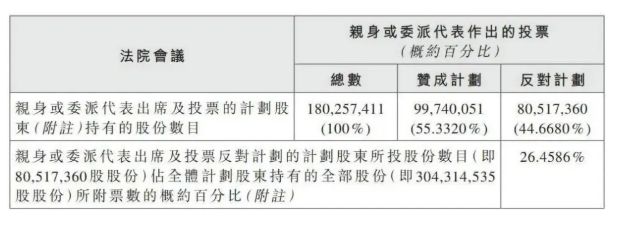
Core Viewpoint - The long-established menswear giant, Goldlion, is struggling with continuous poor performance and has faced a failed privatization attempt, which has led to a significant drop in its stock price. Group 1: Privatization Attempt - Goldlion's chairman, Zeng Zhiming, has been pushing for privatization since late last year, aiming to end the company's 33-year listing on the Hong Kong stock market [1][2] - The privatization plan was rejected in a court meeting on May 9, with only 55.33% of votes in favor, failing to meet the required 75% threshold [4][5] - Following the rejection, Goldlion's stock price plummeted nearly 40% on the first trading day, closing down 33.56% [1] Group 2: Financial Performance - Goldlion's revenue for 2024 was HKD 1.129 billion, a year-on-year decline of 8.44%, while net profit shrank to HKD 86.21 million, down 19.86% [8][12] - The company has experienced a compound annual decline of 12% in performance over the past three years, with net profit growth rates showing double-digit negative growth [8][12] - Despite the poor performance, Goldlion maintains a stable cash flow with over HKD 1 billion in cash and bank balances, and no bank loans or overdrafts [12][13] Group 3: Market Position and Challenges - Goldlion's market position has weakened, with an average daily trading volume of only 296,000 shares, representing less than 0.03% of total shares [3] - The company has not utilized its listing status for fundraising in the past 20 years, incurring annual compliance costs of HKD 12 million [3][12] - The menswear industry is facing collective challenges, with other brands like Youngor and Bananai also reporting significant declines in profits [14] Group 4: Asset Valuation - Goldlion has substantial property assets valued at approximately HKD 2.605 billion, with a net asset value of HKD 4.47 per share, nearly three times the privatization offer price of HKD 1.52 per share [6][13] - The company reported rental income of HKD 146 million and property management fees of HKD 41 million in 2024, totaling HKD 187 million [13] Group 5: Strategic Initiatives - Goldlion has attempted to pivot by launching products that incorporate traditional Chinese culture and establishing sub-brands aimed at urban social life, but these efforts have yielded limited results [14]