
男装

Search documents
海澜之家(600398):京东入股公司子公司,看好城市奥莱业务提速
GF SECURITIES· 2026-03-09 10:49
Investment Rating - The investment rating for the company is "Buy" with a current price of 6.12 CNY and a target value of 8.65 CNY [4]. Core Views - The company has received a strategic investment from JD.com in its subsidiary, which is expected to accelerate the development of its urban outlet business. This new business model focuses on locations closer to core urban areas, enhancing consumer accessibility and increasing visitor frequency [8]. - The main business of the company remains stable, with new ventures anticipated to achieve rapid growth. The urban outlet business, along with international market expansion and the Adidas FCC business, is expected to drive significant revenue increases [8]. - Earnings per share (EPS) forecasts for 2025, 2026, and 2027 are projected to be 0.44 CNY, 0.48 CNY, and 0.54 CNY respectively. The company is assigned a price-to-earnings (P/E) ratio of 18 times for 2026, leading to a reasonable value estimate of 8.65 CNY per share [8]. Financial Summary - Revenue projections for the company are as follows: - 2023: 21,528 million CNY - 2024: 20,957 million CNY (decrease of 2.7%) - 2025: 21,444 million CNY (increase of 2.3%) - 2026: 23,452 million CNY (increase of 9.4%) - 2027: 26,014 million CNY (increase of 10.9%) [2]. - The company's EBITDA is expected to be: - 2023: 5,406 million CNY - 2024: 4,670 million CNY - 2025: 4,591 million CNY - 2026: 4,988 million CNY - 2027: 5,538 million CNY [2]. - The net profit attributable to shareholders is forecasted as follows: - 2023: 2,952 million CNY - 2024: 2,159 million CNY (decrease of 26.9%) - 2025: 2,104 million CNY (decrease of 2.5%) - 2026: 2,307 million CNY (increase of 9.6%) - 2027: 2,610 million CNY (increase of 13.1%) [2]. - The return on equity (ROE) is projected to be: - 2023: 18.4% - 2024: 12.7% - 2025: 12.2% - 2026: 13.2% - 2027: 14.7% [2].

比亚迪车“扛住”导弹?千问技术负责人离职,马云现身谈AI;西贝被曝缓发工资,裁员赔偿分期;30万买12瓶茅台,6瓶鉴定为假酒|| 大件事
Sou Hu Cai Jing· 2026-03-07 07:20
Group 1 - Lin Junyang, the core leader of Qwen, announced his departure from the company, causing significant attention in the global AI open-source community [1][2][4] - Lin, aged 33, has a strong academic background with degrees from Peking University and has been pivotal in the development of the Qwen series of open-source models since joining Alibaba in 2019 [4] - The Qwen team recently launched the Qwen 3.5 series of models, which are designed for deployment on edge devices, and announced a rebranding decision to unify their B-end and C-end brands under "Qwen" [5] Group 2 - Xibei, a restaurant chain, has been reported to delay salary payments and offer severance pay in installments, leading to employee dissatisfaction [8][12] - The company has faced financial difficulties, with reports indicating a cumulative loss exceeding 600 million since September 2025, prompting plans to close around 102 stores [12][13] - Xibei's recent financing round increased its registered capital by approximately 13%, indicating some level of investor confidence despite ongoing operational challenges [12] Group 3 - Hailan Home has been suspended from participating in military procurement activities due to contract violations, which may impact its valuation as it approaches a secondary listing in Hong Kong [14][16] - The company has experienced stagnant revenue growth since 2019, with a notable decline in net profit in recent years [15][16] Group 4 - BYD's vehicle was reportedly damaged by an Iranian missile explosion, but the car's structure remained intact, raising discussions about its safety features [18][20] - Military experts suggest that the incident's outcome was largely coincidental, emphasizing the need for a rational perspective on such events [22] Group 5 - A customer in Sichuan purchased 12 bottles of "50-year Moutai" for 308,000 yuan, but subsequent inspections revealed several bottles to be counterfeit [24][27] - The incident highlights ongoing issues with counterfeit products in the Moutai market, despite the company's efforts to combat fraud [27]



红豆股份连续两年亏损,老牌男装集体遇转型困局
Sou Hu Cai Jing· 2026-01-27 07:25
Core Viewpoint - The traditional men's clothing brands, once thriving due to workplace and gifting demands, are now facing significant challenges, with many experiencing consecutive years of losses and struggling to adapt to changing market dynamics [2][5][22]. Company Overview - Hongdou Co., a 65-year-old brand, is projected to report a net loss of 280 to 360 million yuan for the year 2025, marking its second consecutive year of losses [2][5]. - The brand, along with peers like Shanshan, Youngor, and Qipilang, is experiencing declining store revenues and shrinking profit margins, reflecting a broader trend among established men's clothing brands [5][22]. Historical Context - Hongdou was founded by Zhou Youting's family, evolving from a small workshop in Wuxi to a prominent brand in the 1980s, with significant contributions from Zhou Youting and his son Zhou Haijiang [6][8]. - The company went public in 2001, but leadership transitions have led to strategic inconsistencies, impacting its ability to adapt to market changes [10][12]. Market Dynamics - The traditional business model relying on formal wear and physical stores is becoming outdated, as the demand for business casual attire rises, with the formal business attire market shrinking at approximately 3% annually [12][22]. - Despite the struggles of brands like Hongdou, the overall men's clothing market is projected to grow, with the Chinese market expected to reach 680 billion yuan by 2025, indicating a shift rather than a decline in the industry [22][25]. Financial Performance - Hongdou's revenue has stagnated around 2.3 billion yuan from 2021 to 2023, with a significant drop to 1.959 billion yuan in 2024, representing a 15.93% decline [15][22]. - The company's gross profit margin has drastically decreased, with franchise store margins plummeting from 31.32% to 2.32%, leading to a vicious cycle of cost-cutting and revenue decline [15][22]. Competitive Landscape - Other traditional brands like Qipilang and Baoxiniro are also facing revenue declines, with Qipilang reporting a 11.2% drop in revenue for Q3 2025 [16][19]. - In contrast, brands like Lilang and Bosideng have successfully navigated the market by focusing on core products and optimizing their business models, demonstrating that there are viable paths for growth within the industry [23][25]. Future Outlook - Hongdou's future hinges on its ability to innovate and unify its business strategy, as it currently operates a diverse portfolio but lacks a cohesive direction [25][26]. - The brand's recognition is primarily tied to its "zero-feeling shirt," but it has not effectively expanded its product line or modernized its image, risking further consumer disengagement [26].

七匹狼(002029.SZ):未涉及 AI4S 相关业务布局
Ge Long Hui· 2026-01-22 06:44
Core Viewpoint - The company, Seven Wolves (002029.SZ), has stated that it currently does not have any business layout related to AI4S in its main operations and future strategic planning [1] Group 1: Business Focus - The company is focused on its main business operations and is actively paying attention to and valuing technological innovation [1] - The company aims to enhance product competitiveness and operational efficiency [1] Group 2: Future Disclosures - The company will strictly fulfill its information disclosure obligations if there are any significant future layouts related to AI4S [1]

2026年男装关键词:海外杂志反复提到的 5 条趋势线
Sou Hu Cai Jing· 2026-01-01 09:38
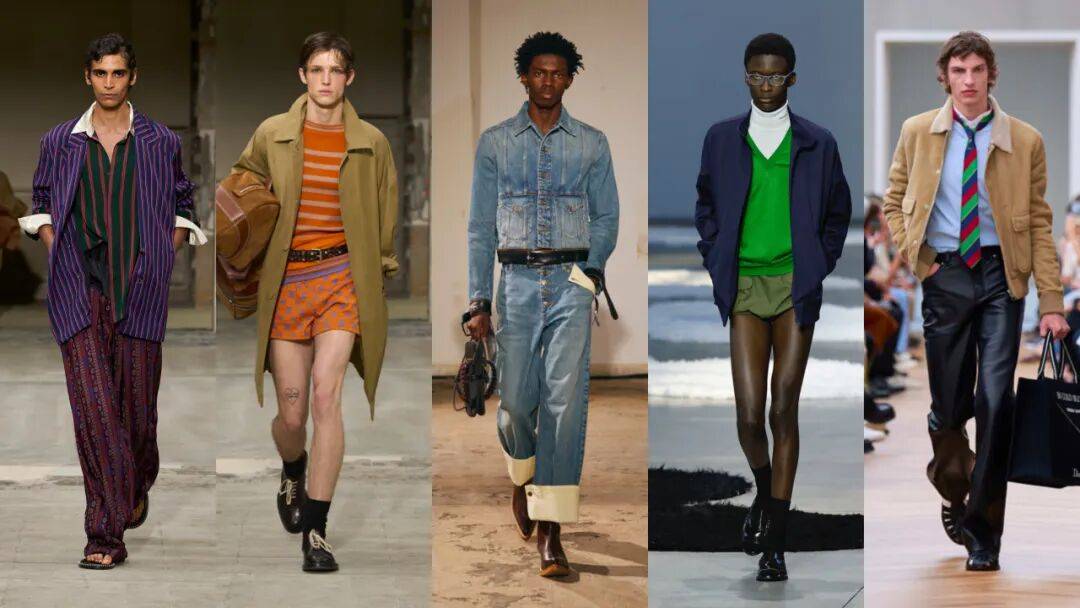
Core Insights - The article outlines five key trends for the Spring/Summer 2026 fashion season, emphasizing a continuation and evolution of past styles rather than the emergence of entirely new concepts [2][5]. Trend Analysis - **Shorter Bottoms**: The trend is moving towards shorter bottoms, particularly "mini shorts," which are becoming more accepted in men's fashion as exposure increases [5][7][8]. - **Relaxed Silhouettes**: There is a noticeable shift towards softer, more relaxed fits, often described as "sleepwear-core," indicating a preference for comfort without resorting to overly oversized styles [11][15]. - **Textural Interest**: The use of embroidery and other tactile materials is gaining prominence, with a focus on craftsmanship and vintage aesthetics in menswear [16][18]. - **Neck Accessories**: The resurgence of neck accessories like ties and scarves is noted, with brands incorporating these elements to enhance the overall look and feel of outfits [21][23]. - **Open Footwear**: The trend towards open footwear, particularly flip-flops, is becoming more prevalent, with brands integrating them into more sophisticated looks [26][28]. Additional Observations - **Color Trends**: Bright colors such as neon yellow and pink are highlighted, but softer, neutral tones may be more practical for everyday wear [32][35]. - **Denim Styles**: The article discusses the complexities of wearing full denim outfits, suggesting that mixing denim pieces may be a more effective approach [36][40].

荣获“年度品牌价值奖”,慕尚集团(01817.HK)加速释放价值潜力
Ge Long Hui A P P· 2025-12-29 08:40
Core Viewpoint - The strategic importance of brand value has become increasingly prominent in the competitive landscape of the men's apparel market, especially for brands undergoing structural transformation. High brand value not only enhances consumer recognition and reduces decision-making costs but also strengthens investor confidence and supports long-term market value [1]. Group 1: Industry Transformation - The men's apparel industry is experiencing a significant transformation, with many leading brands facing challenges such as declining revenues, store closures, and high inventory levels. Brands like Youngor, Jiumuwang, and Qipilang have reported collective revenue declines in the first three quarters, with some experiencing both revenue and profit drops [2][3]. - The shift in consumer power to Generation Z has rendered traditional brand images as "conservative" and "outdated," necessitating a transformation in branding and marketing strategies to appeal to younger consumers [4]. - GXG has identified the "commuting men's wear" segment, positioning itself to lead in this new market landscape by addressing the evolving needs of urban male consumers [4][5]. Group 2: Brand Value Accumulation - GXG's brand value growth is attributed to systematic efforts across three key dimensions: cultural depth, product adaptation, and channel upgrades [7]. - The brand emphasizes cultural significance by providing unique value propositions that resonate with young male consumers, integrating traditional aesthetics into modern designs through collaborations with intangible cultural heritage [8][9]. - GXG's product offerings, such as the "Zero Pressure" series, are designed to meet the functional and aesthetic needs of modern consumers, ensuring comfort and versatility across various scenarios [10][11]. Group 3: Channel Strategy - GXG's channel strategy focuses on dual advancement: consolidating presence in high-potential markets while expanding into lower-tier cities to reach a broader consumer base [11]. - The brand is optimizing its store model by closing underperforming locations and enhancing its presence in key urban areas, thereby reinforcing brand recognition and value [11]. - This strategic approach allows GXG to accumulate brand equity through consistent consumer engagement across different market levels, ultimately supporting sustained brand value growth [12]. Conclusion - The recognition of GXG as the "Annual Brand Value Award" winner reflects its successful navigation of the men's apparel market by leveraging cultural narratives, product innovation, and strategic channel upgrades to build a robust brand moat. The brand's commitment to understanding contemporary consumer sentiments positions it for long-term success and capital returns [13].
指数显示消费者购买品牌商品趋势持续增强
Xin Hua Cai Jing· 2025-12-25 13:57
Core Insights - The "China Online Consumption Brand Index" (CBI) for Q3 2025 was officially released, showing a value of 62.65, which represents a 0.92% increase compared to the same period last year, indicating a sustained growth trend in consumer emphasis on quality and brand during online shopping [1][2] Industry Performance - There are significant differences in CBI scores across various industries, with higher scores indicating fewer non-branded products and a concentration of sales among leading brands, while lower scores suggest greater competition for brand recognition [1] - The industries with the highest CBI scores include 3C digital products, home appliances, beauty products, and sports outdoor goods, reflecting a higher consumer demand for product quality, functionality, and brand recognition in these sectors [1] Brand Purchasing Power - Several industries, including women's clothing, 3C smart products, daily beauty products, sports outdoor goods, pet supplies, men's clothing, and home furnishings, have shown growth in their CBI scores compared to the previous year [2] - First-tier cities continue to lead in brand purchasing power rankings, emphasizing the importance of quality competition over mere cost competition [2] Consumer Trends - The CBI results indicate a growing trend among Chinese consumers towards preferring high-quality and branded products when shopping online [2] - Despite discussions around the rise of "white-label" products, the overall trend of the CBI suggests that brand consumption is still in an expansion phase, with many brands facing strategic dilemmas between low-cost customer acquisition and value innovation [2]
私有化失败转向台球,商务男装金利来另辟蹊径
Bei Jing Shang Bao· 2025-12-22 13:05
Core Insights - Goldlion, known as the "King of Suits," is seeking new growth paths by entering the billiards apparel market, opening its first billiards store in Wuhan, which features professional billiards clothing and an interactive experience area [1][3] - The company has faced declining performance in its traditional business of men's formal wear, with revenue dropping from over HKD 1.8 billion at its peak to HKD 1.2 billion [4][5] - The billiards market in China is growing, with a projected market size of RMB 872 billion in 2024, reflecting a 20.5% year-on-year increase, and the number of billiards clubs increasing at an annual rate of 12% [8][9] Company Strategy - Goldlion aims to position its billiards brand as a fashionable, high-quality leisure brand targeting middle-class male consumers aged 25-45, combining professional equipment with social experiences [3][8] - The company has previously attempted to diversify its offerings, launching new product lines and series to attract different consumer segments, but these efforts have not significantly improved its performance [7][8] - Goldlion's management believes that billiards aligns with its brand philosophy of balancing tradition and innovation, hoping to attract younger consumers through this new venture [8][9] Industry Context - The men's formal wear industry is experiencing widespread challenges, with several brands, including Seven Wolves and Youngor, reporting declines in revenue and profit [5][6] - The market for men's apparel is becoming polarized, with lower-priced segments growing while higher-priced segments face pressure from international brands and private label products [6] - The demand for billiards apparel may not match the popularity of the sport itself, as many consumers enjoy playing billiards but are reluctant to purchase specialized clothing [8]

纺织品和服装行业研究:耐克仍处于复苏中期;关注美护品牌多渠道建设
SINOLINK SECURITIES· 2025-12-21 09:57
Investment Rating - The report indicates a recovery phase for Nike, with a stable revenue growth of 1% year-on-year in FY26Q2, despite challenges in certain markets [1][11]. Core Insights - Nike is currently in a mid-recovery phase, focusing on strategic adjustments and product innovation. The performance in key markets will depend on the rollout of core sports products and the strategic reset in major markets [1][17]. - The North American market shows strong performance with a 9% year-on-year revenue increase, while the Greater China region faces a 16% decline as it undergoes a strategic reset [1][13]. - The report highlights a mixed performance in the beauty and personal care sector, with online skincare sales growing by 4.8% year-on-year, while makeup sales increased by 10% [2][18]. Summary by Sections Nike Performance - FY26Q2 revenue reached $124.27 billion, with a 1% year-on-year growth. Wholesale channels grew by 8%, while NIKEDirect saw a decline of 9% [1][11]. - The North American market's revenue increased by 9%, driven by strong demand in running, children's apparel, and basketball categories [1][13]. - The Greater China market's revenue decreased by 16%, impacted by reduced foot traffic and inventory issues [1][13]. Beauty and Personal Care Sector - Online skincare sales in November grew by 4.8%, with Tmall and Douyin showing contrasting performance [2][18]. - Makeup sales increased by 10%, with Tmall and Douyin also reflecting varied growth rates [2][18]. - Brands are shifting focus to Tmall as ROI on Douyin advertising declines [2][18]. Retail Trends - November clothing retail sales grew by 3.5% year-on-year, but the growth rate has slowed compared to October [3][25]. - Jewelry retail sales saw a decline of 8.5% year-on-year, while gold prices supported demand [3][25]. - The cosmetics sector experienced a 6.1% year-on-year growth, but the growth rate has decreased compared to previous months [3][32]. Investment Recommendations - For apparel brands, Hai Lan's Home is recommended for its strong profitability and expansion potential, while Li Ning is seen as having a potential turning point [4]. - In the beauty sector, companies like Juzi Biotechnology and Jinbo Biological are highlighted for their resilience and product launches [4]. - The jewelry sector remains attractive due to rising gold prices, with recommendations for brands like Laoputang [4].

从“功能刚需”向“科学悦己”升级,2026男装内衣私域增长密码解锁
Yang Zi Wan Bao Wang· 2025-12-18 03:34
Core Insights - The innerwear industry is experiencing a shift in consumer perception from "functional necessity" to "scientific self-appreciation," with 58% of consumers focusing on emotional value and scientific selection [1][3] - The DreamX Technology men's innerwear conference in Shanghai highlighted structural changes in the industry, emphasizing the importance of private domain operations and strategies for sustainable growth [1][4] Industry Trends - Three significant trends in the innerwear market: 1. Consumer mindset is evolving towards valuing brand and quality assurance, with emotional value and scientific selection becoming core demands [3] 2. Product technology is advancing towards a digital health ecosystem, with tech-enabled products rapidly gaining popularity [3] 3. Consumption scenarios are expanding from physiological needs to psychological aspects, with high-energy fitness, outdoor activities, and daily commuting driving demand [3] - In the men's apparel category, a structural transformation is evident: 1. Sports leisure has replaced business formal wear as the main growth driver, with casual and functional blends dominating the market [3] 2. Consumer demand is shifting from "looking good" to "smart dressing," with over 60% of products utilizing functional fabrics [3] 3. Style segmentation is growing, with trends like Guochao and City Boy seeing a 156% increase in store growth [3] Company Strategies - DreamX Technology has identified four core development directions for the upcoming year: 1. Focus on "quality products" by upgrading the supply chain and differentiating product strategies [2] 2. Enhance "content" by launching new features and improving private domain live-streaming tools [2] 3. Deepen "AI empowerment" to optimize operational efficiency across the entire supply chain [2] 4. Expand the open ecosystem by connecting diverse online and offline partners [2] - The company aims to leverage its B2R model and AI technology to provide comprehensive support for merchants, enhancing user engagement and driving sustainable growth [2] Performance Highlights - DreamX Technology has achieved impressive growth despite market changes, with high user loyalty and low return rates since 2025 [4] - Key product categories like down jackets, outdoor jackets, loungewear, and underwear have emerged as new growth engines, with some brands experiencing growth rates exceeding 200% [4] - GXG, through exclusive collaboration with DreamX, achieved sales exceeding 10 million yuan, setting a benchmark for private domain cooperation [4] Practical Insights - Brand representatives from GXG, MEINS, and others shared successful growth strategies at the conference, emphasizing the importance of private domain operations [5] - The company is committed to empowering partners to achieve performance growth while driving transformation in the men's innerwear industry [5]