Mutual Funds

Search documents
Highland Global Allocation Fund Declares Monthly Distributions of $0.088 Per Share
Prnewswire· 2025-10-01 21:00
Core Points - Highland Global Allocation Fund (HGLB) has declared monthly distributions of $0.088 per share for the period from October to December 2025, reflecting an annual distribution rate of 8.5% based on the average net asset value (NAV) per share for the last five trading days of 2024 [1][2]. Distribution Details - The distribution schedule is as follows: - Ex-Date: October 24, 2025; Record Date: October 24, 2025; Payable Date: October 31, 2025 - Ex-Date: November 21, 2025; Record Date: November 21, 2025; Payable Date: November 28, 2025 - Ex-Date: December 24, 2025; Record Date: December 24, 2025; Payable Date: December 31, 2025 [2]. Level Distribution Policy - The Fund operates under a Level Distribution Policy approved in March 2019, which allows for monthly distributions at a fixed rate that resets annually based on the average NAV per share [2][3]. - The Board of Trustees may amend the Level Distribution Policy or cease distributions without prior notice, which could impact the market price of the Fund's shares [5]. Shareholder Options - Shareholders can choose to reinvest distributions in additional shares through the Dividend Reinvestment Plan or opt for cash distributions by contacting their financial adviser or brokerage [4]. Distribution Composition - Distributions may include a return of capital, which occurs when some of the invested money is returned to shareholders. This does not necessarily reflect the Fund's investment performance [7][11]. - The Fund may pay out less than the entire net investment income in certain periods to maintain stable distributions, which could lead to variations in the dividend amount [6]. Fund Overview - Highland Global Allocation Fund is a closed-end fund managed by NexPoint Asset Management, L.P. More information can be found on their official website [9][10].


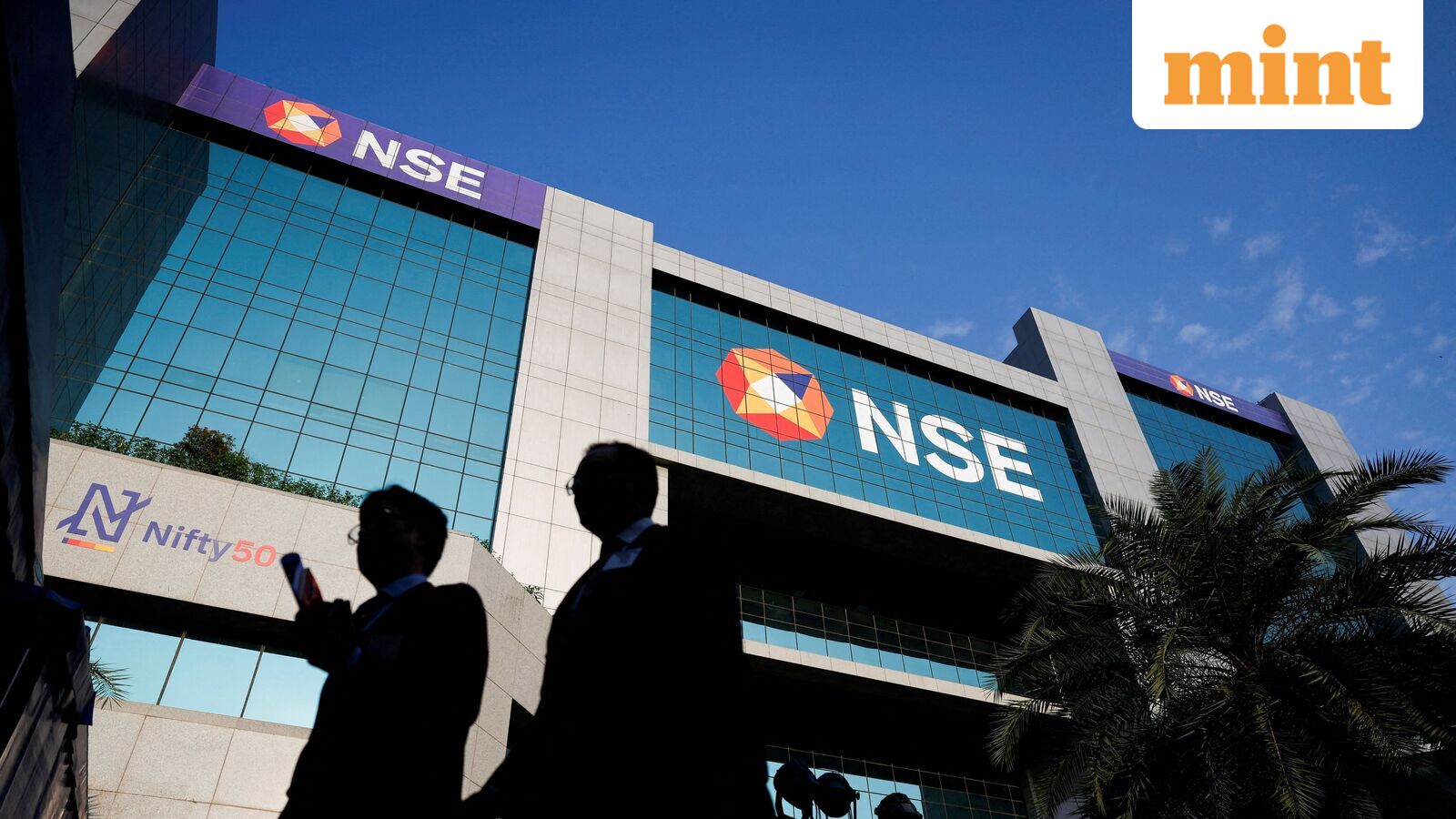
How to boost portfolio returns when Nifty 50 delivers zero growth
MINT· 2025-09-29 06:30
Core Insights - The Nifty 50 index delivered zero returns over the past year, with significant variations across other indices and asset classes [1][2] - Broader indices like Nifty 500, Nifty Midcap 150, and Nifty Smallcap 250 experienced declines of 4.09%, 2.88%, and 6.86% respectively [2] - Actively managed funds outperformed passive funds, with top large-cap funds delivering returns between 1.5% to 7% [3][4] Equity Indices Performance - Midcap and smallcap indices underperformed large caps, reversing a multi-year trend [3] - Top-performing actively managed funds in various categories provided better returns compared to indices [3][4] Global Investment Opportunities - Diversifying 10-20% of equity portfolios into global funds could have improved returns significantly [5] - Notable global funds include Mirae Asset Hang Seng Tech Fund with over 100% returns, and Invesco India-Invesco Global Consumer Trends FoF with 64% returns [6] Precious Metals Performance - Gold and silver delivered around 45% returns, driven by global uncertainties [8] - Silver's investment potential has increased due to its critical role in new technologies [9][10] Other Asset Classes - Fixed deposits from large banks yielded 6.5% to 7%, while corporate bond funds returned around 8% [12] - Multi-asset funds achieved returns of 10-15% due to exposure to gold, silver, and international equities [12] REITs and InvITs - REITs delivered over 15% returns, including a dividend yield of 6-7%, while InvITs returned between 8-14% [14] - Recent SEBI classification of REITs as equity is expected to enhance their appeal and stability [15][16] Portfolio Strategy Recommendations - Actively managed funds, global allocation, and multi-asset funds significantly outperformed the Nifty 50 [18] - A diversified asset allocation strategy across various asset classes can enhance resilience and risk-adjusted returns [20]
新浪基金白话解读《推动公募基金高质量发展行动方案》系列之三:公募基金发展的五个“指南针”
Xin Lang Ji Jin· 2025-09-19 02:03
Group 1 - The article discusses the "Five Persistences" outlined in the "Action Plan for Promoting High-Quality Development of Public Funds," which serve as guiding principles for the public fund industry [1][2][3] - The first persistence emphasizes the comprehensive leadership of the Party in financial work, ensuring that the public fund industry aligns with national strategies and supports the real economy and people's livelihoods [1] - The second persistence focuses on strong regulation and risk prevention, aiming to maintain industry standards and protect investors from potential pitfalls while allowing the industry to function effectively [2] - The third persistence is problem-oriented and goal-oriented, addressing real concerns of investors and implementing tangible solutions to improve transparency and reduce costs [2][3] - The fourth persistence prioritizes investor interests, requiring fund companies to focus on profitability for investors rather than merely expanding scale or profits [3] - The fifth persistence advocates for a market-oriented and rule-of-law approach, learning from mature markets while adapting to China's specific context, with a goal to create a more regulated and professional environment for investors [3] Group 2 - Overall, the "Five Persistences" act as pillars supporting the public fund industry towards high-quality development, enhancing industry stability and investor protection [3]

Jio BlackRock sees India’s mutual fund industry tripling by 2032
BusinessLine· 2025-09-17 03:31
Core Viewpoint - BlackRock's partnership with Mukesh Ambani's group anticipates significant growth in India's mutual fund industry, projecting a potential threefold expansion over the next seven years, driven by strong domestic investor inflows and a robust economy [1]. Group 1: Market Growth and Trends - The Indian mutual fund industry, valued at nearly $900 billion, is expected to see substantial growth, with assets more than doubling in the past five years [1][3]. - Participation in Indian financial markets is rapidly increasing, largely due to the rise of digital platforms [2]. - India's equity markets have more than doubled to $5.3 trillion over the last five years, attracting millions of retail investors [5]. Group 2: Competitive Landscape - Jio BlackRock faces competition from established fund houses supported by major banks like HDFC Bank, ICICI Bank, and State Bank of India, which have extensive distribution networks [5]. - Online investment platforms such as Groww and Zerodha are contributing to the growth of direct mutual fund sales [5]. Group 3: Investment Strategies and Innovations - The Jio BlackRock venture raised over $2 billion in just three days for its debut funds, positioning itself among the top 15 managers in that category [6]. - The asset manager is preparing a mix of passive and active strategies, with its first active equity fund set to launch soon, utilizing nearly 400 indicators on about 1,000 Indian stocks [7]. - Plans include launching a fund that rotates between sectors based on quantitative signals and another that allocates systematically between asset classes [8]. Group 4: Data-Driven Approach - There is significant growth potential for systematic strategies in India, supported by a data-driven approach that combines quantitative analysis with human judgment [9]. - The venture intends to leverage alternative data sources, such as web-search activity and retail sentiment, to enhance investment decision-making [9]. Group 5: Direct-to-Consumer Strategy - The Jio BlackRock partnership is pursuing a direct-to-consumer strategy through its app, aiming to bypass traditional brokers and distributors [10].


X @Bloomberg
Bloomberg· 2025-09-15 21:02
Mutual fund giants rushed into private credit as their savior. The results? Less than hoped. https://t.co/d95wrI1Net ...
降费!公募基金第三阶段费率改革正式落地
Xin Lang Ji Jin· 2025-09-11 01:58
Core Viewpoint - The public fund industry in China has completed its third phase of fee rate reform, which will result in over 50 billion yuan in annual savings for investors [1][2]. Group 1: Fee Rate Reform Phases - The first phase of the reform focused on reducing management and custody fees, lowering the basic operational costs of funds [2]. - The second phase targeted the commission rates for securities trading, making the operational costs of funds more efficient [2]. - The recently implemented third phase directly addresses sales fees, eliminating subscription, purchase, and service fees on the fund company's own sales platforms, leading to significant savings for investors [2]. Group 2: Industry Development and Future Outlook - The completion of the fee rate reform marks a new development stage for the public fund industry, emphasizing long-term investment value and enhancing research and investment systems [3]. - The industry aims to leverage technology to improve service levels, contributing to wealth growth for residents and supporting national strategies [3]. - The conclusion of the fee rate reform is viewed as a new beginning, encouraging investors to adopt long-term and rational investment philosophies [3].
Cohen & Steers Infrastructure Fund, Inc. Declares Distribution for October 2025
Prnewswire· 2025-09-10 20:45
Core Viewpoint - The Cohen & Steers Infrastructure Fund, Inc. has announced a monthly distribution of $0.155 for October 2025, reflecting its managed distribution policy aimed at providing regular returns to shareholders [1]. Distribution Details - The monthly distribution will be made on October 31, 2025, with an ex-dividend date of October 2, 2025 [1]. - The Fund's managed distribution policy allows for greater flexibility in realizing long-term capital gains and distributing them regularly [1]. Fund Composition and Tax Implications - Distributions may include net investment income, long-term capital gains, short-term capital gains, and/or return of capital, depending on the character of dividends reported by underlying investments [2][3]. - Shareholders will receive a Form 1099-DIV for tax reporting purposes, indicating how to report distributions for federal income tax [4]. Company Overview - Cohen & Steers is a global investment manager specializing in real assets and alternative income, with a focus on listed and private real estate, preferred securities, infrastructure, and resource equities [6]. - The firm was founded in 1986 and is headquartered in New York City, with additional offices in major global financial centers [6].


3 Key Signs Your 401(k) Isn’t Doing as Well as It Should Be — and How To Fix It
Yahoo Finance· 2025-09-10 14:17
Core Insights - A significant number of employer-sponsored 401(k) plans are underperforming or overpriced, with nearly 84% having at least one type of red-flag infraction that could lead to fines or penalties [2][7] Group 1: Excessive Fees - Many employer-sponsored plans charge excessive fees, with almost 80% of corporate retirement plans with at least 100 employees overpaying on 401(k) fees [4] - A 1% increase in 401(k) fees can reduce savings by 28% over 35 years, highlighting the impact of high fees on retirement funds [5] Group 2: Underperforming Funds - Consistent underperformance of 401(k) funds can stem from poorly chosen investment options or lack of diversification, despite market fluctuations affecting all funds [6] Group 3: Violations in the Fund - Approximately 43% of 401(k) plans in the U.S. have at least one severe violation, which can negatively impact fund performance and lead to significant penalties for companies [7][9]
Mulvihill Premium Yield Fund Announces Semi-Annual Results
Globenewswire· 2025-08-29 20:01
Core Insights - The Mulvihill Premium Yield Fund reported mixed results for the period ended June 30, 2025, with increases in net assets for Class I and Class F units, while Class A and ETF units experienced decreases [1] - The Fund aims to provide high quarterly income, long-term capital appreciation, and lower overall portfolio volatility through investments in high-quality equity securities and option writing strategies [2][3] Financial Performance - Net assets attributable to Class I units increased by $0.15 million ($0.01 per unit), while Class F units increased by $0.44 million ($0.04 per unit) [1] - Class A units saw a decrease of $0.30 million ($0.29 per unit), and ETF units decreased by $0.48 million ($0.28 per unit) [1] - Total distributions paid during the period were $450,062 for Class I, $422,240 for Class F, $359,787 for Class A, and $630,400 for ETF units, all at $0.38 per unit [1] Investment Strategy - The Fund invests in an actively managed portfolio of securities from the S&P/TSX Composite Index and S&P 500 Index, utilizing option writing strategies to enhance tax-efficient yield [3][4] - A quantitative approach is employed for security selection, with the goal of achieving a 5% yield and potential for additional capital growth [4] Management and Structure - The investment portfolio is managed by Mulvihill Capital Management Inc., and the Fund's ETF units are listed on the Toronto Stock Exchange under the symbol MPY [5]

India isn't flinching: Why Trump might be misreading India's tariff playbook
CNBC· 2025-08-07 09:58
Core Viewpoint - The U.S. has imposed a 50% tariff on Indian goods and threatened secondary sanctions over India's oil trade with Russia, leading to a mixed response in India's stock market and political landscape [1][2][3]. Economic Impact - The potential impact on India's GDP from the U.S. tariffs is estimated at 60 basis points, approximately $23 billion [5]. - Allowing U.S. dairy exports into India could cost the country ₹1.8 lakh crore ($20 billion), with over half of this burden affecting farmers directly [6]. - The gem and jewelry sector may face catastrophic consequences, while seafood exporters could lose nearly $3 billion annually due to the tariffs [8]. - India's textile industry anticipates a loss of $5 billion in business due to the tariffs [8]. - High U.S. duties may hinder India's ability to attract foreign direct investment (FDI), although domestic consumption accounts for over 60% of India's GDP [9]. Trade Data - In 2024, India's exports to the U.S. included electronics ($11.1 billion), gems and jewelry ($9.9 billion), pharmaceuticals ($8.1 billion), nuclear reactors and machinery ($6.2 billion), and refined petroleum products ($5.8 billion) [7]. - Total bilateral trade with the U.S. in 2024 was $212.3 billion, with goods trade at $129 billion and services trade at $83.4 billion [11]. Political Response - Indian Prime Minister Modi has gained support from the opposition to resist U.S. demands, emphasizing that India will not compromise on the interests of farmers [2][4]. - Modi's government has already taken steps to reduce duties on various U.S. imports and has increased oil purchases from the U.S. by 120% in the last six months [16][17]. Diplomatic Efforts - Modi is planning a visit to China and has sent India's National Security Advisor to Russia to pursue diplomatic solutions [13]. - India's foreign ministry has criticized U.S. hypocrisy regarding its own trade with Russia, while also highlighting that most of India's oil trade with Russia is settled in dirhams [14][15]. Future Considerations - The Indian government is exploring legal options and strategies in response to U.S. actions, emphasizing the importance of collaboration with other affected trading partners [20]. - A potential breakthrough in talks between the U.S., Russia, and Ukraine could alleviate India's concerns regarding oil purchases from Russia [21].