Quantum Computing

Search documents
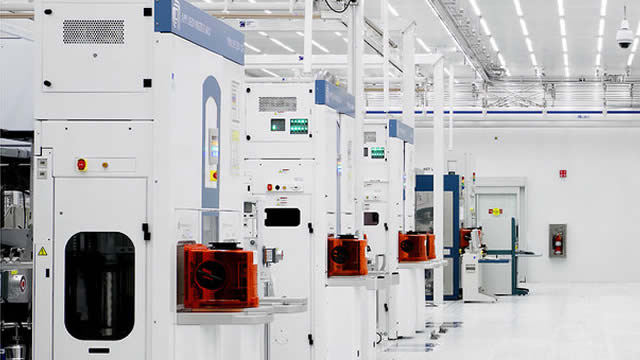
Where Will Quantum Computing Inc. Be in 5 Years?
The Motley Fool· 2025-11-30 14:15
Core Viewpoint - The next five years will be critical for Quantum Computing Inc. (QCi) to prove the viability of its technology and its ability to attract significant investment despite current challenges [1][2][6]. Company Background - QCi transitioned from a beverage company to a quantum computing firm in 2021, establishing a quantum computing foundry that produces room-temperature processors [3][4]. Technology and Applications - QCi's technology is designed to operate at room temperature, differing from competitors like IonQ, which require extremely cold environments for their trapped ion systems [4]. - Currently, QCi's processors are primarily used for research purposes, with testing being conducted by NASA and a major automotive manufacturer, but there is no assurance of large-scale purchases [5]. Financial Performance - QCi reported $384,000 in sales for the third quarter, with an operating loss of $10.4 million, indicating significant financial challenges [10]. - The company has a market capitalization of $3 billion and a cash reserve of $1.6 billion, but it is incurring heavy expenses with negligible revenue [9][10]. Valuation Metrics - QCi's price-to-sales (P/S) ratio stands at an extraordinarily high 2,800, compared to the technology industry's average of just over 8, suggesting that investors are paying a substantial premium for its shares [11][12]. - The recent increase in QCi's stock price may not reflect its underlying financial health, as the gains are attributed to temporary accounting adjustments rather than sustainable improvements [10][12].



3 Quantum Computing Stocks I'd Buy Right Now
The Motley Fool· 2025-11-30 10:00
Core Insights - The article discusses the potential of quantum computing as the next major investment opportunity, likening it to Nvidia's success in the GPU market [1][2] - It highlights three publicly traded quantum companies that are leading the charge in this emerging field: IonQ, Rigetti Computing, and D-Wave Quantum [1][2] Company Summaries IonQ - IonQ is recognized as a leading candidate in the quantum race, achieving a world-record 99.99% 2-qubit gate fidelity, which is crucial for efficient error correction [3] - The company reported third-quarter 2025 revenue of $39.9 million, marking a 222% year-over-year growth, with full-year guidance of $106 million to $110 million [5] - IonQ has a strong cash position of $3.5 billion, enabling strategic acquisitions and talent acquisition, with recent purchases including Vector Atomic and Oxford Ionics [5] Rigetti Computing - Rigetti employs a modular, multichip architecture using superconducting qubits, which is compared to AMD's strategy in the semiconductor industry [6] - The company's Ankaa-3 system has a median 2-qubit gate fidelity of 99.5%, with a focus on speed as superconducting qubits operate in nanoseconds [8] - Rigetti has commercialized its technology through sales to various sectors and has approximately $600 million in cash and investments, supporting its roadmap for larger quantum systems [9] D-Wave Quantum - D-Wave is often misunderstood as merely an annealer but is generating revenue through its specialized quantum computing for optimization problems [10] - The Advantage2 system features over 4,400 annealing qubits and has secured 133 customers, including major corporations [11] - D-Wave is also developing a universal gate-model computer and has a cash position of around $836 million, reducing liquidity risk [12] Investment Perspective - The article suggests that no single qubit architecture is guaranteed to dominate, with trapped ions offering fidelity, superconducting systems providing speed, and annealing systems delivering utility [13] - Investors are encouraged to consider a diversified approach by investing in all three companies to capitalize on the quantum computing trend [13] - The potential market for quantum computing is projected to reach between $45 billion and $131 billion by 2040, indicating significant upside potential despite current unprofitability and high expectations [14]




Rigetti Computing Posted a $201 Million Loss Last Quarter, but This Is the More Important Number for Investors to Focus On
The Motley Fool· 2025-11-29 17:15
The quantum computing company's valuation looks excessive when compared to the entire industry.The quantum computing industry is in its early growth days. It'll likely be many years before quantum computers are common. While many tech experts believe there is a lot of potential for them to improve efficiency and productivity, the big question always leads back to when that will actually happen. And that's the biggest unknown at this stage.That also means that for the foreseeable future, companies such as Ri ...
Prediction: This Stock Market Bubble Will Burst in 2026 and 3 Popular Stocks Will Crash (Hint: Not Artificial Intelligence)
The Motley Fool· 2025-11-29 08:45
Core Viewpoint - Quantum computing stocks such as Rigetti, IonQ, and D-Wave are facing potential valuation corrections as the technology is still in its infancy and may not be widely useful for at least a decade [3][15][16] Industry Overview - Quantum computing is expected to revolutionize various sectors, including drug discovery, materials science, finance, cybersecurity, supply chain management, and artificial intelligence [7] - Current quantum computing revenue is projected to reach $4 billion by 2030, while AI revenue is forecasted to hit $390 billion by 2025, indicating a significant disparity in market investment [11] Company Valuations - Rigetti, IonQ, and D-Wave are trading at extremely high valuations, with IonQ at 145 times sales, D-Wave at 270 times, and Rigetti at 980 times, compared to Nvidia's 3 times sales in 2015 [13] - Over the past three years, D-Wave increased its share count by 209%, Rigetti by 164%, and IonQ by 77%, leading to significant shareholder dilution [14] Expert Opinions - Industry experts, including Nvidia's CEO and Alphabet's CEO, suggest that practical quantum computers are still 5 to 20 years away, indicating that current market enthusiasm may be premature [12] - The expectation is that the quantum computing bubble may burst as early as 2026 due to the combination of high valuations and the long timeline for technological breakthroughs [15][16]

Rigetti vs D-Wave Quantum: Which Quantum Stock Is the Smarter Bet?
ZACKS· 2025-11-28 18:51
Core Insights - Quantum computing is gaining significant attention due to its potential to solve complex problems that classical systems cannot handle, presenting a unique investment opportunity in a future trillion-dollar industry [1] Company Approaches - Rigetti Computing (RGTI) is advancing a gate-based superconducting architecture aimed at universality and scalability, recently launching a 36-qubit system with a median two-qubit gate fidelity of approximately 99.5% [5][12] - D-Wave Quantum (QBTS) focuses on quantum annealing and hybrid solvers for immediate deployment in optimization problems, providing a near-term value proposition for industries [6][13] Price Performance - RGTI shares have increased by 67.5% year-to-date, while QBTS stock has surged by 166.7% in the same period [3] Business Models - RGTI's revenue is primarily derived from government contracts and research collaborations, leading to unpredictable revenue flows [8] - QBTS is pursuing a diversified revenue model that includes hardware sales and enterprise engagements, indicating a shift towards a more stable revenue base [9] Recent Financials - RGTI reported revenues of approximately $1.9 million, down from $2.4 million year-over-year, with elevated operating expenses of around $21 million [10] - QBTS experienced a strong quarterly performance with revenues doubling to $3.7 million and a significant increase in cash reserves to $836.2 million [11] Future Projections - The Zacks Consensus Estimate for RGTI's 2025 sales indicates a year-over-year decline of 23.82%, with a projected loss per share of 68 cents [15] - In contrast, QBTS's 2025 sales are expected to grow by 188.6%, with a projected loss per share of 23 cents [18] Investment Considerations - RGTI is positioned for long-term scalability with its gate-based systems, while QBTS offers immediate commercial activity and momentum [23] - The choice between RGTI and QBTS depends on investor preference for near-term traction versus long-term potential in quantum computing [14][23]


Palantir has worst month in two years as AI stocks selloff
CNBC· 2025-11-28 18:44
Core Insights - Palantir Technologies experienced a significant decline in stock value, dropping 16% in November 2023, marking its worst month since August 2023, primarily due to investor concerns over AI stock valuations [1][2][5] - Despite strong third-quarter earnings and revenue, with a second consecutive quarter of $1 billion revenue, valuation fears led to a selloff post-earnings [2][3] - Notable investor Michael Burry has taken a short position against Palantir, contributing to negative sentiment around the stock [3][4] Financial Performance - Palantir reported third-quarter earnings that exceeded Wall Street expectations, achieving $1 billion in revenue for the second straight quarter [2] - The company's stock is currently trading at 233 times forward earnings, significantly higher than competitors like Nvidia and Alphabet, which trade at approximately 38 times and 30 times, respectively [6] Market Sentiment - Analysts from Jefferies and RBC Capital Markets expressed concerns over Palantir's "extreme" valuation and "increasingly concentrated growth profile," suggesting better risk-reward opportunities in other AI stocks like Microsoft and Snowflake [3] - The broader AI sector faced a selloff in November, with Nvidia down over 12% and Microsoft and Amazon each dropping about 5% [5] Strategic Developments - Despite the stock decline, Palantir secured new contracts, including a multi-year agreement with PwC to enhance AI adoption in the U.K. and a deal with FTAI for aircraft engine maintenance [4] - CEO Alex Karp defended the company's valuation and criticized Burry's actions as "market manipulation," asserting that Palantir is providing investment opportunities previously limited to top venture capitalists [4][7]


GMO warns AI is a 'classic investment bubble.' Here's what to buy instead.
Yahoo Finance· 2025-11-28 18:15
Core Viewpoint - GMO warns that the AI sector is exhibiting classic signs of an investment bubble, characterized by high valuations and rampant speculation [1][7] Group 1: AI Bubble Concerns - The firm has consistently cautioned about an AI bubble, reiterating its bearish stance as market exuberance grows [1] - Quantum computing stocks have surged by over 1200% in the past year, leading to valuations that make other stocks appear undervalued [2] - GMO's concerns are specifically focused on the AI trade, suggesting that there are still opportunities in other areas of the stock market [2] Group 2: Market Comparisons - The current market environment is compared to the dot-com bubble of 2000, which should provide some reassurance to investors [3] - Dynamic, valuation-driven asset allocation strategies have historically helped investors avoid significant losses during market bubbles [3] Group 3: Investment Opportunities - GMO identifies developed market value stocks and non-US small-cap value stocks, particularly in Japan, as attractive investment opportunities [4] - The firm emphasizes that investors can shift their portfolios away from AI stocks without sacrificing long-term expected returns [6]
What Alphabet’s CEO Just Said Should Get Quantum Computing Investors Very Excited
Yahoo Finance· 2025-11-28 15:52
Core Insights - Quantum computing has the potential to revolutionize various fields by solving complex problems much faster than classical supercomputers [3] - Despite its promise, quantum technology faces significant challenges such as scalability, high error rates, and extreme cooling requirements, delaying practical applications [4] - Recent comments from Alphabet CEO Sundar Pichai suggest a pivotal moment for quantum computing, likening its current stage to artificial intelligence five years ago [6] Company Performance - IonQ, D-Wave Quantum, and Rigetti Computing have experienced substantial stock price increases over the past two years, with IonQ up over 284%, D-Wave surging more than 2,600%, and Rigetti gaining several thousand percent [4] - However, all three companies have seen their stock prices decline sharply from their all-time highs, with losses of 35% or more [5] Future Outlook - Pichai indicated that the quantum computing field is entering a "noisy intermediate-scale quantum era," with ongoing advancements despite existing errors [7] - He anticipates that within five years, quantum machines will demonstrate clear advantages over classical computers in real-world applications [7] - While fully functional, error-corrected quantum computers are still a decade away, Alphabet is committed to investing billions in research to drive long-term breakthroughs [8]

From Chips to Qubits: Inside IBM's Quantum System Two
Youtube· 2025-11-28 13:57
Core Insights - The article discusses the advancements in quantum computing technology, particularly focusing on IBM's latest quantum systems and their infrastructure designed for scalability and modularity [1][2][5]. Group 1: Quantum Computing Infrastructure - IBM's Quantum System Two is highlighted as the most recent quantum computing system, featuring a modular architecture built for data centers [1][2]. - The cryogenic system is essential for cooling the quantum processors, which currently include three Heron processors with 156 qubits each [3][4]. - The control electronics are located close to the quantum processors to minimize latency and ensure efficient signal manipulation [4][5]. Group 2: Quantum Chip Technology - The Nighthawk quantum chip, which has 120 qubits arranged in a square lattice, offers improved connectivity compared to previous generations [6][14]. - The chips are mounted on printed circuit boards and integrated into cryogenic infrastructure, allowing for a varying number of chips to be accommodated [7][8]. - Efforts are being made to miniaturize wiring and components to enable more chips to fit within the same cryogenic footprint [9][12]. Group 3: Testing and Characterization - IBM has a dedicated lab for testing and characterizing quantum chips, where both room temperature and cryogenic tests are conducted to ensure performance before deployment [17][18]. - The testing environment replicates the conditions under which the chips will operate, achieving temperatures as low as 15 milli Kelvin [19][20].


Prediction: Wall Street's Biggest Bubble Will Burst in 2026 (and I'm Not Talking About Artificial Intelligence)
The Motley Fool· 2025-11-28 08:51
Core Insights - The article discusses the potential bubble in quantum computing stocks, highlighting that while the technology is promising, it is still years away from significant practical applications [1][10][17] Industry Overview - Quantum computing is expected to create substantial economic value, estimated between $450 billion to $850 billion by 2040, indicating a wide range of potential beneficiaries [3] - The early-stage commercialization of quantum computing has generated investor excitement, with major companies like Amazon and Microsoft providing access to quantum computing services [5][12] Company Performance - Quantum computing stocks such as IonQ, Rigetti Computing, D-Wave Quantum, and Quantum Computing Inc. have seen significant price increases, with some stocks rallying by as much as 829% over the past year [2][6] - Projected sales growth for these companies from 2025 to 2027 includes IonQ increasing from $108 million to $315 million, Rigetti from $8 million to $48 million, D-Wave from $25 million to $74 million, and Quantum Computing Inc. from $1 million to $10 million [7][6] Market Dynamics - The article suggests that the quantum computing bubble may burst in 2026, as historical trends indicate that investor expectations often exceed the actual adoption and utility of new technologies [8][9] - The first-mover advantage of current quantum computing companies is at risk due to competition from major tech firms like Alphabet and Microsoft, which are also investing heavily in quantum technologies [13][14] Valuation Concerns - Current valuations of quantum computing stocks suggest a high probability of a bubble, with price-to-sales ratios for these companies projected to exceed historical peaks associated with previous technology bubbles [16]