Retailers

Search documents
Retail Earnings Could Assess Consumers' Post-Tariff Health
PYMNTS.com· 2025-08-17 20:21
Core Insights - Major U.S. retailers, including Walmart, are set to report quarterly earnings, which will provide insights into consumer behavior amid economic challenges [1] - Consumer sentiment has declined by 5% in August, primarily due to rising inflation concerns, indicating potential impacts on retail performance [3] Group 1: Economic Context - The upcoming earnings reports will reveal how U.S. consumers are managing the effects of White House tariffs, with a focus on consumer spending resilience amid inflation and job growth concerns [2] - A significant 10% drop in the current index of consumer sentiment reflects growing worries about personal finances, which may affect retail sales [3] Group 2: Consumer Behavior - Research indicates that 47% of American shoppers have faced difficulties in finding or affording everyday items due to tariffs, leading to supply chain disruptions [4] - Nearly one-third of consumers have postponed or canceled discretionary purchases, while 42% are now comparing prices at multiple retailers, up from 27% in January [5] Group 3: Retailer Challenges - Retailers are facing a consumer base that is increasingly price-sensitive and uncertain about product availability, which could impact long-term customer loyalty [6] - The ongoing effects of tariffs are transforming shopping habits, with consumers becoming more cautious and thrifty in their purchasing decisions [6]



Retail Earnings Loom: What Can Investors Expect?
ZACKS· 2025-08-15 23:45
Core Insights - Walmart (WMT) shares have significantly outperformed broader market indexes and peers, including Target (TGT) and Amazon (AMZN), with a year-to-date increase of +11.7% [1][2] - The upcoming quarterly results on August 21 will be crucial in determining if Walmart can sustain its stock momentum [1] Performance Comparison - Year-to-date performance shows Walmart up +11.7%, compared to the Magnificent 7 group at +15.6%, S&P 500 at +9.9%, Amazon at +5.3%, and Target down -22.8% [2] - Performance dynamics shifted post-April 8 market lows, with Walmart lagging behind the Magnificent 7, Amazon, and S&P 500 during that recovery period [3][7] Market Position and Strategy - Walmart's low-beta status and focus on essential goods contribute to its defensive stock attributes, providing stability amid market fluctuations [7][8] - The company has gained market share among higher-income households, driven by inflationary pressures and enhanced e-commerce capabilities [9][10] E-commerce and Revenue Growth - Walmart's e-commerce segment is now profitable, accounting for approximately 15% of total sales, with expectations to double this figure over time [12] - The company anticipates a +4% sales growth and operating income growth exceeding sales growth, having achieved +5.5% sales and +9.5% operating income growth in the past two years [15] Upcoming Earnings Expectations - Walmart is projected to report $0.73 in EPS on $175.51 billion in revenues, reflecting a year-over-year increase of +8.9% and +3.6%, respectively [16] - Same-store sales in the U.S. (excluding fuel) are expected to grow by +4.17%, slightly lower than the previous quarter's +4.8% [17] Retail Sector Overview - The retail sector is seeing strong earnings growth, with 21 of 32 S&P 500 retailers reporting a +20.5% increase in earnings year-over-year [21] - The overall earnings picture for the S&P 500 indicates a +11.4% increase in earnings and +5.8% revenue growth for 462 members that have reported [30][32]
1 Green Flag for Costco Wholesale Right Now
The Motley Fool· 2025-08-15 21:17
Core Viewpoint - The rising and unpredictable tariffs, while not beneficial for Costco, may provide a relative advantage over its competitors, making it a favorable investment opportunity for shareholders in the long term [1][5]. Group 1: Impact of Tariffs on Costco - Tariffs are expected to increase Costco's expenses and create operational unpredictability, but the same challenges will affect its rivals, often more severely [5]. - Costco's management has focused on tariff mitigation strategies, indicating that they do not view tariffs as a positive factor for the company [2][6]. Group 2: Competitive Advantages - Costco's scale allows it to negotiate with vendors to absorb more of the cost increases compared to smaller retailers [6]. - The company's ability to quickly reprice and pivot sourcing due to fewer unique items on shelves positions it favorably in a tariff-impacted market [6]. - Price-sensitive consumers may increasingly choose Costco as tariffs lead to inflation, potentially boosting membership sales as shoppers compare prices with competitors like Walmart and Target [6]. Group 3: Brand Strategy - The Kirkland Signature store brand can mitigate tariff impacts by sourcing from local production partners or lower-tariff sources [6].

Target Trails Walmart As Digital Woes, Tariffs Take A Toll
Benzinga· 2025-08-15 15:29
Core Insights - Target Corporation is experiencing declining sales growth compared to Walmart due to factors such as slowing digital performance, higher import exposure, and increasing tariff pressures [1][2] - Bank of America Securities analyst Robert F. Ohmes downgraded Target's stock from Neutral to Underperform, reducing the price forecast from $105 to $93 [1][2] Sales and Performance - Target's adjusted EPS outlook for fiscal 2027 is lowered to $7.75, with long-term sales and margin risks identified [2] - Since 2019, Target has lagged behind Walmart in comparable sales CAGR, with Target's mobile app MAUs declining by 4.1% year over year, while Walmart U.S. grew by 17.2% [3] Digital Growth and Competition - Target's online sales growth is significantly lower than Walmart's, with Target at 5%-6% compared to Walmart's 20%-25% [3] - Increased digital traffic is essential for Target to scale advertising and third-party marketplace fees, which are critical for offsetting margin pressures [4] Cost Structure and Pricing - Approximately 50% of Target's COGS comes from imports, compared to about 33% for Walmart, necessitating a higher average price increase for Target to offset tariffs [4] - Target may need to implement an 8% price hike by 2027, while Walmart may only require a 4%-5% increase [5] Market Position and Risks - Recent changes in merchandising and partnerships, such as those with Ulta Beauty, may heighten risks in the current sourcing environment [5] - As of the latest trading session, Target shares are down 1.3% to $103.00 [5]


Target Stock Gathering Attention Ahead Of Earnings
Forbes· 2025-08-14 18:35
Group 1 - Target Corp (TGT) will end its shop-in-shop partnership with Ulta Beauty (ULTA) in 2026, leading to a 1.5% decline in stock price to $103.83, with support at the $100 level [1] - Year-to-date, Target's stock is down 23.3%, indicating a need for a post-earnings rebound to escape consolidation [1] - Target is set to report second-quarter earnings on August 20, with expectations of declines in both earnings and revenue year-over-year [4] Group 2 - Target's stock has experienced three consecutive post-earnings declines, including a significant 21.4% drop in November [4] - The stock's options market is pricing in a potential move of 10.9% following the earnings report, regardless of direction [4] - Recent downgrades include a shift to "underperform" from "neutral" by Edgewater Research, while Truist raised its price target to $17 but maintained a "hold" rating [5] Group 3 - The consensus 12-month price target for Target is $105.68, representing a slim 1.8% premium to current levels, suggesting potential for downgrades or price-target cuts [6] - In the options market, puts have gained popularity, with a 50-day put/call volume ratio of 0.94, ranking higher than 90% of readings from the past year [7]
Costco: Not Cheap, But Not Stretched
Seeking Alpha· 2025-08-14 11:31
Group 1 - Despite an expected surge in interest in defensive stocks like Costco Wholesale Corporation, valuations have not significantly exceeded historical averages, unlike Walmart [1] - Costco's business model is price-conscious, which contributes to a strong customer loyalty base [1] Group 2 - The article emphasizes the importance of macroeconomic trends, corporate earnings, and financial statement analysis in identifying investment opportunities [1]
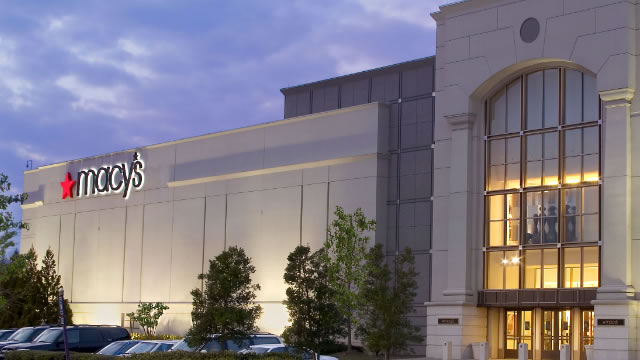
The new American shopping mall is less Macy's, more church, bowling, Barnes & Noble
CNBC· 2025-08-09 12:30
Core Insights - The transformation of struggling malls, such as the Dayton Mall, is being driven by unconventional tenants like churches, which can attract community engagement and foot traffic [2][3][6] - The decline of traditional enclosed malls has been attributed to changing demographics, shopping habits, and the rise of e-commerce, but there are signs of potential revival through innovative repurposing strategies [7][8][15] - Successful mall redevelopment involves subdividing large anchor spaces into niche businesses that encourage cross-shopping, leading to increased revenue [10][11][12] Group 1: Mall Transformations - The Dayton Mall has faced challenges due to anchor store closures, leading to its receivership, but the sale of the former Sears space to Crossroads Church has revitalized the mall [2][4] - Crossroads Church has drawn thousands of visitors, including non-affiliated individuals, contributing to the mall's renewed activity [5][6] - The trend of repurposing anchor spaces is not unique to Dayton, as other malls are also exploring unconventional tenants to fill vacancies [6][12] Group 2: Industry Trends - The trend of repurposing empty anchors has been ongoing for over a decade, with recent data indicating a rebound in mall traffic as these strategies take effect [8][14] - CBL Properties' CEO noted that subdividing former anchor stores has significantly increased revenue, with some locations generating five to six times the previous amounts [11] - The incorporation of experiential categories, such as entertainment and dining, is becoming essential for attracting visitors to malls [13][15] Group 3: Consumer Behavior - Gen Z's affinity for malls as community spaces has been highlighted, with a shift towards seeking in-person experiences post-COVID [13][19] - Malls are increasingly being viewed as destinations for various activities beyond shopping, including seasonal events and dining [15][20] - The nostalgic connection many consumers have with malls is influencing their return, as they seek to recreate memories from their youth [19][20]

Amazon and Walmart Vie for AI Super Agent Status
PYMNTS.com· 2025-08-08 08:01
Core Insights - Walmart and Amazon are leveraging AI to reshape user experience and internal operations, creating a foundational AI-based operating system for commerce [1][12] - The competition between Walmart and Amazon is twofold: developing advanced AI agents for shopping behaviors and optimizing logistics for faster delivery [2][9] - The retail landscape is shifting towards intelligent, adaptive commerce ecosystems where AI-driven decision-making is becoming central [3][4] AI Integration and Retail Strategy - Amazon anticipates that agentic AI, which acts on behalf of users, will be a significant growth driver, utilizing AWS tools for automating retail transactions [3][7] - Walmart is deploying its own AI "super agents" to enhance customer service and aims for eCommerce to constitute half of its sales within five years [7][12] - The convergence of AI and logistics is expected to redefine competitive advantages in retail, moving away from traditional metrics like scale and supplier relationships [8][12] Delivery and Fulfillment Performance - During a recent retail competition, Walmart outperformed Amazon in same-day delivery, with 48% of grocery-only customers using Walmart's service compared to 36% for Amazon [9][10] - Walmart's hybrid fulfillment model, which includes store fulfillment and curbside pickup, provides a competitive edge in convenience over Amazon's centralized delivery approach [10][12] - Amazon is exploring drone delivery innovations, with regulatory changes potentially facilitating broader deployment and enhancing its delivery capabilities [11][12]


Buybacks Over Dividends? These 2 Stock Picks Make a Strong Case
MarketBeat· 2025-08-07 12:16
Core Viewpoint - The article discusses the advantages of stock buybacks over dividends as a method for companies to reward shareholders and enhance their growth potential [2][4][5]. Group 1: Stock Buybacks vs. Dividends - Stock buybacks are considered a more efficient way to reward shareholders compared to dividends, as they are not subject to double taxation [4][5]. - Dividends reduce a company's ability to reinvest in growth opportunities, while buybacks increase each shareholder's ownership percentage [5]. Group 2: Bank of America - Bank of America has announced a new stock buyback program worth $40 billion, indicating a positive outlook for the bank despite a recent stock rally of 11.5% [8][10]. - Institutional investors have increased their holdings in Bank of America, with one firm doubling its position to $151.5 million, representing about 15% of institutional buying this quarter [9]. - Analysts project a 19% increase in earnings per share (EPS) for Bank of America, forecasting $1.06 for Q2 2026, up from $0.89 [12]. Group 3: Dollar Tree - Dollar Tree has initiated a $2.5 billion stock buyback program amid improving trade tariff negotiations, contributing to a 38% stock price increase over the quarter [14][13]. - Despite a consensus "Hold" rating, some analysts view Dollar Tree as an "Overweight" with a target price of $138, suggesting a potential upside of 20% from current levels [15].


Why Flipkart and China Are Crucial to Walmart's Global Strategy
ZACKS· 2025-08-05 15:41
Core Insights - Walmart Inc.'s global strategy is significantly focused on investments in key markets such as China and India, with Flipkart leading its e-commerce and advertising initiatives, which are crucial for future growth [1][5] - The company's International segment saw a net sales growth of 7.8% in constant currency, with contributions from China and Flipkart helping to mitigate challenges from currency fluctuations and margin pressures [2][9] - Walmart's e-commerce sales increased by 22% in the first quarter of fiscal 2026, driven by strong performance in China and Flipkart [1][9] Market Performance - Walmart's shares have increased by 47% over the past year, outperforming the industry growth of 44.4%, while competitors like Costco and Target saw different performance trends [6] - The forward 12-month price-to-earnings ratio for Walmart is 36.21, which is higher than the industry's 32.91, indicating a premium valuation compared to Target but a discount to Costco [7][10] Financial Estimates - The Zacks Consensus Estimate indicates year-over-year growth of 3.5% in sales and 3.6% in earnings per share for the current financial year [11] - For the upcoming quarters, the estimates for sales and earnings per share show a consistent growth trajectory, with the current year expected to reach $704.71 billion in sales and $2.60 in earnings per share [12][13] Strategic Initiatives - Walmart is investing in faster delivery, advertising monetization, and membership growth in both China and India, with Sam's Club China reporting a membership income increase of over 40% in the first quarter [4][5] - Flipkart's strong marketplace position in India and a developing logistics network are key drivers of its expansion, while China's growth is supported by Sam's Club and efficient e-commerce execution [3][5]