
Automotive Retail

Search documents
AutoZone Gears Up For Q4 Print; Here Are The Recent Forecast Changes From Wall Street's Most Accurate Analysts - AutoZone (NYSE:AZO)
Benzinga· 2025-09-18 07:49
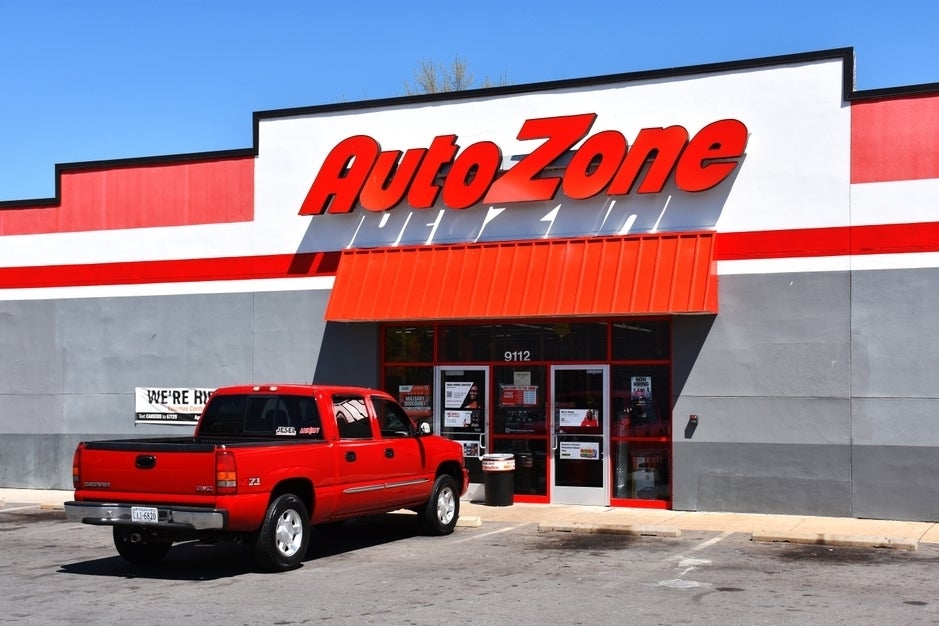
Group 1 - AutoZone is set to release its fourth-quarter earnings on September 23, with expected earnings of $50.95 per share, a decrease from $51.58 per share in the same period last year [1] - The company projects quarterly revenue of $6.25 billion, slightly up from $6.21 billion a year earlier [1] - In the third quarter, AutoZone reported earnings per share of $35.36, missing the analyst consensus estimate of $37.17, while quarterly sales reached $4.46 billion, reflecting a 5.4% year-over-year increase [2] Group 2 - AutoZone's same-store sales grew by 3.2%, driven by strength in the domestic segment [2] - Analysts have provided positive ratings for AutoZone, with several raising their price targets significantly [5] - Raymond James analyst raised the price target from $4,200 to $4,900, while JP Morgan increased it from $4,200 to $4,850, indicating strong confidence in the stock [5]


AutoNation Expands Footprint with Audi and Mercedes-Benz Stores in Chicago
Prnewswire· 2025-09-16 12:00
Acquisition Details - AutoNation, Inc. has acquired two luxury stores in Chicago, specifically Fletcher Jones Audi and Mercedes-Benz of Chicago, effective September 15, 2025, representing approximately $325 million in annual revenue and 4,500 retail new and used vehicle annual unit sales [1] - This acquisition increases AutoNation's location count in the greater Chicago area to 10, which includes two Audi stores, three Mercedes-Benz stores, one BMW store, three Import stores, and one collision center [1] Strategic Impact - The CEO of AutoNation, Mike Manley, expressed enthusiasm about the acquisition, stating it will enhance the luxury brand portfolio, deepen market presence, and create scale that drives customer experience and shareholder value [1] Company Overview - AutoNation is one of the largest automotive retailers in the United States, offering a wide variety of new and used vehicles, customer financing, parts, and expert maintenance and repair services [1] - The company has raised over $40 million for cancer-related causes through its initiative DRV PNK, demonstrating its commitment to making a positive impact in the community [1]

Asbury Automotive Group Breaks Below 200-Day Moving Average - Notable for ABG
Nasdaq· 2025-09-12 22:51
Group 1 - Asbury Automotive Group Inc shares have crossed below their 200-day moving average of $224.07, trading as low as $223.46 per share, indicating a decline of approximately 2.8% on the day [2] - The 52-week range for Asbury Automotive Group Inc shares is between a low of $178.395 and a high of $277.13, with the last trade recorded at $221.89 [2]


3 Companies Boosting Buybacks While Others Pull Back
MarketBeat· 2025-09-12 20:33
Group 1: Stock Buybacks Overview - Stock buybacks, or share repurchases, are common practices for companies to allocate capital, reducing the number of outstanding shares and potentially raising stock prices if demand remains constant [1] - Buybacks typically come from a company's free cash flow (FCF) and can be controversial; companies may repurchase shares believing their stock is undervalued, but growth-oriented investors may avoid these stocks if they see buybacks as a sign of limited growth prospects [2] Group 2: S&P 500 Buyback Trends - In the first half of 2025, share repurchases by S&P 500 companies were strong, but recent earnings reports indicate a slowdown in buybacks due to anticipated increased capital expenditures and lower interest rates [3] - This environment presents an opportunity for income-oriented investors to focus on companies that continue to increase their buyback efforts, which may lead to stock price appreciation and safe dividends [3] Group 3: Capital One Financial - Capital One Financial's stock has increased over 64% in the last 12 months and over 26% in 2025, outperforming the S&P 500 and ranking among the strongest in the finance sector [4] - The acquisition of Discover Financial is a key catalyst for Capital One, expected to enhance its negotiating power with Mastercard and Visa, although buybacks returned to a three-year average in the second quarter following a spike in the first quarter [5] - Management plans to increase stock buybacks in the coming quarter, which could serve as a catalyst for COF stock, currently trading near its 52-week high [6] Group 4: AutoZone - AutoZone has a strong history of share repurchases, reducing its outstanding share volume by an average of 7.9% over the last three years, contributing to a total return of over 90% in the same period [8][9] - Increasing free cash flow supports future growth for AutoZone, which benefits from macroeconomic conditions that make vehicle repairs more appealing to consumers [9] - AutoZone's stock is trading above its consensus price target, with analysts issuing high price targets following its last earnings report [10] Group 5: Apple Inc. - Apple has a history of stock buybacks at a rate of around 4% over the past few years, including the repurchase of 104 million shares in the most recent quarter, contributing to a total return of over 100% in the last five years [12] - The company has a 14-year history of increasing its dividend, appealing to both growth and income investors, despite concerns about its AI strategy and supply chain reliance on China [11][12]

Securities Fraud Investigation Into America's Car-Mart, Inc. (CRMT) Announced – Investors Who Lost Money Urged To Contact Glancy Prongay & Murray LLP, a Leading Securities Fraud Law Firm
Businesswire· 2025-09-12 16:00
Core Viewpoint - Glancy Prongay & Murray LLP has initiated an investigation into America's Car-Mart, Inc. regarding potential violations of federal securities laws affecting investors [1] Group 1 - The investigation is on behalf of investors who may have incurred losses related to America's Car-Mart, Inc. (NASDAQ: CRMT) [1] - The law firm is encouraging affected investors to inquire about pursuing claims to recover their losses [1]

America's Car-Mart, Inc. (CRMT) Investors Who Lost Money – Contact Law Offices of Howard G. Smith About Securities Fraud Investigation
Businesswire· 2025-09-12 13:00
Core Viewpoint - An investigation has been announced regarding America's Car-Mart, Inc. for potential violations of federal securities laws, indicating possible legal challenges for the company and its investors [1]. Group 1 - The Law Offices of Howard G. Smith are representing investors of America's Car-Mart, Inc. who may have suffered financial losses [1]. - Investors are encouraged to contact the law firm to discuss potential claims for recovering losses related to their investments in America's Car-Mart, Inc. [1].
Securities Fraud Investigation Into America's Car-Mart, Inc. (CRMT) Announced – Investors Who Lost Money Urged To Contact The Law Offices of Frank R. Cruz
Businesswire· 2025-09-11 18:28
Core Viewpoint - The Law Offices of Frank R. Cruz is investigating America's Car-Mart, Inc. for potential violations of federal securities laws, indicating concerns over the company's financial practices and disclosures [1] Company Investigation - The investigation is initiated on behalf of investors who may have suffered losses due to the company's actions [1] - Car-Mart announced a delay in financial disclosures on July 15, 2025, which has raised red flags among investors [1]
Here's Why Lithia Motors (LAD) is a Strong Momentum Stock
ZACKS· 2025-09-11 14:51
Core Insights - Zacks Premium provides tools for investors to enhance their stock market engagement and confidence, including daily updates, research reports, and stock screens [1] Zacks Style Scores - Zacks Style Scores rate stocks based on value, growth, and momentum, serving as complementary indicators to the Zacks Rank, helping investors identify securities likely to outperform the market in the short term [2][3] Value Score - The Value Style Score identifies attractive and discounted stocks using ratios like P/E, PEG, Price/Sales, and Price/Cash Flow, appealing to value investors [3] Growth Score - The Growth Style Score focuses on a company's future prospects and financial health, analyzing projected and historical earnings, sales, and cash flow to find stocks with sustainable growth [4] Momentum Score - The Momentum Style Score helps investors capitalize on price trends by analyzing factors like one-week price changes and monthly earnings estimate changes, indicating optimal times to invest in high-momentum stocks [5] VGM Score - The VGM Score combines all three Style Scores, providing a comprehensive indicator that evaluates stocks based on their value, growth, and momentum characteristics [6] Zacks Rank - The Zacks Rank is a proprietary stock-rating model that uses earnings estimate revisions to simplify portfolio building, with 1 (Strong Buy) stocks achieving an average annual return of +23.64% since 1988, significantly outperforming the S&P 500 [7][8] Stock to Watch: Lithia Motors - Lithia Motors, Inc. is a leading automotive retailer in the U.S., offering 52 vehicle brands across 459 locations in the U.S., U.K., and Canada, currently holding a 3 (Hold) Zacks Rank with a VGM Score of A [11] Performance Metrics - Lithia Motors has a Momentum Style Score of B, with shares increasing by 7% over the past four weeks, and three analysts have raised their earnings estimates for fiscal 2025, with the Zacks Consensus Estimate rising by $1.22 to $35.24 per share [12]


1 Thing I Can't Stop Thinking About Following O'Reilly Automotive's Recent Earnings Report
Yahoo Finance· 2025-09-11 11:20
Core Insights - O'Reilly Automotive has seen a significant increase in its stock price, trading up approximately 33% in 2025 and 10.2% since the second-quarter financial results were reported [1][3] - The company reported revenue growth of 6% and diluted earnings-per-share growth of 11% for the second quarter, with same-store sales (SSS) growth of 4.1% [3][4] - O'Reilly has achieved 32 consecutive years of positive SSS growth, indicating strong and durable demand [4][5] Financial Performance - The company’s revenue and earnings growth remain solid, with a focus on same-store sales as a key performance indicator [3][6] - O'Reilly's management has utilized free cash flow to repurchase shares, resulting in a 3% reduction in outstanding shares over the past year, which positively impacts earnings per share [5][6] Valuation Concerns - Despite the strong performance, the stock's valuation appears stretched, with a price-to-earnings ratio of 38.2, the highest in at least two decades [7][6] - Analysts suggest that while the stock may continue to rise, the current valuation may not be sustainable [7][8]

2025 年全球零售大会 — 第二天要点-Global Retail Conference 2025 — Day 2 Takeaways
2025-09-08 06:23
Summary of Key Takeaways from the Global Retailing Conference 2025 Industry Overview - The conference highlighted a resilient but selective consumer in the retail sector, prioritizing newness and fashion over staples and basics, which is expected to impact brands' ability to maintain volume amidst potential tariff-related pricing adjustments [2][5][6]. Core Insights Consumer Behavior - Consumers are increasingly responsive to new offerings, willing to pay full price for must-have items, while older collections are trending down [5]. - A significant portion of companies (approximately 75% of respondents) expect consumer health to remain stable into 2026, with many not experiencing pushback on pricing [6][8]. Market Dynamics - Share consolidation is anticipated to continue, with larger, better-capitalized companies gaining market share from smaller competitors [5]. - Companies are optimistic about maintaining or improving margins, with no current supply chain disruptions reported [6]. Company-Specific Insights The Gap, Inc. - GAP is transitioning from a "Fix the Fundamentals" phase to a "Build Momentum" phase, focusing on category leadership and expanding into beauty and accessories [11][12]. - The company is seeing strong performance in key brands like Old Navy and Gap, particularly in denim, with a recent marketing campaign achieving 4x more views than previous efforts [12][13]. - Management is focused on improving customer experience through innovative store concepts and a strategic approach to pricing amidst tariff challenges [14]. Genesco, Inc. - Genesco reported positive momentum following strategic investments, with confidence in sustaining growth into 2H and 2026 [18][23]. - The company is enhancing its product offerings and store formats to drive engagement and sales [23]. PVH Corp. - PVH expressed confidence in its PVH+ plan, with expectations for improved operating margins and strong performance across brands like Calvin Klein and Tommy Hilfiger [22][28]. - The company is optimistic about consumer spending trends and mitigating tariff impacts through strategic sourcing and pricing [23]. Victoria's Secret & Co. - Victoria's Secret is focusing on creativity and customer engagement, with early signs of growth from its Path to Potential strategy [27][30]. - The company is addressing challenges in the PINK brand and sees significant growth potential in the beauty category [30][31]. Macy's, Inc. - Macy's management characterized the consumer as resilient but uncertain, with ongoing strategic initiatives expected to drive sustainable growth [33][34]. - The company is leveraging its multi-brand and multi-channel portfolio to navigate market uncertainties [34]. Lithia Motors, Inc. - Lithia remains well-positioned for new vehicle demand, although sales may soften in 2H due to tariff impacts [37][38]. - The company is focusing on inventory management and operational efficiency to maintain margins amidst rising costs [38]. Driven Brands Holdings - Driven Brands is experiencing mid- to high-single-digit comp growth, supported by ongoing store maturation and cash flow from its Franchise Brands and Car Wash segments [44][47]. Genuine Parts Co. - Genuine Parts is focused on operational improvements and strategic reviews, with a cautious outlook on consumer demand [48][50]. - The company anticipates a low-single-digit increase in costs due to tariffs, with a corresponding price increase to maintain margins [50]. Valvoline Inc. - Valvoline is not seeing signs of demand deferral and expects to gain market share in the DIFM oil service channel [53][54]. - The company is well-positioned for growth, with a focus on maintaining service affordability and efficiency [54]. FEMSA - FEMSA is viewed as a long-term investment opportunity despite short-term challenges in Mexico, with a strong balance sheet and growth potential in various markets [57]. Additional Considerations - The conference underscored the importance of innovation, strategic pricing, and consumer engagement as key drivers for success in the retail sector amidst a challenging macroeconomic environment [2][5][6][11][12].