股票回购

Search documents
开源量化评论(118):股权激励与股票回购事件在选股中的应用
KAIYUAN SECURITIES· 2026-02-11 14:45
Quantitative Models and Construction Methods 1. Model Name: Event-Driven Stock Selection Strategy Based on Internal Incentive and Commitment Events - **Model Construction Idea**: The model leverages three core internal incentive and commitment events—equity incentives, employee stock ownership plans (ESOPs), and stock repurchase plans—to construct an event-driven stock selection strategy. These events are considered to have significant pricing implications for stock performance[3][4][14] - **Model Construction Process**: 1. **Equity Incentive Strategy**: - Select stocks that announced equity incentive plans within the past 60 calendar days - Exclude stocks that terminated equity incentives by the end of the month - Use equity incentive scale as a positive indicator and executive shareholding ratio as a negative indicator - Normalize scores using z-score and select the top 15 stocks for equal-weighted holding - Rebalance monthly with a transaction fee of 0.3% per side[119][121] 2. **ESOP Strategy**: - Select stocks that announced ESOPs within the past 60 calendar days - Exclude stocks that terminated ESOPs by the end of the month - Use ESOP scale as a positive indicator and select the top 15 stocks for equal-weighted holding - Rebalance monthly with a transaction fee of 0.3% per side[124][127] 3. **Stock Repurchase Strategy**: - Select stocks that announced stock repurchase plans within the past 60 calendar days - Rank stocks by trailing twelve-month (TTM) net profit and select the bottom 15 stocks for equal-weighted holding - Rebalance monthly with a transaction fee of 0.3% per side[131][133] 4. **Multi-Strategy Fusion**: - Combine the above three strategies into a unified portfolio using equal weighting - Rebalance monthly to form a composite investment strategy[138][140] 2. Model Evaluation - **Equity Incentive Strategy**: Demonstrates strong long-term performance with significant excess returns over the benchmark, indicating its effectiveness in capturing pricing signals from equity incentive events[121] - **ESOP Strategy**: Shows robust excess returns, with larger ESOP scales generally leading to higher future returns, reflecting the market's positive response to employee ownership[127] - **Stock Repurchase Strategy**: Exhibits higher volatility and less stable excess returns compared to the other two strategies, but still provides meaningful pricing signals, especially for companies with low current profitability[136] - **Multi-Strategy Fusion**: Combines the strengths of individual strategies, achieving complementary effects and delivering stable excess returns over the benchmark[141] --- Model Backtesting Results 1. Equity Incentive Strategy - Annualized Return: 27.02% - Annualized Volatility: 33.16% - Sharpe Ratio: 0.83 - IR: 1.13 - Maximum Drawdown: -54.89%[121][122] 2. ESOP Strategy - Annualized Return: 20.92% - Annualized Volatility: 29.00% - Sharpe Ratio: 0.73 - IR: 1.05 - Maximum Drawdown: -57.34%[127][128] 3. Stock Repurchase Strategy - Annualized Return: 16.04% - Annualized Volatility: 27.75% - Sharpe Ratio: 0.6 - IR: 0.8 - Maximum Drawdown: -36.15%[136][137] 4. Multi-Strategy Fusion - Annualized Return: 22.62% - Annualized Volatility: 29.58% - Sharpe Ratio: 0.77 - IR: 1.13 - Maximum Drawdown: -56.03%[141][142] --- Quantitative Factors and Construction Methods 1. Factor Name: Equity Incentive Scale - **Factor Construction Idea**: The scale of equity incentives reflects the intensity of management's commitment to improving company performance and aligning interests with shareholders[87] - **Factor Construction Process**: - Calculate the proportion of granted shares to total shares based on equity incentive announcements - Group samples into quintiles and analyze cumulative returns over 60 trading days post-announcement[87][88] - **Factor Evaluation**: Larger equity incentive scales are positively correlated with stronger stock performance, indicating effective alignment of management and shareholder interests[87] 2. Factor Name: ESOP Scale - **Factor Construction Idea**: The scale of ESOPs indicates the degree of employee engagement and alignment with company performance[89] - **Factor Construction Process**: - Calculate the proportion of ESOP shares to total shares based on ESOP announcements - Group samples into quintiles and analyze cumulative returns over 60 trading days post-announcement[89][91] - **Factor Evaluation**: While not strictly monotonic, larger ESOP scales generally lead to better stock performance, making it a useful positive indicator[91] 3. Factor Name: Stock Repurchase Scale - **Factor Construction Idea**: The scale of stock repurchases reflects management's confidence in the company's valuation and future prospects[93] - **Factor Construction Process**: - Use the maximum repurchase amount as a proportion of total shares to measure repurchase scale - Group samples into quintiles and analyze cumulative returns over 60 trading days post-announcement[93][95] - **Factor Evaluation**: Higher repurchase scales are associated with better stock performance, particularly for mid-to-high scale groups[95] --- Factor Backtesting Results 1. Equity Incentive Scale - Highest Quintile Annualized Return: >35%[90] 2. ESOP Scale - Highest Quintile Annualized Return: ~30-35%[92] 3. Stock Repurchase Scale - Second-Highest Quintile Annualized Return: ~50-60%[95] 4. Multi-Strategy Fusion - Annualized Return Range: 21%-28% across different parameter settings[149][150]
小米集团:2月9日回购150万股,支付总价5272.68万港元
Jin Rong Jie· 2026-02-09 10:56
Group 1 - The company announced a share buyback of 1.5 million shares on February 9, 2026 [1] - The repurchase price per share ranged from HKD 35.04 to HKD 35.24 [1] - The total amount paid for the buyback was HKD 52.7268 million [1]

港股龙头公司回购节奏和力度不减,北向资金减慢流入
Huan Qiu Wang· 2026-01-24 01:23
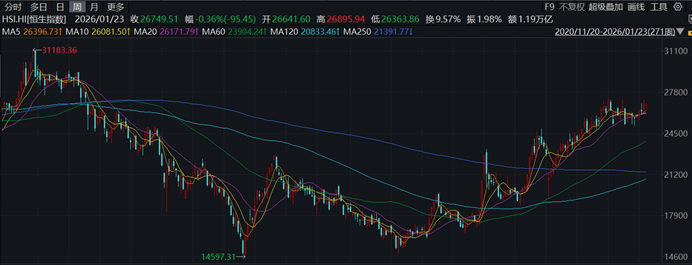
Group 1 - The Hong Kong stock market has shown a generally strong upward trend since 2026, with total buyback amounts exceeding 11 billion HKD [1] - Leading companies, such as Tencent Holdings, have maintained significant buyback activities, with Tencent's buyback amount surpassing 6 billion HKD this year [1] - A total of 108 Hong Kong-listed companies have engaged in buybacks this year, a decrease from 121 companies in the same period last year, indicating a notable reduction in buyback amounts [1] Group 2 - Cinda International notes that the Hong Kong stock market is more sensitive to changes in global liquidity, which may slow down foreign capital inflows due to geopolitical instability [3] - Since the fourth quarter of last year, northbound capital inflows have slowed, leading to insufficient upward momentum for the Hong Kong stock market [3] - The Hang Seng Index is expected to face resistance at the high level of 27,188 points reached in November 2025 [3]


A股13连阳关键时刻,央行开年第一会释放重磅消息!再提“向非银机构提供流动性的机制性安排”,或成我国中央银行制度又一项重大改革
Jin Rong Jie· 2026-01-06 12:36
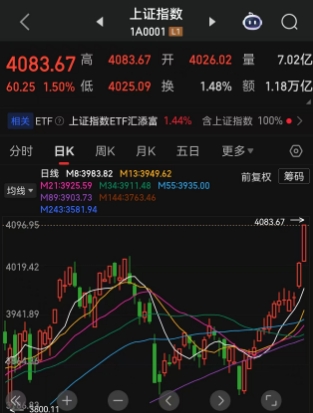
Group 1 - The People's Bank of China (PBOC) emphasizes a stable yet progressive monetary policy for 2026, focusing on high-quality economic development and reasonable price recovery while maintaining ample liquidity [1] - The PBOC plans to implement a mechanism for providing liquidity to non-bank financial institutions under specific scenarios, which is crucial for supporting capital markets [1][5] - Non-bank institutions, including brokerages, funds, and insurance companies, are highlighted as key players in the financial system, necessitating direct liquidity support from the central bank [6][7] Group 2 - The introduction of two monetary policy tools in 2024 significantly reversed the downward trend in the A-share market, marking the beginning of the "924 market" rally [2][3] - The PBOC's creation of liquidity support tools for non-bank financial institutions aims to enhance the stability of capital markets and is seen as a long-term mechanism [2] - The PBOC's previous liquidity support measures have been effective in stabilizing market sentiment, indicating a shift towards a more inclusive monetary policy framework [8]
超1100亿元,深市公司回购增持彰显信心,真金白银护航市场稳定
Zheng Quan Shi Bao· 2026-01-04 12:19
Core Insights - Since 2025, companies listed on the Shenzhen Stock Exchange have actively engaged in share buybacks and increases, with a total of 424 disclosed plans amounting to a maximum of 114.25 billion yuan, reflecting their confidence in long-term development and enhancing investor trust [1][3]. Group 1: Overall Trends - The overall trend in 2025 shows a significant increase in willingness for share buybacks and increases, characterized by high intent, considerable scale, and industry concentration [2][3]. - Out of the 424 disclosed plans, 288 were buyback plans with a maximum amount of 82.725 billion yuan, while 136 were increase plans with a maximum of 31.521 billion yuan [3]. Group 2: Industry Focus - Key industries leading the buyback efforts include electronics, biomedicine, machinery, and power equipment, accounting for 40.97% of total buybacks, while biomedicine, machinery, basic chemicals, and home appliances lead in increases, making up 37.78% [3]. - The buyback and increase activities are seen as mechanisms for companies to optimize their equity structure and enhance shareholder returns, contributing to market stability and liquidity [3]. Group 3: Leading Companies - Leading companies in various sectors have played a pivotal role in guiding market trends through substantial buybacks and increases, establishing benchmarks and stabilizing expectations [4][5]. - Midea Group has executed a buyback plan exceeding 10 billion yuan, aimed at reducing registered capital and implementing employee stock ownership plans, thereby enhancing shareholder equity [5]. - Contemporary Amperex Technology Co., Ltd. (CATL) plans to buy back shares totaling between 4 billion and 8 billion yuan, reflecting its commitment to value creation [5]. Group 4: Market Dynamics - The buyback activities of leading companies are seen as a reflection of rational recognition of their value and the gradual emergence of long-term investment value in the capital market [6]. - The ongoing market reforms and regulatory improvements are expected to sustain the positive momentum of buybacks and increases, providing robust support for the high-quality development of the capital market [6].
贝壳-W12月26日斥资300万美元回购55.66万股
Zhi Tong Cai Jing· 2025-12-29 00:08
Group 1 - The company Beike-W (02423) announced a share buyback plan, spending $3 million to repurchase 557,900 shares on December 24, 2025 [1] - Additionally, the company spent another $3 million to buy back 556,600 shares on December 26, 2025 [1]
家乡互动12月17日斥资32.22万港元回购22.8万股
Zhi Tong Cai Jing· 2025-12-17 11:27
Group 1 - The company, Home Town Interactive (03798), announced a share buyback plan on December 17, 2025, involving an expenditure of HKD 322,200 to repurchase 228,000 shares [1]

速腾聚创(02498.HK)11月26日回购32.30万股,耗资1001.15万港元
Zheng Quan Shi Bao Wang· 2025-11-26 15:10
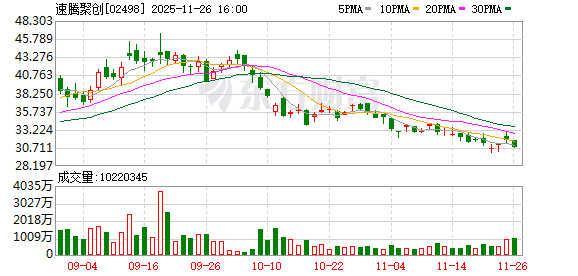
Group 1 - The core point of the article is that Sutech Juchuang has conducted a share buyback on November 26, purchasing 323,000 shares at a price range of HKD 30.720 to HKD 31.200, totaling HKD 10.0115 million [2] - The stock closed at HKD 30.700 on the same day, reflecting a decline of 3.09%, with a total trading volume of HKD 316 million [2] - Year-to-date, the company has completed four buybacks, acquiring a total of 1.23 million shares for a cumulative amount of HKD 37.1849 million [2] Group 2 - The detailed buyback information includes the number of shares repurchased, highest and lowest buyback prices, and total buyback amounts for each transaction [2] - On November 26, 2025, the company repurchased 32.30 million shares at a maximum price of HKD 31.200 and a minimum price of HKD 30.720, amounting to HKD 10.0115 million [2] - Previous buybacks occurred on October 17, 2025, with 29 million shares repurchased for HKD 9.9175 million, and on April 8, 2025, with 34.70 million shares for HKD 9.7836 million [2]
贵州茅台,连发2条重要公告
Feng Huang Wang· 2025-11-05 13:45
Group 1 - The company plans to repurchase shares through centralized bidding, with a total fund amount not less than 1.5 billion yuan and not exceeding 3 billion yuan, with a repurchase price not exceeding 1887.63 yuan per share [1] - The repurchased shares will be used for cancellation and reduction of the company's registered capital, and the repurchase plan is subject to approval at the shareholders' meeting, which carries the risk of not being approved [1] - The company announced a mid-term profit distribution plan for 2025, proposing a cash dividend of 23.957 yuan per share (including tax), totaling a proposed cash distribution of 30.001 billion yuan (including tax), which also requires approval at the shareholders' meeting [1]

诺瓦星云:已回购5.88万股,使用资金总额991.17万元
Xin Lang Cai Jing· 2025-11-05 09:01
Core Viewpoint - Nova Star Cloud announced a share buyback plan, indicating a commitment to returning value to shareholders through repurchase of shares [1] Group 1 - As of October 31, 2025, the company has repurchased a total of 58,800 shares, which represents 0.06% of the total share capital [1] - The buyback price ranged from 166.25 CNY to 170.99 CNY per share [1] - The total funds used for the buyback amounted to 9.9117 million CNY, excluding transaction fees [1]