Data Centers

Search documents
EdgeMode announces portfolio review, accelerates Spanish AI projects
Yahoo Finance· 2025-12-15 10:26
Core Insights - EdgeMode is seeking to rescind a share exchange agreement from early 2025 due to issues discovered during an internal portfolio review [1] - The rescission process may require judicial intervention and aims to reverse the transaction based on newly uncovered information [1] Financial Impact - The potential impact of the rescission represents less than 5.5% of EdgeMode's 1.8 gigawatts (GW) gross capacity AI datacentre portfolio in Spain [2] - If the rescission is completed, up to 1.56 billion shares issued under the agreement are expected to return to treasury, potentially reducing more than 50% of both potential and outstanding dilution [3] Strategic Developments - EdgeMode's board has terminated approximately 385 million unexercised stock options, eliminating 12.8% of potential dilution [2] - The company is developing scalable AI-ready datacentre campuses and integrated energy infrastructure across strategic global markets to meet the growing demand for AI and high-performance computing [4] Governance and Capital Structure - To ensure governance stability during the transition, EdgeMode has introduced a Series D preferred class of stock to support consistent oversight without causing economic dilution for common shareholders [4] - CEO Charlie Faulkner emphasized that the steps taken strengthen the capital structure and allow the company to focus on advancing its AI datacentre development pipeline in Spain [5] Partnership and Development Plans - In November 2025, EdgeMode signed a definitive agreement with Blackberry AIF (BAIF) to co-develop five large-scale datacentre sites in Spain, with EdgeMode holding a 75% stake in a special purpose vehicle [5][6] - The planned development encompasses over 1.5GW of Tier 3 datacentre capacity, marking it as one of Europe's largest ongoing AI-focused infrastructure initiatives [6] Market Valuation Potential - Upon reaching Ready-to-Build (RTB) status, each site could achieve sale valuations of up to $1 million per megawatt, driven by European demand for hyperscale and AI-compute capabilities [7]
Recent investments in India from US firms highlight scale of bilateral tech & economic engagement
The Economic Times· 2025-12-15 02:58
Core Insights - Recent announcements from major U.S. companies indicate a total investment of USD 67.5 billion in India, emphasizing the growing technology and economic engagement between India and the U.S. [15] Google - Google has announced a USD 15 billion investment to establish a 1GW AI-powered data center campus in Visakhapatnam, marking its largest facility outside the U.S. This investment aims to create a significant AI and subsea-connectivity hub while enhancing India's digital infrastructure [1][15]. Microsoft - Microsoft plans to invest USD 17.5 billion in India from 2026 to 2029, focusing on expanding cloud and AI capabilities. This investment represents Microsoft's largest commitment in Asia and aims to build infrastructure, skills, and sovereign capabilities for an AI-first future [2][10][11]. - The initiative includes a significant increase in digital skill development, with Microsoft doubling its goal to train 20 million Indians in AI and technology skills by 2030 [11]. Amazon - Amazon has committed to investing USD 35 billion across its Indian operations by 2030, which will increase its total planned investment in India to approximately USD 75 billion, making it one of the largest foreign investors in the country [3][6][7][15]. - The investment will focus on three strategic pillars: AI-driven digitization, export growth, and job creation, with plans to enhance both digital and physical infrastructure in India [7][15]. - Specific initiatives include providing AI tools to 15 million small businesses, empowering 4 million students with AI-centric education, and expanding fulfillment centers and cloud data centers [8][15]. Tata Electronics and Intel - Tata Electronics has announced a partnership with Intel as part of a USD 14 billion semiconductor venture, which includes the establishment of India's first full-scale semiconductor manufacturing sites in Gujarat and Assam [12][15]. - Intel will collaborate with Tata to utilize these facilities for manufacturing and packaging Intel-designed semiconductor products, indicating confidence in India's manufacturing capabilities [12][15].






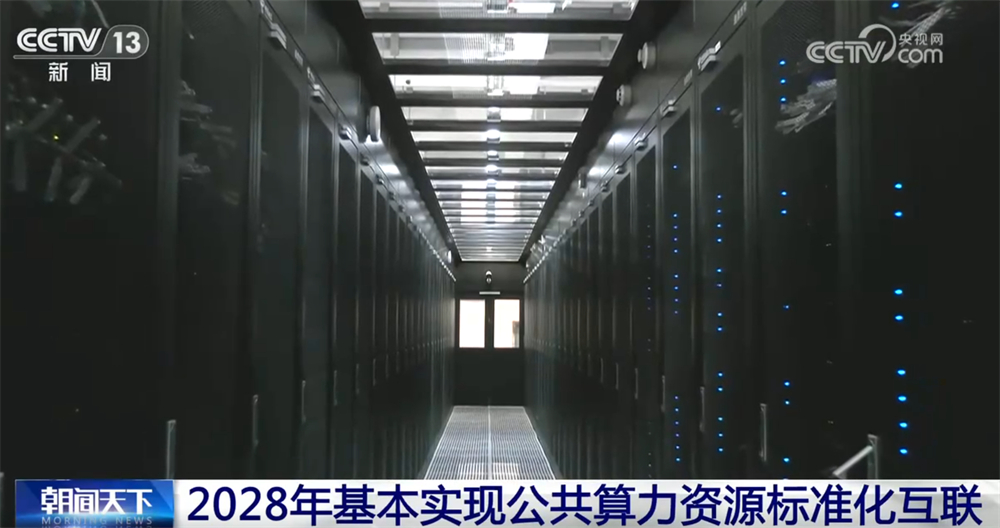
建设全国一体化算力网络按下“加速键” 向“智”向“绿”转型发展
Yang Shi Wang· 2025-12-15 02:08
Group 1 - The core viewpoint is that China is actively advancing the construction and layout of computing power centers to enhance the supply capacity and efficiency of intelligent computing resources, aiming to build a collaborative and efficient national integrated computing power network [1][3]. - As of now, China's computing power infrastructure has reached a scale of 12.5 million standard racks, but faces challenges such as low monitoring efficiency, incomplete supply-demand information, and lack of overall planning in resource allocation [1][5]. - The Ministry of Industry and Information Technology has released the "Computing Power Interconnection Action Plan," which aims to establish a standardized interconnection platform for public computing resources by 2025, with a goal of achieving a computing power internet by 2028 [5][6]. Group 2 - The intelligent computing centers are being rapidly deployed, with a focus on reducing operational energy consumption. AI chips used for model training are more powerful but also consume more energy, prompting a shift towards greener data centers [6][12]. - In Langfang, Hebei, six of the top ten computing power service providers in China are establishing large-scale intelligent computing clusters, with the largest single data center in the country located there [6][10]. - The energy utilization efficiency (PUE) target for projects has been set below 1.39, with some achieving below 1.25, indicating significant progress in energy efficiency [8].
专家反馈:美国可再生能源电力需求-Expert Call Feedback_ US Renewables_Power Demand
2025-12-15 01:55
Summary of Key Points from the Expert Call on US Renewables/Power Demand Industry Overview - The focus of the call was on the dynamics between US renewables development and the rising power demand driven by data centers in the US [2][3] Core Insights - **Renewables vs. Power Firmness**: While renewables are cost-effective and quick to deploy, challenges related to power firmness and grid constraints must be addressed before they can significantly penetrate the US data center market [1][9] - **Current Demand Drivers**: The primary driver of recent power demand growth in the US is the electrification of the Permian Basin, with load increasing from approximately 4GW in November 2021 to over 7GW by 2025 [3][4] - **Future Projections**: Rystad Energy anticipates that data center capacity will increase significantly beyond 2025, leading to more pronounced increases in load and potentially retail prices [3][4] Strategic Recommendations - **All-of-the-Above Approach**: An "all-of-the-above" strategy is essential to manage the complexities of growing data center capacity, balancing affordability, grid constraints, and incentivizing investments. This includes leveraging existing nuclear and combined cycle gas turbine (CCGT) resources, which provide the cheapest incremental power [5][9] - **Affordability Concerns**: Addressing affordability is crucial for the US power market while pursuing load growth, as the market is likely to prioritize cheaper solutions [5][9] Additional Considerations - **Intermittency of Renewables**: Despite the advantages of wind and solar energy, their intermittency and lack of firm power make them less attractive for data centers compared to gas, nuclear, and geothermal options [9] - **Market Dynamics**: The current economic risk associated with solar energy is low, with significant market growth driven by Power Purchase Agreement (PPA) demand rather than direct sourcing to data centers [9] - **Grid Capacity and Interconnection**: Future data center growth will likely depend on increasing grid capacity and reforming grid interconnections, particularly in regions like PJM, to better accommodate data centers and enhance the role of renewables [9] Visual Data - **Exhibits**: The call referenced several exhibits, including projections of US data center demand from 2020 to 2035 and Levelized Cost of Energy (LCOE) across various technologies, which provide further insights into market dynamics [4][8]
The AI Boom Is Pushing Data Centers Past the Thermal Wall
Yahoo Finance· 2025-12-14 18:00
Core Insights - The demand for advanced cooling technologies in data centers is surging due to the thermal limits of traditional infrastructure being tested by hyperscale operators [1] Market Overview - The global data center cooling market was valued at $14.21 billion in 2024 and is projected to reach $34.12 billion by 2033, representing a compound annual growth rate (CAGR) of 10.3% [2] Technical Evolution - The industry is evolving technically, moving from conventional air-cooling methods to liquid and hybrid architectures due to the rapid adoption of high-performance computing (HPC) and AI workloads [3] - Current rack densities in hyperscale facilities are exceeding 20 to 30 kilowatts (kW) per rack, with some AI clusters surpassing 100 kW, making air cooling inefficient [5] Cooling Technologies - The report identifies the rapid expansion of hyperscale facilities as a primary catalyst for the demand for direct-to-chip and immersion cooling technologies [5] - New data center builds are increasingly designed with liquid-first infrastructure, while legacy facilities face challenges in retrofitting [6] Energy Consumption - Data centers are projected to consume over 1,000 terawatt-hours (TWh) of electricity globally by 2026, with potential energy use hitting 2,200 TWh by 2030 [7] - Cooling systems account for nearly 40% of a facility's total energy usage, making efficiency metrics like Power Usage Effectiveness (PUE) critical for operational and investment decisions [7][8] Regulatory Impact - Regulatory momentum in North America and Europe is influencing investment decisions, with stricter standards on energy reporting and environmental performance being imposed [8]
Could Applied Digital Be One of the Biggest Winners of the AI Infrastructure Boom?
The Motley Fool· 2025-12-14 17:55
Core Insights - The rapid global adoption of AI is driving significant investments in AI infrastructure, with a projected spending of nearly $350 billion on AI data centers by public hyperscalers in 2025 [2] - Applied Digital is emerging as a key beneficiary of this trend, with its high-density, liquid-cooled data centers optimized for AI workloads [3] Company Performance - Applied Digital has a robust contracted backlog of nearly $16 billion for AI data center-related revenue, including an $11 billion contract with CoreWeave over 15 years [5] - The company has also secured an additional $5 billion in contracted revenue through a 15-year lease of 200-MW data center capacity at Polaris Forge 2 [6] - Analysts project a revenue growth of 37.9% for Applied Digital in fiscal 2026, reaching $297.3 million, indicating substantial multiyear growth potential [7] Operational Strategy - Applied Digital has integrated operational capabilities with hyperscalers, providing tenant fit-out services that contributed $26.3 million in revenue in the first quarter [8] - The company has effectively managed its supply chain, reducing construction timelines from 24 months to 12-14 months, allowing for rapid capacity ramp-up [10] Capacity Expansion Plans - The first 100-MW capacity at Polaris Forge 1 is complete, with plans to expand to over 1 GW as new regional transmission infrastructure becomes available [11] - Applied Digital is constructing 300-MW capacity at Polaris Forge 2, expected to come online in 2027, with a total active development pipeline of 4 GW [12] Funding and Financial Outlook - The company has secured $2.35 billion through a private offering of senior secured notes to support its expansion plans [13] - Macquarie Capital has committed up to $5 billion in preferred equity financing, which is expected to unlock data center capacity buildout worth $20 billion to $25 billion [14] - Despite a high valuation of 39.5 times sales, the anticipated cash flows from the CoreWeave lease could lead to a net operating income run rate of $1 billion in the next five years [16]


Bitfarms Stock: The Bitcoin Mining Play to Watch
The Motley Fool· 2025-12-14 12:07
Core Viewpoint - Bitfarms is transitioning from Bitcoin mining to focus on energy and digital services, particularly to meet the demands of AI data centers, resulting in significant stock performance compared to Bitcoin [1][4][6]. Company Transition - Bitfarms has shifted away from Bitcoin mining since late last year, closing some Bitcoin positions at high prices and converting its mining centers to new uses [4][6]. - The CEO indicated that the company expects to earn more from a single site offering GPUs as a service than from its previous Bitcoin mining operations [4]. Market Context - The Bitcoin mining sector is facing challenges due to volatile prices and increased competition, making it less profitable [5]. - Other Bitcoin miners are also adapting their facilities to serve the energy needs of AI data centers, indicating a broader industry trend [5]. Future Prospects - Bitfarms plans to completely wind down its mining operations and is focusing on energy services, which are gaining traction as investments related to AI [6]. - The company has a $128 million deal lined up with a large American multinational for data center infrastructure, with ongoing development plans in Quebec and Pennsylvania [7].


Bernie Sanders Says Mark Zuckerberg's Louisiana Data Center Will Use 3X More Electricity Than All Of New Orleans: 'Fight Back Against Billionaires'
Yahoo Finance· 2025-12-13 03:31
Core Viewpoint - Senator Bernie Sanders has raised concerns about the significant energy demands of Big Tech, particularly highlighting Meta Platforms Inc.'s planned data center in Louisiana, which could consume more electricity than entire U.S. cities, ultimately burdening taxpayers [1][2]. Group 1: Energy Consumption Concerns - Meta's Louisiana data center is projected to use three times more electricity than all of New Orleans, raising alarms about the impact on the power grid [2]. - Additional large-scale projects, including one linked to OpenAI and Oracle Corp. in Texas, could consume enough power to serve 750,000 homes, while another Meta facility could match the electricity needs of 1.2 million households [4]. Group 2: Public Response and Resistance - Local communities are beginning to resist mega-projects due to concerns over rising energy bills, water usage, and property values, with some successful opposition leading to the abandonment of proposed data centers [5]. Group 3: Industry Trends - The rapid rise in data center demand, driven by AI, is contributing to soaring electricity consumption, with data centers currently accounting for a record 5% of total U.S. electricity consumption, a figure that could more than double in the next five years [6].
X @Bloomberg
Bloomberg· 2025-12-12 20:20
Financial Performance - Oracle's new investment-grade notes are trading more like junk bonds [1] Investment & Risk - Delays on data center completion dates are fueling fears about AI investment profits [1]

The Biggest Risk to Your Portfolio Isn't Missing AI -- It's Holding These 2 Stocks When the Hype Fades
The Motley Fool· 2025-12-12 19:30
CoreWeave - CoreWeave is highly leveraged, with a significant role in the AI data center buildout, and is expected to nearly triple its revenue in 2024, but this growth is driven by substantial debt [3][6] - The company has over $10 billion in long-term debt, requiring high-interest borrowing, and it pays six times its gross profit to service this debt [6] - CoreWeave's capital expenditures have exceeded its revenue for each quarter, with capex more than double its sales and six times its operating cash flow over the last 12 months [5][6] Oracle - Oracle is also relying on leverage for growth, particularly through its all-in AI strategy, which involves significant resource expenditure to meet the demands of AI customers like OpenAI [7][10] - The company has issued tens of billions of dollars in bonds this year, with credit default swaps reaching their highest levels since the 2007-08 financial crisis, indicating increased market risk [9] - Oracle's debt is primarily funding data centers for OpenAI, which is committed to paying Oracle at least $300 billion over five years, despite OpenAI's low annual sales and ongoing losses [10][11] Industry Outlook - Both CoreWeave and Oracle are seen as risky investments due to their heavy reliance on continued AI demand and the accumulation of expensive debt [12][13] - The current AI hype is compared to the dot-com bubble of the 1990s, suggesting that if the hype fades, these companies may struggle to thrive [12][13]