Banking

Search documents
2026江苏绿建国际博览会筹备启动 科技创新赋能城乡高质量发展
Yang Zi Wan Bao Wang· 2026-01-30 12:46
Core Viewpoint - The 2026 Jiangsu Green Low-Carbon Building International Expo will focus on "Technological Innovation Empowering High-Quality Urban and Rural Development," scheduled for April 9-11 in Nanjing, aiming to integrate technological innovation with industry development [1][4]. Group 1: Previous Expo Achievements - The previous expo in 2025 showcased nearly 15,000 square meters, attracting 119 renowned domestic and international enterprises, and hosted around 50 events with 17,000 attendees, effectively promoting the integration of the "four chains" [3]. - Notable technological displays included smart home solutions and construction robots from companies like Huawei and China State Construction Engineering Corporation [3]. - Financial collaborations resulted in 14 billion yuan in cooperation intentions, a fourfold increase from the previous year, with Jiangsu Bank and Pacific Insurance offering targeted financial and insurance services [3]. Group 2: Current Expo Preparations - The 2026 expo aligns with national strategic deployments and emphasizes the cultivation of new productive forces in the housing and urban-rural construction sector [4]. - Key areas of focus include the latest technologies and products in artificial intelligence, urban renewal, and smart construction, alongside various activities such as talent recruitment and public science education [4]. - Preparations are progressing well, with a dedicated exhibition team engaging with nearly 300 companies, including over 50 leading enterprises and several Fortune 500 companies [4]. Group 3: Innovative Exhibition Features - The expo will feature an innovative exhibition model with a "1+3" guest city approach, showcasing Nanjing, Suzhou, Yangzhou, and Yancheng, along with a dedicated theme area for "Artificial Intelligence + Housing and Urban-Rural Construction" [5]. - Activities will promote deep integration of policy dissemination, technical exchanges, and industrial upgrades, facilitating cross-border promotion of technological achievements [5]. - The event aims to enhance service precision by aligning supply and demand, incorporating exhibition attendance into continuing education for registered professionals, and optimizing scheduling for public access [5].


机构:沃什被视为美联储主席的“绝佳人选”
Xin Lang Cai Jing· 2026-01-30 12:33
专题:特朗普正式提名沃什出任美联储主席 MainSky Asset Management的Eckhard Schulte在一份报告中称,美国总统唐纳德·特朗普选择前美联储理 事凯文·沃什(Kevin Warsh)担任下任美联储主席是"绝佳人选"。 专题:特朗普正式提名沃什出任美联储主席 MainSky Asset Management的Eckhard Schulte在一份报告中称,美国总统唐纳德·特朗普选择前美联储理 事凯文·沃什(Kevin Warsh)担任下任美联储主席是"绝佳人选"。 这位MainSky的董事会主席表示,这位前美联储理事会成员"经验极为丰富、务实,且在金融市场享有 最高声望"。Schulte称,沃什尤其出众之处在于,他将让美联储重新专注于其核心任务,并使其摆脱以 往的危机干预时期。 新浪合作大平台期货开户 安全快捷有保障 责任编辑:刘明亮 这位MainSky的董事会主席表示,这位前美联储理事会成员"经验极为丰富、务实,且在金融市场享有 最高声望"。Schulte称,沃什尤其出众之处在于,他将让美联储重新专注于其核心任务,并使其摆脱以 往的危机干预时期。 新浪合作大平台期货开户 安全快捷有 ...
Trump's Fed Chair Pick: What Kevin Warsh Brings to the Federal Reserve
Youtube· 2026-01-30 12:29
Core Viewpoint - Kevin Warsh is a prominent figure in both Wall Street and Washington, known for his critical stance on the Federal Reserve and his advocacy for significant changes in its operations [1][2][6] Group 1: Background and Career - Warsh graduated from Harvard Law and Stanford, starting his career at Morgan Stanley before serving as an economic adviser in the George W. Bush administration and becoming the youngest Fed governor in 2006 [1] - After leaving the Fed, he has been advising investor Stan Druckenmiller at Duquesne Capital and lecturing at Stanford [2] Group 2: Views on the Federal Reserve - Warsh is a harsh critic of the Fed, particularly opposing quantitative easing (QE), which he believes expanded the Fed's role excessively [2][4] - He has expressed a desire for the Fed to focus on combating inflation and has a reputation for being hawkish, although he has recently softened this stance [3][4] Group 3: Economic Perspectives - Warsh believes that advancements in AI could enhance productivity and help reduce inflation, suggesting that the Fed may have more flexibility in its monetary policy [3][5] - He advocates for a smaller balance sheet for the Fed and is open to a new Treasury-Fed accord to maintain economic stability [4][6] Group 4: Changes in Stance - Warsh's current position indicates a potential willingness to continue cutting rates, suggesting that the timing may not be as urgent as previously thought [5] - His evolving views reflect a less hawkish approach compared to his earlier criticisms of the Fed [4]

Dragged by metal, IT stocks Sensex ends down 297 points
Rediff· 2026-01-30 11:35
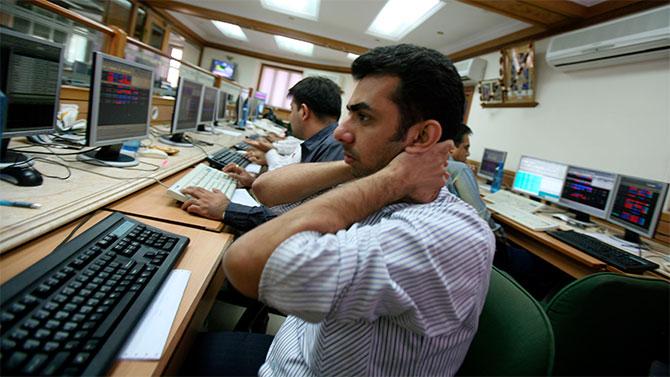
Market Performance - Benchmark equity indices Sensex and Nifty ended lower, with Sensex declining by 296.59 points or 0.36% to settle at 82,269.78 and Nifty dropping by 98.25 points or 0.39% to end at 25,320.65 [3][5] - The decline was attributed to weakness in metal and IT stocks, as well as caution ahead of the upcoming Budget presentation on February 1 [5][6] Sector Performance - Tata Steel experienced the largest decline among Sensex firms, falling by 4.57%, while other laggards included ICICI Bank, Power Grid, HCL Tech, Tech Mahindra, Infosys, and Kotak Mahindra Bank [4] - Conversely, Mahindra & Mahindra, State Bank of India, ITC, and Bharat Electronics were among the gainers [4] Foreign and Domestic Investment - Foreign institutional investors sold equities worth Rs 393.97 crore, while domestic institutional investors purchased stocks worth Rs 2,638.76 crore [4][5] Economic Outlook - India's economy is projected to grow by 6.8-7.2% in the upcoming fiscal year, maintaining its status as the world's fastest-growing major economy despite global trade risks [7]
HELOC and home equity loan rates today, January 30, 2026: As the Fed pauses, so do home equity rates
Yahoo Finance· 2026-01-30 11:00
Core Insights - The national average rates for second mortgage products, including home equity loans and HELOCs, are at multi-year lows, with the Federal Reserve maintaining a hold on interest rates, suggesting stability in the prime rate, a key factor in home equity lending [1] Group 1: Current Rates - The average HELOC rate is currently 7.25%, while the national average for home equity loans is 7.56%, based on applicants with a minimum credit score of 780 and a maximum combined loan-to-value ratio of less than 70% [2][8] - Homeowners have approximately $34 trillion in equity tied up in their homes as of Q3 2025, indicating significant potential for home equity lending [2] Group 2: Market Dynamics - With mortgage rates remaining in the low-6% range, homeowners are less likely to sell their homes or refinance, making HELOCs and home equity loans attractive alternatives for accessing home equity [3] - Interest rates for home equity products are determined by an index rate plus a margin, with the current prime rate at 6.75% [4] Group 3: Lender Considerations - Lenders have flexibility in pricing second mortgage products, and rates depend on factors such as credit score and debt levels, encouraging consumers to shop around for the best offers [5] - Introductory HELOC rates can be as low as 5.99% for the first year, but consumers should compare rates, fees, and repayment terms when selecting lenders [6] Group 4: Financial Implications - Interest rates fell throughout most of 2025 and are expected to remain steady into the first half of 2026, making it a favorable time for obtaining a second mortgage [10] - A $50,000 HELOC at a 7.50% interest rate would result in a monthly payment of approximately $313 during the 10-year draw period, but rates are typically variable, which could lead to increased payments during the repayment period [11]
Stock markets snap 3-day rally dragged by metal, IT stocks
The Hindu· 2026-01-30 10:53
Market Performance - Benchmark equity indices Sensex and Nifty ended lower, with Sensex declining by 296.59 points or 0.36% to settle at 82,269.78, and Nifty dropping by 98.25 points or 0.39% to end at 25,320.65, snapping a three-day rally [1][2] - The decline was influenced by selling pressure in metal and IT stocks, with Tata Steel experiencing the largest drop of 4.57% among Sensex firms [2] Foreign Investment Activity - Foreign institutional investors sold equities worth ₹393.97 crore on January 29, 2026, while domestic institutional investors purchased stocks worth ₹2,638.76 crore [3] Economic Outlook - India's economy is projected to grow by 6.8-7.2% in the upcoming fiscal year, maintaining its status as the fastest-growing major economy despite global trade risks and volatility [5] Market Sentiment - The Indian equity markets exhibited volatility ahead of the Union Budget, with cautious sentiment due to persistent foreign fund outflows and rupee depreciation [4][7] - Analysts noted that market participants are balancing pre-Budget positioning against external headwinds, contributing to a cautious market environment [7]
Circle Targets Banks With New Enterprise Blockchain — Can It Win?
Yahoo Finance· 2026-01-30 10:35
Core Insights - Circle Internet Group has launched an ambitious roadmap for 2026 focused on its Layer-1 blockchain, Arc, which aims to function as an "Economic Operating System" for global finance [1] - The company is striving to transition Arc from testnet to production while expanding its Circle Payments Network and StableFX applications to enhance its presence in the stablecoin settlement market [1] Market Position and Competition - Circle is facing increasing competition from Tether, which generated $5.2 billion in revenue in 2025 and holds a 60.1% share of the $311 billion stablecoin market with USDT [2] - Circle's USDC has a market share of 24.2%, with a circulation of $72.4 billion, despite experiencing a 108% year-over-year growth [2] Arc Testnet Performance - Arc's public testnet has processed over 150 million transactions since its launch in October 2025, with nearly 1.5 million active wallets and average settlement times of approximately 0.5 seconds [3] - The network has attracted over 100 institutional participants, including major firms like BlackRock, Goldman Sachs, and Visa, within its first 90 days [3] Development and Integration - Circle is working towards production readiness by enhancing the validator set for better distribution and establishing a governance model that meets institutional risk and compliance standards [4] - Arc utilizes USDC as its native gas token and is designed for regulated financial operations with deterministic sub-second finality [4] - The company has integrated Arc with its Cross-Chain Transfer Protocol, which connects 19 blockchains and has processed a cumulative volume of $126 billion as of December 2025 [5] Strategic Moves and Industry Trends - Circle's strategy includes the introduction of Gateway, a system that unifies USDC balances across networks, and Build, a suite of AI developer tools to expedite application development [5] - Tether is expanding its operations beyond stablecoins into traditional finance, recently acquiring 140 tons of gold valued at $23 billion and launching USAT, a federally regulated stablecoin [5][6] - Tether's CEO has indicated that the company is positioning itself as a significant player in the gold market, purchasing over a ton of gold weekly [6]
Billionaires Buy an Index Fund That Is Crushing AI Stocks Nvidia and Palantir in 2026
The Motley Fool· 2026-01-30 09:12
Core Viewpoint - The SPDR Gold Shares ETF has significantly outperformed Bitcoin, Nvidia, and the S&P 500 in 2023, highlighting gold's strong performance as a safe haven asset amid geopolitical and economic uncertainties [1][2]. Performance Comparison - The SPDR Gold Shares ETF has increased by 25% year to date, outperforming Palantir Technologies (down 12%) and Nvidia (up 3%) [1]. - The ETF has outperformed the S&P 500 by 23 percentage points year to date and by 52 percentage points over the last six months [2]. Hedge Fund Activity - Notable hedge fund managers, Israel Englander of Millennium Management and Ken Griffin of Citadel Advisors, have increased their holdings in the SPDR Gold Shares ETF, indicating confidence in gold as a strategic investment [6]. Gold as a Diversifier - Gold is recognized as an attractive portfolio diversifier due to its low correlation with stocks and bonds, making it appealing during periods of global tension and economic distress [4][5]. Historical Performance - Historical data shows that gold has provided a hedge during significant market downturns, with gold prices declining less than the S&P 500 during crises [5]. Geopolitical Factors - The demand for gold tends to rise during periods of geopolitical tension and economic uncertainty, which have been exacerbated by recent U.S. policies [8][9]. Future Price Predictions - Analysts have varying predictions for gold prices in 2026, with estimates ranging from $4,700 to $6,000 per ounce, reflecting differing views on the impact of geopolitical and economic factors [11].


Euro zone consumers up 5-year inflation forecast to record high, ECB poll shows
Reuters· 2026-01-30 09:04
Core Insights - Euro zone consumers have raised their longer-term inflation expectations to a record high in December, indicating a belief that prices will grow faster than the European Central Bank's (ECB) target for years to come [1] Group 1 - The European Central Bank conducted a poll showing that inflation expectations among consumers in the Euro zone have reached unprecedented levels [1] - This increase in inflation expectations suggests that consumers anticipate sustained price growth beyond the ECB's target rate [1] - The implications of these expectations could influence monetary policy decisions by the ECB in the future [1]

FICO UK Credit Card Market Report: November 2025
Businesswire· 2026-01-30 09:00
Core Insights - The FICO UK Credit Card Market Report for November 2025 indicates that pre-Christmas spending was below 2024 levels, with rising balances and the lowest payment rates since 2021, highlighting financial stress among consumers [1] Spending Trends - Average credit card spending increased by 2.6% from October to November, reaching £785, but remained 2.4% lower year-on-year [1] - The percentage of customers using credit cards for cash withdrawals saw a significant decline of 12.3% month-on-month and 15.2% year-on-year [1] Payment and Balance Analysis - Payment rates dropped to 33.4%, down 2.8% from the previous month and 7.4% from November 2024, indicating increased financial strain [1] - Average active balances rose to £1,915, reflecting a monthly increase of 0.8% and an annual rise of 5% [1] Delinquency and Risk Indicators - The number of credit card accounts exceeding their limit increased by 6.4% month-on-month and 5.9% year-on-year [1] - Delinquent balances have grown across all categories, suggesting that customers missing payments are doing so with higher debt loads than in previous years [1] Strategic Recommendations - Risk and collections teams are advised to enhance monitoring for customers showing early signs of payment distress, especially as the holiday season approaches [1] - Effective account management should consider consumers' current financial situations and their capacity to manage existing and additional debt [1]