科技创新与产业融合

Search documents
券商、基金深度解读来了!
券商中国· 2026-03-05 23:32
Core Viewpoint - The government work report for 2026 emphasizes a flexible GDP growth target of "4.5%-5%" to allow for structural adjustments, risk prevention, and reform, reflecting a focus on quality over quantity in economic growth [2][3][4]. Economic Growth Target - The GDP growth target adjustment is seen as a strategic choice to provide space for structural adjustments and risk management, rather than a simple reduction in growth expectations [2][3]. - The target aligns with China's long-term growth potential, balancing quality improvements with reasonable growth rates [2][3]. - The target also aims to support medium to long-term development, with an average growth rate of around 4.2% needed to double the economy by 2035 [3]. Fiscal and Monetary Policy - The report proposes a more proactive fiscal policy with a deficit rate of around 4% and a budget expenditure of 30 trillion yuan, marking a significant increase [5]. - The monetary policy will continue to be moderately loose, focusing on stabilizing economic growth and ensuring liquidity [5][6]. - Coordination between fiscal and monetary policies is emphasized, with fiscal policy aimed at stimulating demand and monetary policy focused on cost reduction [6][7]. Consumer Market Focus - The report prioritizes building a strong domestic market, emphasizing the role of domestic demand in driving economic growth [8][9]. - Specific measures include 250 billion yuan in special bonds for consumer upgrades and 800 billion yuan for infrastructure projects, indicating a shift towards a more systematic approach to expanding domestic demand [8][9]. - The focus on consumer spending is expected to enhance consumer confidence and drive sustainable growth [9]. Technological Innovation - The report highlights the importance of technological innovation, aiming to foster new growth drivers and support the digital transformation of industries [11][12]. - Specific initiatives include promoting artificial intelligence and establishing a robust financial support system for innovation [11][12]. - The emphasis on integrating technology with industry aims to enhance productivity and competitiveness in the global market [12]. Capital Market Reforms - The report outlines plans for deepening capital market reforms, focusing on balancing investment and exit mechanisms while enhancing investor protection [13][14]. - The shift in focus from stabilizing the market to building a sustainable capital market framework is noted, with an emphasis on long-term capital inflows [14][15]. - The report aims to improve the investment environment and promote direct financing to support the real economy [14][15].

重磅解读!十余家公募发声
券商中国· 2026-03-05 15:19
Core Viewpoint - The government work report emphasizes high-quality development as the primary task for 2026, outlining clear economic goals and policies to balance growth, employment, and risk prevention [1][3]. Economic Growth Target - The main expected economic growth target for this year is set at 4.5% to 5%, with an emphasis on flexibility and responsiveness to international economic changes [3][4]. - This target aligns with China's long-term growth potential and aims to facilitate structural transformation and reform [3][4][5]. Policy Framework - The report maintains a "steady progress" approach in fiscal and monetary policies, with a fiscal deficit rate of 4% and a continuation of "moderately loose" monetary policy [6][7]. - The focus is on fostering new growth drivers, talent development, and green transformation while ensuring stability in the face of global challenges [6][7]. Expanding Domestic Demand - The report highlights the importance of boosting consumption and integrating it with supply-side structural reforms, aiming to leverage China's vast market [8][9]. - Specific measures include a plan to increase residents' income, support for consumption through special bonds, and significant investments in infrastructure [8][9][10]. Technological Innovation and Industry Integration - The report outlines ten key tasks for 2026, emphasizing the need for technological self-reliance and innovation to support high-quality development [12][13]. - There is a focus on enhancing the integration of technology and industry, with significant funding allocated for major technological upgrades and the development of new industries [12][13][14]. Financial Service System Adaptation - The report calls for a financial service system that aligns with the development of new quality productivity, emphasizing the need for long-term capital to support innovation [15][16]. - It highlights the importance of improving the capital market's role in resource allocation and protecting investors while promoting a balance between financing and investment functions [17][18].
地方两会系列(二):重点工作如何部署?
East Money Securities· 2026-02-26 07:45
Key Focus Areas - Local governments emphasize the synergy between supply and demand, promoting a combination of investment and consumption[9] - The integration of education, technology, talent, and industry is prioritized to accelerate the application of technology in industries[9] - Regional coordinated development and the construction of a unified national market are highlighted, with a focus on reducing "involution" competition[10] Investment Strategies - Investment is directed towards key industries and major projects, with a focus on digital infrastructure, artificial intelligence, quantum technology, and low-altitude economy[9] - Emphasis on "investment in people" policies, highlighting the importance of livelihood investments[9] - Some regions have already initiated major projects under the "14th Five-Year Plan," ensuring solid project reserves[9] Consumption Initiatives - Efforts to boost consumption are intensified, with a focus on supply-demand adaptability in specific deployments[9] - New consumption scenarios and models are being explored, incorporating regional characteristics such as digital, green, and emotional consumption[9] - The approach to consumption is shifting from multiple points of growth to broader industrial upgrades[9] Industrial Development - Traditional industries are accelerating transformation and efficiency improvements, focusing on sectors like automotive, steel, chemicals, textiles, food, and building materials[9] - New and future industries are emphasized for effective implementation, particularly in the "6+10" categories, including AI, low-altitude economy, and biomedicine[9] - The integration of modern service industries with advanced manufacturing is being promoted[9] International Expansion - There is a push to expand the scale of enterprises going abroad and enhance their international visibility[9] - Improvement of overseas comprehensive service systems to protect the interests of domestic companies abroad is emphasized[9] - Development of new business formats in cultural and entertainment sectors for international markets is highlighted[9]
多地公布重点项目清单 产业项目成稳增长“主力军”
Zheng Quan Ri Bao Wang· 2026-02-12 04:28
Core Viewpoint - The construction of major projects is a powerful tool for expanding effective investment and driving the development of upstream and downstream industries, serving as a stabilizing force for economic growth [1] Group 1: Project Lists and Investments - Tianjin has released a list of 1,112 key projects with a total investment of 1.82 trillion yuan, including 824 key construction projects with an investment of 1.4 trillion yuan and an annual planned investment of 202.19 billion yuan [1] - Jiangsu plans to arrange 670 major projects this year, with 550 projects to be implemented, an increase of 50 projects year-on-year, and an annual planned investment of 664.6 billion yuan, up by 12 billion yuan [2] - Hubei's first batch of 937 provincial key projects has a total investment of 3.39 trillion yuan and an annual planned investment of 408.4 billion yuan, with 84 projects exceeding 10 billion yuan [2] Group 2: Economic Impact and Employment - The launch of these projects is expected to stimulate the construction, building materials, machinery, and engineering services industries, creating a "ripple effect" that will drive local government investment and job creation [3] - The projects are seen as not only stabilizing short-term growth but also serving as a "booster" for structural improvement in the medium term and a "power source" for long-term economic momentum [3] Group 3: Industry Focus and Trends - In Tianjin's project list, advanced manufacturing, technology and industrial innovation, and modern service industries account for 47.2% of the annual planned investment [3] - In Jiangsu, 414 major projects are focused on industry, with an annual planned investment of 295 billion yuan, and the proportion of strategic emerging industries in manufacturing projects has increased from 74% to 80% [3] - Hubei's key projects include 513 major industrial projects, which exceed major infrastructure projects, with a total investment of 1.41 trillion yuan and an annual planned investment of 206.4 billion yuan [3] Group 4: Key Highlights of Project Lists - The project lists for 2026 showcase four main highlights: deep integration of innovation and industry, clear mainline for industrial upgrading, optimized investment structure, and balanced development focusing on both livelihood and urban renewal [4] - The emphasis is on the transformation of manufacturing towards intelligence, greenness, and integration, while also enhancing modern service capabilities and addressing infrastructure gaps [4]
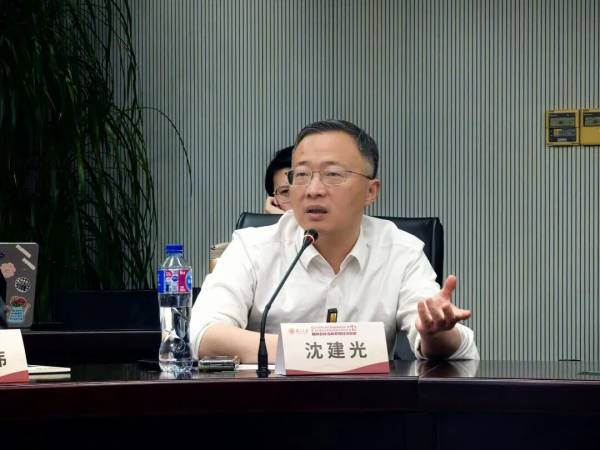
京东首席经济学家沈建光:与“十四五”相比,“十五五”规划有六大关键调整
Sou Hu Cai Jing· 2026-02-02 12:42
Group 1: Economic Outlook and Policy Direction - The 2026 macroeconomic outlook emphasizes the importance of the "15th Five-Year Plan," which marks a shift in policy focus towards economic construction, consumption, and technological development [1][6][17] - Key adjustments in the "15th Five-Year Plan" include a renewed emphasis on balancing economic growth with safety, promoting urban-rural integration, and reforming the fiscal and tax system [1][6][8] - China's economic growth rate has decreased to around 5%, but it remains competitive compared to emerging markets like Vietnam and India, highlighting the need for a focus on maintaining reasonable growth [1][7] Group 2: Monetary and Fiscal Policy Changes - Significant changes in monetary policy now include promoting stable economic development and reasonable price recovery as key considerations, moving away from a sole focus on inflation [2][10] - Fiscal policy is expected to maintain a deficit rate of around 4%, with an emphasis on necessary debt levels and total expenditure [2][10] - The policy aims to optimize existing demand through measures like "trade-in" programs and removing unreasonable restrictions to stimulate consumption [2][11] Group 3: Global Economic Context - The U.S. economy shows signs of weakness, with a cooling job market and a decline in the dollar's reserve status, while the European economy faces multiple challenges, including energy crises [4][15] - Despite a 35% drop in real estate prices over five years, China's economy has shown resilience, supported by advancements in semiconductor equipment, digital economy, and artificial intelligence [4][12] - China's trade surplus is projected to reach $1.2 trillion by 2025, indicating a balanced trade relationship with the U.S. despite ongoing trade tensions [12][16] Group 4: Consumer and Investment Dynamics - The core policy direction for 2026 is to boost consumption, with a significant gap between service consumption in China (18% of GDP) compared to the U.S. (46%), primarily due to urban-rural disparities [4][17] - Investment pressures are evident, with fixed asset investment declining by 12%, although this figure may not accurately reflect the actual investment situation [11][12] - The "15th Five-Year Plan" aims to enhance consumer spending through urban-rural integration and regulatory relaxation, such as in the automotive and yacht sectors [17]
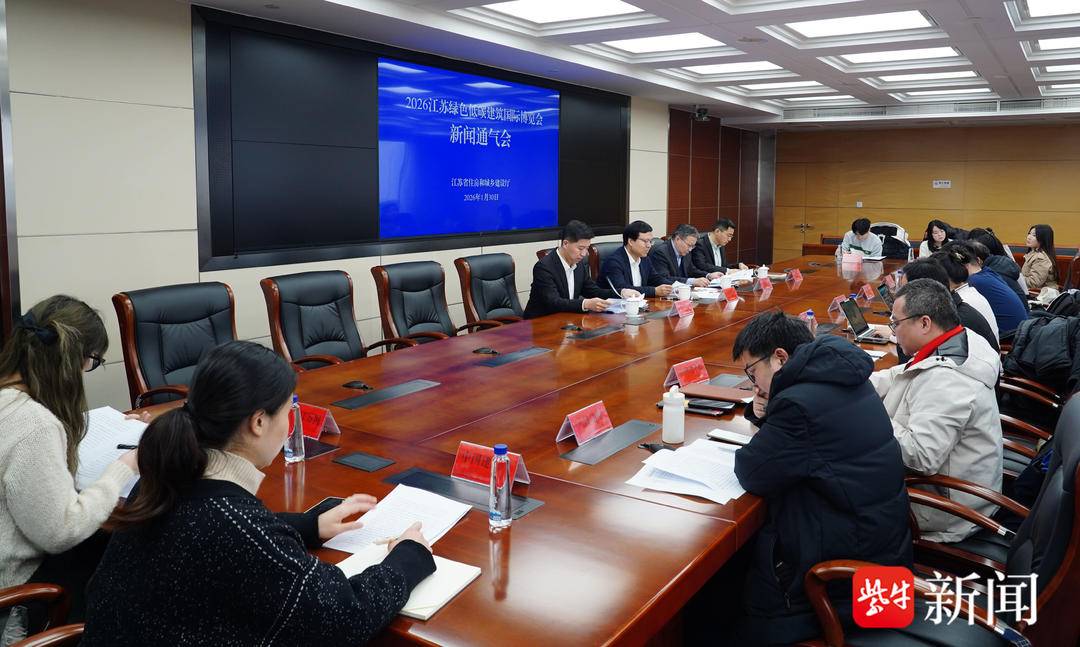
2026江苏绿建国际博览会筹备启动 科技创新赋能城乡高质量发展
Yang Zi Wan Bao Wang· 2026-01-30 12:46
Core Viewpoint - The 2026 Jiangsu Green Low-Carbon Building International Expo will focus on "Technological Innovation Empowering High-Quality Urban and Rural Development," scheduled for April 9-11 in Nanjing, aiming to integrate technological innovation with industry development [1][4]. Group 1: Previous Expo Achievements - The previous expo in 2025 showcased nearly 15,000 square meters, attracting 119 renowned domestic and international enterprises, and hosted around 50 events with 17,000 attendees, effectively promoting the integration of the "four chains" [3]. - Notable technological displays included smart home solutions and construction robots from companies like Huawei and China State Construction Engineering Corporation [3]. - Financial collaborations resulted in 14 billion yuan in cooperation intentions, a fourfold increase from the previous year, with Jiangsu Bank and Pacific Insurance offering targeted financial and insurance services [3]. Group 2: Current Expo Preparations - The 2026 expo aligns with national strategic deployments and emphasizes the cultivation of new productive forces in the housing and urban-rural construction sector [4]. - Key areas of focus include the latest technologies and products in artificial intelligence, urban renewal, and smart construction, alongside various activities such as talent recruitment and public science education [4]. - Preparations are progressing well, with a dedicated exhibition team engaging with nearly 300 companies, including over 50 leading enterprises and several Fortune 500 companies [4]. Group 3: Innovative Exhibition Features - The expo will feature an innovative exhibition model with a "1+3" guest city approach, showcasing Nanjing, Suzhou, Yangzhou, and Yancheng, along with a dedicated theme area for "Artificial Intelligence + Housing and Urban-Rural Construction" [5]. - Activities will promote deep integration of policy dissemination, technical exchanges, and industrial upgrades, facilitating cross-border promotion of technological achievements [5]. - The event aims to enhance service precision by aligning supply and demand, incorporating exhibition attendance into continuing education for registered professionals, and optimizing scheduling for public access [5].
全国人大代表潘复生:打通“从0到1再到100”的链条
Ren Min Ri Bao· 2026-01-30 03:30
Group 1 - The core viewpoint emphasizes the importance of deep integration between technological innovation and industrial innovation as a foundation for establishing a modern industrial system [1][2] - There is a notable shortage of high-quality laborers, which hinders the deep integration of technological and industrial innovation. The proportion of personnel with basic scientific literacy in China needs improvement [1] - Recommendations include enhancing science popularization efforts to improve the scientific quality and capabilities of laborers, particularly those managing technological work [1] Group 2 - From a technical perspective, the shortage of original technologies and pilot testing platforms is a significant bottleneck for the integration of technology and industry in China [1] - A new national system is suggested to bridge the gap from "0 to 1 to 100," with a focus on addressing the challenges in the engineering process of pilot testing [1] - Mechanism-wise, there are still bottlenecks in China's technology sector that restrict innovation vitality. Suggestions include breaking down innovation barriers and adopting principles from game theory to rationally distribute risks and benefits [2]
2025“企业家之夜”盛典将启,与千年古井,共赴新征程!
Xin Lang Cai Jing· 2026-01-27 08:49
Group 1 - The event "Entrepreneur Night" is set to take place on January 29, 2025, organized by Sina Finance, First Finance, and Gujing Gongjiu, focusing on the theme "Paying Tribute to the Driving Forces of the New Era" [1][6] - The "China Economic News Figures" IP evaluates outstanding entrepreneurs based on five dimensions: innovation, disruption, foresight, growth, and newness, becoming an important window for observing China's economic development [2][7] - Gujing Gongjiu, as one of China's eight famous liquor brands, has maintained a growth trajectory in sync with China's economic development, emphasizing quality through traditional brewing methods that have been preserved for over 1800 years [2][7] Group 2 - Gujing Gongjiu has innovatively addressed the challenges of traditional manufacturing transformation with its "1+1" production model, integrating advanced technologies like 5G and big data to create the industry's first fully connected transparent factory [3][8] - The company has launched products like the light ancient 20 and "Gujing Light Health Society" to align with modern consumer trends, promoting health and youthfulness in the liquor industry [3][8] - Gujing Gongjiu actively practices social responsibility through its "Three Quality Project," which aims to enhance quality, virtue, and brand beauty while supporting rural revitalization through order-based planting [3][8] Group 3 - The 11th edition of the "Entrepreneur Night" coincides with a critical phase in China's transition to high-quality development, featuring discussions on key topics through speeches and roundtable forums [4][9] - The event has evolved from an industry gathering to a significant platform for recognizing the growth and responsibility of outstanding entrepreneurs, reflecting the ongoing confidence in China's economic development [4][9] - The upcoming event will showcase more leading figures who embody the principles of tradition, innovation, and social responsibility, contributing to a new chapter in high-quality economic development in China [4][9]

第三届链博会│高效链条牵引科技与产业融合
Jing Ji Ri Bao· 2026-01-26 09:13
Group 1 - The core viewpoint emphasizes the importance of transitioning scientific achievements from "laboratories" to "production lines" to drive technological innovation and empower industrial upgrades [1] - The third China International Supply Chain Promotion Expo featured organized activities such as result releases, financing roadshows, and supply-demand matching, facilitating deep integration of technology and industry [1] - A new innovation chain section at the expo attracted significant attention, highlighting the consensus that advanced technological achievements must be linked to real-world applications through supply chains to maximize their impact [1] Group 2 - The effectiveness of intellectual property (IP) utilization in China has accelerated, with 680,000 patents identified as convertible resources, benefiting 450,000 enterprises through targeted matching services [2] - As of now, the cumulative number of patent transfer and licensing records in China has reached 1.025 million, with universities and research institutions accounting for 127,000 of these transfers [2] - The rapid advancement of digital technology has introduced complexities in IP protection and conversion, particularly in high-tech industries like advanced manufacturing and electric vehicles, where patent interdependencies are increasingly prominent [2] Group 3 - Simple supply-demand matching and conversion transactions are becoming less effective; a focus on chain collaboration in technology penetration, resource integration, and scene development is essential for reducing R&D costs and enhancing innovation efficiency [3] - The "Beijing Initiative" released at the expo calls for deep integration of technological and industrial innovation, aiming to accelerate the conversion of scientific achievements into real productivity [3] - The initiative encourages various sectors to explore the "conversion code" for driving high-quality industrial development through technological innovation, thereby fostering new productive forces and stimulating global innovation [3]
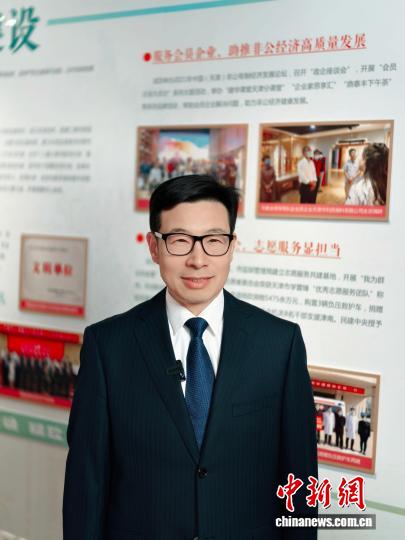
张荃:民建建言天津“十五五”,聚力经济提质增效
Zhong Guo Xin Wen Wang· 2026-01-26 05:10
Core Viewpoint - Tianjin is focusing on high-quality development as it embarks on the "14th Five-Year Plan," with the Tianjin Municipal Committee of the China Democratic National Construction Association (民建) playing a crucial role in this process [1][3]. Group 1: Organizational Goals and Strategies - The Tianjin Municipal Committee aims to enhance political guidance, strengthen organizational construction, and improve service capabilities to contribute effectively to the city's development [1][3]. - The committee emphasizes the importance of inheriting and promoting values such as patriotism, democracy, and innovation to support Tianjin's growth [3]. Group 2: Key Initiatives and Recommendations - A significant task undertaken by the committee involved enhancing innovation capabilities and supporting the Tianjin High Education Science and Technology Park, which included extensive field visits and discussions to identify shortcomings [2][4]. - Recommendations from the committee include establishing technology verification centers, creating a collaborative financial support system, and integrating key platform construction into the "14th Five-Year Plan" [4][5]. Group 3: Regional Development and Collaboration - The committee is focused on the Beijing-Tianjin-Hebei coordinated development strategy, proposing a market-oriented approach to leverage Tianjin's regional advantages [4][5]. - Suggestions include enhancing cooperation with neighboring regions, granting greater reform autonomy, and developing a cross-regional benefit-sharing mechanism to facilitate industrial transfer and joint investment [5]. Group 4: Support for Member Enterprises - The committee is constructing a "power support" system to boost member enterprises' confidence and innovation, which includes political guidance, policy interpretation, and economic exchange activities [6]. - Initiatives such as "聚力·引领," "聚力·赋能," and "聚力·链接" are designed to enhance collaboration and resource sharing among member enterprises and government bodies [6].