互联网打车

Search documents
6亿月活背后的客服困局:天润云(02167.HK)ZENAVA如何助力打车平台突围?
Ge Long Hui· 2026-01-17 14:45
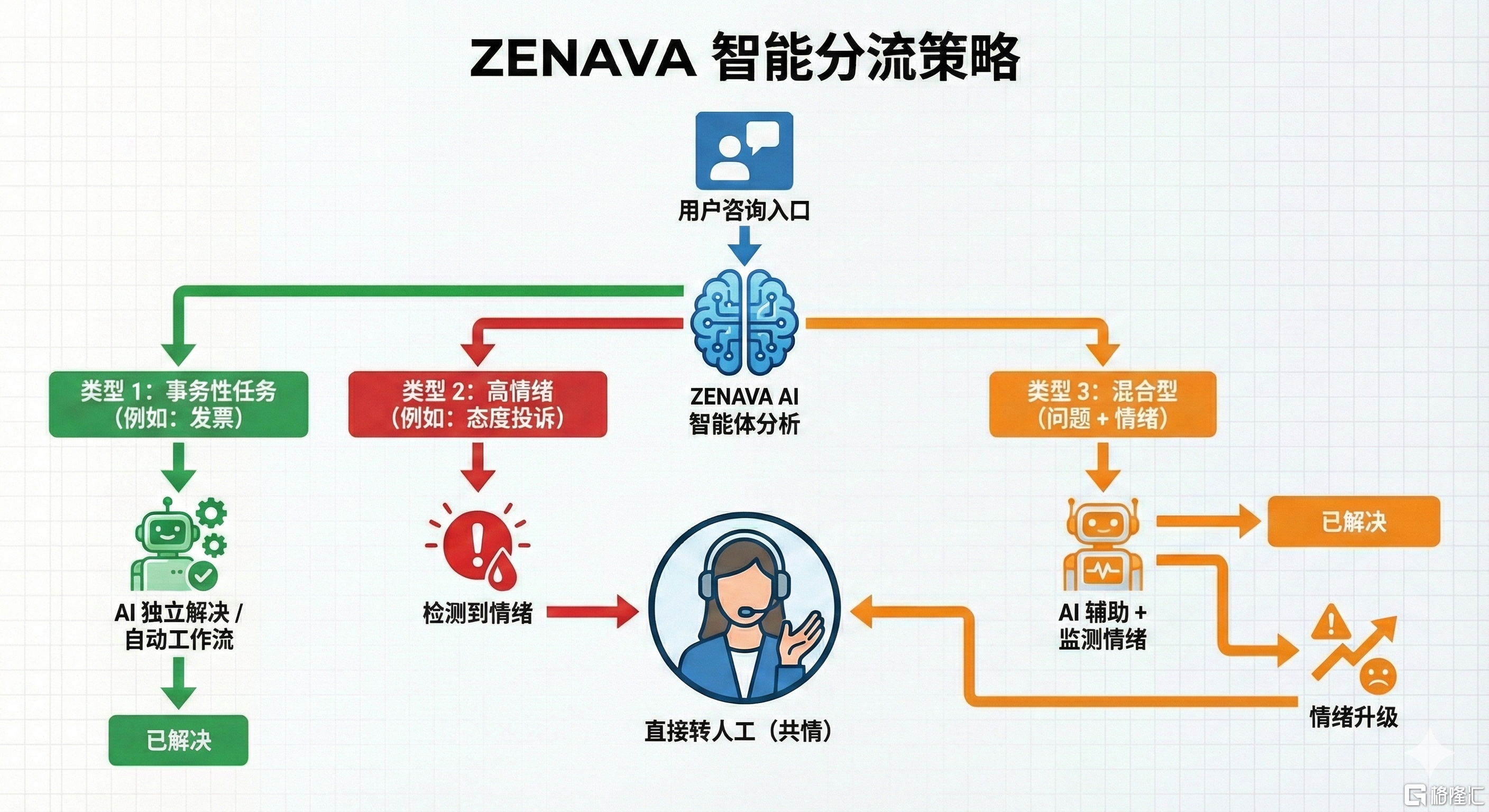
Core Insights - The article highlights the challenges faced by customer service teams across various industries, particularly in high-frequency service sectors like ride-hailing platforms, where increasing user numbers and costs lead to deteriorating user experience [1][2]. Group 1: Industry Challenges - Ride-hailing platforms experience significant customer service demands due to high user volume, with nearly 600 million monthly active users, leading to numerous inquiries related to orders, fees, driver behavior, and lost items [4]. - The complexity of customer service issues arises from the simultaneous pressure of high user volume, time sensitivity, and emotional factors, especially when users are in urgent situations [3][4]. - There is a structural mismatch between service demand and human resource availability, as customer inquiries peak during non-standard hours, while human agents are typically available only from 9 AM to 6 PM [5]. Group 2: AI Integration - In response to these challenges, the platform has begun integrating AI Agents, specifically ZENAVA, to handle frontline customer service tasks, thereby restructuring the existing service model [6]. - ZENAVA has taken over a significant portion of basic inquiries and standard issue responses, achieving an independent response rate of over 65%, which alleviates pressure on human agents [7][9]. - The AI operates 24/7, breaking the limitations of traditional human service hours and subsequently improving customer satisfaction [7]. Group 3: AI Processing Strategies - Customer service issues have been categorized into three types for effective AI handling: straightforward problem-solving, emotional expression, and mixed scenarios [8][12]. - For straightforward issues, ZENAVA can efficiently understand and resolve user requests, such as processing coupon issues without human intervention [9]. - In emotionally charged situations, ZENAVA identifies strong user emotions and escalates the conversation to human agents to prevent further conflict [10]. - For mixed scenarios, ZENAVA attempts to assist with problem resolution while monitoring user emotions, escalating to human agents when necessary [13]. Group 4: Conclusion - The case of the ride-hailing platform illustrates that traditional human-centric customer service models are reaching their limits in efficiency and user experience [13]. - A shift from a human-driven approach to an AI-driven model allows for the delegation of high-frequency, standardized tasks to AI, enabling human agents to focus on more complex and valuable interactions [13].

低价销售行为的多维剖析:影响、竞争性质与法律边界
Sou Hu Cai Jing· 2025-05-19 11:39
Group 1 - The core issue of low-price sales is its significant impact on market order and brand development, with complaints related to low-price sales increasing by 18% year-on-year in 2024 [1] - Low-price sales lead to a "price avalanche effect," causing a 40% decline in monthly sales for businesses maintaining original prices, forcing 70% of industry players to follow suit, resulting in a 12% drop in overall profit margins [3] - The prevalence of counterfeit products in low-price sales is alarming, with 35% of such products being fake, leading to a 200% increase in complaints for a major international beauty brand and a 27 percentage point drop in brand reputation within six months [3] Group 2 - Not all low-price sales are illegal; they must be assessed based on intent, market impact, and legal criteria, with examples of unfair competition including predatory pricing and counterfeit sales [4] - Legal low-price sales can occur under specific circumstances, such as managing perishable goods or promoting new products with a clear promotional period, as demonstrated by a supermarket increasing turnover of near-expiry goods by 60% [5][6] - The legal framework allows for price reductions based on cost savings or seasonal adjustments, provided they do not harm other businesses or disrupt market order [7]