交通枢纽运营

Search documents
苹果园综合交通枢纽开通
Bei Jing Ri Bao Ke Hu Duan· 2025-12-30 22:52
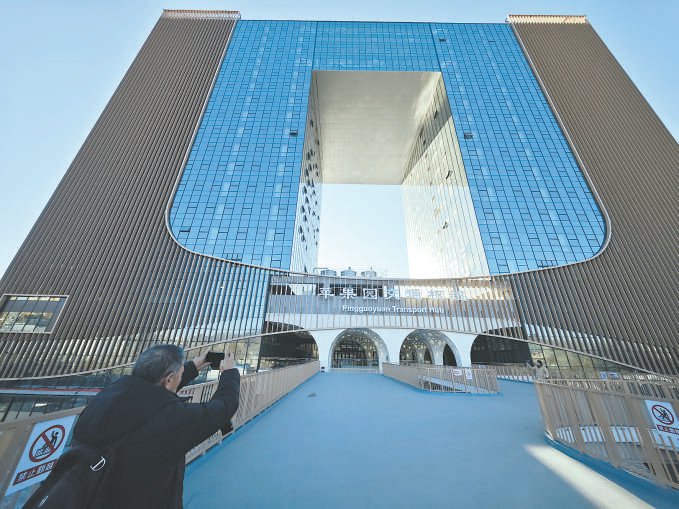
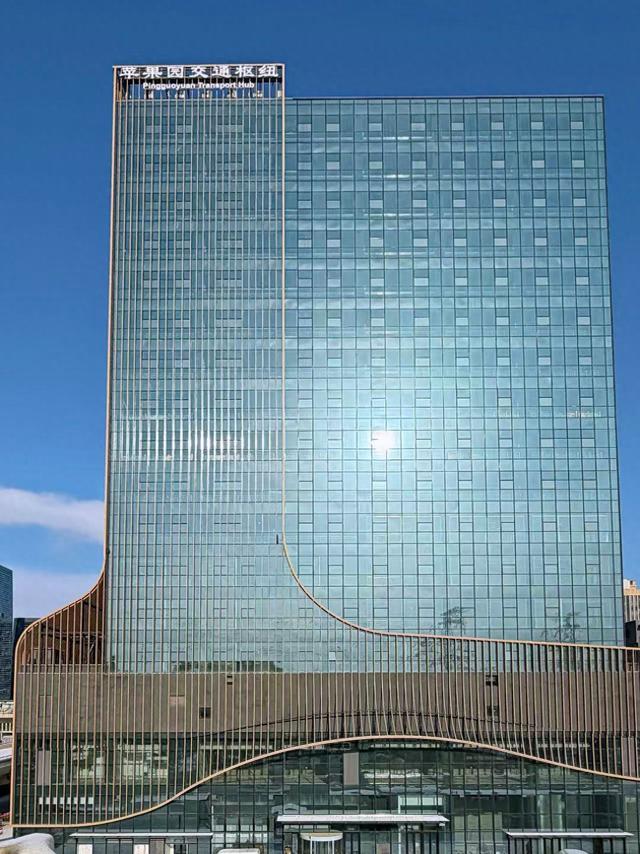
Core Points - The Apple Garden Comprehensive Transportation Hub officially opened in Shijingshan District, serving as a key transportation gateway in the western part of Beijing [2] - The hub integrates multiple transportation modes, including subway, bus, taxi, private cars, and bicycles, facilitating seamless transfers [2] - Currently, the hub connects Metro Line 6 and S1, with 26 bus routes operational, providing over 2000 parking spaces for citizens [2] Transportation Features - The hub is strategically located near major roads and commercial areas, enhancing accessibility [2] - Inside the hub, the design is clean and simple, with clear signage for easy navigation [2] - Future plans include the opening of the Apple Garden Station on Metro Line 1, which will allow for convenient transfers among three subway lines [2] Parking Facilities - The hub includes 876 designated parking spaces, with 156 in the northern underground parking and 720 in the southern underground parking [3] - Surrounding the hub, there are six public parking facilities within a 500-meter radius, collectively offering over 2000 parking spaces to alleviate local parking issues [3] - Additionally, the hub plans to accommodate 1200 non-motorized vehicle parking spaces, with clear signage to guide proper parking [3]

三轨交会、公交线路26条,苹果园综合交通枢纽开通运营
Bei Jing Ri Bao Ke Hu Duan· 2025-12-30 03:47
Core Viewpoint - The opening of the Apple Garden Comprehensive Transportation Hub on December 30 significantly enhances the transportation network in the Shijingshan District, providing a multi-modal transfer network that includes various transportation options, thereby improving transfer efficiency for citizens [1][11]. Group 1: Transportation Network - The hub integrates multiple transportation modes, including rail transit (S1 line, Line 6), ground buses (rapid, regular, and transit buses), taxis, private cars, and bicycles, allowing citizens to choose flexible transfer paths based on their travel needs [1]. - The hub is strategically located, bordered by major roads and adjacent to key landmarks, facilitating easy access to three rail lines [3][4]. Group 2: Infrastructure and Facilities - The hub features 15 starting bus routes, 10 transit bus routes, and 1 rapid bus route, with designated areas for passenger drop-off and pick-up located in the northern section of the hub [6]. - A total of 876 parking spaces are planned within the hub, with 156 in the northern underground parking area and 720 in the southern underground area, addressing local parking challenges [6]. - Surrounding the hub, there are six public parking facilities within a 500-meter radius, providing over 2,000 additional parking spaces [6]. Group 3: Non-Motorized Transport - The hub includes 1,200 designated non-motorized vehicle parking spaces, with clear signage to guide users [8]. - There are 3,780 temporary parking spaces for non-motorized vehicles in the vicinity, equipped with directional signs to ensure proper parking [8]. Group 4: User Experience and Safety - The hub is designed with clear signage, guiding displays, and electronic information screens to assist citizens in navigating transfer paths and entrances [8]. - Dedicated service personnel are stationed in connecting passages to provide guidance, ensuring seamless transitions between different modes of transport and enhancing safety [8]. Group 5: Economic and Social Impact - The opening of the Apple Garden Comprehensive Transportation Hub is expected to provide more convenient, safe, and comfortable integrated travel services, further improving the transportation network in the western Beijing area and contributing to high-quality regional economic and social development [11].
12月23日起,广东车辆可开进香港市区!
Di Yi Cai Jing· 2025-10-31 07:23
Core Points - The "Yue Car Southbound" initiative allows Guangdong vehicles to enter Hong Kong, with applications starting today and the first approved vehicles able to enter as early as December 23 [1][2] - The program is initially open to four cities in Guangdong: Guangzhou, Zhuhai, Zhongshan, and Jiangmen, with plans to expand to other cities in six months [1][3] - A daily cap of 100 vehicles will be implemented for entering Hong Kong, with each vehicle allowed to stay for a maximum of three days [3][4] Implementation Details - The application process requires drivers to have a valid Hong Kong driving license and to meet vehicle inspection and insurance requirements [3][4] - The automated "transit parking lot" at Hong Kong International Airport will provide approximately 1,800 parking spaces and will begin accepting applications on November 1 [2][4] - The "Yue Car Southbound" program is designed to complement the existing "Hong Kong Car Northbound" initiative, which has significantly increased cross-border travel and economic activity in the Greater Bay Area [4] Economic Impact - The "Yue Car Southbound" initiative is expected to enhance tourism, retail, and dining sectors in Hong Kong by facilitating easier access for mainland residents [4] - Recent data indicates a stabilization in local consumer sentiment, with retail sales showing a 3.8% year-on-year increase in August, suggesting a positive outlook for the retail sector [5]
北广场优化、南广场扩容,烟台站多举措改造提效接驳服务
Qi Lu Wan Bao Wang· 2025-10-23 08:35
Core Viewpoint - Yantai South Station will cease passenger operations, leading to an increased passenger load on Yantai Station, which is undergoing significant upgrades to enhance its service and efficiency [1]. Group 1: Yantai Station Upgrades - Yantai Station is a crucial transportation hub and will accommodate passengers from the suspended South Station during its upgrade period [1]. - The upgrade includes optimizing the layout of transfer facilities to improve transfer efficiency and service levels, focusing on public transport priority and coordinated operations between the north and south squares [1]. Group 2: North Square Enhancements - The North Square will feature a centralized drop-off area for buses, taxis, and large vehicles, allowing passengers to board directly without walking to Haigang Road [2]. - A taxi drop-off lane and holding area will be established to facilitate easier access for passengers [2]. - A new parking area for private cars is planned, with preparations currently underway [2]. Group 3: South Square Improvements - The South Square will have its drop-off entrance relocated to North Road, allowing vehicles to enter directly without detours, thus alleviating traffic on Haigang Road [2]. - The exit for the drop-off area will be moved west to improve traffic flow and safety, enhancing the overall efficiency of North Road [2]. Group 4: Expansion of Facilities - The West side of the South Square will be transformed into a bus terminal, while the old bus station will be demolished to optimize space and functionality [3]. - Underutilized areas will be converted into parking lots, and the existing parking capacity will be expanded to address parking shortages in the region [3].
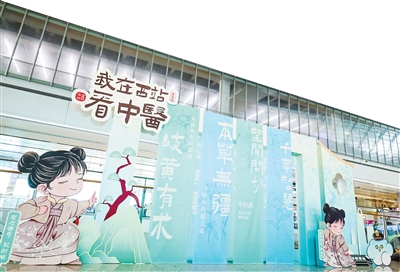
省中医院与西站枢纽公司携手打造“健康共富”新模式
Hang Zhou Ri Bao· 2025-06-27 03:16
Core Viewpoint - The strategic partnership between Zhejiang Provincial Hospital of Traditional Chinese Medicine and Hangzhou West Station Hub Development Co., Ltd. aims to integrate quality medical resources with transportation advantages to create a new model of "Health and Common Prosperity" [2][4] Group 1: Strategic Cooperation - The partnership will leverage the "Common Prosperity Train" to enhance the dissemination of traditional Chinese medicine culture and improve grassroots medical service capabilities along high-speed rail lines [2][4] - This collaboration is part of a broader national initiative to support the development of traditional Chinese medicine through various policies and strategic plans [4] Group 2: Innovative Model - The initiative transforms the transportation hub into a health hub, providing immersive experiences of traditional Chinese medicine culture for travelers [5] - Activities include a "Traditional Chinese Medicine Market" at the West Station, featuring interactive experiences such as acupuncture, herbal tea tasting, and cultural demonstrations [5] Group 3: Future Activities - Upcoming events will take place in Wenzhou, Pan'an, and Quzhou, focusing on high-quality traditional Chinese medicine activities, including free medical consultations and health industry support [6] - The model aims to extend traditional Chinese medicine services and cultural education throughout the Yangtze River Delta region, promoting accessibility and common prosperity [6]