
综合交通枢纽

Search documents
地铁17号线望京西站明天开通
Bei Jing Wan Bao· 2026-01-30 06:42
Core Points - The Beijing Subway Line 17's Wangjing West Station officially opens for operation, enhancing connectivity between Line 17, Line 13, and Line 15 [1] - The station serves as a key transfer hub, facilitating seamless underground transfers among three major subway lines and integrating with bus services for improved commuter options [1] - The Wangjing West Transportation Hub optimizes transfer efficiency and enhances passenger experience through a multi-level transfer space and organized traffic flow [1] - The station features a two-level underground island platform, allowing for easier transfers between lines without the need for outdoor corridors, thus improving safety and comfort [1] - The hub has been equipped with comprehensive bus facilities, accommodating seven bus routes [2]
济南|济南全力打造全国综合交通枢纽
Da Zhong Ri Bao· 2026-01-15 01:29
Core Insights - Jinan aims to become a national comprehensive transportation hub by advancing key transportation projects during the 14th Five-Year Plan period [1][2] Group 1: Railway Development - Jinan is constructing a "米" shaped high-speed rail network, with 20 operational railway lines totaling 835 kilometers, including 12 high-speed rail lines covering 446 kilometers [1] - Approximately 660 high-speed trains operate daily, connecting Jinan to 366 cities nationwide [1] Group 2: Highway Network Enhancement - The Jinan metropolitan area has established a primary framework for the "二环一联十六射" highway network, with plans to reach 915.6 kilometers of operational highways by the end of 2025 [1] - The highway network density and the proportion of dual six-lane roads are the highest in the province [1] Group 3: Urban Road and Airport Expansion - A total of 902 kilometers of urban roads have been newly constructed or renovated, with 86 projects completed, including major roads like Aoti West Road and Longding Avenue [2] - The second phase of Jinan International Airport's expansion is underway, aiming to achieve a maximum flight level of 4F and facilitate seamless "air-rail" transfers [2] Group 4: Urban Rail Transit Projects - Nine urban rail transit projects are planned during the 14th Five-Year Plan, with several lines already completed, resulting in a total operational length of over 248 kilometers [2] Group 5: Inland Waterway Development - Jinan has developed inland waterway transport, completing the Xiaoqing River restoration and constructing Jinan Port and Zhangqiu Port, providing low-cost, high-capacity transport options for bulk goods [2] Group 6: National Recognition and Investment - Jinan was selected as one of the first national comprehensive freight hub cities, with 27 key projects underway and a total investment of 14.75 billion yuan planned for the implementation period from 2022 to 2024 [2] - The city has received A-level performance evaluations for three consecutive years and has secured 1.8 billion yuan in central and provincial funding, being the only city among the first 15 to receive full funding for three years [2]
首破1400万人次!广州地铁客流刷新全国纪录
2 1 Shi Ji Jing Ji Bao Dao· 2026-01-01 23:41
Core Insights - On December 31, 2025, Guangzhou Metro achieved a record daily passenger volume of 14.093 million, setting a new national high for subway ridership in a single day [1][2] - This figure represents a 15.5% increase compared to the previous record of 12.202 million passengers on December 31, 2024 [2] - The data indicates that on the same day, Beijing Metro recorded 13.1 million passengers, Shenzhen 13.05 million, and Shanghai 12.94 million, ranking second, third, and fourth nationally, respectively [2] Passenger Volume Breakdown - On December 31, 2025, 12 lines of the Guangzhou Metro set new single-line passenger records, with the highest ridership on Line 3 (2.46 million), Line 2 (1.421 million), and Line 5 (1.278 million) [2] - Six lines exceeded one million passengers, showcasing significant demand across the network [2] - The top three stations by passenger volume were Sports West Road Station (558,000), Jiahe Wanggang Station (498,000), and Zhujiang New Town Station (314,000) [2] Yearly Trends - The average daily passenger volume for Guangzhou Metro in 2025 reached 9.312 million, a 4.9% increase from 8.879 million in 2024 [3] - There were 89 days in 2025 where passenger volume exceeded ten million, a substantial increase of 128.2% compared to 39 days in 2024 [3] - The Guangdong intercity rail service also set a new record with 45 trains carrying 253,600 passengers on the same day [3] Future Expectations - Guangzhou Metro anticipates that on January 1, 2026, the passenger volume will also exceed ten million, driven by favorable weather and public demand [3] - To accommodate this expected surge, extended service hours and additional trains will be deployed on several lines [3] - The record passenger volume reflects Guangzhou's robust capabilities as a national comprehensive transportation hub, supported by ongoing infrastructure improvements and network integration [3]
高速公路里程增长81%,中山“十四五”交通运输工作成绩单出炉
Xin Lang Cai Jing· 2025-12-31 14:51
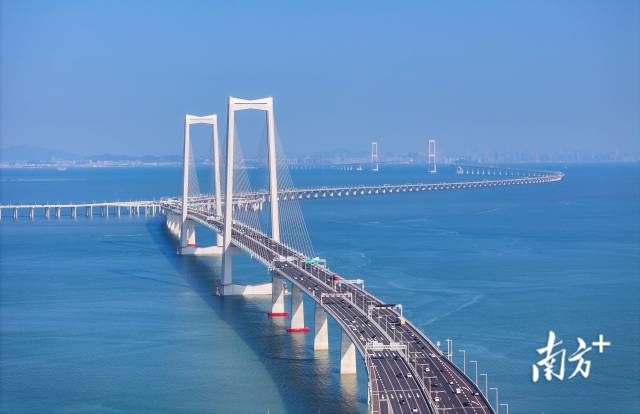
Core Insights - The meeting highlighted the achievements of the transportation system in Zhongshan during the "14th Five-Year Plan" period and outlined key tasks for 2026, emphasizing the completion of major projects like the Shenzhen-Zhongshan Bridge and the establishment of a comprehensive transportation hub in the Pearl River Delta [1][4]. Transportation Network Development - Zhongshan's fixed asset investment in road and waterway construction has ranked among the top in the province for four consecutive years, with a total increase of 80.9% compared to the "13th Five-Year Plan" [1]. - The completion of key projects such as the Shenzhen-Zhongshan Bridge has contributed to a total highway mileage of 333 kilometers, an increase of 81% from the end of the "13th Five-Year Plan" [1]. - The "Four Vertical and Five Horizontal" highway network and the "Three Rings and Twelve Expressways" network are nearing completion, achieving the "60 30" time-space circle goal [1]. Rural Road and Infrastructure Improvements - During the "14th Five-Year Plan," Zhongshan exceeded provincial targets for rural road construction, achieving 100% dual-lane access for administrative villages and 100% public transport coverage [3]. - The city has built 28 under-bridge parks, benefiting nearly 300,000 residents, and increased road greening by over 200 kilometers [3]. Reforms and Innovations - Zhongshan has initiated several national and provincial industry reform pilot projects, with the taxi "service + income" regulatory model becoming a national benchmark [3]. - Progress has been made in the low-altitude economy sector, including the launch of the first cross-sea low-altitude logistics commercial route in the Guangdong-Hong Kong-Macao Greater Bay Area [3]. Public Welfare Enhancements - New intercity bus lines have been launched, and a new passenger terminal has been established, facilitating water transport routes to Hong Kong, Macau, Shenzhen, and Zhuhai [3]. - Upgrades to ports like Huangpu and Xiaolan have been completed, with 13 combined port routes to Guangzhou and Shenzhen now operational, achieving full coverage of combined port routes in Zhongshan [3]. Safety and Compliance - Zhongshan has strictly implemented the Ministry of Transport's "Thirty Measures" and has conducted various safety production rectification efforts, resulting in a stable and improving safety production situation [3]. Future Plans - The city aims to develop a high-level comprehensive transportation plan for the "15th Five-Year Plan," focusing on becoming a comprehensive transportation hub in the Guangdong-Hong Kong-Macao Greater Bay Area [4]. - In 2026, Zhongshan plans to enhance its efficient and convenient transportation network, accelerate rail project construction, and improve road traffic capacity [5].

苹果园综合交通枢纽开通
Bei Jing Ri Bao Ke Hu Duan· 2025-12-30 22:52
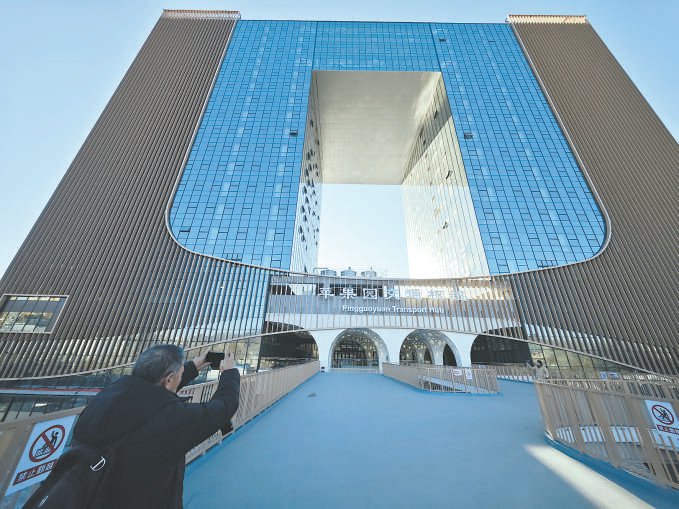
Core Points - The Apple Garden Comprehensive Transportation Hub officially opened in Shijingshan District, serving as a key transportation gateway in the western part of Beijing [2] - The hub integrates multiple transportation modes, including subway, bus, taxi, private cars, and bicycles, facilitating seamless transfers [2] - Currently, the hub connects Metro Line 6 and S1, with 26 bus routes operational, providing over 2000 parking spaces for citizens [2] Transportation Features - The hub is strategically located near major roads and commercial areas, enhancing accessibility [2] - Inside the hub, the design is clean and simple, with clear signage for easy navigation [2] - Future plans include the opening of the Apple Garden Station on Metro Line 1, which will allow for convenient transfers among three subway lines [2] Parking Facilities - The hub includes 876 designated parking spaces, with 156 in the northern underground parking and 720 in the southern underground parking [3] - Surrounding the hub, there are six public parking facilities within a 500-meter radius, collectively offering over 2000 parking spaces to alleviate local parking issues [3] - Additionally, the hub plans to accommodate 1200 non-motorized vehicle parking spaces, with clear signage to guide proper parking [3]
从通州到燕郊只需11分钟
Bei Jing Ri Bao Ke Hu Duan· 2025-12-30 06:34
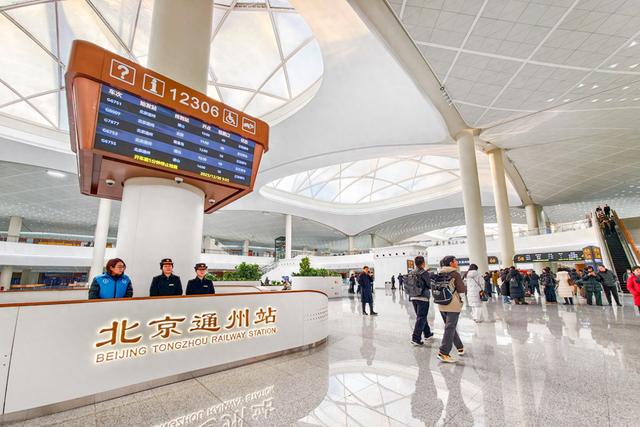
Group 1 - Beijing Tongzhou Station officially opened today, marking the completion of the "Eight Stations and Two Hubs" integrated transportation network in Beijing [1][3] - The first train departed from Tongzhou Station carrying 448 passengers to Tangshan, with a travel time of one hour [1][3] - The station features a unique platform design with full-screen safety doors to enhance passenger safety [3] Group 2 - The transportation hub allows seamless transfers between the Beijing-Tangshan intercity railway, Metro Line 6, taxis, ride-hailing services, and buses [4][5] - A new airport bus service connects Tongzhou Station to both Beijing Capital International Airport and Daxing Airport, operating daily from 8:00 AM to 7:30 PM [5] - Ticket prices from Tongzhou Station to Yanjiao start at 10 yuan, with discounts available for certain train services [6] Group 3 - The Apple Garden Comprehensive Transportation Hub also opened today, featuring multiple transportation options including rail, bus, and taxi services [9] - The hub is designed for efficient transfers between Metro Line 1, Line 6, and S1, with a total of 15 starting bus routes and 10 transit routes [9][10] - The hub includes 876 parking spaces, with additional public parking facilities nearby providing over 2,000 parking spots [10]
三轨交会、公交线路26条,苹果园综合交通枢纽开通运营
Bei Jing Ri Bao Ke Hu Duan· 2025-12-30 03:47
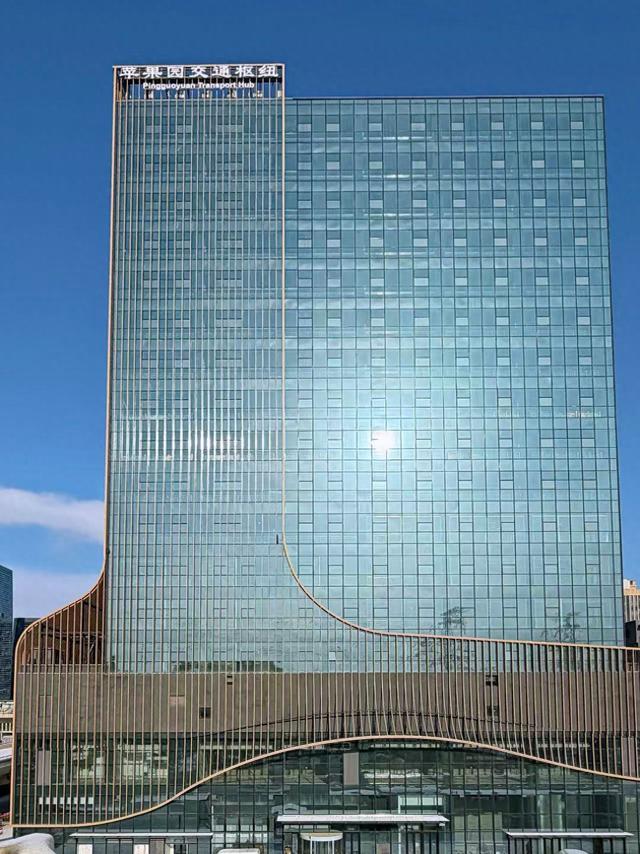
Core Viewpoint - The opening of the Apple Garden Comprehensive Transportation Hub on December 30 significantly enhances the transportation network in the Shijingshan District, providing a multi-modal transfer network that includes various transportation options, thereby improving transfer efficiency for citizens [1][11]. Group 1: Transportation Network - The hub integrates multiple transportation modes, including rail transit (S1 line, Line 6), ground buses (rapid, regular, and transit buses), taxis, private cars, and bicycles, allowing citizens to choose flexible transfer paths based on their travel needs [1]. - The hub is strategically located, bordered by major roads and adjacent to key landmarks, facilitating easy access to three rail lines [3][4]. Group 2: Infrastructure and Facilities - The hub features 15 starting bus routes, 10 transit bus routes, and 1 rapid bus route, with designated areas for passenger drop-off and pick-up located in the northern section of the hub [6]. - A total of 876 parking spaces are planned within the hub, with 156 in the northern underground parking area and 720 in the southern underground area, addressing local parking challenges [6]. - Surrounding the hub, there are six public parking facilities within a 500-meter radius, providing over 2,000 additional parking spaces [6]. Group 3: Non-Motorized Transport - The hub includes 1,200 designated non-motorized vehicle parking spaces, with clear signage to guide users [8]. - There are 3,780 temporary parking spaces for non-motorized vehicles in the vicinity, equipped with directional signs to ensure proper parking [8]. Group 4: User Experience and Safety - The hub is designed with clear signage, guiding displays, and electronic information screens to assist citizens in navigating transfer paths and entrances [8]. - Dedicated service personnel are stationed in connecting passages to provide guidance, ensuring seamless transitions between different modes of transport and enhancing safety [8]. Group 5: Economic and Social Impact - The opening of the Apple Garden Comprehensive Transportation Hub is expected to provide more convenient, safe, and comfortable integrated travel services, further improving the transportation network in the western Beijing area and contributing to high-quality regional economic and social development [11].
北京苹果园综合交通枢纽明日开通运营,将彻底重构京西交通格局
Bei Jing Qing Nian Bao· 2025-12-29 16:40
Core Insights - The Apple Garden Comprehensive Transportation Hub in the western part of Beijing will commence operations on December 30, 2023, significantly restructuring the transportation landscape in the region and providing citizens with a "one-stop transfer, multi-modal choice" travel experience [1][3] Transportation Integration - The hub integrates various transportation modes, including rail transit (S1 line, M6 line), ground public transport (rapid buses, regular buses, transit buses), taxis, private cars, and bicycles, allowing citizens to flexibly choose the optimal transfer path based on distance and time needs [3][6] - The central area of the hub serves as the core for rail transit transfers, achieving "zero-distance" convenient transfers between the M6 line and S1 line, with future plans for seamless connections with the M1 line upon its renovation completion [6] Public Transport Layout - The hub is designed with 15 starting bus routes, 10 transit bus routes, and 1 rapid bus route, with clear divisions and movement lines to facilitate passenger flow [6] - The starting bus routes will have a centralized drop-off area in the northern bus transfer hall, while transit routes will be distributed along Apple Garden Road and South Apple Garden Road to meet rapid transit needs [6] Parking Solutions - The hub will alleviate parking difficulties with a total of 876 motor vehicle parking spaces, including 720 in the underground parking lot of the southern area and 156 in the northern area [8] - Additionally, over 2,000 parking spaces will be available within a 500-meter radius of the hub, including facilities at nearby shopping centers and dealerships [9] Non-Motorized Transport - The hub will provide 1,200 designated non-motorized vehicle parking spaces, with additional 3,780 spaces marked around the hub to support green travel [9] - Clear signage and guidance systems will be installed throughout the hub to assist citizens in navigating the area and ensuring seamless transfers between different transportation modes [9]
锐评|“八站两场”,梦想在这里启程
Xin Lang Cai Jing· 2025-12-27 02:14
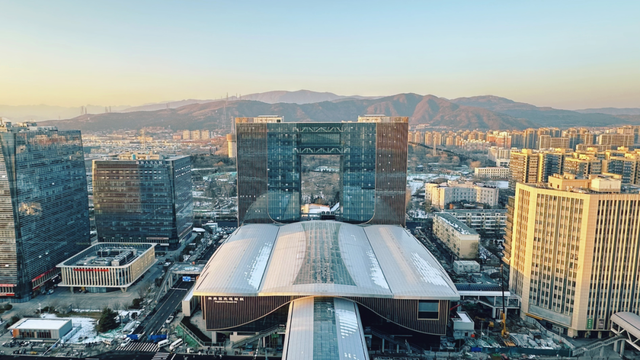
Core Viewpoint - The Beijing Tongzhou Station is set to commence operations on December 30, 2025, marking a significant development in Beijing's transportation infrastructure, which will enhance the city's status as a comprehensive transportation hub with eight major railway stations and two large international airports [1][3]. Group 1: Transportation Infrastructure - The new Tongzhou Station will integrate various transportation modes, including the Beijing-Tanggu intercity railway, Metro Line 6, taxis, ride-hailing services, and buses, facilitating seamless transfers for commuters and travelers [3]. - The "Eight Stations and Two Airports" framework strengthens the transportation network in the Beijing-Tianjin-Hebei region, establishing a "1 to 1.5-hour transportation circle" among major cities [3][4]. Group 2: Urban Development and Economic Impact - The expansion of the railway network and the addition of new stations are expected to alleviate traffic pressure in central Beijing, enhancing the overall capacity of the capital's transportation system [3]. - The development of transportation hubs is anticipated to stimulate regional economic growth by improving accessibility for commuters and tourists, thereby fostering a more dynamic urban environment [3][4]. Group 3: Enhancing Passenger Experience - Modern train stations and airports are evolving into urban centers that prioritize passenger experience, with initiatives to beautify spaces and improve services [4]. - Beijing's major train stations are implementing green spaces and aesthetic enhancements to create a welcoming atmosphere for travelers, contributing to the city's image as a vibrant and modern metropolis [4].
人享其行、通达四海,“十四五”临沂市交通运输领域成绩单发布
Qi Lu Wan Bao· 2025-12-24 13:56
Core Viewpoint - The Linyi City government has made significant advancements in its transportation infrastructure and logistics capabilities during the "14th Five-Year Plan" period, achieving high-quality development and recognition as a national comprehensive transportation hub city [1]. Group 1: Transportation Infrastructure Investment - During the "14th Five-Year" period, Linyi's transportation infrastructure investment is expected to reach 126.17 billion yuan, a year-on-year increase of 22.9%, setting a historical record [2]. - The completion of the Daylan High-speed Railway and the acceleration of the Weishui-Suzhou High-speed Railway construction have enhanced connectivity to major urban agglomerations [2]. - The total length of railways has reached 149.3 kilometers with 17 dedicated railway lines, while the total length of highways has reached 33,300 kilometers, an increase of 2,516 kilometers since the beginning of the "14th Five-Year" [2]. Group 2: Logistics Development - Linyi has transitioned from a single logistics channel to a multi-modal logistics network, achieving the title of "China's Logistics Capital" [3]. - The city has established 9 international road transport routes and operates 1,895 China-Europe freight trains over five years, connecting to 14 countries and 43 cities [3]. - The Linyi Airport has been approved as a national open aviation port, enhancing international air connectivity [3]. Group 3: Economic Support and Industrial Development - The "Jinan-Linyi" urban cluster has been recognized as a national comprehensive freight hub, with investments of 12.232 billion yuan during the implementation period [4]. - The total number of enterprises in the hub economy zone has reached 2,800, generating a GDP of 270 billion yuan, with postal delivery volumes increasing by 296.13% [4]. - Major express delivery companies have established regional distribution centers in Linyi, with delivery prices 50% lower than the national average [4]. Group 4: Transportation Services Enhancement - The city has implemented a free public transport policy during specific time periods, with public transport vehicles and routes reaching 3,097 and 286 respectively, serving 140 million passengers annually [5]. - The government has provided over 5 billion yuan in subsidies and fee reductions to support transportation enterprises [5]. - A transportation logistics dispute resolution center has been established, enhancing service quality and efficiency [5]. Group 5: Innovation and Green Development - Linyi has built three general airports and initiated low-altitude airspace applications, with 44 low-altitude economy-related enterprises [6][7]. - The city has implemented a national logistics data open interconnection pilot, gathering over 2 billion data points to support transportation services [7]. - The number of new energy and clean energy vehicles has increased by 77.7%, with a significant rise in charging infrastructure [7].