体育教培

Search documents
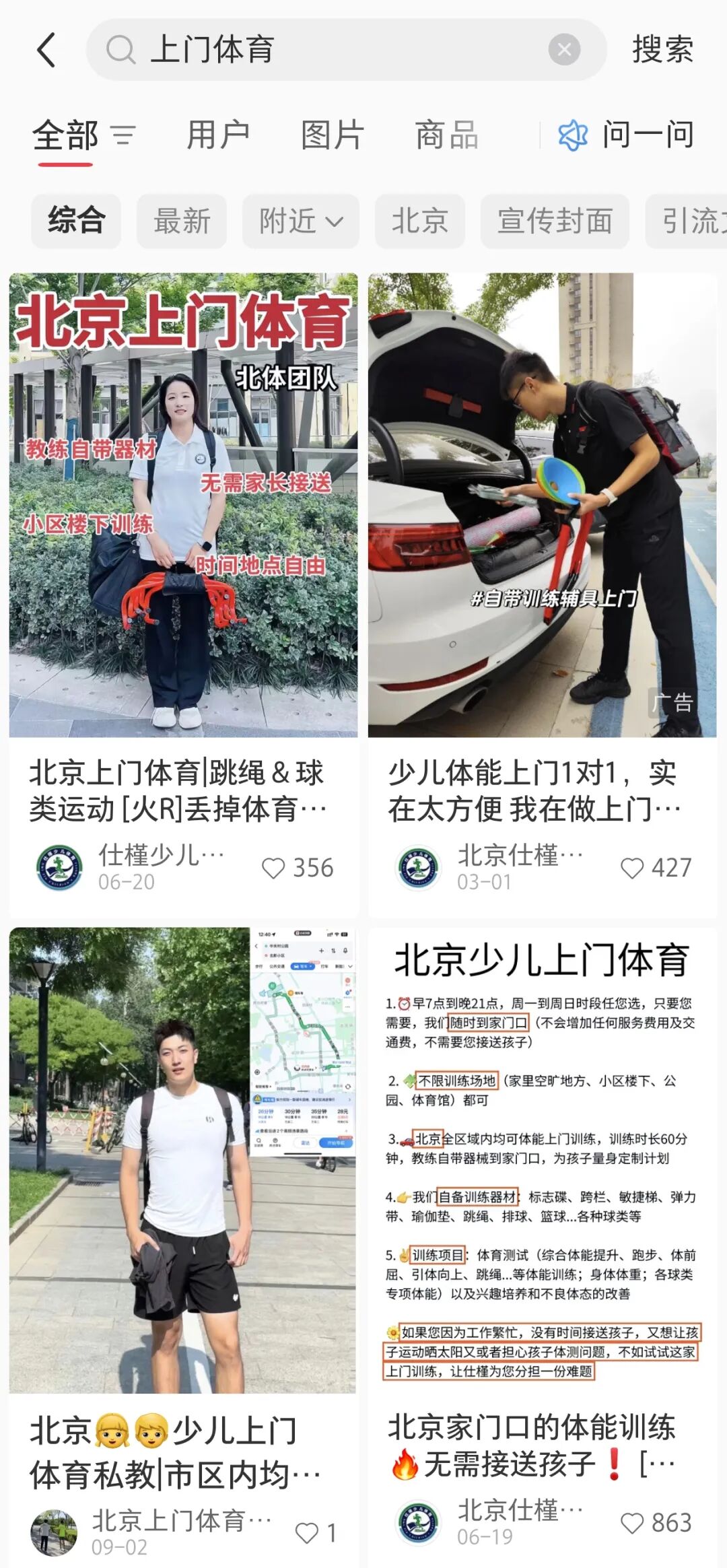
动荡中的体育教培,想抓住“上门体育”这根救命稻草
3 6 Ke· 2025-10-23 23:58
Core Insights - The sports training industry is undergoing significant turmoil, with many institutions facing closures and declining attendance and renewal rates, leading to reduced revenue recognition [1] - In contrast, the "doorstep sports" model is rapidly emerging, focusing on personalized training for youth aged 3-18, with a projected market growth of 127% in 2024, where doorstep services account for 41% of the market [1] Group 1: Supply and Demand Dynamics - "Doorstep sports" is not limited to home services but includes outdoor classes in community areas, accurately described as "sports classes at the doorstep" [2] - The core model involves professional coaches bringing equipment to the vicinity of students' homes for personalized training, with classes typically lasting about one hour [2] - The closure of many traditional training venues has led to an influx of coaches into the market, making the low-risk, cost-effective doorstep sports model an attractive option for many [2] Group 2: Business Strategies - Many training venues are adopting "doorstep sports" as a front-end product to attract customers, gradually integrating it into their main business model [10] - For instance, the basketball training institution "Jufanxing" initially offered low-priced doorstep courses to attract students, later adjusting the pricing to match their main offerings due to high demand [10] Group 3: Market Trends and Consumer Behavior - Policy changes, such as the "sports examination" policy, have positively influenced parents' perceptions of sports training, with over 45% of youth increasing their spending on sports activities [11] - Parents are increasingly motivated by long-term benefits for their children, such as health and character development, rather than short-term exam preparation [11] - The affordability and convenience of "doorstep sports" make it an appealing option for parents, especially in light of recent economic pressures and institutional failures [11] Group 4: Regional Market Characteristics - The emerging "doorstep sports" model exhibits distinct regional characteristics, with various operational models being developed [12] - For example, "Xiao Tang Student" employs a group class model that connects parents and coaches within communities, while "Tian Neng Dao Jia" focuses on high-end one-on-one training with a premium pricing strategy [14][15] Group 5: Challenges and Future Outlook - Despite the growth potential, the industry faces challenges in scaling operations and maintaining quality control, particularly in platform-based models like "Leshi Sports" [22][24] - The sustainability of the "doorstep sports" model hinges on establishing a systematic approach to organization and operations, ensuring quality in teaching and service delivery [31][32] - The industry is witnessing a trend towards diversification, with institutions expanding their service offerings to include outdoor education and community events [34]

激活体育消费大有可为
券商中国· 2025-07-21 04:18
Core Viewpoint - The rise of niche sports like pickleball reflects a shift in consumer preferences towards personalized and refined experiences in sports consumption, driven by social media and changing demographics [2][3][6]. Group 1: Niche Sports and Consumer Trends - Pickleball has gained significant popularity, with 140 million views on social media platforms and over 1100% sales growth during the "6·18" shopping festival on Tmall [2]. - The characteristics of pickleball, such as smaller courts and lighter equipment, make it more accessible compared to traditional sports like tennis [2]. - Experts suggest that the current popularity of pickleball partially stems from the overflow of demand from tennis, although its long-term sustainability is questioned [2][3]. Group 2: Role of Social Media - Social media plays a crucial role in promoting niche sports, enhancing participation through sharing and community engagement [6]. - The viral nature of platforms allows niche sports to gain visibility, potentially transforming them into mainstream activities in the future [6]. Group 3: Market Dynamics of Sports - Niche sports often cater to high-net-worth individuals, leading to higher average spending per participant, while traditional sports have a larger market scale due to broader participation [7]. - The distinction between niche and mainstream sports is not absolute, as many niche sports may evolve into popular activities over time [6][7]. Group 4: Policy and Economic Impact - Recent policies aim to stimulate sports consumption through events and activities, recognizing the potential economic benefits of sports [8][9]. - The balance between high-value niche sports and widely participated mainstream sports is essential for overall sports consumption growth [7][9]. Group 5: Importance of Leisure Time - The availability of leisure time is deemed more critical than income for driving sports consumption, emphasizing the need for better work-life balance [10][11]. - Implementing effective vacation policies can significantly enhance participation in sports, thereby boosting consumption [11].