古籍修复

Search documents
药学生选择修古籍:感谢行业,想在专业上再突破|残卷重生录
Xin Lang Cai Jing· 2025-12-31 15:53
Core Viewpoint - The article highlights the significant contributions of Wan Xiaolan, a master of ancient book restoration and a representative inheritor of provincial-level intangible cultural heritage in Sichuan, who has restored 1,696 cultural relics over 16 years, including precious documents from the Tang and Ming dynasties [1] Group 1 - Wan Xiaolan has been engaged in the field of ancient book restoration for 16 years [1] - The total number of restored cultural relics by Wan Xiaolan is 1,696 items, including books and scrolls [1] - Notable works restored include the Tang Dynasty's "Dunhuang Manuscript: Tang People's Writings" from the ninth year of the Kaiyuan era and the Ming Dynasty's official edition "Yongle North Collection" [1]
2025年零成本创业风口:揭秘十个冷门但是足够暴利的产业
Sou Hu Cai Jing· 2025-12-03 04:44
Core Insights - In 2025, the shift in economic conditions and rapid technological advancements are driving interest in personal entrepreneurship opportunities, particularly in niche high-profit businesses that offer low barriers to entry and high returns [1] Group 1: Business Opportunities - APP New User Acquisition Studios represent an upgraded model of traditional ground promotion, achieving daily earnings of 300 to 500 yuan per person, significantly higher than the 30 to 50 yuan typical in traditional models [3] - The smart home service market is projected to grow, with a 40% penetration rate expected by 2025, and professional configuration services charging between 300 to 800 yuan per household [3] - The ancient book restoration market shows strong demand, with prices ranging from 500 to 2000 yuan per book, and a single-person studio can earn over 30,000 yuan monthly with low material costs [5] - Balcony planting system installation services are booming, with standard packages priced between 8000 to 15000 yuan, appealing to urban dwellers seeking a connection to nature [5] - The automotive modification market is shifting towards ambient lighting, with installation costs between 2500 to 4000 yuan and a material cost of about 800 yuan [8] - Professional bathing services for the elderly are in high demand, charging 150 to 300 yuan per session, with initial investments of 20,000 to 30,000 yuan for equipment [8] - Photo recovery services charge between 200 to 500 yuan, with minimal technical costs and a focus on nostalgic older adults and business professionals [9] - High-end fragrance services can charge between 3000 to 10000 yuan, with raw material costs under 10%, targeting corporate clients initially [11] - Custom architectural models priced between 3000 to 20000 yuan leverage emotional value and social media marketing [11] - Voice beautification training services can charge between 2000 to 8000 yuan, with an 80% profit margin, catering to professionals like streamers and teachers [11] Group 2: Market Characteristics - These niche businesses address specific pain points for targeted demographics, creating high added value through specialized services [11] - The entrepreneurial landscape in 2025 emphasizes finding overlooked essential needs rather than competing in saturated markets [11] - Entrepreneurs are encouraged to leverage their resource advantages and conduct thorough market research to identify high-fit opportunities for low-cost experimentation [11]



我在图书馆修古籍
Ren Min Ri Bao· 2025-05-05 22:17
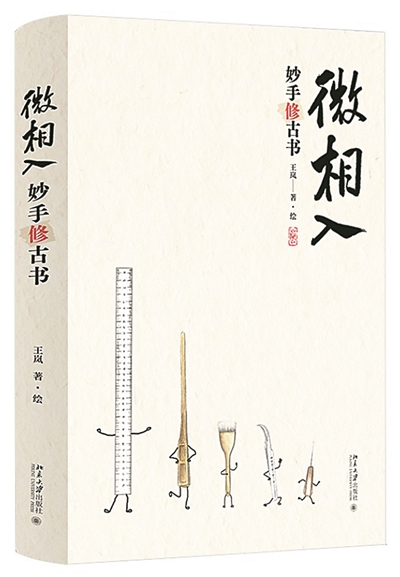
Core Insights - The article discusses the traditional craft of ancient book restoration, highlighting its historical significance and the meticulous techniques involved in the process [2][3][4]. Group 1: Historical Context - Ancient book restoration is an old and niche industry, with roots tracing back to the sale of books and the work of traditional craftsmen [2]. - The practice has gained recognition in recent years due to increased efforts in ancient book preservation [3]. Group 2: Techniques and Methods - Restoration methods still follow principles outlined in historical texts, emphasizing precision and minimal intervention, akin to modern conservation philosophies [3]. - The book "微相入:妙手修古书" details the restoration process through five sections: calamity, tools, paper, repair, and connection, illustrating the traditional techniques [3][4]. Group 3: Tools and Materials - Essential tools for restoration include bamboo knives, tweezers, and needles, often handmade by restorers to suit specific needs [4]. - The choice of repair paper is crucial, with traditional handmade paper being preferred for its compatibility with ancient texts, often requiring careful selection and matching [4]. Group 4: Practical Challenges - Most restoration work involves common Qing Dynasty texts, which often require urgent repairs without disassembly, testing the skills of restorers [5]. - The article describes the challenges faced in restoration, likening it to emergency medical care, where quick and effective solutions are necessary [5]. Group 5: Philosophical Approaches - Different restoration experts adopt unique methods, sometimes preserving historical damage as part of the book's narrative, reflecting a deeper understanding of restoration principles [5]. - The evolving techniques and philosophies of restoration are passed down through generations, adapting to contemporary practices while maintaining traditional values [6].