修旧如旧

Search documents
大运河畔烟火气 寻常人家幸福年
Xin Lang Cai Jing· 2026-02-19 23:02
Group 1 - The article highlights the revitalization of the ancient village of Nanganquan, which has benefited from the cultural development along the Grand Canal, leading to a vibrant local economy and community life [1][3] - The village has embraced a "repairing the old as the old" philosophy, restoring historical buildings and introducing diverse new business models, including specialty dining and cultural experiences, which have contributed to increased income for residents [3] - Local residents are experiencing improved livelihoods through various income sources such as dividends from shares, wages from work, rental income from properties, and profits from businesses, indicating a positive economic outlook for the community [3] Group 2 - The transformation of traditional homes into commercial spaces has provided stable rental income for residents, exemplified by the case of a local shop owner who now earns 30,000 yuan annually from renting her property [2] - The festive atmosphere in the village is enhanced by local vendors and activities, attracting tourists and creating a lively environment, which is crucial for the upcoming Spring Festival holiday [2] - The community's efforts to maintain cleanliness and enhance the visitor experience reflect a commitment to preserving cultural heritage while promoting economic growth [1][2]
“一针一线”唤醒国之瑰宝
Xin Lang Cai Jing· 2026-02-07 21:54
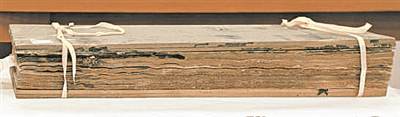
Core Insights - The article highlights the successful restoration of significant cultural artifacts, including the Tibetan version of the "Kanjur" and Dunhuang linen paintings, through advanced scientific methods and collaborative efforts by the National Library of China and the China Cultural Relics Protection Foundation [6][7]. Restoration Process - The restoration of the Tibetan "Kanjur" involved addressing severe mold, water damage, and physical deterioration across over 300 leaves, with a meticulous cleaning process that took several months [8][9]. - Various cleaning techniques were employed, including the use of silicone rollers and micro-needles for precise dirt removal, followed by careful reassembly of the multi-layered paper leaves [8][9]. - The restoration team faced challenges in maintaining the original dimensions of the leaves post-restoration, requiring extensive pressure application to ensure uniformity [9]. Challenges in Restoration - The restoration of a unique Dunhuang linen painting presented difficulties due to its dual nature of containing both artwork and scripture, leading to debates on whether to separate or preserve them together [10][11]. - The chosen approach of original state restoration aimed to minimize intervention, ensuring that the integrity of the original materials was maintained [11][12]. Innovative Techniques - The restoration team implemented innovative methods, such as the "embedding method" for irregular damage, which required extreme precision to match the original threads [12]. - The use of advanced technology allowed for the recreation of the paper used in Dunhuang manuscripts, ensuring that the restored artifacts closely resembled their original state [13][14]. Preservation Philosophy - The restoration philosophy emphasized minimal intervention and the preservation of all components of the artifacts, including the mounting materials, which are also considered valuable historical items [13]. - The team adopted a new understanding of the importance of all layers of artifacts, recognizing that even the outer materials hold historical significance [13].

上海古建筑日均“行走”10米 7500吨石库门建筑群完成归位
Yang Shi Xin Wen Ke Hu Duan· 2025-06-08 07:56
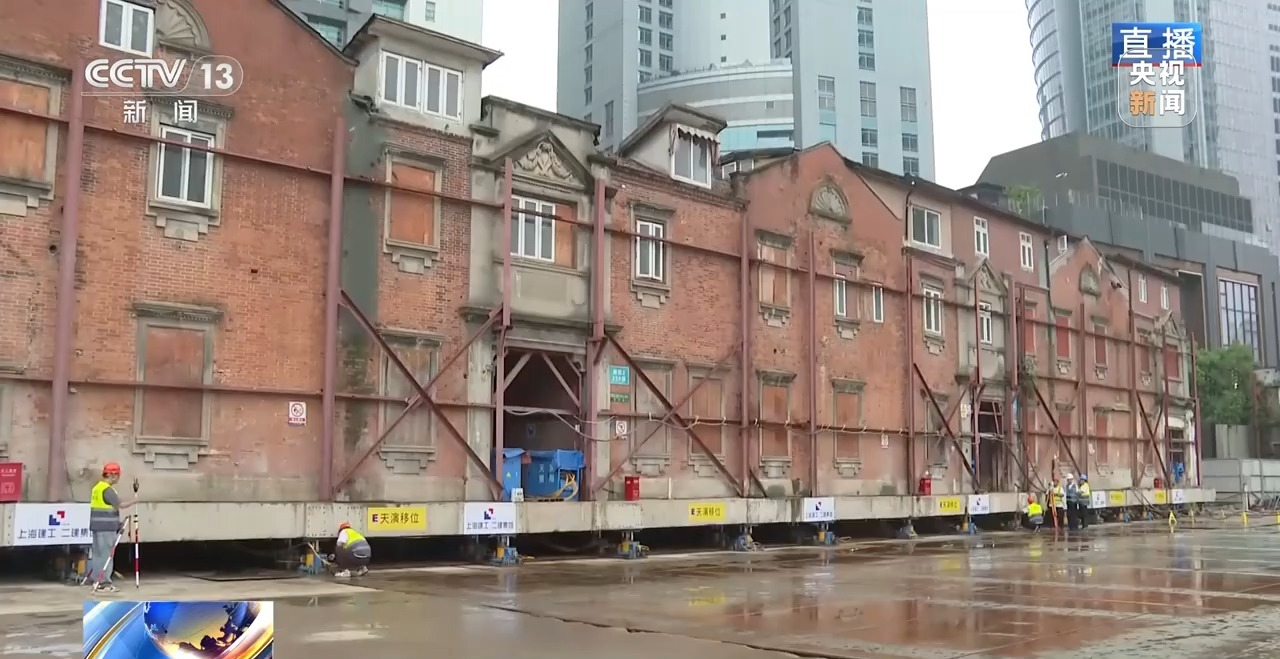
Core Viewpoint - The article highlights the successful completion of the relocation and restoration of the "Huayanli" stone gate building group in Zhangyuan, Shanghai, which is the largest group of stone gate architecture in China, emphasizing the balance between historical preservation and urban development [1][5][14]. Group 1: Historical Significance and Preservation - Zhangyuan has a history of over 140 years and is recognized as the largest and most well-preserved stone gate architectural complex in Shanghai, serving as a living museum of the city's history [1][7]. - The "Huayanli" building group consists of three stone gate buildings with a total area of approximately 4,000 square meters, showcasing exquisite decorative features and historical significance [8][10]. Group 2: Relocation and Restoration Process - The relocation process began on May 19, with the buildings moving at an average speed of 10 meters per day, utilizing 432 small walking robots to facilitate the movement [3][4]. - The buildings were temporarily fixed to their foundations and lifted using hydraulic jacks, allowing for the installation of walking robots that enabled the buildings to "walk" back to their original positions [4][10]. Group 3: Urban Development and Infrastructure - The relocation was necessary to protect the historical buildings from damage during underground construction, which aims to create additional municipal facilities and parking spaces [7][11]. - The underground space will provide over 300 new parking spots and facilitate transfers for three subway lines, integrating modern infrastructure with historical preservation [13]. Group 4: Future Prospects - After restoration, the historical buildings are expected to be transformed into a new commercial district and office spaces, contributing to the urban renewal efforts while maintaining the historical essence of the area [13][14]. - The approach of "repairing the old as the old" reflects Shanghai's commitment to balancing urban development with the preservation of its historical architecture [14].
一砖一石,留下历史的印迹|文物修复
Jing Ji Guan Cha Bao· 2025-05-19 00:46
Group 1 - The article discusses the restoration efforts of the Tiger Hill Pagoda in Suzhou, which has been leaning due to uneven ground settlement, earning it the nickname "Chinese Leaning Tower of Pisa" [2][3] - The first restoration in 1953 involved reinforcing the pagoda with reinforced concrete, which inadvertently increased its weight and caused issues with the foundation [3][4] - The second major restoration focused on strengthening the foundation through a combination of techniques including pile encasement and grouting, effectively controlling the settlement and tilt of the pagoda [4][5] Group 2 - After over twenty years post the second restoration, new issues arose such as water seepage and deterioration of the structure, leading to the initiation of a third major restoration in 2011 [5][6] - The third restoration emphasized comprehensive maintenance, including structural preservation, waterproofing, and protection against biological damage, marking a shift from previous emergency repairs to a more holistic approach [5][7] - The restoration process included the construction of scaffolding for access, which was completed in May 2015, allowing for detailed maintenance and repairs to the pagoda [6][7] Group 3 - The third restoration involved extensive work on the pagoda's roof, including cleaning, rust treatment, and the installation of new lightning protection systems [7][8] - The maintenance also addressed structural issues such as cracks and deterioration in the pagoda's body, ensuring that all repairs were conducted with a focus on preserving the original aesthetics [8][9] - A comprehensive survey using 3D laser scanning was implemented to monitor the pagoda's condition accurately, allowing for timely interventions [10] Group 4 - The article also highlights the restoration of the Zhao Zhou Bridge, which has undergone multiple repairs since its construction over 1400 years ago, with the most significant restoration occurring between 1955 and 1956 [12][13] - The restoration of Zhao Zhou Bridge faced debates on whether to maintain its original appearance or to replace severely damaged stones, ultimately leading to a reconstruction that utilized modern techniques while attempting to preserve historical integrity [14][15] - The restoration process included the use of reinforced concrete and waterproofing measures, which, while effective, led to concerns about the loss of historical authenticity [16][19] Group 5 - The article concludes with a focus on the importance of careful restoration practices, emphasizing the need to balance modern techniques with the preservation of historical value, as seen in the ongoing efforts to maintain the Great Wall [24][25] - The work of restoration experts like Cheng Yongmao is highlighted, showcasing a commitment to minimal intervention while ensuring structural safety and historical fidelity [28][29] - The ongoing restoration projects reflect a broader trend in heritage conservation, prioritizing the preservation of cultural significance alongside structural integrity [37]
我在图书馆修古籍
Ren Min Ri Bao· 2025-05-05 22:17
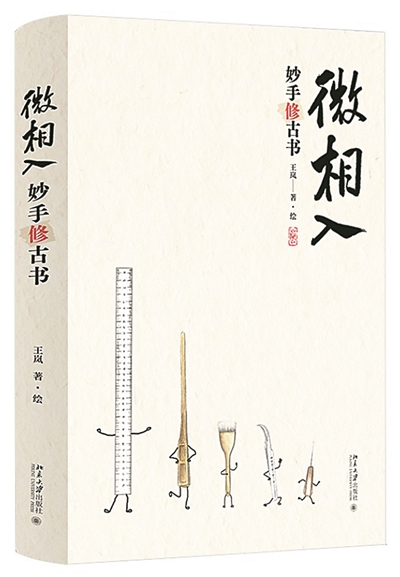
Core Insights - The article discusses the traditional craft of ancient book restoration, highlighting its historical significance and the meticulous techniques involved in the process [2][3][4]. Group 1: Historical Context - Ancient book restoration is an old and niche industry, with roots tracing back to the sale of books and the work of traditional craftsmen [2]. - The practice has gained recognition in recent years due to increased efforts in ancient book preservation [3]. Group 2: Techniques and Methods - Restoration methods still follow principles outlined in historical texts, emphasizing precision and minimal intervention, akin to modern conservation philosophies [3]. - The book "微相入:妙手修古书" details the restoration process through five sections: calamity, tools, paper, repair, and connection, illustrating the traditional techniques [3][4]. Group 3: Tools and Materials - Essential tools for restoration include bamboo knives, tweezers, and needles, often handmade by restorers to suit specific needs [4]. - The choice of repair paper is crucial, with traditional handmade paper being preferred for its compatibility with ancient texts, often requiring careful selection and matching [4]. Group 4: Practical Challenges - Most restoration work involves common Qing Dynasty texts, which often require urgent repairs without disassembly, testing the skills of restorers [5]. - The article describes the challenges faced in restoration, likening it to emergency medical care, where quick and effective solutions are necessary [5]. Group 5: Philosophical Approaches - Different restoration experts adopt unique methods, sometimes preserving historical damage as part of the book's narrative, reflecting a deeper understanding of restoration principles [5]. - The evolving techniques and philosophies of restoration are passed down through generations, adapting to contemporary practices while maintaining traditional values [6].