
实验动物养殖

Search documents
如何看待本轮猴价上涨行情
2025-12-16 03:26
Summary of Conference Call on Monkey Price Trends Industry Overview - The conference call discusses the domestic monkey breeding industry, particularly focusing on the demand for experimental monkeys and the factors influencing their prices [1][2]. Key Points and Arguments Demand and Supply Dynamics - There is a strong demand for experimental monkeys from domestic DL companies, leading to a significant increase in orders, particularly from November and December 2023 [2]. - The supply of monkeys is constrained due to a shortage of animal resources, resulting in a market characterized by scattered orders rather than long-term contracts [3]. - The average price of experimental monkeys is expected to stabilize between 12-13 million yuan, with potential fluctuations up to 12-16 million yuan [4][13]. Quality and Quantity of Domestic Monkey Population - The overall population of monkeys remains stable, but the quality is declining, affecting both the output quantity and quality [5]. Importation of Monkeys - Cambodia began exporting experimental monkeys to China in December 2023, with Vietnam expected to follow in 2025 and Indonesia in 2026 [6]. - Imported monkeys are primarily for breeding purposes, but some meet experimental standards and can be sold as commercial monkeys [7]. Cost of Production - The cost of producing monkeys has increased due to additional testing requirements, raising the cost by approximately 700-800 yuan per monkey [8]. Future Supply Trends - A supply gap for commercial monkeys is anticipated to persist from 2026 to 2028, particularly severe in 2026 and 2027, with improvements expected by 2029 [9]. Impact of Overseas Demand - The price of experimental monkeys in the U.S. is significantly higher than in China, influencing domestic pricing strategies. For instance, when domestic prices are below 100,000 yuan, U.S. prices are around 140,000-150,000 yuan [10]. Revenue from Non-Standard Monkeys - The increase in output for 2025 is attributed to the sale of non-standard monkeys, which do not significantly boost revenue due to their lower price points [11]. Industry Pricing Levels - The current average market price for monkeys is between 110,000 and 120,000 yuan, with the company maintaining a competitive pricing strategy [12]. Challenges in Breeding Programs - Although breeding plans exist, the actual implementation is challenging due to the strong demand for immediate returns, making it difficult to retain breeding stock [16]. Influence of Domestic Innovation - The growth of domestic innovative pharmaceuticals is driving demand for monkeys, with usage surpassing that in the U.S. and a higher number of original drugs compared to Western countries [17]. Additional Important Insights - The market is shifting towards more flexible purchasing arrangements, with clients actively seeking monkeys rather than relying on long-term contracts [3]. - The potential for exporting monkeys is limited due to regulatory constraints, as they are considered a strategic resource [14]. - The cost of imported monkeys varies based on the gender ratio and country of origin, with Cambodian imports costing around 70,000-80,000 yuan per monkey [14]. This summary encapsulates the critical insights from the conference call regarding the monkey breeding industry, highlighting the interplay between demand, supply, pricing, and the impact of domestic and international factors.
创新药遭遇“窜天猴” 两个月大涨30% 1只实验猴卖12万元仍“有价无猴”
Mei Ri Jing Ji Xin Wen· 2025-12-02 13:09
Core Insights - The price of experimental monkeys, specifically the crab-eating macaque, has surged above 100,000 yuan, marking a significant increase of over 30% from previous prices, leading to a budget shortfall for companies [1][2] - The supply of experimental monkeys is critically low, with a reported annual demand-supply gap of approximately 10,000 monkeys in China, exacerbated by the increasing reliance on these animals for drug safety evaluations [10][11] - The cyclical nature of monkey prices is influenced by a seven-year breeding cycle, making it difficult for breeding companies to respond to market demands in a timely manner [6][7] Price Trends - The price of crab-eating macaques has fluctuated dramatically over the past decade, with a 14-fold increase since 2017, and current prices are expected to stabilize between 70,000 to 150,000 yuan in the next two to three years [2][5] - The peak price reached 200,000 yuan in 2022 and 2023, but has since decreased to around 100,000 yuan, still significantly impacting the cost structure of drug development projects [3][6] Supply Chain Dynamics - The concentration of monkey breeding facilities has increased, with major CRO companies acquiring a significant portion of the available monkeys, leading to a tighter market for smaller companies seeking to procure these animals [9][10] - The breeding cycle for crab-eating macaques is lengthy, taking approximately 6 to 7 years from birth to maturity, which complicates the ability of breeding companies to scale up production in response to rising demand [6][7] Industry Implications - The high cost of experimental monkeys now constitutes a core part of the toxicology testing budget, with estimates suggesting that a single project may require four to five million yuan just for safety evaluation experiments [3][4] - The ongoing demand for innovative drug development, particularly in areas such as antibody drugs and gene therapy, continues to drive the need for crab-eating macaques in preclinical testing [7][11] Future Outlook - The industry is facing a potential decline in self-sustaining breeding capacity, with projections indicating that the annual production of self-bred crab-eating macaques may fall below 10,000 in the next two to three years if current trends continue [7][10] - Companies are urged to consider long-term strategies for breeding and procurement to mitigate the impact of fluctuating prices and supply shortages in the future [6][9]
创新药遭遇“窜天猴”:两个月大涨30%,1只实验猴卖12万元
Mei Ri Jing Ji Xin Wen· 2025-12-01 22:50
Core Viewpoint - The price of non-human primates, particularly the crab-eating macaque, has surged significantly, with prices rising from over 90,000 yuan to 120,000 yuan in just two months, indicating a budget shortfall of over 1 million yuan for companies seeking to purchase these animals for drug safety evaluations [2][4][6]. Price Trends - The price of crab-eating macaques has experienced a dramatic increase, with a 30% rise recently, following a previous peak of over 200,000 yuan in 2022, and a subsequent drop to a low of 65,000 yuan [2][4]. - Industry experts predict that the price will fluctuate between 70,000 yuan and 150,000 yuan over the next two to three years [2][4]. Supply and Demand Dynamics - There is a notable shortage of available macaques, with many companies struggling to find suitable sources despite the rising prices [4][17]. - The demand for crab-eating macaques has surged, with usage in domestic laboratories increasing from 18,140 in 2017 to 28,026 in 2019, a growth of 54.5% [11]. - The annual supply-demand gap for crab-eating macaques in China is estimated to be around 10,000 animals, with a significant focus on maintaining a balanced ratio of male to female macaques for breeding purposes [17]. Industry Structure and Challenges - The breeding cycle for crab-eating macaques is lengthy, taking approximately six to seven years from birth to maturity, which complicates the ability to meet rising demand [12][14]. - The concentration of resources among leading Contract Research Organizations (CROs) has further limited the availability of macaques, as these companies have acquired a significant portion of the existing supply [16][17]. - The current market dynamics have led to a stagnation in the breeding of macaques, with many companies opting to sell available macaques rather than invest in breeding programs [14][16]. Regulatory and Ethical Considerations - Recent developments in the U.S., where the CDC plans to halt all internal research involving monkeys, have sparked discussions about the future of animal testing in biomedical research [21][22]. - The reliance on non-human primates for critical research underscores the ethical dilemmas faced by the industry, as the demand for innovative therapies continues to grow [21][23].


创新药遭遇“窜天猴”:两个月大涨30% 1只实验猴卖12万元 仍“有价无猴” 国内年缺口约1万只
Mei Ri Jing Ji Xin Wen· 2025-12-01 14:27
Core Insights - The price of the crab-eating macaque has surged above 100,000 yuan, marking a significant increase of over 30% from previous levels, leading to a budget shortfall of more than 1 million yuan for companies [1][3] - The supply of macaques is critically low, with many companies struggling to find suitable sources despite the rising prices, indicating a "monkey price upcycle" [1][3] - The demand for macaques is expected to remain high, with estimates suggesting prices will fluctuate between 70,000 and 150,000 yuan over the next two to three years [2][4] Price Trends - The price of crab-eating macaques has seen a dramatic increase, with historical data showing a 14-fold rise over the past seven years, particularly after 2017 when prices began to escalate [3][4] - The peak price reached 200,000 yuan in 2022, but has since stabilized around 100,000 yuan, still significantly impacting the budgets of pharmaceutical companies [4][10] Supply and Demand Dynamics - The current supply of macaques is insufficient to meet the growing demand, with an estimated annual shortfall of about 10,000 macaques in China [12] - The breeding cycle for crab-eating macaques is lengthy, taking approximately six to seven years from birth to maturity, which complicates the ability to quickly respond to market demands [10][12] - Major Contract Research Organizations (CROs) have begun acquiring macaque breeding facilities, further constraining the available supply for smaller companies [12] Industry Implications - The rising prices and supply shortages are creating a challenging environment for pharmaceutical companies, which rely on macaques for critical preclinical safety evaluations [4][10] - The ongoing demand for innovative drug development, particularly in areas like antibody drugs and gene therapy, underscores the importance of macaques in the research process [10][12] - The situation is exacerbated by the recent news of the CDC in the U.S. halting internal research involving monkeys, raising concerns about the future of animal research and its implications for drug development [13][14]
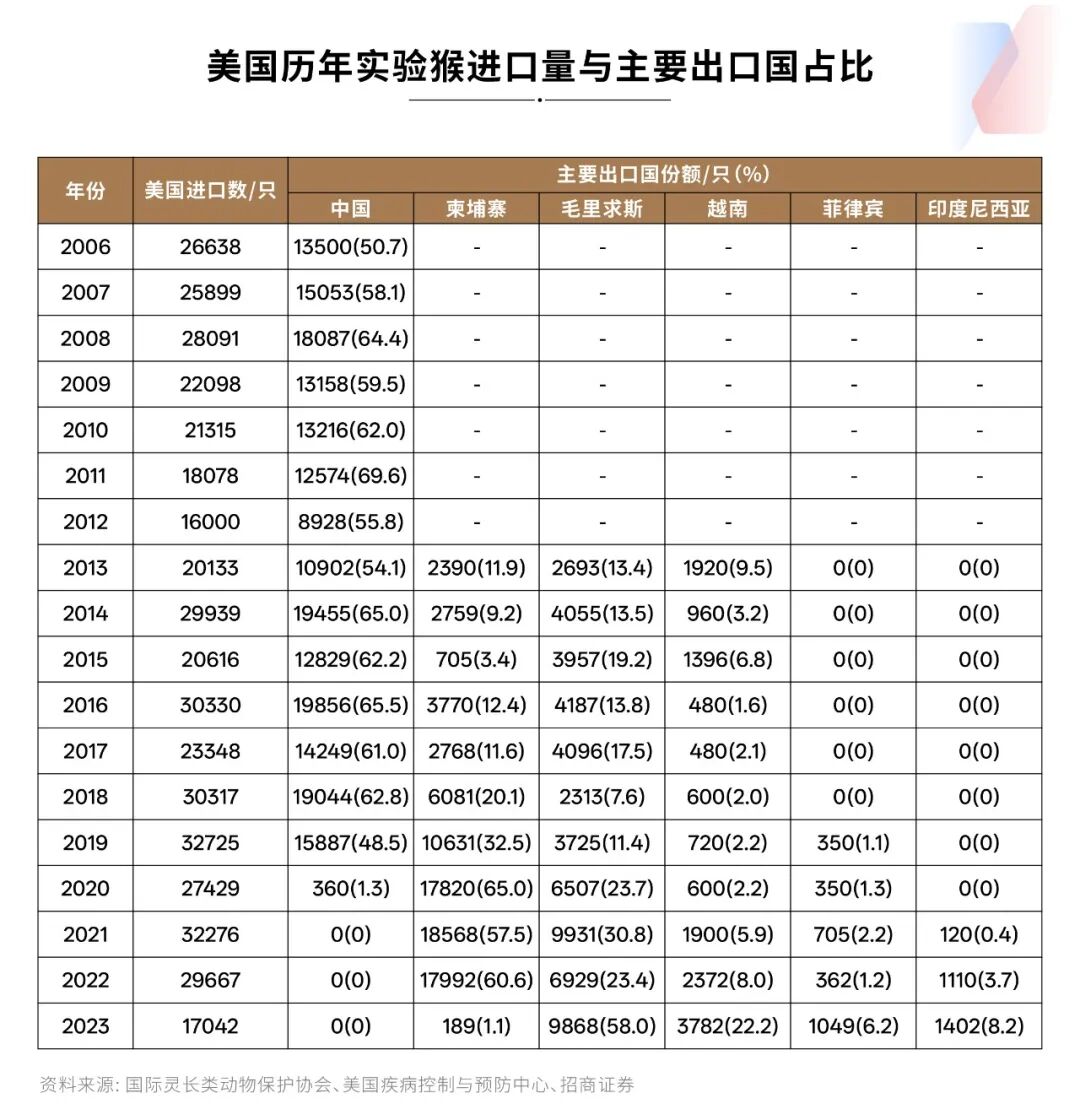
实验猴市场近况更新
2025-09-24 09:35
Summary of the Experimental Monkey Market Conference Call Industry Overview - The experimental monkey market has faced a continuous supply shortage since 2020, primarily due to depleted inventories, pandemic-related import/export restrictions, and aging breeding stock leading to decreased reproduction rates. The current annual supply is approximately 30,000 monkeys, with a shortfall exceeding 40,000 monkeys. Although some relief is expected in 2025, suitable monkeys will still be in short supply [1][4][7]. Key Points and Arguments - **Supply and Demand Dynamics**: The production of experimental monkeys has stabilized around 30,000 annually over the past three years, with a slight increase expected in 2025. However, quality control measures reduce the usable quantity to about 25,000 [1][5]. The demand for monkeys significantly decreased in 2023 but is projected to rebound in 2024 and reach over 35,000 in 2025, indicating a gradual recovery in market demand [6][7]. - **Price Fluctuations**: The price of experimental monkeys has experienced significant volatility. Prices surged from 30,000 RMB in 2020 to around 200,000 RMB by mid-2022, then dropped to approximately 60,000-70,000 RMB in mid-2023. A slight rebound occurred in the latter half of 2023, stabilizing around 80,000-90,000 RMB in 2024, with some regions exceeding 100,000 RMB in 2025 [2][8]. - **Market Concentration**: The domestic experimental animal industry is characterized by high supply-side concentration, with large enterprises acquiring monkey breeding resources, thus controlling pricing. Many companies rely on market purchases, exacerbating supply tightness [3][11]. - **Aging Population and Reproduction Challenges**: The domestic monkey population is aging, with over 40% being older than 15 years. The birth rate is only about 30%, and the cost of importing new breeding stock is high, posing challenges for future supply [10][12]. - **Regional Breeding Bases**: Major breeding bases are concentrated in southern China, particularly in Guangdong, Guangxi, Hainan, and Yunnan. Many of these have been acquired or restructured by listed companies, leading to limited available resources and price volatility [14][15]. Additional Important Insights - **Impact of Export Policies**: If China allows the export of experimental monkeys, it could significantly benefit breeding units but may reduce domestic orders from CRO companies. Historically, the U.S. was a major buyer, and resuming exports could alleviate domestic supply pressures while increasing prices [8][9]. - **Future Trends**: The market is expected to remain tight in the long term, with high prices limiting project initiation. However, the increasing number of CRO companies handling foreign orders presents a more optimistic market outlook for 2025 [7][11]. - **Technological Developments**: New methodologies and AI-driven approaches are being explored to replace traditional animal testing, but full implementation is expected to take at least 10 years. Current technologies can partially substitute for primate use, but significant challenges remain [19][20]. This summary encapsulates the current state and future outlook of the experimental monkey market, highlighting critical supply-demand dynamics, pricing trends, and industry challenges.